
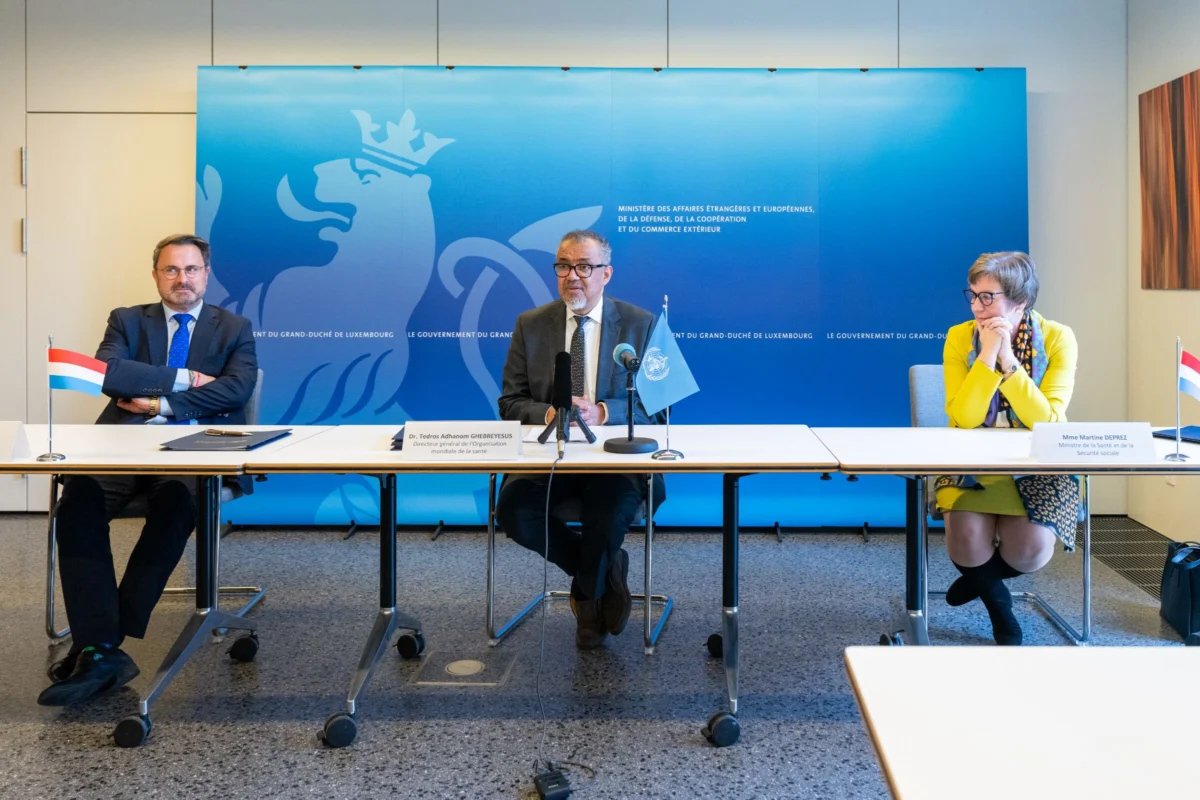
In a landmark move for international health cooperation, the Grand Duchy of Luxembourg and the World Health Organization (WHO) formalized a multi-year funding agreement on 20 December 2024, marking a significant escalation in their long-standing strategic alliance. The signing ceremony, which took place on the International Day of Solidarity, resulted in a total financial commitment of €47.5 million. This injection of capital is designed to bolster global public health initiatives, address widening health inequalities, and reinforce the structural capacity of the WHO as it navigates the complex landscape of the 2025–2028 operational cycle.
The centerpiece of this development is a Strategic Partnership Framework (SPF) valued at €46.5 million, established with the Luxembourg Ministry of Development Cooperation and Humanitarian Affairs. This represents the most substantial financial agreement ever concluded between the two entities. Simultaneously, a separate, inaugural agreement worth €1 million was signed with the Ministry of Health and Social Safety, marking the first time the Ministry has provided a direct voluntary contribution to the global health body.
A Chronology of Collaboration
The relationship between Luxembourg and the WHO has historically been rooted in the principles of multilateralism and humanitarian assistance. For decades, Luxembourg has consistently positioned itself as a reliable donor, often prioritizing flexible funding models that allow the WHO to respond rapidly to emerging threats.
The timeline leading up to this milestone began in early 2024, as the WHO started drafting its Fourteenth General Programme of Work (GPW 14), which sets the organization’s strategic direction from 2025 to 2028. During a series of diplomatic engagements throughout the year, representatives from the Luxembourgish government and the WHO secretariat identified critical gaps in global health security, particularly regarding the post-pandemic recovery of vulnerable nations. The negotiations concluded in late December, ensuring that the funding would be available at the start of the next four-year operational cycle.
Financial Breakdown and Strategic Allocation
The €46.5 million provided under the SPF is characterized by its flexibility, a critical factor in modern international development finance. By providing "fully flexible" funding, Luxembourg allows the WHO to allocate resources toward areas of highest, most immediate need, rather than tethering the money to predetermined, potentially obsolete projects.

The financial package is divided into several thematic pillars:
- Universal Health Coverage (UHC) Partnership: A significant portion of the funding is earmarked for the UHC Partnership, which supports countries in strengthening their primary health care systems to ensure equitable access to services.
- Tropical Disease Research: The agreement includes specific provisions for the WHO’s Special Programme for Research and Training in Tropical Diseases, which focuses on neglected tropical diseases that disproportionately affect the world’s poorest populations.
- Polio Eradication: The funds will support the final push toward global polio eradication, an initiative that has faced significant headwinds in recent years due to conflict and vaccine hesitancy in endemic regions.
- Thematic and Flexible Funding: The remainder of the allocation is distributed across technical domains, including sanitary crisis preparedness and the development of international health norms and standards.
Official Perspectives and Diplomatic Context
During the signing ceremony, which was attended by WHO Director-General Dr. Tedros Adhanom Ghebreyesus, Luxembourg’s Deputy Prime Minister and Minister of Foreign and European Affairs, Xavier Bettel, emphasized the philosophical shift in the country’s approach to health security. "We launch these agreements with WHO because we believe the best way to avoid is to prevent," Bettel stated, underscoring a proactive stance toward pandemic preparedness.
Martine Deprez, Minister of Health and Social Safety, highlighted the domestic and international priorities driving this investment. "From now till 2028, this contribution will help finance priority areas in Luxembourg’s collaboration with WHO," Deprez explained. She specifically pointed to the necessity of mitigating health inequalities, with a dedicated focus on gender-responsive health programming. This reflects a growing recognition within international development circles that health crises—and the subsequent recovery efforts—often affect populations unevenly based on gender, socioeconomic status, and geographic location.
Dr. Tedros Adhanom Ghebreyesus characterized the timing of the agreement as deeply symbolic. By finalizing the deal on the International Day of Solidarity, the parties aimed to frame the funding not merely as a transaction, but as a commitment to the global community. "It is a strong statement of solidarity by Luxembourg, not just with WHO, but with the people of the world," Dr. Tedros remarked.
Global Health Implications and Future Outlook
The significance of this partnership extends beyond the monetary value. In an era where the international order faces pressure from geopolitical fragmentation, the commitment of a mid-sized European nation like Luxembourg to multilateral health governance serves as a bellwether for other donor countries.
The reliance of the global health architecture on voluntary, flexible contributions has been a point of contention and discussion at several World Health Assemblies. Historically, the WHO has struggled with "earmarked" funding, which restricts the organization’s ability to move quickly during an emergency. By providing a substantial portion of the €46.5 million as flexible capital, Luxembourg is effectively advocating for a more agile, responsive WHO.

Furthermore, the integration of technical product development into the agreement ensures that the WHO continues to serve its primary function as the world’s leading source of normative guidance. The guidelines, norms, and standards generated by the WHO form the backbone of national health policies worldwide. By funding the development of these products, Luxembourg is indirectly shaping the standard of care in developing nations that lack the domestic capacity to conduct their own extensive epidemiological and clinical research.
Fact-Based Analysis of Risks and Challenges
While the infusion of capital is a positive development, the success of the 2025–2028 strategy will depend on several external variables. The WHO remains susceptible to the volatility of global politics, and the effectiveness of the funding will be contingent on the stability of the regions where these programs are deployed.
For instance, the commitment to polio eradication remains vulnerable to regional instability. Similarly, the focus on sanitary crisis preparedness requires not only funding but also the political will of individual member states to implement the International Health Regulations (IHR). The partnership between Luxembourg and the WHO serves to provide the technical and financial scaffolding, but the final outcome remains subject to the cooperation of 194 member states.
Conclusion: A Foundation for Solidarity
The partnership between Luxembourg and the WHO is a testament to the enduring relevance of international institutions in an interconnected world. As the international community looks toward the 2030 Sustainable Development Goals, initiatives like this provide the necessary resources to bridge the gap between policy and practice.
By prioritizing gender-focused health, tropical disease eradication, and universal health coverage, Luxembourg has aligned its national development agenda with the most pressing global health challenges of the decade. As the world transitions into the 2025–2028 cycle, the impact of this €47.5 million investment will likely be measured by the resilience of the health systems it helps to fortify and the number of lives preserved through early intervention and improved health standards. The agreement stands as a clear signal that, despite the complexities of global governance, there remains a path toward collective action when national interests are aligned with the fundamental human right to health.
