
For decades, the global beauty and haircare industry has anchored a significant portion of its consumer advice on the concept of hair porosity—a term broadly used to describe how well hair absorbs and retains moisture. Across social media platforms, instructional blogs, and salon consultation chairs, consumers are routinely encouraged to determine their hair’s structural health using simplistic diagnostic tools, most notably the "Float Test" and the "Drop Test." However, a comprehensive analysis of cosmetic chemistry and dermatological science reveals that these widely accepted diagnostic methods are fundamentally flawed. Rather than measuring the internal permeability or porosity of the hair shaft, these informal tests actually observe surface tension phenomena and exterior lipid degradation, raising questions about the reliability of conventional hair typing routines.
The persistence of porosity-based haircare advice stems from a legacy of well-meaning generalizations within the cosmetic community. While many consumers eventually find products that suit their hair textures by following porosity guidelines, cosmetic scientists point out that this success is largely coincidental. The underlying mechanical and chemical assumptions regarding how hair interacts with water do not align with empirical laboratory data. To understand why common diagnostic tests fail to measure actual porosity, experts must examine the physical properties of human hair, the nature of water absorption, and the chemistry of surface tension.
Challenging the Myth of Waterproof Hair
The foundation of the hair porosity myth rests on the common misconception that undamaged, healthy hair is inherently waterproof. According to popular beauty narratives, a pristine cuticle layer forms a tight, impermeable seal that completely repels water, while conditioners are marketed as synthetic replacements that restore this protective barrier on damaged strands. In reality, scientific literature demonstrates that undamaged human hair is remarkably permeable to atmospheric moisture.
Research compiled in foundational dermatological texts, such as chemical analyses of human hair by C.R. Robbins, indicates that healthy, undamaged hair can absorb up to 30 percent of its dry weight in water within a matter of minutes when exposed to high-humidity environments. Furthermore, the internal water content of conditioned and unconditioned hair fluctuates continuously in direct response to surrounding relative humidity levels. Laboratory data highlights this precise relationship: at zero percent relative humidity, hair retains zero percent absorbed water; at 40 percent humidity, water absorption rises to 10.2 percent; and at full saturation (100 percent relative humidity), undamaged hair absorbs an average of 31.2 percent of its weight in water.
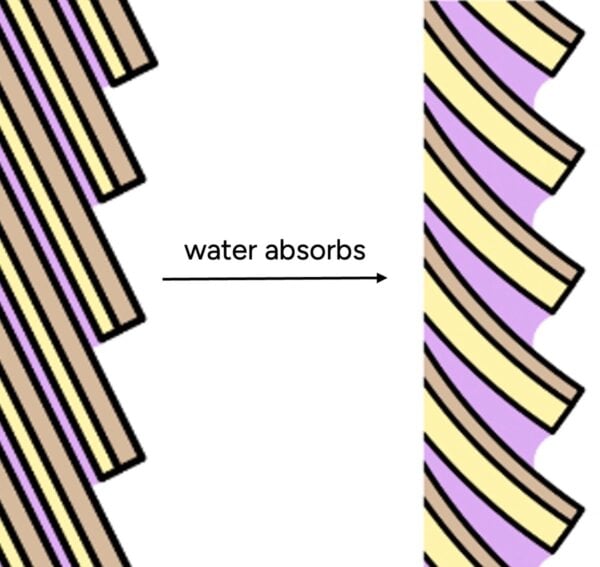
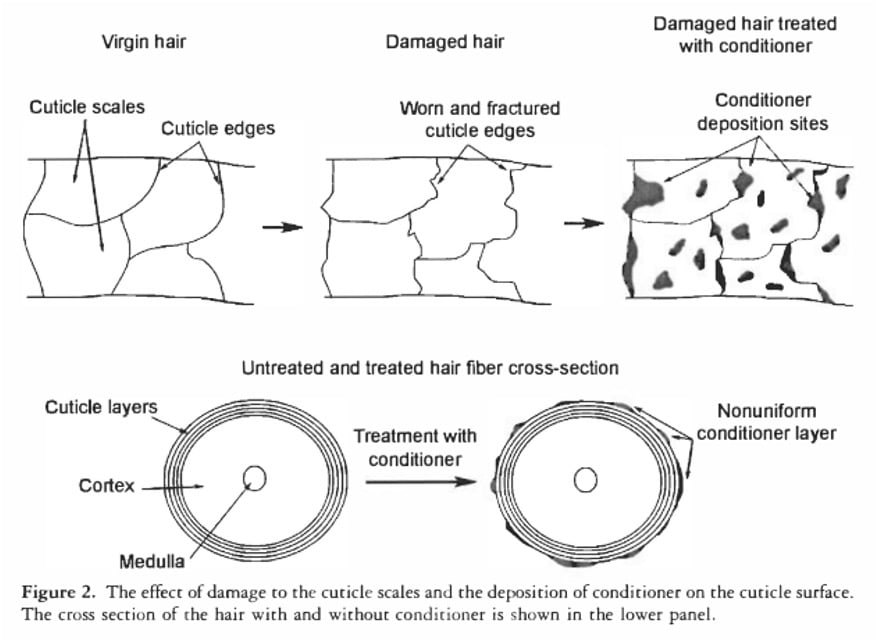
This rapid absorption occurs because the hair’s natural protective barrier—known as the F-layer—is localized strictly to the upper surfaces of individual cuticle scales, leaving microscopic gaps through which moisture can easily migrate. Structurally, a human hair shaft functions similarly to a pinecone, featuring overlapping scales that allow environmental moisture to enter the cortex. Additionally, microscopic imaging studies, including research published by C. La Torre and B. Bhushan in the Journal of Cosmetic Science, reveal that standard hair conditioners do not form a continuous, waterproof film. Instead, conditioning agents deposit in localized micro-globs across the hair surface. While these microscopic deposits are sufficient to smooth the exterior and reduce friction, individual water molecules are orders of magnitude smaller than these conditioning blobs, rendering them entirely ineffective at blocking moisture penetration.
Deconstructing the Diagnostics: The Float Test and Drop Test
Despite the clear permeability of healthy hair, consumers continue to rely on DIY diagnostic tests to categorize their hair as "low," "medium," or "high" porosity. The two most prominent evaluations are the Float Test and the Drop Test.
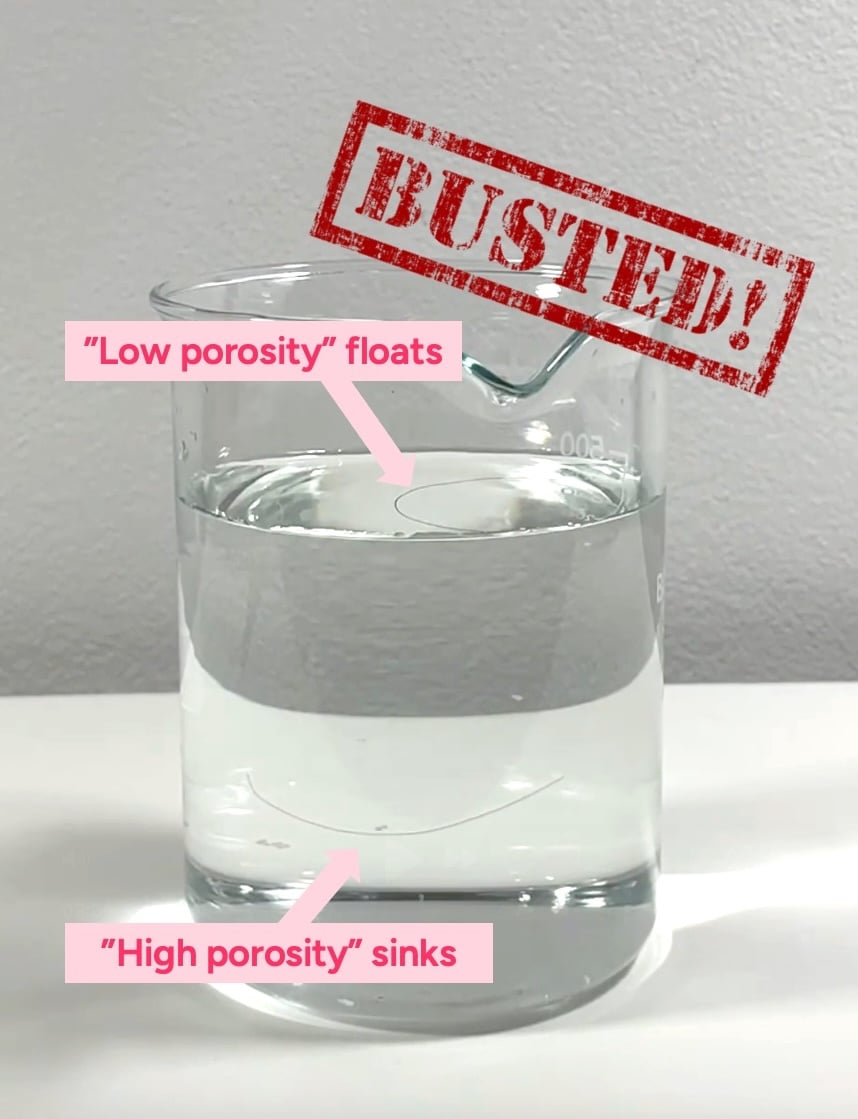
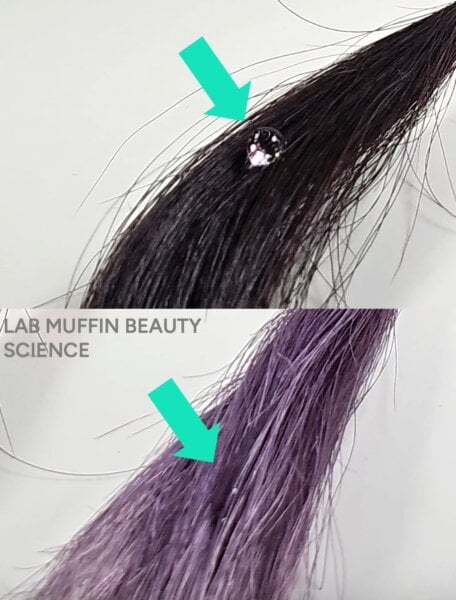
In the Float Test, a clean strand of hair is placed into a glass of water. According to popular lore, hair that floats is classified as low porosity due to a sealed cuticle, whereas hair that sinks is diagnosed as high porosity because it has allegedly absorbed enough water to become denser than the surrounding liquid. Conversely, the Drop Test involves placing a single drop of water onto a locked section of hair. On undamaged hair, the droplet purportedly remains beaded due to an intact cuticle, while on damaged hair, the droplet flattens instantly as it supposedly rushes into internal pores and cavities.
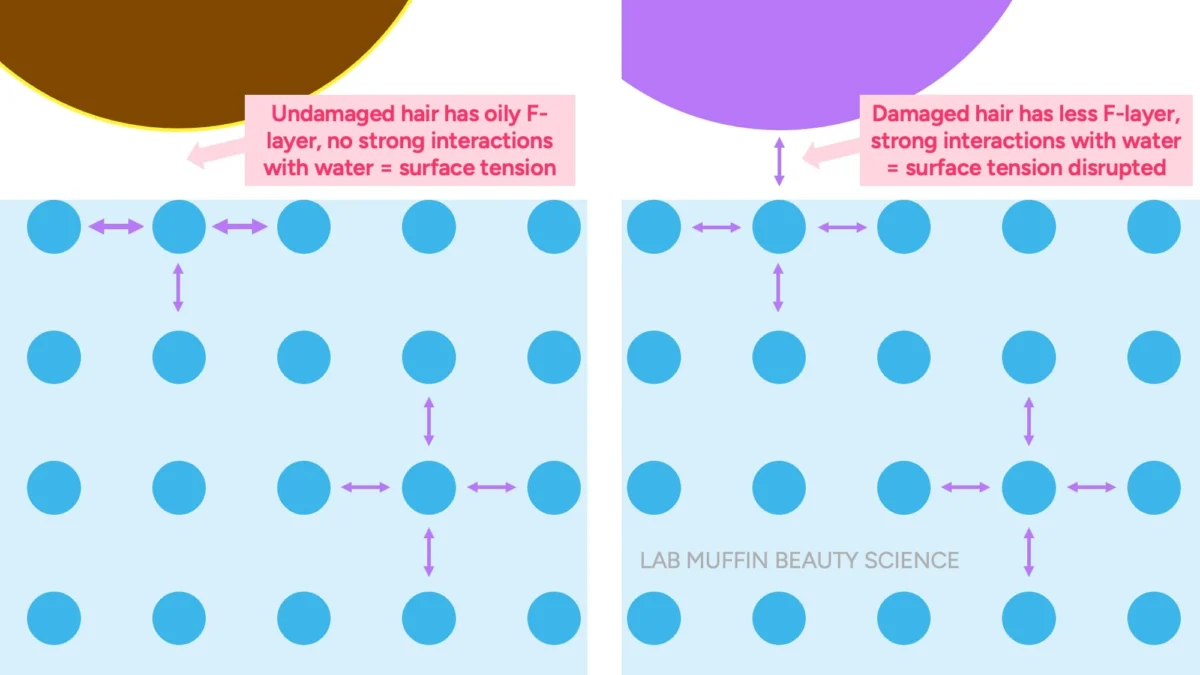
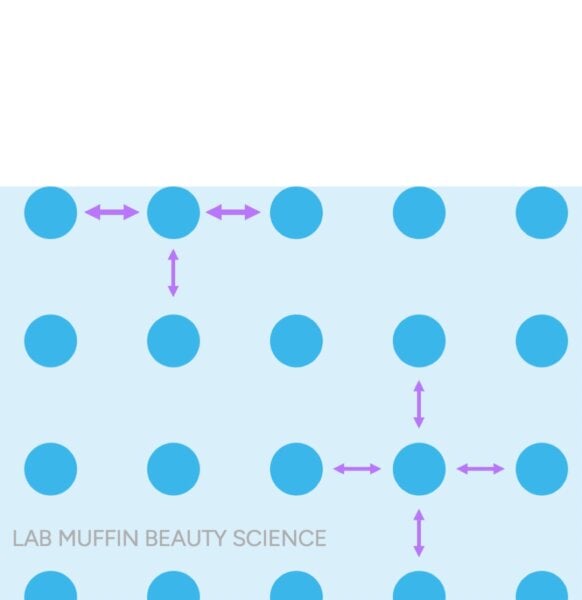
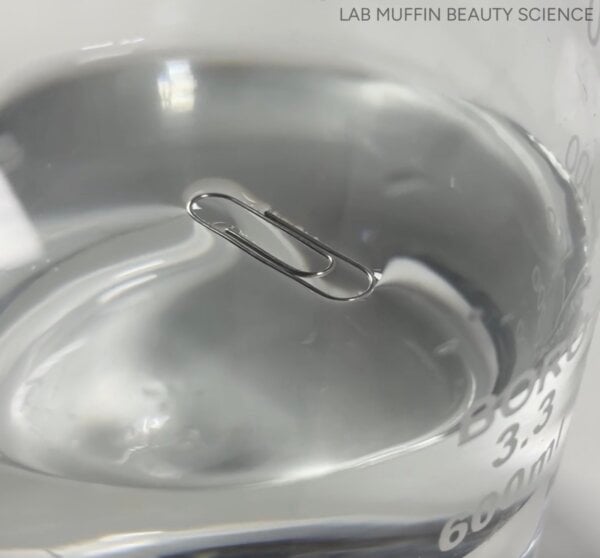
Cosmetic scientists emphasize that these diagnostic interpretations ignore basic physics, specifically the principles of surface tension and hydro-philicity. In liquid water, individual molecules engage in extensive hydrogen bonding with one another. Because molecules at the liquid surface lack neighboring molecules above them, they form tighter bonds with adjacent surface molecules, creating a microscopic, elastic skin across the water body. This phenomenon is powerful enough to support dense objects—such as steel paperclips, which are roughly eight times denser than water—provided the surface tension remains unbroken. However, if a surfactant or external contaminant disrupts these hydrogen bonds, the paperclip immediately sinks, despite being completely solid and incapable of fluid absorption.
The Science of Surface Tension in Hair Diagnostics
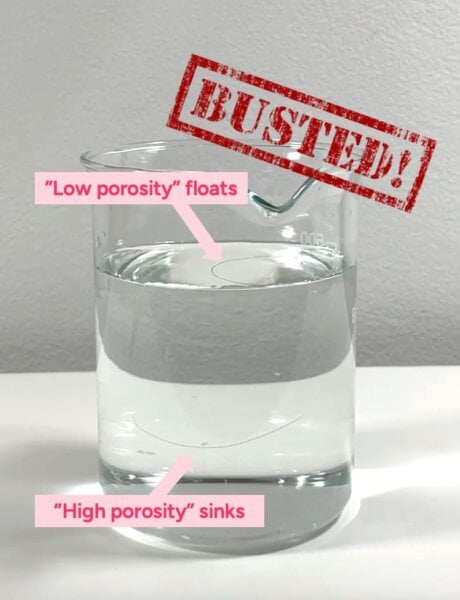
When applied to human hair, the Float Test and Drop Test are merely measuring the surface properties of the cuticle rather than internal porosity. Undamaged hair features an outermost hydrophobic lipid layer—the aforementioned F-layer—which repels water and preserves the integrity of the liquid’s surface tension. When a strand of healthy hair is placed in water, it rests upon this surface tension barrier, resulting in floating.
Conversely, when hair suffers from chemical, thermal, or mechanical damage, this protective lipid layer is stripped away, exposing a hydrophilic (water-loving) protein surface beneath. When damaged hair contacts water, its exposed hydrophilic sites form hydrogen bonds with the surrounding water molecules. This molecular interaction disrupts the surface tension of the liquid, effectively pulling the surface apart and allowing the hair strand to sink. Thus, the sinking phenomenon observed in the Float Test is an indicator of exterior surface degradation, not internal volumetric porosity.
Similarly, the Drop Test measures surface wettability rather than absorption capacity. Empirical studies show that damaged hair absorbs only about 45 percent of its weight in water—an increase of just 15 percentage points over undamaged hair. This marginal difference demonstrates that the rapid flattening of a water droplet on damaged hair is caused by capillary action and surface spreading along the exterior cuticle, rather than a sudden rush of fluid into internal pores.
The mechanism by which undamaged hair absorbs nearly a third of its weight in water relies entirely on the gaseous phase of moisture. In ambient humid air, independent water vapor molecules are not bound by liquid surface tension. These microscopic molecules easily navigate the micro-gaps between cuticle scales, penetrating the hair shaft without encountering surface resistance.
Implications for Salon Professionals and Consumers
The revelation that porosity tests measure surface damage rather than internal capacity carries practical implications for both everyday consumers and professional stylists. While organizing haircare routines around surface damage is generally beneficial—since damaged hair requires intensive repair, gentle detangling, and moisture retention—relying on inaccurate porosity definitions can lead to technical miscalculations in professional salons.
Salon educators and cosmetic chemists caution hairdressers against using the Float Test or Drop Test to evaluate hair readiness for chemical treatments such as permanent waving, coloring, or relaxing. Chemical processing times depend heavily on structural integrity, chemical bond density, and overall cuticle degradation. Mistaking surface lipid loss for high porosity can result in improper processing times, leading to over-processed, chemically compromised hair. Industry experts recommend direct strand testing—applying the specific chemical product to an isolated test snippet—as the only reliable method for determining processing velocity.
Broader Impact on the Beauty Industry
The persistence of the hair porosity myth highlights a broader communication gap between rigorous dermatological science and the commercial beauty marketplace. As consumers increasingly demand science-backed skincare and haircare routines, misinformation regarding structural hair health continues to circulate widely across digital platforms.
By reframing the conversation around surface tension and cuticle damage, scientists hope to steer consumers toward evidence-based haircare practices. Understanding that hair is naturally permeable to atmospheric humidity, and that common diagnostic tests evaluate exterior surface chemistry rather than internal structure, empowers consumers to make informed decisions. Ultimately, effective hair management relies on recognizing visible signs of mechanical and chemical wear, rather than relying on unscientific household experiments in glasses of water.
