
The United Kingdom’s emerging position as a global leader in food biotechnology is facing a critical juncture. As government officials negotiate a new Sanitary and Phytosanitary (SPS) agreement with the European Union—slated to take effect in mid-2027—international food tech startups are hitting the brakes on commercial expansion within the country. At the heart of the controversy is a looming regulatory paradox: a trade pact designed to streamline cross-border commerce could inadvertently dismantle the UK’s hard-won regulatory autonomy in novel foods, forcing innovative companies back into the notoriously protracted approval pipelines of the European Union.
The alarm was formally sounded via an open letter addressed to Prime Minister Andy Burnham. Spearheaded by Czech firm BeneMeat, a pioneer in cultivated meat production for both human consumption and pet food, the letter warns that the ongoing uncertainty surrounding the post-Brexit regulatory landscape is already chilling foreign direct investment, stalling partnerships, and forcing companies to reconsider their manufacturing footprints in Britain.
The Regulatory Crossroads: UK Innovation Versus EU Bureaucracy
To understand the gravity of the brewing crisis, one must examine the divergence of food regulation that has occurred since the United Kingdom formally exited the European Union in 2020. For the initial post-Brexit years, the UK’s Food Standards Agency (FSA) largely mirrored the EU’s stringent and deliberate novel food regulations. However, recognizing the economic imperative of capturing a share of the burgeoning alt-protein market, the FSA initiated a strategic regulatory overhaul designed to accelerate approval timelines without compromising consumer safety.
A centerpiece of this progressive strategy was the launch in 2025 of a two-year cultivated meat sandbox programme. This initiative brought regulators, researchers, and industry stakeholders together to collaboratively draft modern safety standards and clear guidance frameworks. The program has yielded tangible results, including the publication of foundational guidance documents aimed at giving applicants unprecedented clarity on the dossier submission process.
Despite these domestic advancements, the architecture of the upcoming UK-EU SPS agreement threatens to upend the sandbox’s legacy. Industry reports indicate that the FSA has privately warned roughly 600 approval holders and business entities that a broad alignment on sanitary and phytosanitary rules could render existing UK novel food authorizations legally void. If enacted without explicit carve-outs, companies would be compelled to subject their products to the EU’s novel food evaluation process—a labyrinthine procedure that routinely spans up to six years, compared to the agile, modernized timelines the FSA has sought to foster.

Concrete Plans on Ice: The Impact on Industry Pioneers
The chilling effect of this regulatory limbo is not merely theoretical; it is actively disrupting operational roadmaps across the sector. Companies that have invested heavily in British R&D, established local supply chain partnerships, and conducted controlled feasibility studies now find themselves paralyzed.
BeneMeat serves as a prime case study. Having recently debuted its cultivated dog food products within the EU market, the firm has invested significantly in building relationships with British enterprises, preparing controlled consumer tastings, opening dialogues regarding domestic manufacturing facilities, and filing a comprehensive regulatory dossier for human-grade cultivated meat in the UK.
"These were not speculative plans for a distant future," notes BeneMeat CEO Roman Kříž. "They were concrete steps towards bringing investment, technology, manufacturing expertise, and new products to the UK. Today, however, further progress across all these areas is on hold as we and our prospective partners wait for clarity on whether Britain will retain the ability to develop its own regulatory pathway for biotechnologies."
BeneMeat is far from alone. While London-based Meatly secured a historic regulatory clearance to sell cultivated meat for pet food in the UK, a growing cohort of international and domestic players has queued up for human food approvals. Companies such as Aleph Farms, Gourmey (specializing in cultivated duck), Vital Meat (focusing on cultivated chicken), Ivy Farm Technologies, and Mosa Meat have submitted applications or advanced deep into the pipeline.
Earlier this year, the FSA published a forward-looking report identifying innovative food technologies most likely to penetrate the UK market over the coming decade. Prior to the SPS complications, observers anticipated the agency would successfully finalize evaluations for at least two cultivated meat products by the time the sandbox initiative concludes in February 2027. Gourmey and Vital Meat are widely understood to be the frontrunners in this process. However, the shadow of the trade deal now threatens to delay or nullify these milestones.
Beyond the Plate: The Broader Economic Implications for the Bioeconomy
Industry advocates argue that framing the issue solely around cultivated meat drastically understates the stakes. The infrastructure, scientific techniques, and talent required to scale cellular agriculture overlap heavily with other high-value sectors, including biopharmaceuticals, tissue engineering, regenerative medicine, advanced materials, and industrial biomanufacturing.
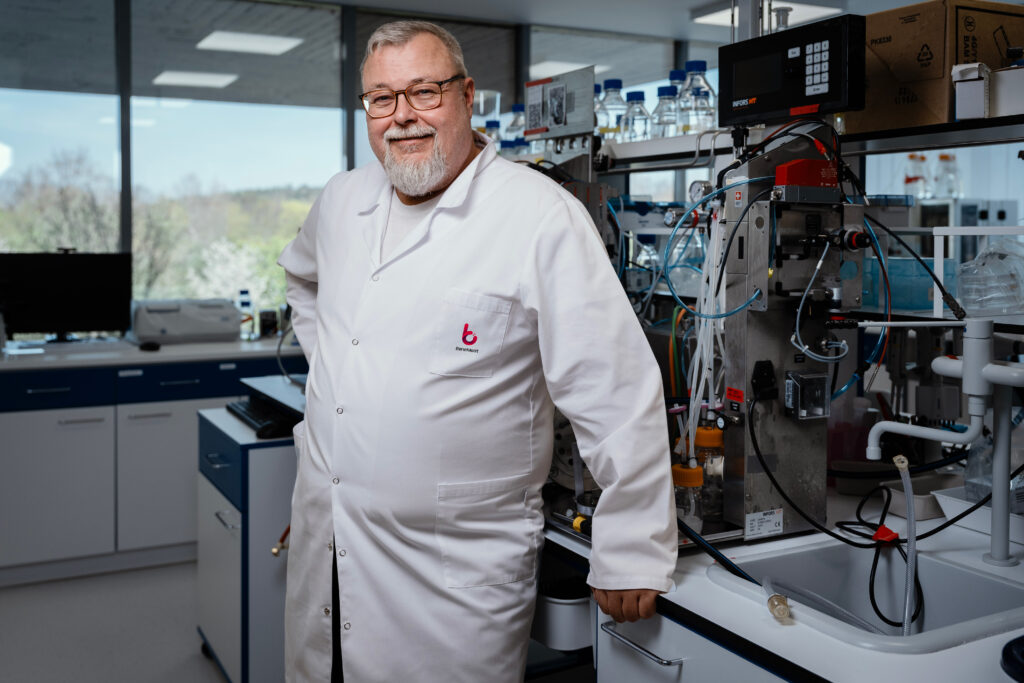
Cellular agriculture relies on advanced capabilities in cell culture, precise bioprocessing, media formulation, automation, and large-scale biological manufacturing. Proponents like BeneMeat emphasize that nations which successfully foster food biotechnology supply chains simultaneously fortify their broader industrial capacity within the knowledge-driven bioeconomy.
"The same knowledge, infrastructure, equipment, and skilled workforce can contribute to new drug discovery and development, medical research, tissue engineering, regenerative medicine, advanced materials, agriculture, and industrial biomanufacturing," the firm’s open letter outlines. "Countries that build these capabilities through food production will strengthen their knowledge and industrial capacity across the wider bioeconomy."
Conversely, if regulatory ambiguity drives capital and talent out of the UK, the nation risks ceding its early competitive advantage to jurisdictions in Asia, North America, and parts of continental Europe that are actively rolling out welcoming regulatory frameworks for cellular agriculture.
The Brexit Paradox and the Government’s Dilemma
The political irony of the situation has not been lost on market analysts. A foundational narrative of the UK’s exit from the European Union was the promise of regulatory agility—the freedom for British institutions to craft bespoke rules, respond rapidly to technological innovation, and foster domestic industries free from Brussels-style bureaucratic friction.
Yet, critics and industry leaders point out that an uncalibrated SPS agreement could produce the exact inverse of those stated goals. Without a dedicated carve-out for novel foods and emerging biotechnologies, the UK risks outsourcing its regulatory authority to a foreign bloc, resulting in slower access to cutting-edge products, diminished consumer choice, and a retreat of investment capital.
"One of the central promises of Brexit was that Britain would regain control over its own rules and decisions and be able to move faster where its interests and technological progress justified it," Kříž noted. "Yet in biotechnology, particularly if a carve-out for novel foods cannot be negotiated, the proposed SPS agreement risks producing the opposite outcome: rules determined elsewhere, slower access to innovation, and ultimately less choice for British consumers."
Crucially, industry stakeholders emphasize that their appeals are not an invitation to reopen ideological debates surrounding Brexit or international trade alignment. Rather, they represent a pragmatic plea for targeted regulatory preservation in sectors characterized by rapid, high-tech scientific advancement.
FSA Response and the Path Forward
As negotiations regarding the 2027 SPS agreement continue behind closed doors, public-sector regulators maintain that they are actively navigating the tension between international trade harmonization and domestic innovation policy.
In recent statements, officials from the Food Standards Agency have reiterated their commitment to supporting the industry through the remainder of the sandbox lifecycle. Joshua Ravenhill, head of the FSA sandbox programme, underscored the agency’s immediate focus in a statement to industry observers.
"The sandbox programme runs until February 2027, and we’re focused on delivering its objectives of answering regulatory questions and providing clarity to the cell-cultivated product industry," Ravenhill stated. He added that the agency is closely monitoring the trajectory of the UK-EU trade talks and will provide timely updates to commercial stakeholders as the legal and regulatory implications crystallize. "We’ll consider next steps in due course. We are proud of what the programme has delivered for food safety and the industry, and will consider how its outcomes have a legacy beyond February."
For now, the UK biotech sector remains suspended in a state of cautious anticipation. Whether the government ultimately elects to protect its novel food regulatory framework within the final text of the SPS agreement will serve as a definitive litmus test for the nation’s ambition to lead the next agricultural and industrial revolution.
