
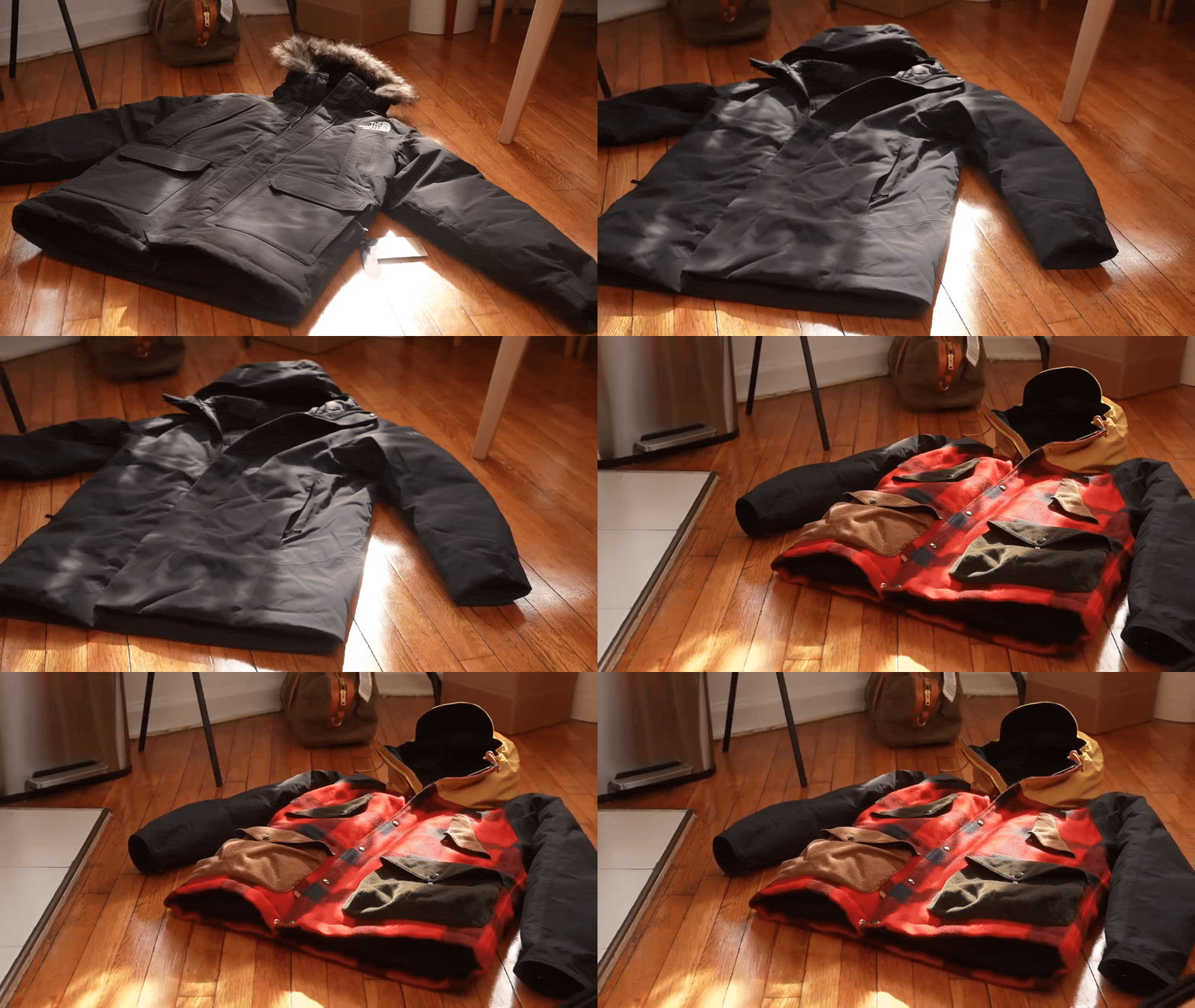
This comprehensive review delves into the performance and features of five leading down jacket brands: Filson, The North Face, Patagonia, Arc’teryx, and Manifattura Ceccarelli. The evaluation focuses on real-world warmth, durability, technological innovation, and overall value, providing a detailed comparison to aid consumers in selecting the ideal winter outerwear. The analysis incorporates a novel "shiver test" conducted in sub-zero temperatures to empirically assess each jacket’s thermal performance.

A Deep Dive into Down Jacket Technology and Performance
The quest for the perfect winter jacket often leads to a consideration of down insulation, renowned for its exceptional warmth-to-weight ratio. This article examines five distinct brands, each with its unique approach to design, materials, and insulation technology. The brands represent a spectrum from heritage craftsmanship to cutting-edge technical apparel, offering consumers a diverse range of options for tackling the coldest climates.

Understanding Down Insulation: Fill Power and Fill Weight

Before evaluating specific jackets, it’s crucial to understand the key metrics that define down insulation. Fill power refers to the loft or volume that one ounce of down occupies. Higher fill power (e.g., 700, 800, 900+) indicates that the down is more efficient, trapping more air and providing superior warmth with less weight. This is because higher quality down clusters are larger and trap more air pockets. Fill weight, on the other hand, refers to the actual amount of down used in the jacket. A jacket with a higher fill weight might be warmer than one with a lower fill weight, even if the latter has a higher fill power, though fill power is generally considered the primary indicator of insulating efficiency.

A common misconception is that down is synonymous with feathers. While down jackets typically contain a blend of down and feathers, high-quality jackets prioritize down. Down is the soft, fluffy undercoating of waterfowl, found beneath the tougher outer feathers, and is responsible for trapping body heat. A typical ratio for good quality down jackets is 80% down and 20% feathers, with premium options often exceeding this down percentage.

The Contenders: A Comparative Analysis
This review employs a rigorous testing methodology, including a subjective "shiver test" to gauge comfort in a five-degree Fahrenheit (-15 degrees Celsius) environment. This test, while not a scientific measurement, provides a practical, real-world assessment of each jacket’s ability to keep the wearer warm.

1. Filson Down Cruiser: Heritage Craftsmanship Meets Practicality
Filson, a brand steeped in American heritage and known for its robust outdoor gear, offers the Down Cruiser. This jacket exemplifies a blend of traditional materials and modern insulation.

- Key Features: Constructed with 11-ounce waxed cotton on the lower arms (shelter cloth) and 8-ounce waxed cotton on the upper body (cover cloth), providing durability and water resistance. It features a Merino wool lining in the neck and hand-warmer pockets for added comfort and insulation.
- Down Specification: 650 fill power (80% down, 20% feathers).
- Warmth Test Performance: The Filson Down Cruiser lasted 1 minute and 52 seconds before the wearer began to feel significant cold, placing it fifth in the shiver test.
- Pros: Exceptional durability, classic heritage styling that ages beautifully through patina, and comfortable Merino wool accents.
- Cons: The untreated down is not water-resistant, and the waxed cotton, while protective, is not as lightweight or breathable as modern technical fabrics. The 650 fill power is lower compared to some other high-end options.
- Analysis: The Filson Down Cruiser is a testament to timeless design and rugged construction. Its wax cotton exterior offers reliable protection against wind and light moisture, and its heritage aesthetic appeals to those who value traditional outdoor apparel. However, its performance in extreme cold is moderate, and the untreated down poses a risk if exposed to significant moisture.
2. The North Face McMurdo Parka: Technical Innovation for Extreme Conditions
The North Face is a globally recognized leader in outdoor apparel, and the McMurdo Parka is a flagship model designed for serious cold-weather protection.

- Key Features: Utilizes proprietary waterproof and windproof technology, similar in principle to Gore-Tex. It includes a removable faux-fur trim on the hood, designed to help manage wind flow around the face. The jacket boasts exceptionally warm hand-warmer pockets and a well-designed hood.
- Down Specification: 600 fill power.
- Warmth Test Performance: The McMurdo Parka demonstrated remarkable performance, lasting 6 minutes and 12 seconds, securing second place in the shiver test. This is notable given its relatively lower fill power.
- Pros: Excellent warmth retention, highly effective waterproof and windproof outer shell, superior hand-warmer pockets, and an effective hood design.
- Cons: Gaps in the hood snaps can allow cold air to penetrate. The 600 fill power is on the lower end of the spectrum for premium down jackets.
- Analysis: The McMurdo Parka’s success, despite its lower fill power, highlights the importance of overall jacket construction and external features. Its robust waterproof membrane and thoughtful design elements, such as the wind flap and warm pockets, contribute significantly to its thermal performance. The issue with hood snaps suggests a minor design flaw that can impact overall comfort in harsh conditions.
3. Patagonia Tres 3-in-1 Parka: Versatility with Compromises
Patagonia is renowned for its commitment to sustainability and functional outdoor gear. The Tres 3-in-1 Parka offers a versatile solution for varying weather conditions.

- Key Features: This jacket is a system comprising a waterproof outer shell and a removable insulated liner. This "3-in-1" design allows for three wearing configurations: the shell alone, the liner alone, or both combined for maximum warmth.
- Down Specification: 700 fill power.
- Warmth Test Performance: The combined jacket lasted 2 minutes and 2 seconds in the cold, ranking fourth.
- Pros: Highly versatile due to its modular design, good fit and aesthetic appeal, and the outer shell functions effectively as a standalone rain jacket.
- Cons: The 3-in-1 design leads to compromises in both warmth and functionality. The hand-warmer pockets are considered subpar, and the overall warmth is not as impressive as dedicated parkas.
- Analysis: The Patagonia Tres Parka excels in adaptability but falls short when judged solely on extreme cold weather performance. The inherent trade-off in a 3-in-1 system is that neither component, nor the combined unit, may perform as well as a specialized garment. While its versatility is a significant advantage for changing conditions, it is not the optimal choice for prolonged exposure to severe cold.
4. Arc’teryx Therme Parka: Cutting-Edge Technology with a Potential Downside
Arc’teryx is synonymous with high-performance, technically advanced outdoor gear, often at a premium price point. The Therme Parka showcases their innovative approach.

- Key Features: Employs Gore-Tex for superior waterproofing and breathability. It utilizes "down composite mapping," strategically placing synthetic insulation in areas prone to moisture (hood, shoulders, underarms) and down in core areas. "Contour construction" further enhances insulation by incorporating synthetic insulation around down baffles.
- Down Specification: 750 fill power.
- Warmth Test Performance: The Arc’teryx jacket endured 4 minutes and 45 seconds, placing it third in the shiver test.
- Pros: State-of-the-art technology, sleek and modern design, excellent waterproof and windproof capabilities, and the down composite mapping is an innovative approach to managing moisture.
- Cons: The primary drawback lies in the long-term durability of the synthetic insulation used in the composite mapping. Synthetic insulation, unlike down, can lose its loft and insulating properties over time, potentially creating colder spots in critical areas. The high price point is also a significant consideration.
- Analysis: Arc’teryx pushes the boundaries of technical apparel. The Therme Parka’s down composite mapping is a clever solution to the problem of down losing loft when wet. However, the inherent degradation of synthetic insulation over years of use presents a potential long-term concern, meaning that while initially superior in certain aspects, its thermal performance might diminish more rapidly than jackets relying solely on high-quality down.
5. Manifattura Ceccarelli Fisherman Down Jacket: The "Italian Stallion" of Warmth
Manifattura Ceccarelli, an Italian manufacturer, represents the pinnacle of artisanal craftsmanship in down outerwear. The Fisherman Down Jacket is a testament to their dedication to quality and warmth.

- Key Features: Boasts an exceptionally high fill power and a substantial fill weight, making it incredibly warm. It features waxed cotton construction for durability and a natural patina, along with vegetable-tanned leather accents for adjustability and a refined aesthetic.
- Down Specification: 800 fill power.
- Warmth Test Performance: This jacket achieved the top position, with the wearer reporting "did not shiver," indicating exceptional thermal performance.
- Pros: Unparalleled warmth and superior craftsmanship, materials that age beautifully, and an overall sense of enduring quality.
- Cons: The jacket is extremely heavy due to the substantial fill and robust materials. Its niche styling might not appeal to everyone.
- Analysis: The Manifattura Ceccarelli Fisherman Down Jacket is an uncompromising piece of winter outerwear. It prioritizes maximum warmth and durability above all else, resulting in a jacket that is a veritable fortress against the cold. While its weight and specific aesthetic are not for every consumer, for those seeking the ultimate in warmth and enduring quality, it stands in a class of its own. The brand’s collaboration history with Filson further solidifies its reputation for excellence.
The Great Debate: Heritage vs. High-Tech in Down Jackets
The landscape of down jackets can broadly be categorized into two main philosophies: heritage-inspired designs utilizing traditional materials like waxed cotton, and modern, high-tech constructions employing advanced waterproof membranes and intricate insulation mapping.

Heritage Brands (Filson, Manifattura Ceccarelli): These brands often focus on durability, timeless aesthetics, and materials that develop a unique patina over time. Waxed cotton, for example, offers excellent wind and water resistance and a classic look, but it can be heavier and less breathable than modern synthetics. The insulation in these jackets is typically pure down, chosen for its consistent and long-lasting loft. The longevity of these garments is often measured in decades, with many designed to be repaired rather than replaced.

High-Tech Brands (The North Face, Patagonia, Arc’teryx): These brands leverage advancements in material science and engineering. They utilize proprietary waterproof and breathable membranes (like Gore-Tex or similar technologies) to create jackets that are both protective against the elements and comfortable during activity. Their insulation strategies can be more complex, incorporating blends of down and synthetic materials, or advanced construction techniques like down composite mapping, to optimize performance for specific conditions. The trade-off here can be in long-term durability of certain components or a higher cost associated with proprietary technologies.

The Longevity Question: A critical aspect differentiating these approaches is long-term durability. Traditional materials like waxed cotton and high-quality down are known for their longevity, often improving with age. Conversely, modern technical fabrics and adhesives, while offering superior initial performance, can be susceptible to delamination or degradation over time, especially with heavy use or improper care. This is a factor to consider when investing in a high-end jacket.

The Ultimate Truth: Layering is Key
While the performance of individual jackets is impressive, the most crucial takeaway from this extensive review is the paramount importance of layering. The effectiveness of any jacket, regardless of its fill power or technological features, is significantly amplified by a well-constructed layering system.

- Base Layer: Wicks moisture away from the skin, keeping you dry.
- Mid Layer: Provides insulation, trapping body heat. This could be fleece, wool, or a lighter down vest.
- Outer Layer (Shell): Protects against wind and precipitation. This can be the down jacket itself, or a separate waterproof/windproof shell worn over an insulating layer.
The anecdote of Taylor, who was perpetually cold despite wearing a substantial down jacket until a proper base layer was introduced, powerfully illustrates this principle. By managing moisture and adding insulation effectively, the body’s natural thermoregulation becomes far more efficient. Therefore, while investing in a high-quality down jacket is undoubtedly beneficial, understanding and implementing proper layering techniques is the true secret to staying warm and comfortable in any winter condition.

Conclusion: Finding Your Perfect Winter Companion
Ultimately, the "best" down jacket is subjective and depends on individual needs, priorities, and budget.

- For unrivaled warmth and enduring craftsmanship, the Manifattura Ceccarelli Fisherman Down Jacket is the undisputed champion, though its weight and price are considerable.
- For rugged durability and classic style that ages beautifully, the Filson Down Cruiser is an excellent choice, particularly for less extreme conditions.
- For tried-and-true cold-weather performance and accessibility, The North Face McMurdo Parka offers impressive warmth and protection.
- For technical innovation and advanced features, Arc’teryx delivers cutting-edge design, albeit with a potential long-term consideration regarding synthetic insulation.
- For versatility across a range of conditions, the Patagonia Tres 3-in-1 Parka provides adaptable solutions, though it sacrifices peak performance in extreme cold.
By understanding the technical specifications, considering personal usage scenarios, and mastering the art of layering, consumers can confidently select a down jacket that will provide reliable warmth and comfort for years to come. The journey to finding the ultimate winter jacket is not just about the garment itself, but about the complete system of apparel and knowledge that ensures you remain warm and protected, no matter the season.
