
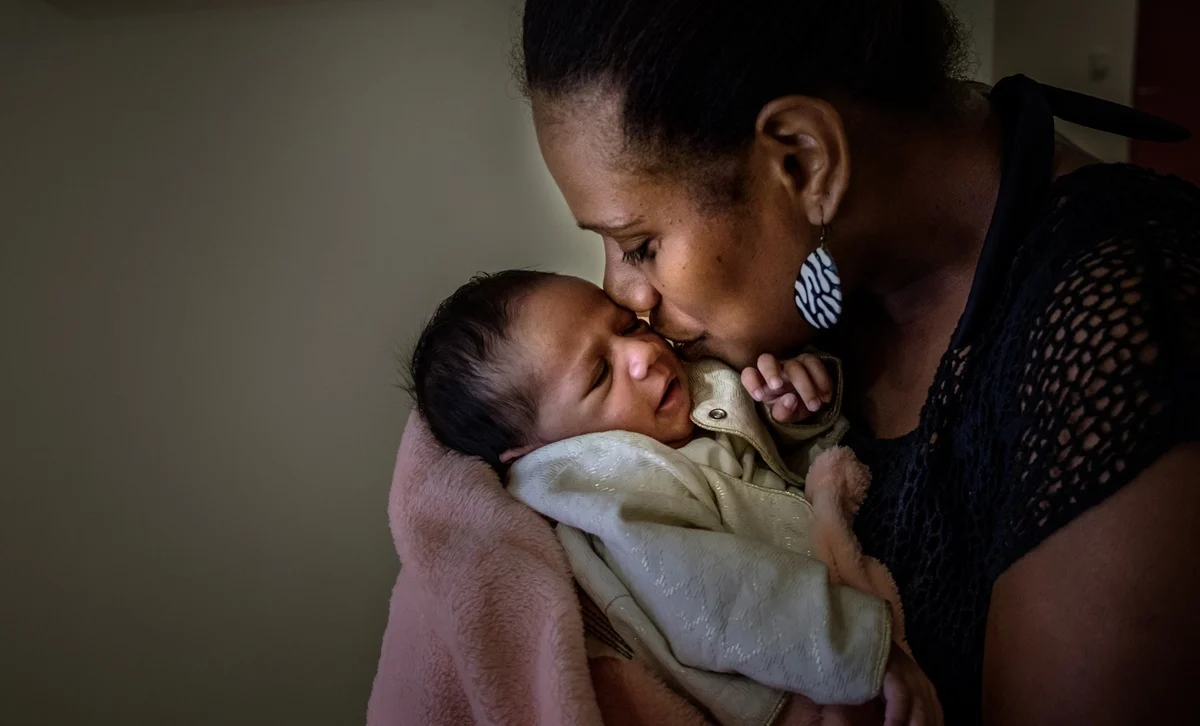
On the occasion of World Health Day 2025, observed on April 7, the World Health Organization (WHO) and its partners launched a synchronized global campaign titled "Healthier beginnings, hopeful futures." This initiative, marking the organization’s 77th anniversary, serves as both a celebration of public health milestones and an urgent call to action regarding the deteriorating state of maternal and newborn health services worldwide. Across more than 100 WHO country offices, officials, health workers, and civil society leaders organized advocacy events aimed at addressing the systemic funding deficits that threaten to reverse decades of progress in reducing preventable maternal and neonatal mortality.
The campaign launch was punctuated by a significant event in Chile, where PAHO/WHO Country Representative Giovanni Escalante Guzmán participated in a high-level dialogue alongside Mapuche leader Juana Cheuquepan. Their discussion, centered on the theme of "mother and newborn health as the basis for healthy families and communities," highlighted the necessity of integrating traditional knowledge with modern clinical care to ensure equitable health outcomes for indigenous and marginalized populations. This event mirrored similar collaborative efforts occurring simultaneously in Geneva, Nairobi, Bangkok, and Washington, D.C., as the global health community grapples with a funding landscape characterized by stagnating investment and competing geopolitical priorities.
The Global Crisis in Maternal Mortality
The backdrop for this year’s World Health Day is a sobering analysis of current health indicators. According to the most recent data compiled by UN agencies, including the WHO, UNICEF, and the United Nations Population Fund (UNFPA), the global trajectory for reducing maternal deaths has faltered. For much of the early 21st century, the world saw a steady decline in maternal mortality ratios (MMR). However, recent figures suggest a stagnation, and in some regions, an increase in maternal deaths during childbirth or the immediate postpartum period.
The primary drivers of this crisis are multi-faceted. Economic volatility in the wake of the pandemic, coupled with rising inflation, has severely impacted national health budgets. Furthermore, the redirection of global health funding toward emergency response and conflict-related humanitarian aid has left essential maternal, newborn, and child health (MNCH) programs under-resourced. The WHO has explicitly warned that if current funding trends continue, the international community will fall significantly short of the Sustainable Development Goal (SDG) target of reducing the global maternal mortality ratio to less than 70 per 100,000 live births by 2030.
A Chronology of Advocacy and Alarm
The lead-up to the April 7, 2025, mobilization began in late 2024, when the WHO’s executive board identified maternal health as a critical "point of failure" in global health security. The timeline of this advocacy movement highlights a concerted effort to shift the narrative from passive observation to active intervention:
- December 2024: WHO publishes a report on the "Funding Gap in Reproductive Health," detailing a multi-billion dollar shortfall in low- and middle-income countries.
- February 2025: UN agencies release a joint statement warning that aid cuts are threatening the survival of fragile health systems in sub-Saharan Africa and South Asia.
- March 2025: Pre-World Health Day symposia are held in regional hubs, focusing on the intersection of climate change and maternal health outcomes.
- April 7, 2025: World Health Day is officially launched with over 100 synchronized global advocacy actions, focusing on the "Healthier beginnings, hopeful futures" campaign.
Regional Perspectives and Localized Challenges
The WHO’s decentralized structure allowed for targeted interventions tailored to specific regional needs. In the African Region, the focus remained heavily on the training and retention of skilled birth attendants, a critical deficit in rural areas where the distance to the nearest surgical facility remains a primary obstacle. Conversely, in the European and Western Pacific regions, the dialogue shifted toward maternal mental health and the utilization of digital health technologies to monitor high-risk pregnancies remotely.
In the Eastern Mediterranean Region, the advocacy focused on the resilience of health systems in the face of ongoing humanitarian crises. The WHO representative for the region noted that in conflict-affected zones, the interruption of maternal care is not merely a logistical failure but a fundamental violation of the right to health. By emphasizing that maternal health is the bedrock of societal stability, the campaign seeks to elevate these issues from niche health policy discussions to central pillars of national security and economic development strategies.
Analysis of Funding and Policy Implications
The current fiscal climate presents a daunting challenge to the "Healthier beginnings, hopeful futures" mandate. Public health economists point to the "crowding out" effect, where essential reproductive health services are deprioritized in favor of more visible, acute infectious disease responses. This strategic misalignment is identified by the WHO as a "false economy." The long-term costs of failing to provide adequate maternal care—ranging from neonatal disability to the economic loss of mothers in the workforce—far outweigh the initial investment required to bolster prenatal and intrapartum services.
Furthermore, the integration of maternal health into Universal Health Coverage (UHC) frameworks is being presented as the primary solution. The WHO argues that by standardizing the inclusion of emergency obstetric care within national health insurance schemes, countries can buffer themselves against external funding shocks. However, this requires significant political will, as it necessitates the long-term commitment of domestic resources rather than reliance on unpredictable international grants.
Official Responses and Stakeholder Engagement
The global health community’s response to the WHO’s call has been largely supportive, though tempered by the reality of fiscal constraints. Donors, including major bilateral agencies and private foundations, have signaled an interest in "results-based financing," where funding is contingent upon the achievement of measurable improvements in local maternal health outcomes.
Civil society organizations have been more vocal, demanding that governments move beyond symbolic commitments. Representatives from global nursing and midwifery associations have emphasized that the campaign must prioritize the safety and fair compensation of the health workforce. "You cannot have healthier beginnings without the human infrastructure to support them," stated one global health advocate during a roundtable discussion at the campaign launch. The consensus among these stakeholders is that World Health Day 2025 must be the start of a permanent shift in policy, rather than a fleeting moment of awareness.
Broader Impact and Future Outlook
The launch of the year-long campaign serves as a diagnostic tool for the global health community. By focusing on the 77th anniversary of the WHO, the organization is drawing a direct line between its foundational mission and the challenges of the modern era. The success of this campaign will be measured not by the number of events held, but by the tangible legislative and budgetary changes that follow.
As the year progresses, the WHO intends to track progress through a series of quarterly progress reports, focusing on the implementation of national health strategies in Member States. The campaign is designed to create a "virtuous cycle" of accountability, where communities are empowered to demand better services, and governments are provided with the technical support to deliver them.
Ultimately, the initiative underscores a fundamental truth: the health of a nation is best reflected in the survival and well-being of its mothers and newborns. As the world navigates a period of significant geopolitical and economic uncertainty, the WHO’s push for "Healthier beginnings, hopeful futures" is a necessary reminder that the most basic human rights are the most essential to protect. Whether the international community can bridge the widening gap between the rhetoric of health equity and the reality of underfunded clinics remains the defining question for the remainder of 2025 and beyond. Through sustained advocacy, strategic investment, and a renewed commitment to the principles of Universal Health Coverage, the WHO aims to ensure that the progress of the last century is not lost to the crises of the present, but rather serves as a foundation for a more resilient and equitable future.
