
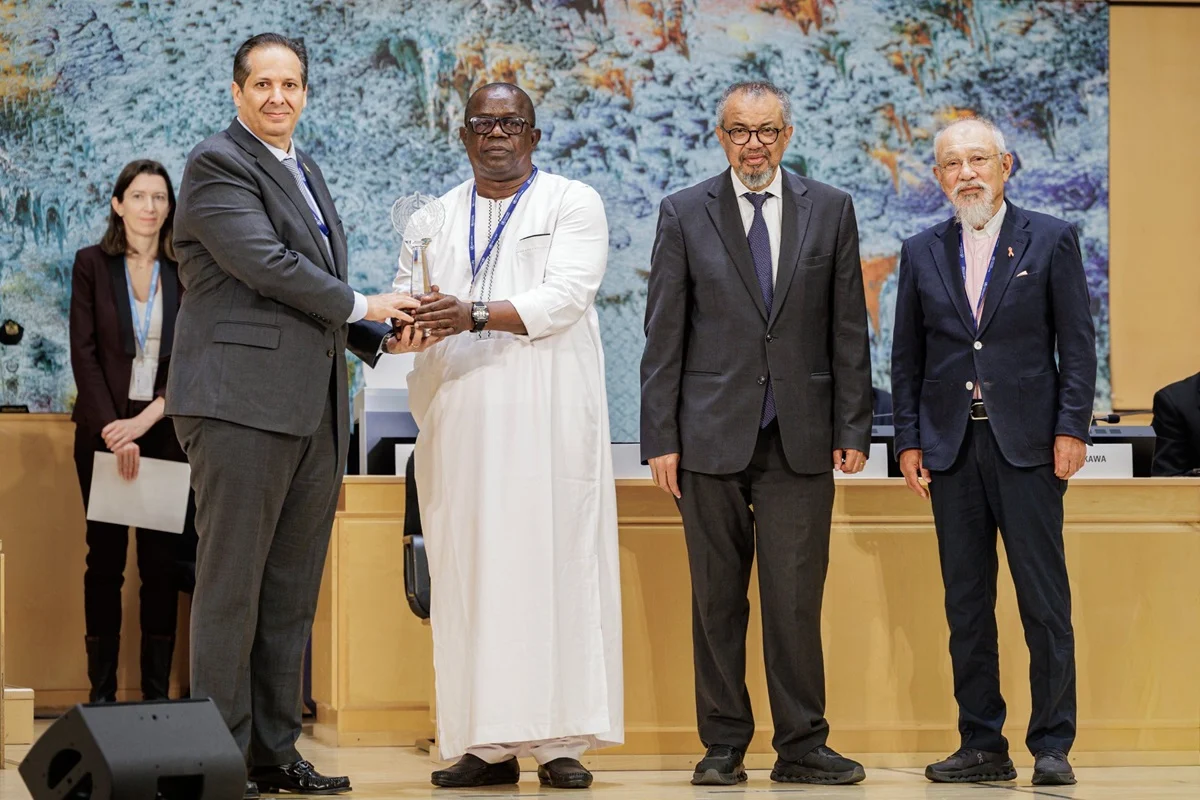
The Seventy-ninth World Health Assembly convened today in a high-profile plenary session to recognize the extraordinary contributions of individuals and institutions that have demonstrated a commitment to global health far exceeding standard expectations. In a ceremony marked by both solemnity and celebration, six laureates representing a vast spectrum of geographical and professional backgrounds were honored for their roles in advancing the frontiers of public health. The awards were presented by the President of the Seventy-ninth World Health Assembly, Dr. Víctor Elias Atallah Lajam of the Dominican Republic, alongside the Director-General of the World Health Organization (WHO), Dr. Tedros Adhanom Ghebreyesus, and representatives from the various foundations that have partnered with the WHO to provide these accolades for four decades.
The 2026 prizes arrive at a critical juncture for global health, as the international community intensifies its efforts to achieve the United Nations Sustainable Development Goals (SDGs) by 2030. This year’s laureates were lauded for their dedication to primary health care (PHC), the reduction of systemic health inequities, and the persistent pursuit of "Health for All." Selected by the WHO Executive Board during its session in February 2026, the awardees reflect a global consensus on the importance of scientific excellence, grassroots innovation, and community-led outreach. Their collective work spans the vital pillars of modern medicine: from the fortification of primary care systems and the advancement of infectious disease control to the empowerment of marginalized communities and the expansion of essential services to the world’s most vulnerable populations.
A Legacy of Leadership: Honoring Dr. LEE Jong-wook
The 2026 ceremony carried a profound historical weight, marking the 20th anniversary of the passing of Dr. LEE Jong-wook, the WHO’s sixth Director-General. Dr. Lee, a visionary leader known for his "3 by 5" initiative to provide HIV/AIDS treatment to millions, passed away unexpectedly in May 2006 during the proceedings of the World Health Assembly. To honor his enduring impact on the organization and the field of public health, the Dr. LEE Jong-wook Memorial Prize for Public Health was among the primary honors bestowed during the session.
Dr. Lee’s legacy remains a guiding light for the WHO, particularly his belief that the organization must be "results-oriented" and focused on the field level. His sudden death two decades ago served as a reminder of the fragility of life and the urgency of the WHO’s mission. The 2026 prize in his name continues to recognize those who embody his spirit of bold leadership and practical action in the face of daunting health challenges.
The 2026 Public Health Prizes: Categories and Objectives
The awards presented at the Seventy-ninth World Health Assembly represent some of the most prestigious honors in the medical and social sciences. Each prize is tailored to address specific facets of the global health landscape, ensuring that a diverse array of achievements—ranging from geriatric care to health promotion—is acknowledged on the world stage.
The Sasakawa Health Prize
Established in 1984, the Sasakawa Health Prize is awarded to individuals or institutions that have performed outstanding innovative work in health development. This typically includes advances in the management of health programs or the implementation of novel technologies in rural settings. In 2026, the focus remained on digital health integration and the use of mobile technology to bridge the gap between urban centers and remote clinics.
The United Arab Emirates Health Foundation Prize
This prize recognizes individuals, groups, or non-governmental organizations that have made a significant contribution to health development. Over the years, this award has frequently highlighted the work of those operating in challenging environments, where resource scarcity requires creative solutions to provide basic surgical care, maternal health services, and clean water initiatives.
The State of Kuwait Health Promotion Foundation’s His Highness Sheikh Sabah Al-Ahmad Al-Jaber Al-Sabah Prize for the Promotion of Healthy Ageing
As the global population ages at an unprecedented rate, the Kuwait Health Promotion Foundation’s prize has become increasingly relevant. This award honors research and clinical practices that promote the well-being of older persons. In 2026, the prize emphasized the importance of integrated care models that allow the elderly to age with dignity within their own communities, reducing the burden on long-term institutionalized care.
The Nelson Mandela Award for Health Promotion
Inspired by the late South African President’s commitment to social justice, this award recognizes individuals or institutions that have made significant contributions to health promotion. The criteria focus on the social determinants of health—such as education, housing, and civil rights—and how these factors influence the overall well-being of a population.
The Selection Process and Global Engagement
The journey to the 2026 awards began months ago, characterized by a rigorous and transparent selection process. Public health prizes are awarded following a formal nomination period where WHO Member States and former laureates submit candidates. In 2026, the WHO reported a record-breaking level of engagement, with nearly 100 nominations submitted from across all six WHO regions: Africa, the Americas, South-East Asia, Europe, the Eastern Mediterranean, and the Western Pacific.
This surge in nominations—the highest in the prizes’ history—reflects an increasing global recognition of public health excellence and a desire to share successful models of care. Following the submission phase, selection panels composed of representatives from the respective foundations and members of the WHO Executive Board meticulously reviewed the candidates. The final winners were designated by the Executive Board during its 158th session in February, setting the stage for the formal presentation in Geneva.
Over the past 15 years, the WHO has awarded prizes to more than 80 laureates from over 50 Member States. This diversity ensures that the prizes are not concentrated in wealthy nations but are instead distributed to the "front lines" of health where innovation often arises from necessity.
Strategic Context: Primary Health Care as the Foundation
The central theme of the 2026 awards ceremony was the revitalization of Primary Health Care (PHC). During his remarks, Dr. Tedros Adhanom Ghebreyesus emphasized that PHC is the most inclusive, equitable, and cost-effective way to achieve universal health coverage. Data provided by the WHO indicates that approximately 90% of essential health interventions can be delivered through a robust PHC system.
Despite this, global investment in PHC has historically lagged behind specialized hospital care. The 2026 laureates were specifically chosen for their work in reversing this trend. By focusing on community health workers, local clinics, and preventative screenings, the awardees have demonstrated that health outcomes can be improved significantly without the need for high-cost, high-tech interventions in every instance.
The WHO’s 2026 World Health Day theme, "Together for health. Stand with science," further reinforced this message. The organization has launched a year-long campaign to highlight science as the bedrock of health policy. This comes at a time when scientific institutions face increasing scrutiny and misinformation. By honoring laureates who utilize evidence-based approaches, the World Health Assembly is sending a clear signal that the future of global health must be guided by rigorous data and scientific integrity.
Analysis of Global Impact and Implications
The recognition of these six laureates is more than a ceremonial gesture; it serves as a strategic tool for the WHO to promote "best practices" globally. When a specific institution is awarded the Sasakawa or UAE prize, their methodology is often studied and replicated by other Member States. This creates a "multiplier effect" where a single innovation in one country can trigger a wave of health improvements across an entire region.
Furthermore, the emphasis on healthy aging in the Kuwait Prize reflects a shift in global health priorities. By 2050, the number of people aged 60 and older is expected to double to 2.1 billion. The 2026 awards acknowledge that health systems must adapt now to prevent a crisis of chronic disease and disability in the coming decades.
The inclusion of the Nelson Mandela Award also highlights the inextricable link between health and human rights. In an era where health inequities are widening both between and within countries, the WHO is using these prizes to advocate for a "pro-poor" health agenda. The data is clear: the most vulnerable populations often pay the highest percentage of their income for health care, leading to a cycle of poverty and illness. The 2026 laureates are recognized for their work in breaking this cycle.
Chronology of the 2026 Awards Cycle
The timeline for the 2026 public health prizes followed a structured path to ensure maximum participation and vetting:
- September – November 2025: Call for nominations issued to all 194 WHO Member States and previous award winners.
- December 2025: Technical review of all 100 submitted nominations by WHO Secretariat departments to ensure compliance with prize statutes.
- January 2026: Meetings of the individual selection panels for each prize to shortlist the most impactful candidates.
- February 2026: The WHO Executive Board officially designates the winners during its winter session.
- April 7, 2026: World Health Day launch of the "Stand with science" campaign, setting the thematic stage for the assembly.
- May 2026: Formal presentation of the awards during the plenary session of the 79th World Health Assembly in Geneva.
Official Responses and Statements
The ceremony elicited a range of responses from the leadership of the global health community. Dr. Víctor Elias Atallah Lajam, in his role as WHA President, praised the laureates for their "indomitable spirit," noting that "these awards do not just recognize past achievements; they serve as a call to action for the next generation of health professionals."
Representatives from the prize-foundations also expressed their continued support for the WHO’s mission. A spokesperson for the Sasakawa Health Foundation noted that the increase in nominations from the African and South-East Asian regions was particularly heartening, as it indicates a growing capacity for local health innovation in the Global South.
Dr. Tedros Adhanom Ghebreyesus concluded the ceremony by linking the awardees’ work to the broader mission of the WHO. "We are the UN agency for health that connects nations, partners, and people on the front lines," he stated. "The individuals we honor today are the embodiment of our mission to promote health, keep the world safe, and serve the vulnerable. They remind us that while the challenges we face are great, the human capacity for compassion and scientific advancement is even greater."
As the Seventy-ninth World Health Assembly continues its deliberations on pandemic preparedness, climate change, and the financing of health systems, the 2026 public health prizes stand as a testament to the progress that can be achieved through international cooperation and a steadfast commitment to the well-being of all people. Guided by science and motivated by equity, the work of this year’s laureates provides a roadmap for a healthier, safer world.
