
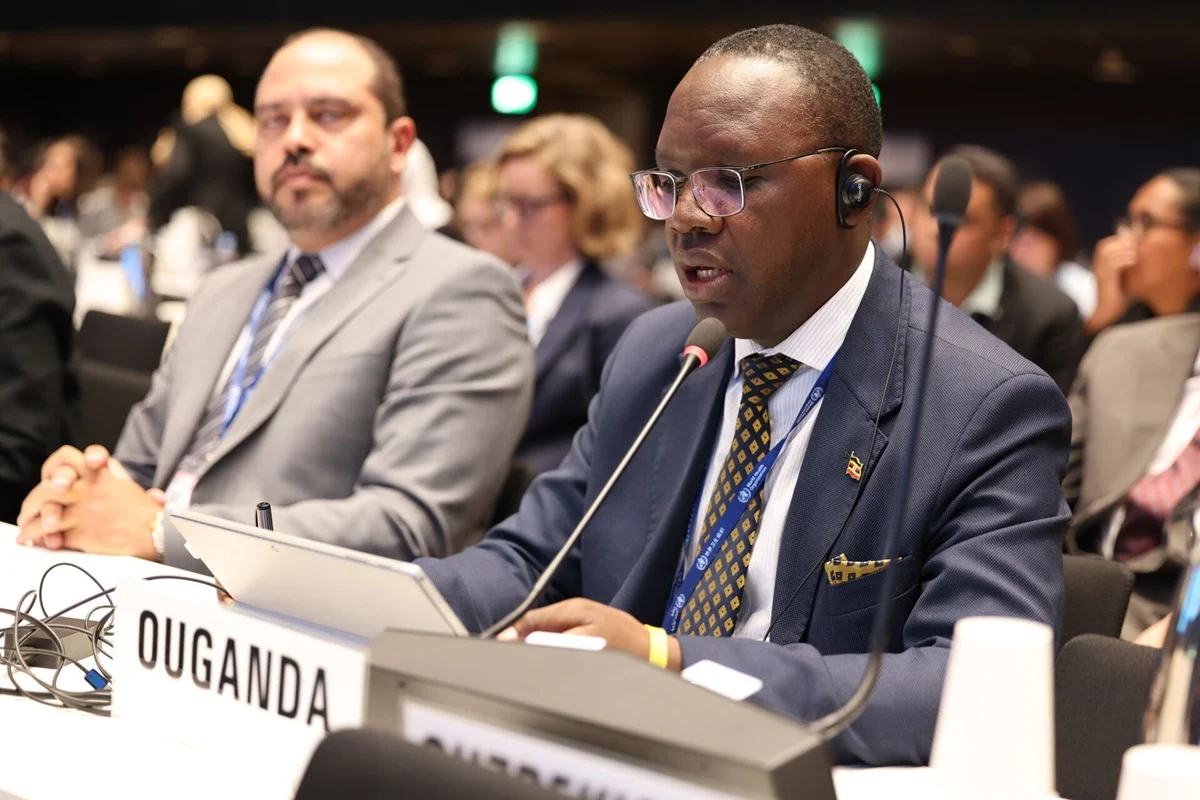
The 79th World Health Assembly convened in Geneva this week under the rallying theme of Reshaping global health: a shared responsibility, marking a pivotal moment in the post-COVID-19 era of international diplomacy. Director-General Dr. Tedros Adhanom Ghebreyesus delivered his comprehensive report to Member States, outlining a roadmap for a more resilient global health architecture while acknowledging the persistent fractures in international cooperation. As the assembly opened its general discussion, the atmosphere was defined by a dual sense of urgency and pragmatism, particularly as delegates grappled with the complex technicalities of the proposed WHO Pandemic Agreement and the deteriorating health situations in several conflict-affected regions.
The PABS Annex: A Strategic Delay for Equitable Access
One of the most significant developments of the session was the formal decision by Member States to extend the drafting and negotiation timeline for the Pathogen Access and Benefit Sharing (PABS) Annex. This critical component, governed by the Intergovernmental Working Group (IGWG) under Article 12 of the WHO Pandemic Agreement, is designed to create a legally binding framework for the rapid sharing of pathogens with pandemic potential, balanced against the equitable distribution of resulting benefits, such as vaccines, diagnostics, and therapeutics.
The goal of the PABS system is to correct the imbalances witnessed during the COVID-19 pandemic, where developing nations often shared viral data promptly but faced significant delays in accessing life-saving medical countermeasures. Despite extensive negotiations over the past year, several technical and political hurdles remain. Member States have now agreed to submit the final outcome of these negotiations for consideration by the 80th World Health Assembly in May 2027. However, the assembly left the door open for an earlier resolution, noting that a dedicated special session could be convened in 2026 should a consensus be reached sooner.
The adoption of the PABS Annex is widely regarded as the "final pillar" necessary for the opening for signature of the broader WHO Pandemic Agreement. Negotiators are scheduled to resume their work at the seventh meeting of the IGWG from July 6 to 17, 2026. The extension reflects the complexity of balancing intellectual property concerns and commercial interests with the moral imperative of global health equity. Analysts suggest that this delay, while frustrating to some, ensures that the resulting framework will be robust enough to withstand the pressures of a future global crisis.
Health Emergencies and the Impact of Conflict
In the deliberations of Committee A, the focus shifted toward the immediate and harrowing realities of health delivery in conflict zones. Delegates reviewed the implementation of the International Health Regulations (2005) and scrutinized the report of the Independent Oversight and Advisory Committee for the WHO Health Emergencies Programme. The discussions were underscored by a grim recognition that conflict remains one of the primary drivers of health insecurity worldwide.
A significant portion of the session was dedicated to the health impact of the ongoing conflict in the Middle East. WHO reports presented to the committee highlighted a disturbing trend of attacks on healthcare infrastructure and the systematic endangerment of health workers. Delegates emphasized that the protection of medical personnel is not merely a humanitarian obligation but a cornerstone of international law. The Committee formally adopted a draft decision regarding the health emergency in Lebanon, a move intended to mobilize international resources and provide a framework for emergency medical assistance in a region where the healthcare system is on the brink of collapse due to cross-border hostilities and internal economic strain.
The report on WHO’s work in health emergencies revealed that the organization is currently responding to more than 50 graded emergencies globally. This unprecedented workload has strained the WHO Contingency Fund for Emergencies (CFE), leading to calls from Member States for more sustainable and flexible financing models that do not rely solely on reactive, ad hoc donations.
A Decade of Reform: The WHO Health Emergencies Programme
On the margins of the assembly, global health leaders gathered for a strategic roundtable to commemorate the tenth anniversary of the WHO Health Emergencies Programme (WHE). Established in 2016 in the wake of the West African Ebola outbreak, the WHE was designed to provide the WHO with operational capabilities that it previously lacked, transforming it from a purely technical and normative body into a frontline responder.
Dr. Chikwe Ihekweazu, Executive Director of the WHE, opened the session by reflecting on how the programme’s evolution has been a direct response to the failures and successes of the last decade. He noted that while the programme was born from the lessons of Ebola, it was forged in the fire of COVID-19. Dr. Tedros Adhanom Ghebreyesus characterized the pandemic as the "ultimate stress test," one that exposed deep-seated weaknesses in global preparedness, particularly regarding the lack of trust between nations and the inequity of resource distribution.
Dr. Mike Ryan, the former Executive Director of the WHE, provided a historical perspective, noting that global health systems have historically been reactive. He argued that the transition from the reactive "SARS-Ebola-COVID" cycle to a proactive, "always-on" surveillance and response system is the defining challenge of the next decade. Ryan emphasized that the WHE must now adapt to "silent" threats, including antimicrobial resistance and the health impacts of climate change, which do not always present with the explosive onset of a viral pandemic but are equally devastating.
Technical Innovations and the Future of Surveillance
The roundtable also highlighted the technological shift in epidemic intelligence. Professor Johanna Hanefeld of the Robert Koch Institute pointed out that the world has entered a new era where advanced analytics and Artificial Intelligence (AI) can predict outbreaks with higher accuracy. However, she cautioned that technology is only as effective as the national systems it supports. Without public trust and transparent reporting from local health authorities, AI-driven models remain academic exercises.
The need for an "end-to-end" approach to medical countermeasures was a recurring theme. Dr. John-Arne Røttingen of the Wellcome Trust argued that the scientific community proved its ability to innovate at speed during COVID-19, but the global political system failed to ensure that those innovations translated into equitable access. He advocated for decentralized manufacturing hubs, particularly in Africa and Latin America, to ensure that the "real-world impact" of science is not limited by geography.
Field Perspectives: Ethiopia and the Central African Republic
The assembly heard powerful testimonies from national health ministers, illustrating how global policies translate into local action. Dr. Mekdes Daba Feyssa, Ethiopia’s Minister of Health, detailed how the investments made during the COVID-19 pandemic—specifically in laboratory networks, oxygen production systems, and workforce training—are now being repurposed to fight other endemic diseases and localized outbreaks. Ethiopia’s experience serves as a case study for "integrated preparedness," where emergency funding is used to build long-term health system resilience.
Similarly, Dr. Pierre Somsé, Minister of Health for the Central African Republic, highlighted the success of the Universal Health and Preparedness Review (UHPR). This mechanism, which involves peer-to-peer assessments of national preparedness, has allowed the Central African Republic to align technical health goals with political will and community engagement. Somsé noted that in fragile states, preparedness is as much about social cohesion and community trust as it is about medical supplies.
Recognizing Public Health Achievements
Amidst the heavy policy debates, the Secretariat took a moment to celebrate tangible progress in public health. Certificates of achievement were presented for outstanding contributions to tobacco control, recognizing nations and organizations that have successfully implemented the WHO MPOWER measures. These awards, part of the World No Tobacco Day initiative, underscore the fact that non-communicable diseases remain a critical focus for the WHO, even as the world pivots toward pandemic preparedness.
Tobacco use remains one of the leading causes of preventable death globally, and the recipients of these awards were lauded for their legislative courage in the face of industry pressure. The Secretariat emphasized that the same principles of "shared responsibility" seen in pandemic negotiations must also apply to the global fight against commercial determinants of health.
Implications and the Path to 2027
As the 79th World Health Assembly continues its work, the implications of its early decisions are clear. The extension of the PABS negotiations signals that the international community is unwilling to settle for a weak or inequitable agreement, even if it means delaying the finalization of the Pandemic Treaty. However, this delay places a heavy burden on the International Health Regulations (2005) to bridge the gap in the interim.
The session has reinforced the reality that global health is no longer a siloed technical field but a central pillar of international security and diplomacy. The "shared responsibility" theme is a recognition that no single nation, regardless of its wealth or technological prowess, can protect its citizens in isolation. The challenges identified—from the need for flexible financing to the protection of health workers in conflict zones—require a level of sustained investment and political courage that has historically been difficult to maintain once a crisis fades from the headlines.
The road to the 80th World Health Assembly in 2027 will be defined by whether Member States can translate the "lessons of a decade" into a legally binding and operationally functional global health architecture. For now, the WHO and its Member States remain in a state of high-stakes transition, attempting to build a safer future while managing the urgent health crises of the present.
