
As public health campaigns over the past several decades have successfully driven up the adoption of sun-protection measures, dermatological data has revealed a puzzling trend: overall skin cancer rates continue to climb globally. This phenomenon has recently fueled viral misconceptions across social media platforms, with wellness influencers and online commentators questioning the fundamental efficacy of sunscreen. Some internet personalities have even gone so far as to suggest that widespread sunscreen use may be driving up melanoma diagnoses rather than preventing them.
However, dermatologists, oncologists, and cosmetic scientists emphasize that these claims rely on a profound misunderstanding of epidemiological data, confusing broad statistical trends with direct causation. To understand why skin cancer rates are rising despite greater investments in sun safety, experts point to a complex interplay of demographic shifts, changing lifestyle habits, increased medical screening, and the core principles of scientific research.
Decoding the Viral Misconception and the Fallacy of Correlation
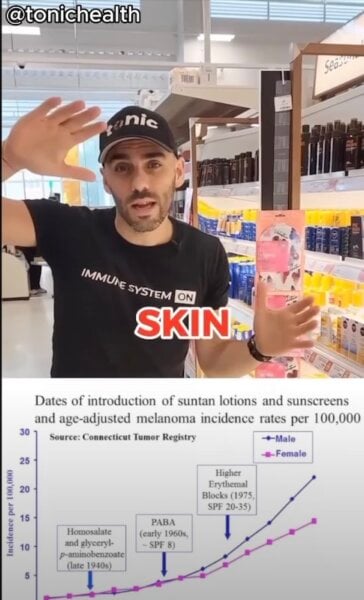
The modern wave of skepticism largely stems from social media videos analyzing long-term charts of melanoma incidence. Creators often point to graphs showing rising skin cancer rates in the United States dating back to the mid-20th century, juxtaposing these curves against the assumption of surging sunscreen sales. The argument typically concludes that because sunscreens are failing to curb the macro-level disease rates, the products themselves must be fundamentally flawed or harmful.
Scientists are quick to dismantle this logic, pointing out a classic statistical error: correlation does not equal causation. In the case of these viral claims, however, the argument fails an even more basic test. Many of the charts presented online do not track sunscreen usage at all; they simply display a multi-decade upward trajectory in melanoma incidence.
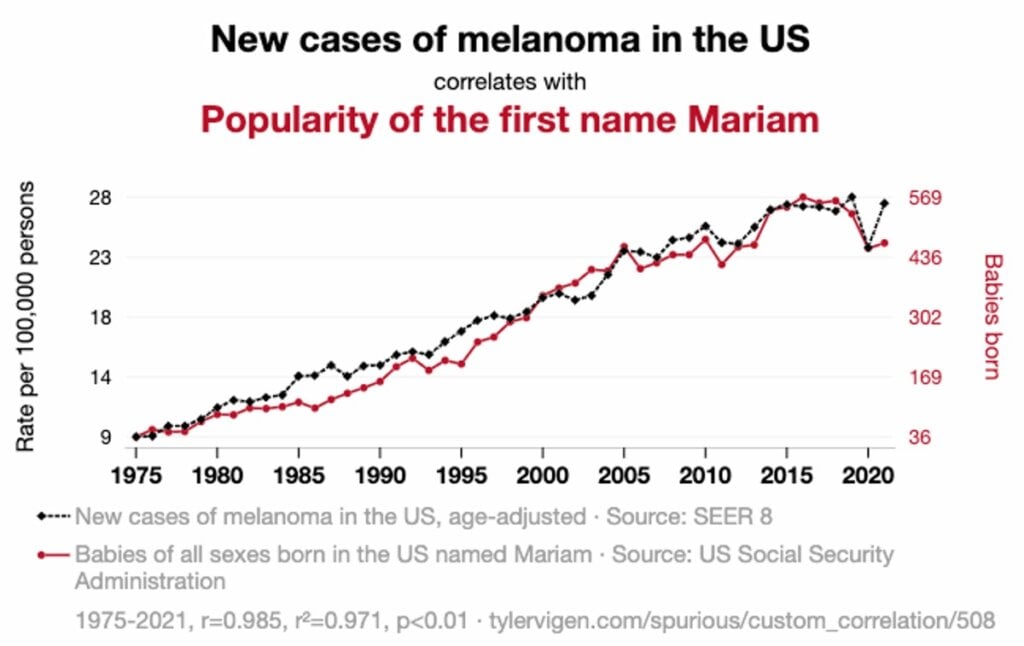
By applying the same flawed logic to historical datasets, analysts can find spurious correlations for almost any growing phenomenon. For instance, statistical models show that US melanoma rates correlate nearly perfectly with completely unrelated societal trends, such as the increasing popularity of certain baby names or shifts in manufacturing output over the last century.

Furthermore, historical context clarifies the timeline of sun protection. While chemical sunscreens were initially formulated in the 1940s, their widespread integration into daily consumer routines did not occur until the 1970s and 1980s. Consequently, the rising trajectory of skin cancer diagnoses observed on long-term charts represents an existing public health trend that predates mass sunscreen adoption by decades.
What Rigorous Clinical Trials Reveal About Sunscreen
To determine whether a preventive health measure actually works, researchers rely on randomized controlled trials (RCTs). These rigorous experiments isolate variables by taking large populations, dividing them into comparable groups, and assigning different interventions while tracking health outcomes over extended periods. This methodology eliminates the confounding variables that plague observational, real-world trend data.
The definitive benchmark for sunscreen research remains the landmark Nambour Trial, conducted in Australia. In this extensive study, researchers tracked participants of similar ages, geographic locations, and skin tones over 4.5 years, with a subsequent 10-year observational follow-up. The cohort was divided into two distinct groups: one applied broad-spectrum sunscreen daily, while the other practiced discretionary use, applying sunscreen only when they individually chose to do so.
If sunscreen caused skin cancer or failed to protect the skin, the daily application group should have exhibited higher rates of malignancies. Instead, the trial yielded definitive proof of sunscreen’s protective benefits. Participants who applied sunscreen daily experienced significantly fewer squamous cell carcinomas and basal cell carcinomas. Subsequent long-term follow-ups also confirmed a statistically significant reduction in the development of melanoma among the consistent-use group.
Beyond cancer prevention, secondary analyses of the trial demonstrated that daily sunscreen users exhibited a 24 percent reduction in clinical signs of skin aging compared to the control group. Additional laboratory studies evaluating epidermal DNA damage have consistently shown that applying high-SPF sunscreens significantly decreases the formation of pyrimidine dimers—cellular mutations caused by ultraviolet radiation that serve as the foundational first step toward skin carcinogenesis.
The Multi-Prone Drivers Behind Rising Skin Cancer Rates
Given the proven efficacy of sunscreens in controlled trials, health authorities are frequently asked why population-level skin cancer rates continue to rise across much of the industrialized world. Epidemiologists and oncologists attribute this upward trend to several powerful socioeconomic and demographic factors that easily overwhelm the protective impact of modern sunscreens.
1. Aging Populations
Demographic transitions play a massive role in cancer statistics. Because cancer is fundamentally a disease driven by accumulated cellular mutations over time, older populations naturally experience higher diagnosis rates. The average age of a melanoma diagnosis is approximately 65 years old. In past decades, demographic life expectancies were lower, meaning many individuals succumbed to other causes before cellular mutations could fully manifest as clinical skin cancers. As global life expectancy increases, the sheer pool of aging individuals at risk for cancer expands correspondingly.
2. Shifting Travel and Leisure Habits
The globalization of leisure has fundamentally altered human sun exposure. The proliferation of affordable commercial aviation and budget airlines has transformed international travel, enabling millions of individuals to take frequent beach holidays in high-UV regions. Furthermore, modern occupational patterns mean that many indoor office workers—whose skin is naturally adapted to minimal sun exposure—suddenly subject their bodies to intense, intermittent bursts of ultraviolet radiation during tropical vacations or weekend outdoor recreation. Epidemiological data consistently shows that intermittent, high-intensity sun exposure and severe sunburns during youth or early adulthood are primary risk factors for melanoma.
3. The Cultural Pursuit of Tanning
Cultural attitudes toward skin tones shifted dramatically during the mid-to-late 20th century. The rise of the commercial tanning industry, alongside the widespread availability of indoor tanning beds, coincided directly with the era when regulatory bodies like the US Food and Drug Administration first began overseeing sunscreen products. The persistent societal desire for a tanned aesthetic continues to drive intentional, unprotected UV exposure that counteracts public health messaging.
4. Enhanced Medical Screening and Detection
Medical technology and diagnostic awareness have advanced exponentially over the past several generations. Public health campaigns educating populations on the "ABCDEs" of suspicious moles have empowered both patients and primary care physicians to identify and biopsy suspicious skin lesions much earlier than in the past. Consequently, dermatologists are detecting and recording early-stage, localized skin cancers that would have previously gone unnoticed or unrecorded. While this screening surge inflates total diagnosis numbers, it often captures cancers before they become life-threatening.
Divergent Global Trends: The Australian Case Study
While overall skin cancer rates continue to rise in many Western nations, this trajectory is not universal. A striking counterexample is found in Australia, a country historically burdened by some of the highest skin cancer rates in the world due to its geographic proximity to the equator and a predominantly fair-skinned population.
Recent data published in the Medical Journal of Australia highlights a remarkable shift: melanoma rates among individuals under the age of 40 have steadily declined over the past two decades. Among Australians aged 15 to 24, melanoma incidence rates have roughly halved since the 1980s. Public health experts attribute this positive divergence to a combination of changing population demographics and aggressive, highly coordinated national public health initiatives.
Unlike countries where sun protection education is left largely to individual choice, Australia pioneered a comprehensive, multi-layered framework known as SunSmart. Launched in the 1980s with the iconic "Slip, Slop, Slap" campaign—urging citizens to slip on a shirt, slop on sunscreen, and slap on a hat—the program eventually expanded to include seeking shade and sliding on sunglasses.
Crucially, Australian public health officials recognized that relying solely on sunscreen is insufficient, as consumers frequently apply inadequate amounts or miss vulnerable areas. This understanding led to systemic environmental and institutional changes. Educational institutions across the country widely adopted strict policies such as "no hat, no play," making sun protection an enforced daily habit for school children rather than an optional choice.
Implications for Future Public Health Strategy
The ongoing debate surrounding sunscreen and cancer rates underscores the necessity of clear, science-based health communication. Experts stress that while sunscreen remains a cornerstone of dermatological health, it should be viewed as one component of a holistic sun-safety strategy rather than a digital shield that grants permission for unlimited ultraviolet exposure.
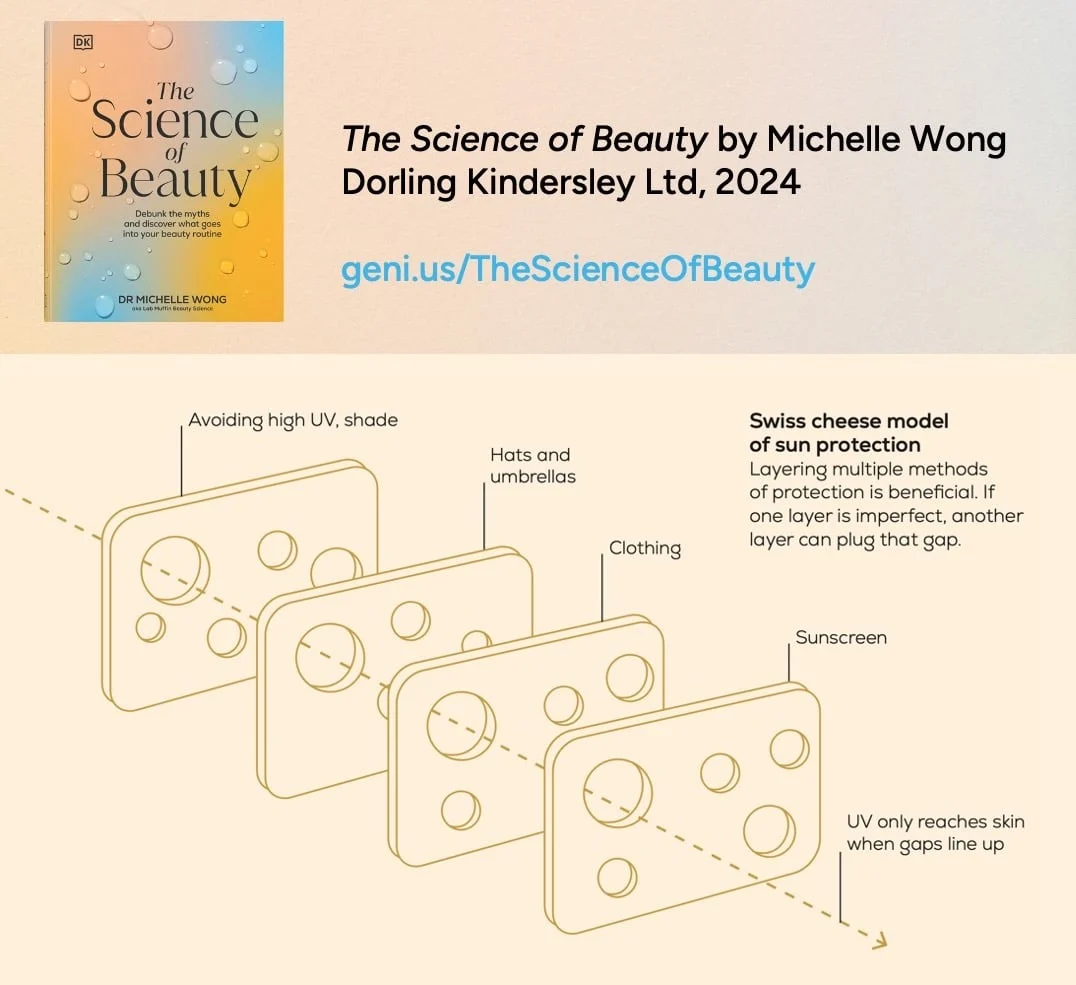
Medical professionals advocate for the "Swiss cheese model" of public health protection, which suggests that no single preventive measure is completely foolproof. By layering multiple defenses—such as wearing UV-protective clothing, seeking shade during peak ultraviolet hours, wearing sunglasses, and applying broad-spectrum sunscreens correctly—individuals can drastically reduce their cumulative risk of developing skin malignancies. As health agencies continue to refine their educational outreach, the focus remains on debunking viral misinformation, promoting comprehensive sun safety behaviors, and ensuring that the public understands the proven, life-saving science behind dermatological recommendations.
