
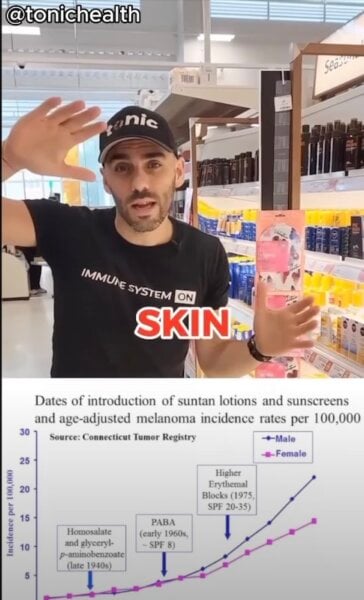
Public health messaging surrounding sun protection has remained consistent for decades, emphasizing that daily sunscreen application is a cornerstone of skin cancer prevention. However, social media platforms have recently amplified a counterintuitive claim: if sunscreen use is at an all-time high, why are skin cancer rates continuing to climb globally? Viral videos and online forums frequently highlight historical charts showing rising melanoma diagnoses alongside increased commercial sunscreen sales, prompting skeptics to question the efficacy—and safety—of these products.
This juxtaposition has fueled public confusion, leading some consumers to wonder whether sunscreens fail to block harmful ultraviolet radiation or, more drastically, if the chemical formulations themselves contribute to carcinogenesis. Dermatologists, oncologists, and cosmetic scientists emphasize that such conclusions rely on a fundamental misunderstanding of epidemiological data, behavioral shifts, and the multifactorial nature of cancer development. Rigorous clinical trials, laboratory testing, and international public health outcomes consistently demonstrate that sunscreen remains an effective tool against skin aging and ultraviolet-induced DNA mutations, even as broader societal trends drive up overall cancer statistics.
Correlation Versus Causation in Public Health Metrics
The argument that sunscreens cause or fail to prevent skin cancer typically hinges on a logical fallacy: confusing chronological correlation with direct causation. When analyzing historical datasets tracking melanoma incidence alongside commercial sunscreen distribution, critics often overlook the fact that these trends exist within a vacuum devoid of critical demographic and lifestyle variables.
Statistically, the upward trajectory of reported melanoma cases in regions like the United States dates back to the 1930s. Commercial sunscreens were introduced in the 1940s, but their widespread, everyday use did not become a cultural norm until the 1970s. Consequently, the rising incidence of skin cancer represents the continuation of an established baseline trend rather than a phenomenon triggered by the advent of sun protection products.

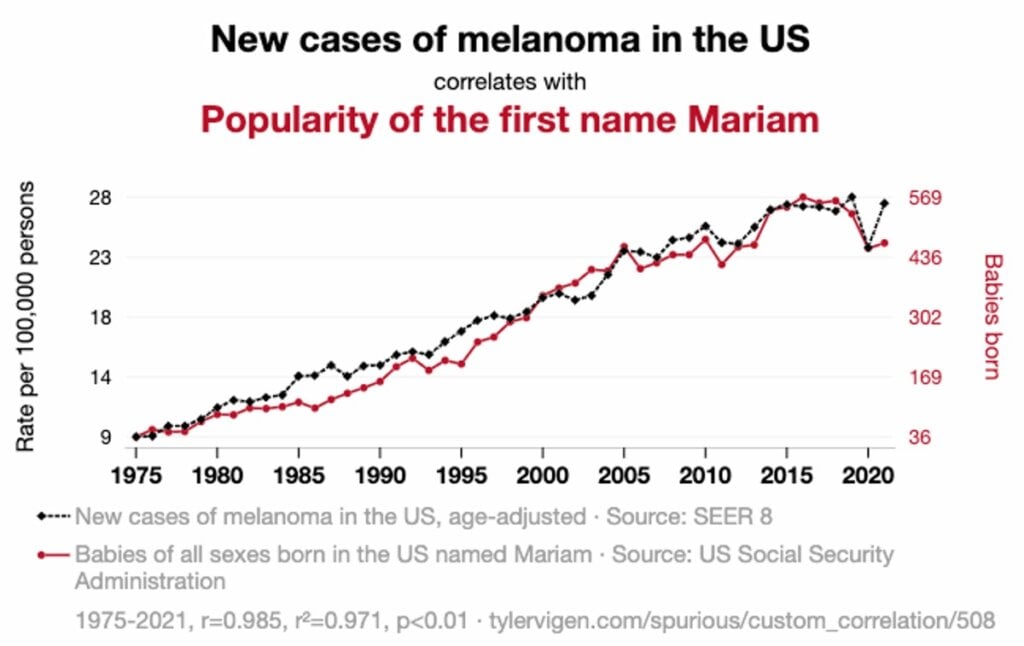
Applying this flawed analytical framework to other historical indicators yields equally absurd conclusions. Just as researchers can map rising melanoma rates against increased sunscreen sales, similar statistical correlations link skin cancer incidence to entirely unrelated societal developments, such as shifts in consumer goods production or baby-naming trends. Epidemiologists stress that observational charts tracking population-level disease rates cannot establish a causal relationship without controlling for confounding factors, such as changes in diagnostic capabilities, environmental exposures, and human lifespan.
Gold-Standard Evidence: The Nambour Trial and Clinical Trials
To definitively assess whether sunscreen protects against or contributes to skin cancer, researchers must look beyond observational trend lines to controlled scientific experimentation. The gold standard in medical research is the randomized controlled trial (RCT), which eliminates confounding variables by comparing outcomes between groups subjected to specific interventions.
The most comprehensive and frequently cited investigation into this matter is the Nambour Trial, conducted in Australia. Researchers followed a large cohort of participants of similar ages, geographic locations, and skin types over a multi-year period. The participants were divided into two groups: one instructed to apply broad-spectrum sunscreen daily, and the other permitted to use sunscreen at their own discretion. Researchers tracked the health outcomes of these cohorts over four and a half years of active intervention, followed by an additional decade of post-trial observation.
The findings decisively refuted the notion that sunscreen use promotes malignancy. Participants in the daily sunscreen application group exhibited a statistically significant reduction in both basal cell carcinomas and squamous cell carcinomas. Furthermore, long-term follow-ups confirmed a marked decrease in the development of melanoma among consistent users compared to the discretionary group. Beyond cancer prevention, secondary analyses revealed that daily sunscreen users displayed roughly 24 percent fewer clinical signs of skin aging, preserving skin elasticity and collagen integrity.
Complementary laboratory studies reinforce these clinical observations. Controlled experiments involving human skin samples exposed to simulated solar radiation demonstrate that applying high-SPF sunscreens significantly suppresses the formation of pyrimidine dimers—DNA lesions and mutations that serve as the critical first step toward photocarcinogenesis. Higher application compliance consistently correlates with lower levels of ultraviolet-induced cellular damage.
Why Skin Cancer Rates Continue to Climb
Given the robust protective efficacy of sunscreens, public health authorities are frequently asked to explain why global skin cancer statistics continue to rise. Dermatological researchers point to several distinct socioeconomic and behavioral phenomena that easily outweigh the protective impact of modern sunscreens:
- Demographic Aging: Life expectancy has risen substantially over the past century. Because cancer is fundamentally a disease of accumulated cellular damage over time, older populations naturally exhibit higher lifetime incidences of oncological diagnoses. The average age of initial melanoma diagnosis is approximately 65. In earlier generations, many individuals succumbed to other causes before cellular mutations had sufficient time to manifest as clinically detectable skin cancers.
- Shifting Travel and Leisure Habits: The democratization of commercial aviation and the globalization of tourism have transformed modern vacation habits. More individuals routinely travel to tropical destinations or high-altitude regions, exposing normally sun-protected skin to intense, intermittent ultraviolet radiation. Weekend beachgoers and indoor workers frequently subject their skin to high-dose UV exposure over short durations, a pattern strongly linked to elevated melanoma risk.
- The Cultural Desirability of Tanning: Despite public health warnings, societal preferences for tanned skin persist. The rise of indoor tanning beds—which emerged and gained popularity around the same era that regulatory bodies began overseeing sunscreen standards—introduced an entirely artificial, concentrated source of carcinogenic UV radiation.
- Enhanced Screening and Diagnostic Sensitivity: Modern medicine has drastically improved its capacity to detect skin anomalies early. Heightened public awareness, widespread dermatological skin checks, and standardized diagnostic frameworks (such as the ABCDE criteria for evaluating moles) mean that doctors and patients identify and record thousands of early-stage lesions that would have gone entirely unnoticed or unrecorded decades ago.
Divergent Global Trends: The Australian SunSmart Paradigm
While overall skin cancer rates have risen in many Western nations, this trend is not uniform. Australia, historically burdened with some of the highest skin cancer rates in the world due to its geographic proximity to the equator and a predominantly fair-skinned population, has recorded a striking divergence in recent years.
Recent epidemiological data published in medical journals reveals that melanoma rates among individuals under the age of 40 have steadily decreased in Australia. Among adolescents and young adults aged 15 to 24, melanoma incidence has approximately halved since the 1980s. Health experts attribute this success not to a reliance on any single preventive measure, but to a coordinated, multi-generational public health campaign known as SunSmart.
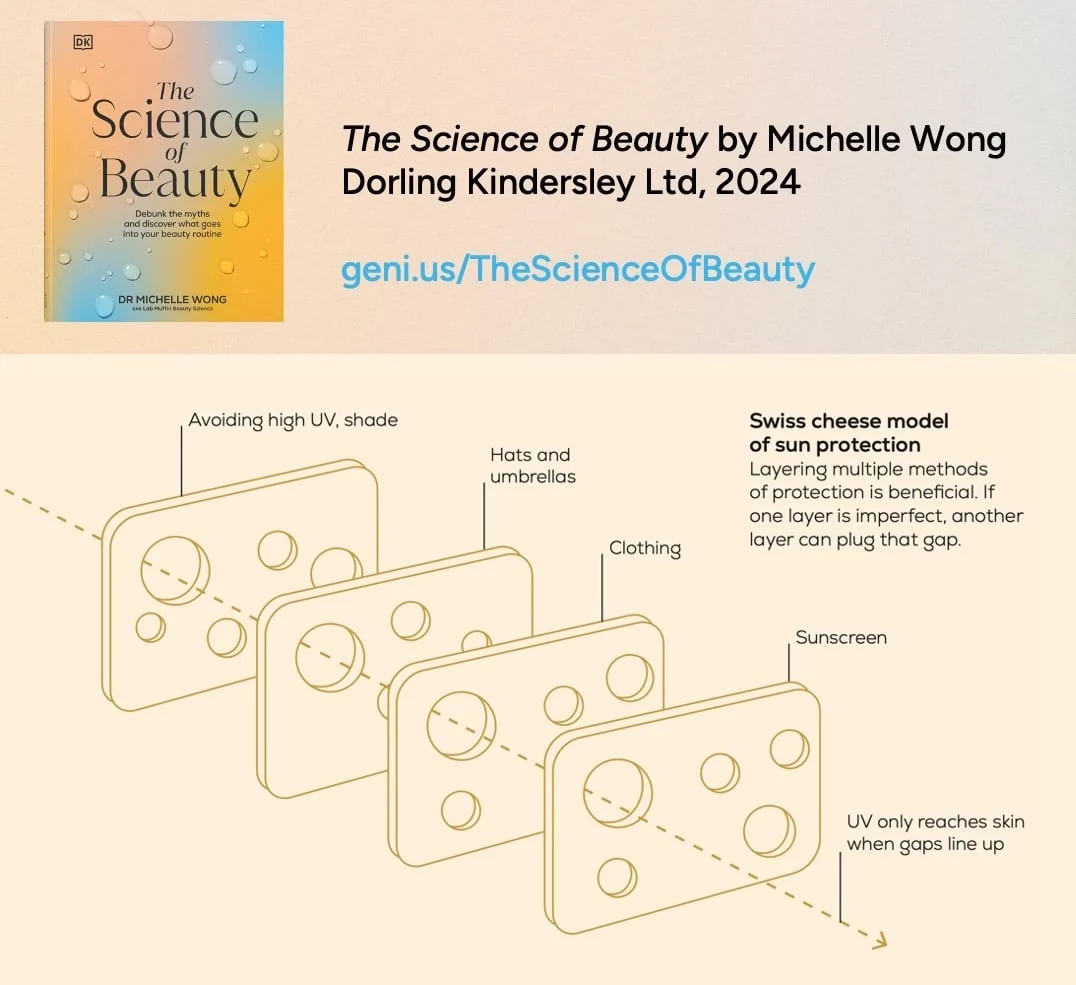
Launched decades ago, Australia’s SunSmart initiatives reshaped cultural norms around sun exposure through persistent messaging and institutional policy enforcement. The strategy relies on the "Swiss cheese model" of risk mitigation, which acknowledges that no single protective layer is infallible. Instead of depending exclusively on topical sunscreens—which are frequently applied too thinly or missed entirely by consumers—the public is encouraged to layer multiple protective behaviors.
This approach is encapsulated in memorable public health slogans such as "Slip, Slop, Slap, Seek, Slide"—urging individuals to slip on a shirt, slop on sunscreen, slap on a hat, seek shade, and slide on sunglasses. Educational institutions adopted stringent operational guidelines, including mandatory "no hat, play in the shade" policies that conditioned children from an early age to view sun safety as a routine component of daily life. The widespread integration of shaded play structures, workplace sun protection regulations, and accessible community sunscreen dispensers further bridged the gap between scientific knowledge and everyday behavior.
Implications for Future Public Health Strategy
The persistent circulation of online misinformation regarding sunscreen safety underscores an ongoing challenge for scientific communication in the digital age. Misleading interpretations of epidemiological data can deter vulnerable populations from utilizing effective photoprotective measures, exposing them to heightened risks of photoaging, actinic keratoses, and skin malignancies.
Public health agencies and dermatological organizations emphasize that while sunscreens are an indispensable component of dermatological care, they must be utilized as part of a comprehensive strategy that includes protective clothing, shade avoidance, and behavioral moderation. As ongoing research continues to refine topical formulations and public education campaigns, the scientific consensus remains absolute: when applied correctly and paired with sensible sun habits, sunscreen is a safe, proven, and vital defense against skin cancer.
