
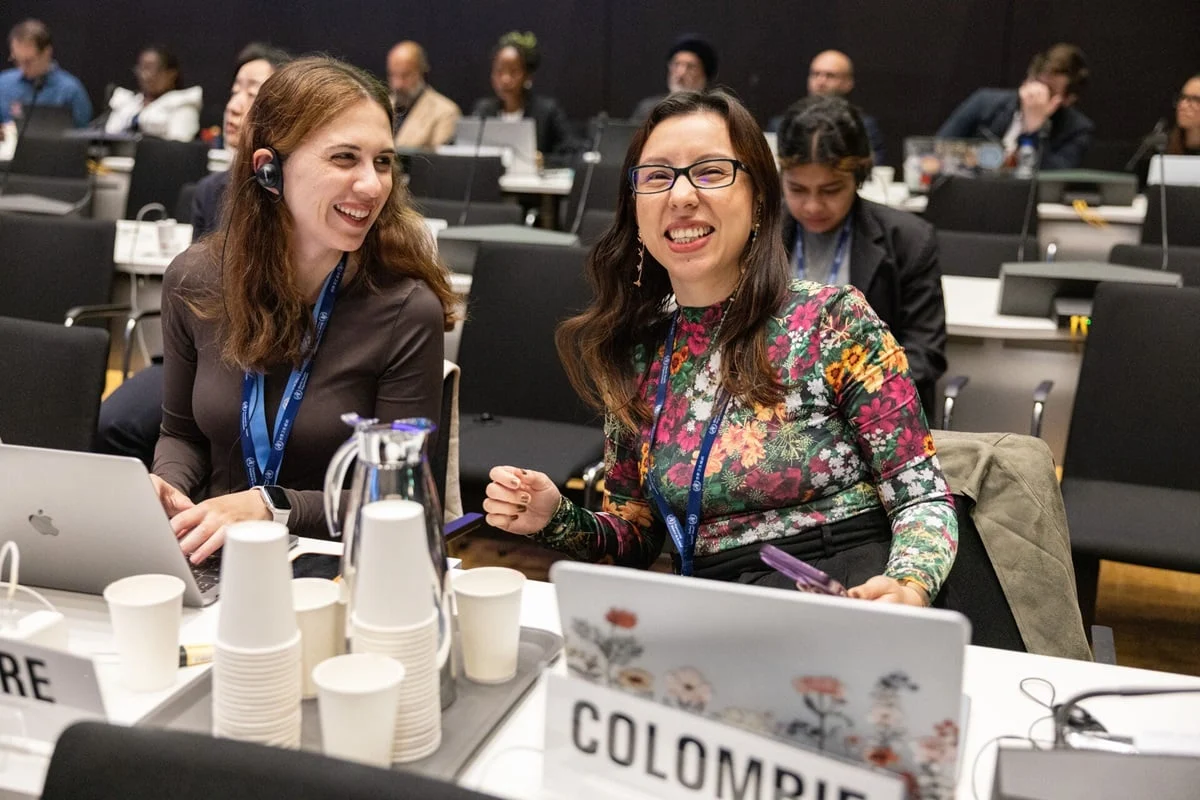
The Seventy-ninth World Health Assembly concluded this week in Geneva, Switzerland, marking a pivotal moment in international public health governance as Member States adopted more than 20 decisions and 13 resolutions. These measures address a broad spectrum of critical health challenges, ranging from non-communicable diseases like stroke and liver disease to the escalating threat of antimicrobial resistance (AMR) and the complexities of precision medicine. The Assembly’s outcomes represent a concerted effort by the 194 Member States of the World Health Organization (WHO) to modernize the global health architecture and ensure that health remains a central pillar of international economic and social policy.
In his closing address to the delegates, WHO Director-General Dr. Tedros Adhanom Ghebreyesus emphasized that the true measure of the Assembly’s success lies in the practical application of these high-level agreements. Dr. Tedros underscored that every resolution adopted only gains value when it creates tangible changes in clinics, communities, and households. He noted that the task ahead involves ensuring health workers are properly equipped, children are vaccinated, maternal mortality is reduced, and disease outbreaks are contained before they can escalate into global crises. This mission, he asserted, will require unwavering political commitment, sustained financing, and a spirit of continued cooperation among Member States and their partners.
The Assembly also served as a platform to recognize leadership within the global health community. Dr. Tedros presented ceremonial gavels to the President of the Seventy-ninth World Health Assembly, Dr. Víctor Atallah Lajam, Minister of Health of the Dominican Republic, and to the chairs of the two main committees: Dr. Timur Sultangaziyev, Deputy Minister of Health of Kazakhstan (Committee A), and Dr. Kwabena Mintah Akandoh, Minister of Health of Ghana (Committee B).
Reforming the Global Health Architecture and Ethical Recruitment
One of the most significant administrative outcomes of the Assembly was the agreement to reform the global health architecture through a joint process that is both Member State-led and WHO-hosted. This reform aims to streamline international responses to health emergencies and improve the efficiency of global health governance.
A cornerstone of this reformative spirit was the approval of a resolution to amend the WHO Global Code of Practice on the International Recruitment of Health Personnel. This update marks the first revision to the Code in 16 years, reflecting the drastic changes in the global health landscape since its original adoption in 2010. The amendments are designed to ensure that the international mobility of health workers is governed by ethical principles that protect both the migrants and the health systems of their home countries.
The revised Code now includes provisions for health personnel recruited internationally as care workers, a sector that has seen massive growth and tension due to aging populations in high-income nations. Furthermore, the Code clarifies how its recommendations apply during health emergencies, ensuring that recruitment practices do not exacerbate crises in vulnerable regions. A key feature of the update is the encouragement of co-investment, where destination countries are urged to invest in the health systems and workforce training of source countries to ensure a "brain gain" rather than a "brain drain." These changes were informed by an Expert Advisory Group (EAG) that highlighted the need for greater support in strengthening health systems in source countries, particularly in low- and middle-income regions where health worker shortages are most acute.
Health as an Economic Imperative: The 2026–2030 Strategy
In a landmark shift for international policy, the Assembly adopted the Strategy on the Economics of Health for All (2026–2030). This decision signals an end to the traditional view of health spending as a mere budgetary cost, reframing it instead as a vital investment in economic stability and sustainable development. Delegates at the Assembly emphasized that health and economic prosperity are deeply interconnected, requiring a "whole-of-government" approach to policy.
The new strategy outlines a vision where economic systems serve the goal of health for all, placing human well-being and equity at the center of fiscal and industrial decisions. It aims to equip countries with the technical capacity to engage effectively with financial actors and to build the evidence base needed for informed decision-making. By integrating health into economic planning, the WHO aims to address the current global health financing emergency and foster resilient health systems capable of providing universal health coverage (UHC).
The strategy received broad support from Member States, who recognized the urgency of shifting toward well-being-oriented economies. Analysts suggest that this move could lead to more stable funding for public health initiatives, as finance ministries begin to see the direct correlation between a healthy workforce and national productivity.
Landmark Resolution on Radiation Protection and Safety
For the first time in the history of the World Health Organization, Member States agreed on a comprehensive resolution regarding radiation and health. The resolution, titled "Radiation and health: strengthening global protection, preparedness and response," covers both ionizing and non-ionizing radiation, addressing a wide range of risks associated with environmental, occupational, and medical exposure.
The Assembly acknowledged the widespread nature of radiation exposure and its long-term health risks, including various forms of cancer. Special attention was given to the increased vulnerability of children and pregnant women. The resolution commits Member States to strengthening national systems for radiation protection, improving exposure monitoring, and enhancing workforce training. It also emphasizes the need for safe and equitable access to medical imaging, radiotherapy, and radiopharmaceuticals, which are essential for modern cancer care and diagnostic medicine.
Furthermore, the resolution calls for increased public awareness regarding natural sources of radiation, such as ultraviolet (UV) radiation and radon gas, which contribute significantly to the global cancer burden. The WHO has been tasked with mapping global actors and initiatives in the field of radiation to identify gaps and advance the public health agenda, with a progress report due at the World Health Assembly in 2028.
Addressing the "Silent Pandemic" of Antimicrobial Resistance
The Assembly renewed its commitment to fighting antimicrobial resistance (AMR) by approving the updated Global Action Plan on Antimicrobial Resistance (GAP-AMR) for the period of 2026–2036. This ten-year plan is a response to alarming data from the WHO’s Global Antimicrobial Resistance and Use Surveillance System (GLASS), which reported that one in six common bacterial infections in 2023 were resistant to standard antibiotic treatments.
The human and economic toll of AMR is staggering. Studies estimate that 4.71 million deaths were associated with bacterial AMR in 2021 alone. Projections suggest that without urgent intervention, AMR could cause up to 39 million deaths by 2050. The updated GAP-AMR adopts a "One Health" approach, recognizing that the health of humans, animals, and the environment is inextricably linked. The plan aims to achieve a 10% reduction in bacterial AMR-associated deaths by 2030, a target aligned with the 2024 UN General Assembly objectives.
Key components of the 2026–2036 plan include expanding equitable access to effective antimicrobials, reducing the use of these drugs in agrifood systems, and minimizing environmental pollution from antimicrobial residues. The WHO, along with its Quadripartite partners—the Food and Agriculture Organization (FAO), the United Nations Environment Programme (UNEP), and the World Organisation for Animal Health (WOAH)—will provide technical support to help countries implement national action plans. Currently, more than 170 countries have developed such plans, but the WHO emphasizes that sustainable financing and accountability remain the biggest hurdles to success.
Chronology of the Seventy-ninth Assembly and Future Implications
The Seventy-ninth World Health Assembly followed a rigorous schedule that began with high-level plenary sessions where heads of state and health ministers outlined their national priorities. This was followed by intensive technical discussions in Committee A, which focused on programmatic and health matters, and Committee B, which handled administrative, financial, and legal issues.
The adoption of these 13 resolutions and 20 decisions marks the beginning of a new implementation phase. The transition from policy to practice will be monitored closely through biennial reports and the WHO’s ongoing technical assistance programs. The emphasis on "precision medicine" and "diagnostic imaging" suggests a move toward more technologically advanced health systems, while the focus on "emergency care" and "haemophilia" indicates a commitment to leaving no patient group behind.
In the broader context of global health security, the decisions made this week in Geneva are intended to fortify the world against future pandemics while addressing the chronic health issues that claim millions of lives annually. The integration of economic strategy with health policy, the ethical management of the health workforce, and the aggressive stance against AMR represent a comprehensive roadmap for the next decade.
As the delegates return to their respective countries, the international community looks toward the 2028 and 2030 milestones to assess whether these ambitious resolutions have successfully translated into improved health outcomes for the world’s population. The "political commitment" called for by Dr. Tedros will be tested as nations navigate the complex balance between economic recovery and the essential investment required to safeguard public health on a global scale.
