
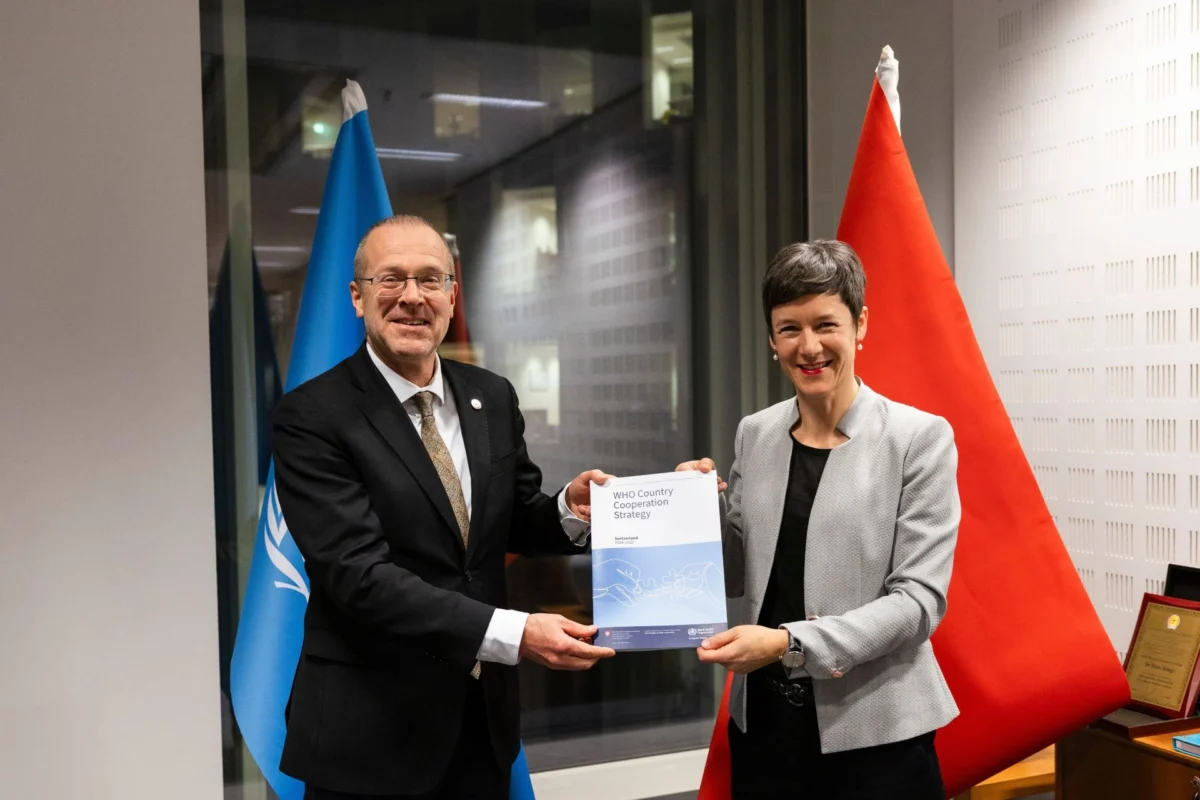
The World Health Organization (WHO) and the Swiss Confederation have officially formalized the extension of their strategic cooperation framework, setting a roadmap for public health collaboration through 2028. This agreement, finalized on March 4, 2025, at the WHO Regional Office for Europe in Copenhagen, represents a significant milestone in the long-standing relationship between the global health agency and its host nation. The strategy builds upon more than a decade of institutional partnership, aiming to address both domestic health challenges within Switzerland and the nation’s pivotal role in global health governance.
A Legacy of Institutional Collaboration
The relationship between Switzerland and the WHO is unique within the international community. As the host country to the WHO headquarters in Geneva, Switzerland occupies a position of central importance in the global health architecture. This proximity has fostered a deep integration of Swiss public health expertise with WHO’s normative work and operational activities.
The origin of this specific cooperation strategy dates back to 2013, when Switzerland became the first high-income country within the WHO European Region to pilot a formal country cooperation strategy (CCS). At the time, the initiative was considered experimental, as CCS documents were traditionally reserved for low- and middle-income nations receiving technical assistance. The success of the 2013-2023 cycle demonstrated that even highly developed nations benefit from a structured, strategic alignment with the WHO’s health agenda, particularly in areas such as health system resilience, data harmonization, and pandemic preparedness.
Chronology of the Strategic Partnership
The evolution of the WHO-Switzerland partnership has been marked by several key phases of development:
- 2013: Launch of the first-ever CCS for a high-income country, establishing a model for health policy alignment between the WHO and Switzerland.
- 2013–2021: Implementation of the initial strategy, focusing on non-communicable diseases, health workforce development, and integrating the Swiss healthcare model with international standards.
- 2022: A formal assessment of the decade-long collaboration was conducted, leading to the decision to renew and modernize the framework to account for post-pandemic realities.
- 2024: Drafting and refinement of the new priorities, incorporating lessons learned from the COVID-19 pandemic and emerging threats such as antimicrobial resistance and climate change.
- March 4, 2025: The formal signing ceremony in Copenhagen, attended by Dr. Hans Henri P. Kluge, WHO Regional Director for Europe, and Barbara Schedler, Ambassador for Global Health at the Swiss Federal Office of Public Health.
Core Objectives of the 2024–2028 Strategy
The renewed strategy is not merely a continuation of previous work but an evolution designed to address contemporary challenges. According to the official documentation, the 2024–2028 roadmap focuses on four primary pillars: strengthening health security, promoting equitable access to health innovations, enhancing the digital transformation of health systems, and reinforcing the role of Switzerland in global health diplomacy.
Strengthening Health Security and Bio-Innovation
A cornerstone of the current cooperation is the advancement of the Global BioHub system. This initiative, which Switzerland has heavily supported, is designed to facilitate the rapid sharing of pathogens and biological materials. In an era where the speed of response to a novel pathogen is the primary determinant of containment success, the BioHub serves as a critical infrastructure. By integrating Swiss laboratory expertise with WHO’s logistical reach, the partnership aims to create a more resilient global surveillance network.
Health System Resilience in the Post-Pandemic Era
Switzerland, like many nations, faced unprecedented pressure on its healthcare infrastructure during the COVID-19 pandemic. The new strategy emphasizes the lessons drawn from this period, particularly regarding supply chain security and the management of medical workforces during surges. The collaboration aims to standardize reporting mechanisms and improve the interoperability of health data across borders, ensuring that Switzerland’s advanced medical systems can better support the broader European region during crises.
Analysis: Why Switzerland’s Cooperation Matters
The importance of this agreement extends beyond the borders of Switzerland. As a neutral state with significant financial influence and a high density of international organizations, Switzerland’s health policies often serve as a bellwether for European health standards.

Data from the Swiss Federal Statistical Office indicate that Switzerland spends approximately 11–12% of its GDP on health, placing it among the highest per-capita spenders globally. By aligning this level of investment with the WHO’s "Thirteenth General Programme of Work," the partnership helps ensure that innovations developed in Swiss laboratories—ranging from pharmaceutical advancements to digital health diagnostics—are shared in a way that contributes to universal health coverage objectives.
Furthermore, the strategy provides a framework for "health diplomacy." Switzerland frequently acts as a bridge-builder in international negotiations. Through this renewed partnership, the WHO gains a reliable partner to advocate for evidence-based health policies in high-level multilateral forums, such as the World Health Assembly and the Executive Board meetings.
Perspectives from Leadership
During the signing ceremony, Dr. Hans Henri P. Kluge emphasized the mutual benefits of the agreement. "Switzerland is not just a host country; it is a vital contributor to the intellectual and operational life of the WHO," he stated. Dr. Kluge noted that the ability to adapt the CCS model from a development-focused tool to a peer-to-peer partnership represents a significant achievement in modernizing global health cooperation.
Ambassador Barbara Schedler, representing the Swiss Federal Office of Public Health, echoed these sentiments, highlighting that the strategy reflects Switzerland’s commitment to multilateralism. "By formalizing our goals through 2028, we are ensuring that our national health priorities are coherent with our international commitments," she observed. The Ambassador noted that the agreement facilitates a more agile response to emerging threats, ensuring that resources are deployed where they can have the greatest impact on population health outcomes.
Broader Implications for Global Health
The renewal of this strategy serves as a blueprint for how the WHO can interact with other high-income nations. As the world navigates a complex geopolitical landscape, the need for stable, predictable partnerships between international organizations and developed member states has never been greater.
The inclusion of digital health initiatives—such as the scaling of electronic health records and the use of artificial intelligence in diagnostics—within the 2024–2028 strategy suggests that the next four years will be defined by a focus on "smart health." This move toward data-driven governance is expected to influence not only Swiss policy but also the regulatory frameworks that the WHO promotes globally.
Furthermore, the emphasis on antimicrobial resistance (AMR) in the new agreement suggests a concerted effort to leverage Swiss research capabilities to tackle one of the most pressing silent crises in modern medicine. By coordinating research efforts and regulatory standards, Switzerland and the WHO intend to accelerate the development of new antibiotics and infection-prevention strategies.
Looking Toward 2028
As the implementation phase begins, the success of the 2024–2028 strategy will be measured by its ability to integrate these high-level objectives into actionable, local health outcomes. Regular progress reviews are scheduled to ensure that the partnership remains flexible enough to respond to unexpected global health emergencies, should they arise.
The signing of this agreement in Copenhagen solidifies a partnership that is built on decades of mutual trust and shared objectives. For the WHO, it provides a stable anchor in a volatile global environment; for Switzerland, it provides a structured pathway to maximize its influence and effectiveness as a leader in global health. As both parties look toward the 2028 deadline, the focus remains clear: utilizing the best of Swiss science and policy to drive the global health agenda forward, ensuring a healthier and more resilient future for the European region and the world at large.
