
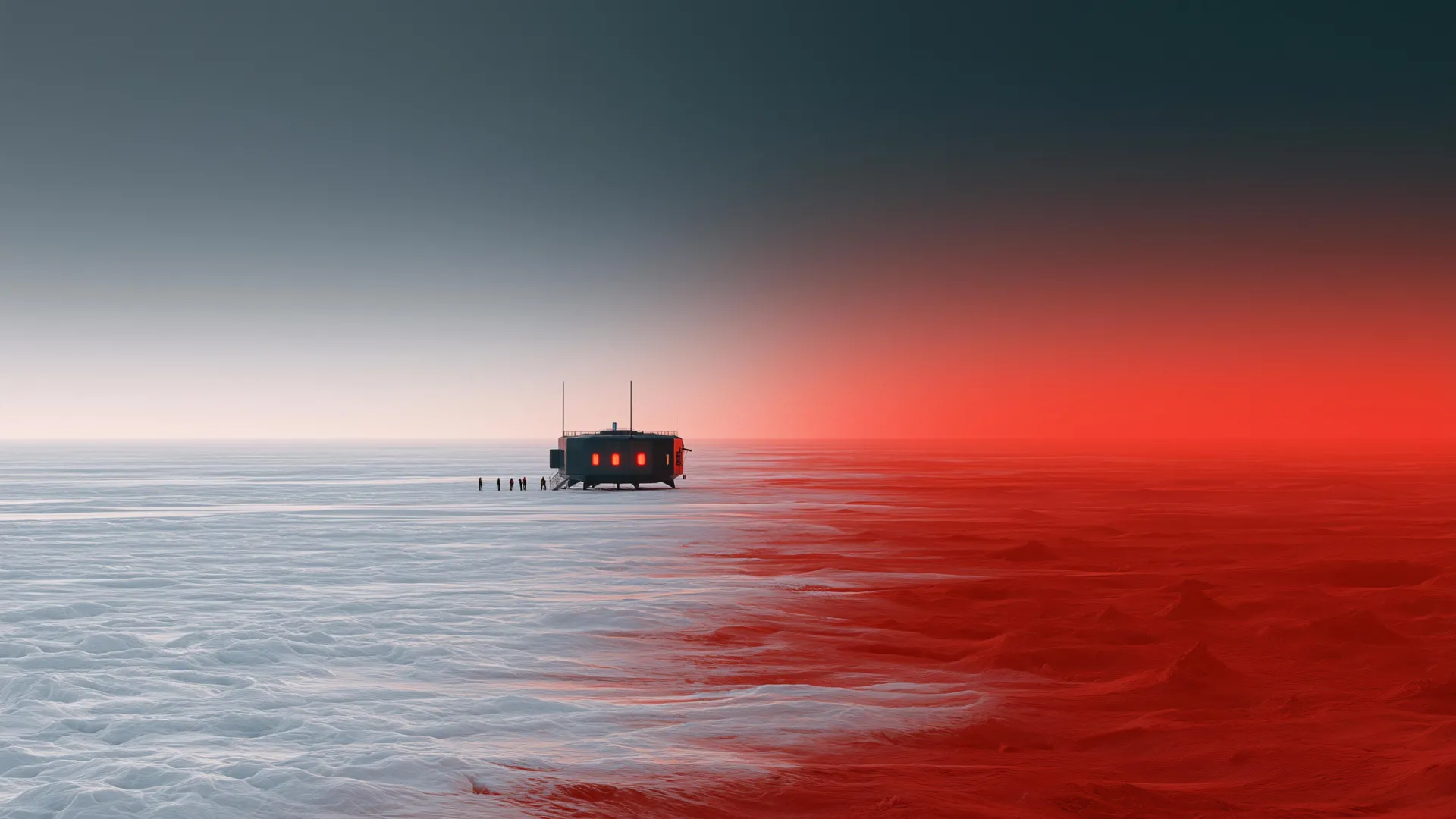
Deep-space exploration has long captured the human imagination, inspiring generations to look toward the Moon, Mars, and beyond with a mixture of awe and ambition. Yet, as space agencies and private aerospace corporations draw closer to realizing extended crewed missions, the primary barrier to success is proving to be less a matter of propulsion technology and more a question of human psychology. Long-duration space missions subject small, highly specialized crews to relentless isolation, unyielding confinement, and immense psychological pressure for months or even years at a time. To better understand how these punishing conditions shape human teamwork, group cohesion, and mental well-being, an international research consortium recently turned their gaze not to the stars, but to the most inhospitable and isolated continent on Earth: Antarctica.
By studying a ten-month overwintering mission at the remote Concordia Station, researchers have gained unprecedented insights into the fragile nature of social dynamics under extreme stress. The findings challenge long-held assumptions about how humans cope with isolation, revealing that in cramped, high-pressure environments, forced proximity does not always foster solidarity. Instead, constant closeness can act as a powerful catalyst for interpersonal tension, highlighting critical challenges that future lunar and Martian colonists will need to navigate if they are to survive and work effectively together.
The Concordia Station: An Earthly Stand-In for the Red Planet
The research initiative was spearheaded by a multidisciplinary team led by Jan Schmutz, a professor in the Department of Psychology at the University of Zurich, and Andrea Cantisani, a psychiatrist and research associate at the University of Bern. Their chosen laboratory, Concordia Station, is jointly operated by the French Polar Institute (IPEV) and the Italian Antarctic Program (PNRA). Perched atop the Antarctic Plateau at Dome C, 3,233 meters above sea level, the station is widely regarded as one of the most remote and hostile places on the surface of the Earth.
During the harsh Antarctic winter, temperatures at Concordia routinely plummet to minus 80 degrees Celsius (minus 112 degrees Fahrenheit). The station becomes entirely inaccessible for months at a time, cutting off the crew from any physical resupply, emergency evacuation, or outside contact beyond digital communications. Because of this absolute geographical and social isolation—compounded by extreme altitude, which causes chronic hypoxia, and months of complete darkness during the polar night—Concordia serves as one of the most rigorous and accurate terrestrial analogs for future extended missions to the Moon or Mars.
Tracking Social Changes in Extreme Isolation: Methodology and Chronology
To capture the subtle and often volatile shifts in human behavior under these conditions, the research team implemented a rigorous, multi-layered monitoring protocol. The study followed a crew of 12 international members who volunteered to endure the ten-month overwintering period. Rather than relying solely on subjective post-mission interviews—which are notoriously vulnerable to memory bias—the scientists utilized a combination of psychological questionnaires and objective, high-resolution behavioral tracking technology.
Chronologically, the data collection was structured across four distinct phases over the ten-month mission. Crew members completed comprehensive psychological questionnaires at predetermined intervals, rating their personal experiences regarding loneliness, perceived trust, interpersonal conflict, overall social relationships, team cohesion, and their own perceived work performance.
Simultaneously, the participants were outfitted with wearable proximity sensors. These discrete devices automatically and continuously measured when crew members were physically close to one another and logged the exact duration of those encounters. By marrying the subjective questionnaire data with objective spatial tracking, the researchers were able to construct a dynamic, longitudinal map of how human social architecture fractures, adapts, and evolves when individuals are cut off from the rest of humanity.
More Contact Did Not Always Help: Unpacking the Paradox of Proximity
One of the most counterintuitive and striking findings to emerge from the Concordia study was that spending more time in close physical proximity to other crew members was not consistently correlated with positive social outcomes. Conventional logic suggests that when humans are isolated together, bonding, frequent interaction, and shared presence should strengthen the group. However, the data revealed a distinct psychological paradox.
Participants who logged higher frequencies of close contact with their peers were actually more likely to report heightened levels of interpersonal conflict, greater mistrust of their colleagues, and, paradoxically, lower perceived personal and team performance. Rather than acting as a therapeutic buffer against the vast emptiness of the Antarctic wilderness, constant physical closeness often morphed into an additional source of acute psychological pressure.
In confined environments where escape is physically impossible, privacy becomes a scarce and highly valued commodity. The study’s results suggest that while isolation brings its own brand of psychological strain, the total lack of personal space and the inability to escape the gaze of others can be equally, if not more, damaging to group harmony.
"In small teams under extreme conditions, more contact doesn’t automatically equate to social support, but can actually increase tensions," explains lead researcher Jan Schmutz.
The researchers maintain appropriate scientific caution regarding these findings, emphasizing that the study identified strong correlations rather than definitive cause-and-effect mechanisms. For example, it is possible that individuals who were already experiencing profound loneliness actively sought out more frequent interactions, even if those encounters ultimately failed to provide the psychological support or validation they desperately needed. Conversely, persistent friction may have forced crew members into prolonged, unavoidable proximity to resolve ongoing work tasks despite declining personal rapport.
Tribalism in Miniature: The Formation of Subgroups
Beyond the frequency of daily interactions, the wearable proximity sensors offered a fascinating window into the spatial habits of the crew over time. As the ten-month mission progressed, the research team observed a gradual, spontaneous fragmentation of the unified 12-person crew into smaller, insular social clusters.
Rather than maintaining an egalitarian, highly integrated team dynamic, individuals increasingly gravitated toward colleagues who shared common linguistic backgrounds, cultural frameworks, or nationalities. This tribalization in miniature served as a psychological coping mechanism; aligning with familiar peers provided individuals with a vital sense of grounding, validation, and emotional safety during particularly stressful phases of the mission.
However, this natural human tendency toward ingroup favoritism carried significant downsides for the collective mission. The consolidation of rigid subgroups threatened to deepen social divisions within the habitat, potentially weakening overall unity, cross-cultural communication, and collaborative efficiency across the broader team. For space agencies planning multinational crews for multi-year voyages to Mars, managing the formation of exclusionary cliques will be a critical operational hurdle.
Broader Impact and Implications for Extreme Environments
While the immediate impetus for the Concordia study was the future of crewed spaceflight, the implications extend far beyond the aerospace sector. The psychological pressures of isolation, confinement, and close-quarters living are shared by workers across a wide array of demanding terrestrial industries.
Submarine crews beneath the global oceans, workers on isolated offshore oil and gas platforms, polar researchers in the Arctic, and expedition teams traversing unexplored wildernesses all face similar socio-psychological stressors. In each of these environments, the breakdown of team cohesion can lead to operational errors, safety compromises, and severe mental health crises.
"The results show how important it is to identify social dynamics early on and provide teams with targeted support," Schmutz notes. By deploying wearable sensor technology and structured psychological monitoring, organizations operating in extreme environments could theoretically detect the early warning signs of team burnout, social withdrawal, or brewing conflict long before they manifest as critical operational failures.
Technological Validation: Passive Monitoring in Harsh Conditions
From a methodological standpoint, the success of the study’s wearable proximity sensors represents a major milestone for behavioral research in extreme environments. Deploying sensitive electronic equipment in a remote Antarctic station—where temperatures can destroy standard batteries and extreme cold strains technology—presents significant logistical challenges.
The sensors operated reliably throughout the grueling ten-month period, proving that passive, continuous data collection is viable in harsh settings. Crucially, the devices allowed researchers to map everyday social patterns objectively without imposing burdensome administrative tasks on the crew or substantially disrupting their daily operational routines.
Looking to the Future: Next Steps in Space Psychology
As space exploration transitions from short-duration missions aboard the International Space Station to extended voyages requiring deep-space transit, understanding the human element will remain paramount. NASA, the European Space Agency, and other international bodies are already evaluating how to incorporate real-time behavioral monitoring and psychological countermeasures into mission architectures.
Building upon the insights gained at Concordia Station, future research initiatives will attempt to drill down into the specific qualitative aspects of human interaction. Scientists plan to investigate which precise types of social engagement effectively alleviate stress and foster resilience, and conversely, which behavioral patterns actively exacerbate anxiety and tension.
Ultimately, as humanity prepares to take its next giant leap into the solar system, studies like the one conducted at Concordia Station serve as a vital reminder. Before we can hope to conquer the hostile environments of the Moon and Mars, we must first learn to navigate the intricate, delicate, and sometimes turbulent universe of human relationships.
