
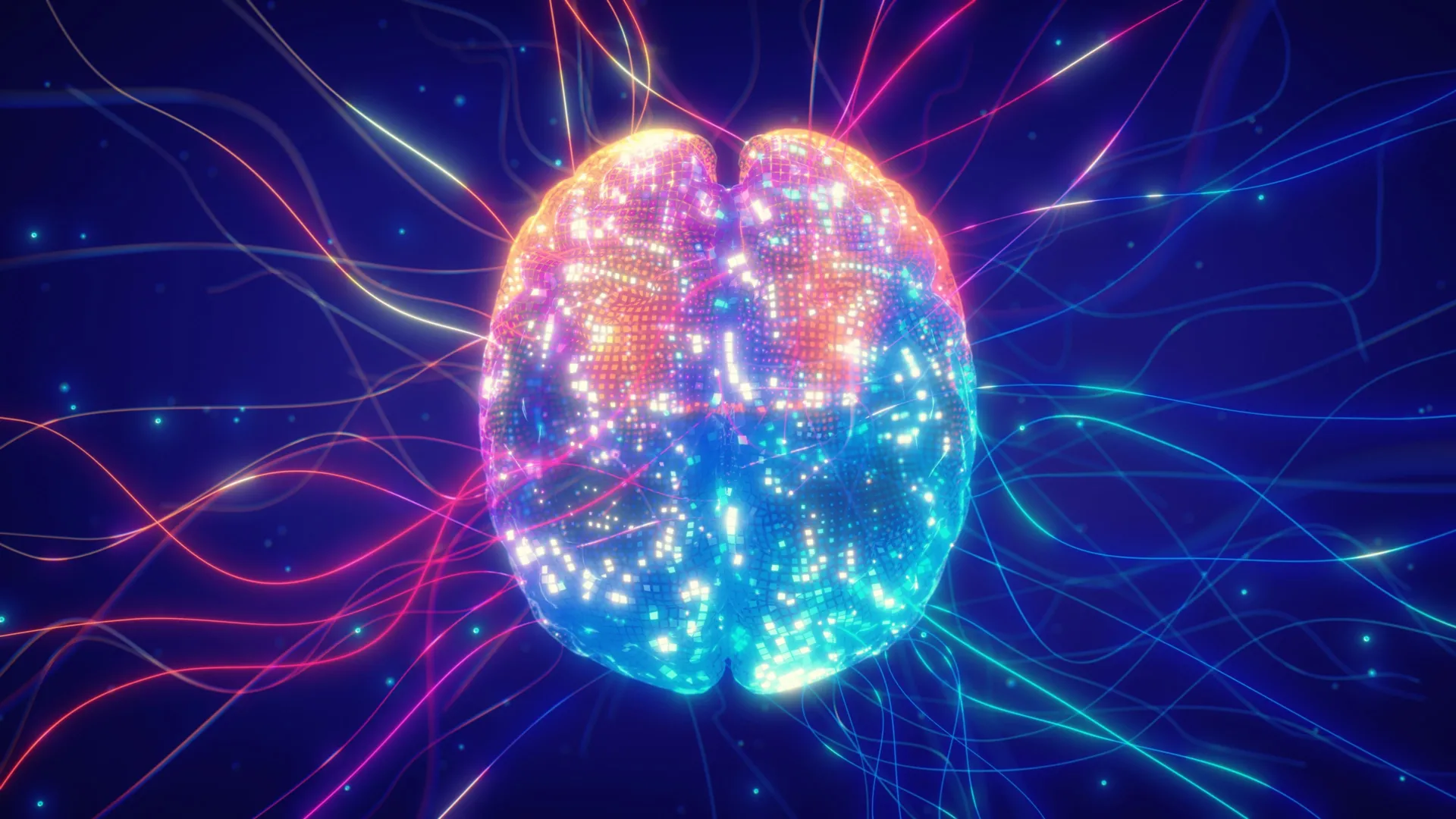
The human brain operates as a remarkably sophisticated command center, continuously processing billions of neural signals to navigate the complexities of daily existence. Routine activities—such as merging onto a congested highway during rush hour—require a staggering degree of real-time cognitive coordination. Behind the wheel, the mind must simultaneously recall navigational routes, execute mechanical vehicle controls, and dynamically adapt to volatile, unpredictable stimuli like sudden road closures, erratic drivers, and shifting weather patterns. Managing this relentless influx of data demands a high-level executive control system capable of filtering noise, prioritizing critical cues, and directing appropriate behavioral responses.
For decades, cognitive neuroscientists have sought to understand the neurological architecture that makes such complex decision-making possible. Recent empirical work led by researchers at the University of Iowa has provided unprecedented clarity into this process, illuminating the inner workings of the brain’s primary information hub: the frontoparietal cortex. Published in the Journal of Neuroscience under the title "Frontoparietal hub connectivity integrates information from multiple sources," the study reveals that this critical brain network functions far more dynamically than previously understood, shifting its internal wiring on the fly to help individuals cope with uncertainty and changing environmental rules.
The Anatomy of Cognitive Control: The Air Traffic Controller of the Mind
Long recognized by the scientific community as a cornerstone of human intelligence, working memory, and goal-directed behavior, the frontoparietal cortex acts metaphorically as an air traffic controller for the human mind. Situated across the frontal and parietal lobes, this interconnected neural network is uniquely positioned to receive inputs from virtually every other region of the central nervous system. Rather than simply passively accumulating these signals, the frontoparietal cortex actively curates them. It evaluates incoming sensory data, filters out irrelevant distractions, amplifies salient information, and synthesizes a cohesive, high-level summary that allows the organism to make informed choices.
Historically, prevailing neuroscientific models assumed that challenging cognitive tasks triggered a straightforward increase in metabolic activity within this region. Under this older hypothesis, harder problems simply required the frontoparietal network to work harder, burning more energy and firing more intensely. However, the new University of Iowa investigation challenges this paradigm. By integrating advanced functional magnetic resonance imaging (fMRI) with sophisticated computational modeling, the research team demonstrated that the network’s response to complexity is structural rather than merely volumetric. When faced with difficult decisions, the frontoparietal cortex dynamically alters its connectivity patterns, actively rewiring how it communicates with disparate brain systems depending on the precise informational requirements of each micro-stage in a decision-making process.
Chronology of the Study: Tracing Uncertainty in Real Time
To observe this dynamic rewiring in action, the research team—led by corresponding author Kai Hwang, associate professor in the Department of Psychological and Brain Sciences, and first author Stephanie Leach, a sixth-year graduate student in Hwang’s laboratory—designed a rigorous empirical experiment. The study enrolled 38 healthy human participants ranging in age from 18 to 35, a demographic cohort frequently utilized in cognitive psychology to establish baseline neurological norms free from age-related neurodegenerative confounds.
The experimental timeline was structured into distinct phases to systematically introduce cognitive conflict and uncertainty. Initially, participants were trained to master a set of arbitrary associations. They were presented with complex combinations of visual stimuli—specifically variations of colors, human faces, and background scenes—and instructed to execute specific motor responses. These responses required pressing designated buttons utilizing either the index or middle finger of either their left or right hand. Through repeated trials, participants internalized these pairings until their error rates dropped significantly, establishing stable neural pathways for the learned rules.
In the subsequent phase of the experiment, the researchers deliberately disrupted this established equilibrium. Without warning, the underlying rules governing the visual-motor pairings were altered. Participants suddenly found themselves making errors on tasks they had previously mastered. This sudden violation of expectations forced the subjects to recognize that the contextual rules had shifted, unlearn their prior associations, encode new parameters, and adapt their physical motor responses accordingly.
This deliberate manipulation introduced a crucial psychological variable: uncertainty. As Dr. Hwang explained when detailing the behavioral mechanics of the experiment, the subjects experienced a distinct cognitive pivot point after registering repeated failures. When individuals consistently succeed, they possess high confidence in their behavioral strategies. However, when errors accumulate, they are forced into a state of metacognitive estimation, questioning whether the environmental context has altered or whether their initial sensory perception was flawed. By capturing brain activity during this exact window of transition, the researchers were able to map how the frontoparietal cortex adjusts its connectivity to track and resolve this induced uncertainty.
Data and Methodology: Decoding the Brains Networks
The methodological strength of the study lies in its multidisciplinary approach, combining behavioral analytics, high-resolution neuroimaging, and advanced computational frameworks. Jiefeng Jiang, a key collaborator in the Department of Psychological and Brain Sciences alongside lab member Shannon Stokes, spearheaded the development of the computational models used to interpret the fMRI datasets.
By analyzing the neuroimaging data collected while participants navigated the shifting task rules, the research team was able to isolate distinct signal streams originating from various sensory and motor regions of the brain. The computational models then traced how the frontoparietal cortex integrated these disparate signals. The empirical results yielded a profound realization: the network does not maintain a static, hardwired communication channel with the rest of the brain. Instead, its anatomical connectivity profile fluctuates continuously.
When participants were initially learning the visual associations, the frontoparietal cortex engaged one specific pattern of inter-regional connectivity. As the rules were upended and uncertainty spiked, the network rapidly reconfigured its dialogue, opening communication lines with memory and error-monitoring regions while dampening interactions with areas dedicated to routine habit execution. This rapid, flexible re-routing enables the brain to synthesize incomplete or contradictory data into a coherent action plan, bridging the gap between raw sensory input and purposeful behavioral output.
Official Responses and Academic Insights
The implications of the research extend far beyond basic cognitive neuroscience, offering new theoretical frameworks for understanding how the human mind achieves adaptive flexibility. For Stephanie Leach, whose doctoral research formed the backbone of the experimental execution and manuscript preparation, the project represents a deeply rewarding milestone in her academic career.
"Having the opportunity to conduct this research has been especially rewarding because it has allowed me to contribute to answering questions about the most fascinating, mysterious, and complex system we know—the human brain," Leach noted, reflecting on the collaborative effort required to bring the study to fruition.
Dr. Hwang emphasized that the primary contribution of the published paper lies in its granular depiction of network-level orchestration. "Our study shows in more detail how the frontoparietal cortex operates—what kind of information it extracts from other systems and how it uses its connectivity pattern to integrate information that is coming in from different areas of the brain," Hwang stated. He reiterated that the network functions as an integrative nexus, stepping in precisely when decentralized brain regions lack sufficient local information to resolve a problem independently, gathering their partial inputs, and formulating an overarching executive directive.
Broader Impacts and Clinical Implications
While foundational research of this nature primarily advances our theoretical understanding of human cognition, it also establishes a critical baseline for exploring clinical pathologies. The findings hold significant promise for guiding future investigations into neurological and psychiatric conditions characterized by executive dysfunction, impaired cognitive flexibility, and difficulties in behavioral regulation.
Conditions such as attention-deficit/hyperactivity disorder (ADHD), schizophrenia, and various forms of frontal lobe trauma frequently manifest as an inability to appropriately adapt to changing environmental demands. Individuals struggling with ADHD, for instance, often exhibit pronounced difficulties in impulse control, working memory utilization, and contextual self-regulation—such as maintaining appropriate behavior in environments that require strict adherence to unwritten social norms.
Dr. Hwang points out that many of these clinical challenges can be conceptualized fundamentally as integration failures. When the brain’s central information-routing systems fail to properly synthesize contextual cues with internal goals, individuals struggle to regulate their actions in real time. If future clinical research can determine whether the dynamic connectivity of the frontoparietal cortex is impaired or altered in populations with ADHD or schizophrenia, it could pave the way for novel diagnostic markers, targeted neurofeedback therapies, or pharmacological interventions designed to restore normal network flexibility.
The research received financial backing and institutional support from premier federal and academic entities, including the National Institute of Mental Health (NIMH) and the Iowa Neuroscience Institute, highlighting the high national priority placed on decoding the neural foundations of human decision-making. As neuroscientists continue to unpack the complex signaling pathways mapped out in this study, humanity moves one step closer to fully understanding the intricate mechanisms that allow us to navigate an uncertain world.
