
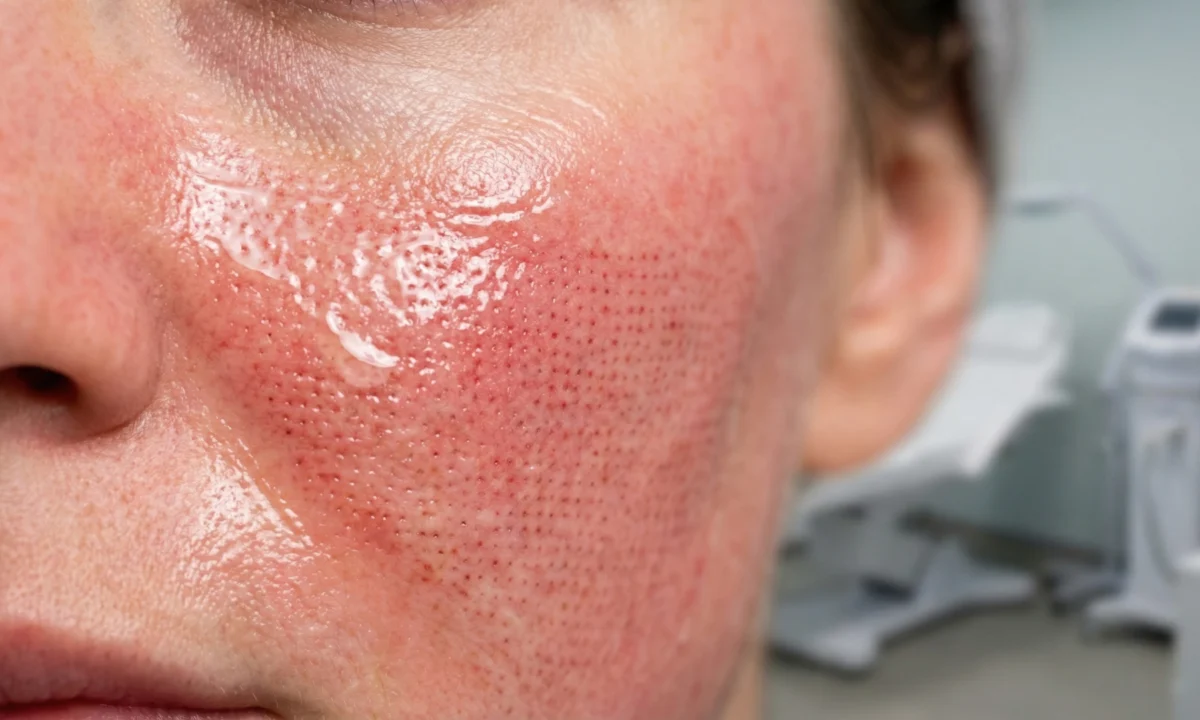
The management of facial burn injuries remains one of the most demanding challenges in both emergency medicine and the field of aesthetic reconstructive surgery. Because the face is central to human identity, communication, and sensory function, any injury to this region carries profound physiological and psychological consequences. Recent clinical discussions led by Dr. Helen Whyte and Dr. Ambreen Ayaz have brought renewed focus to the role of hypochlorous acid (HOCl) as a pivotal agent in the acute and long-term treatment of these complex injuries. As practitioners seek to balance the immediate need for infection control with the long-term goal of minimizing hypertrophic scarring and preserving aesthetic integrity, the biochemical properties of HOCl are increasingly being recognized as superior to traditional antiseptic protocols.
Facial skin is structurally distinct from the rest of the body, characterized by a high density of pilosebaceous units, a rich vascular network, and a relatively thin dermal layer in specific zones like the periorbital and perioral regions. While this high vascularity aids in rapid healing, it also contributes to significant edema and inflammatory responses following thermal or chemical trauma. The primary objective in treating such injuries is to prevent the "zone of stasis"—the area of tissue surrounding the central burn—from progressing to full-blown necrosis. It is within this critical window of intervention that the choice of topical agents becomes a determining factor in patient outcomes.
The Pathophysiology of Facial Burn Progression
To understand the utility of hypochlorous acid, one must first examine the three-tier model of burn wounds: the zone of coagulation, the zone of stasis, and the zone of hyperemia. The zone of coagulation is the point of maximum damage where irreversible tissue loss occurs. Surrounding this is the zone of stasis, where tissue is potentially salvageable but at high risk of dying due to reduced perfusion, inflammation, and infection.
Dr. Whyte and Dr. Ayaz emphasize that the clinical priority is protecting the zone of stasis. Conventional treatments, such as silver sulfadiazine or povidone-iodine, while effective at killing bacteria, often exhibit cytotoxic properties that can damage healthy keratinocytes and fibroblasts, paradoxically slowing the healing process. In contrast, HOCl offers a non-cytotoxic alternative that mimics the body’s own immune response, providing a sterile environment without hindering cellular migration or proliferation.
The Chemistry and Biological Origin of Hypochlorous Acid
Hypochlorous acid is a weak acid that is naturally produced by the human body’s white blood cells, specifically neutrophils, during the "oxidative burst" to combat invading pathogens. Chemically, it is an electrically neutral molecule (HOCl), which allows it to penetrate the negatively charged cell walls of bacteria more effectively than the negatively charged hypochlorite ion (OCl-) found in standard bleach.
For decades, the use of HOCl in clinical settings was limited by its instability; it would quickly revert to salt water when exposed to air or light. However, advancements in electrochemical activation (ECA) technology have allowed for the production of stabilized, pH-neutral HOCl solutions with a shelf life suitable for medical environments. These stabilized solutions typically maintain a pH between 5.0 and 6.5, which aligns with the natural acid mantle of the skin, further reducing the risk of irritation during the treatment of sensitive facial tissues.

Mechanisms of Action in Wound Debridement and Infection Control
Infection is the leading cause of morbidity and delayed healing in burn patients. The facial region is particularly susceptible due to its proximity to the oral and nasal cavities, which house diverse microbial flora. HOCl serves as a broad-spectrum antimicrobial agent, effective against Gram-positive and Gram-negative bacteria, including resistant strains like Methicillin-resistant Staphylococcus aureus (MRSA) and Pseudomonas aeruginosa.
Beyond its bactericidal properties, HOCl is uniquely effective at disrupting biofilms. Biofilms are complex communities of microorganisms encased in a protective polymer matrix that adhere to the wound surface, creating a physical barrier to both antibiotics and the body’s immune cells. Dr. Ayaz notes that the ability of HOCl to penetrate this matrix and neutralize the underlying pathogens is a significant advantage in chronic wound management and deep-partial thickness burns where infection risks are highest.
Furthermore, HOCl acts as a potent anti-inflammatory. It has been shown to downregulate pro-inflammatory cytokines and neutralize mast cell-derived histamine. By dampening the excessive inflammatory response, HOCl helps reduce the intense pruritus (itching) and pain often associated with facial burns, while simultaneously preventing the excessive collagen deposition that leads to disfiguring scars.
Comparative Data: HOCl vs. Traditional Antiseptics
Clinical data comparing HOCl to traditional agents like chlorhexidine, hydrogen peroxide, and povidone-iodine highlight a significant disparity in tissue compatibility. In vitro studies have demonstrated that even at low concentrations, hydrogen peroxide and povidone-iodine can inhibit fibroblast activity, which is essential for wound closure.
In a comparative analysis of wound healing rates, stabilized HOCl was found to increase the rate of re-epithelialization by up to 25% compared to saline-soaked dressings. This is attributed to the fact that HOCl does not interfere with the migration of new skin cells across the wound bed. In the context of facial burns, where every day of delayed healing increases the risk of contracture and permanent scarring, this accelerated timeline is of paramount importance.
Clinical Protocol and Application in Aesthetic Medicine
The application of HOCl in treating facial burns follows a structured protocol designed to maintain a moist wound environment while ensuring sterility. The process generally begins with a gentle irrigation of the affected area using a stabilized HOCl spray or soak. This serves to mechanically debride loose necrotic tissue and contaminants without the trauma of physical scrubbing.
Following irrigation, HOCl-saturated gauze may be applied as a compress for 10 to 15 minutes. This "soaking" phase allows the solution to penetrate the dermal layers and address any nascent biofilm formation. For post-acute care, HOCl-infused hydrogels are often utilized to provide a sustained release of the active molecule while protecting the fragile new epithelium from environmental pollutants.

Dr. Whyte and Dr. Ayaz also highlight the crossover utility of HOCl in elective aesthetic procedures. Chemical peels, laser resurfacing, and microneedling essentially create controlled "medical burns" to stimulate collagen. The use of HOCl in post-procedure kits has become a standard of care for many practitioners, as it reduces downtime and prevents secondary infections that could compromise the aesthetic result.
Addressing the Psychological and Social Impact
The implications of facial burn treatment extend far beyond the physical healing of the skin. The face is the primary medium for social interaction; therefore, the quality of the repair dictates the patient’s long-term quality of life. Traditional burn treatments that resulted in thick, inelastic scar tissue often required years of reconstructive surgeries and left patients with significant emotional trauma.
By utilizing HOCl to promote "regenerative" rather than "reparative" healing, clinicians are seeing a reduction in the need for aggressive surgical intervention. Regenerative healing results in tissue that more closely resembles the original skin in terms of texture, pigment, and elasticity. The psychological benefit of achieving a near-normal appearance cannot be overstated, and the shift toward HOCl-based protocols represents a more holistic approach to patient recovery.
Challenges and Future Directions
Despite the clear advantages, the widespread adoption of HOCl in emergency burn units faces certain hurdles. Education remains a primary barrier; many medical professionals still equate "hypochlorous acid" with "bleach," failing to recognize the critical chemical differences in pH and concentration. Additionally, while stabilized versions exist, the cost of high-quality, medical-grade HOCl is currently higher than that of generic saline or povidone-iodine solutions.
However, as the body of clinical evidence grows, it is expected that HOCl will become a staple in the "golden hour" of burn management. Research is currently expanding into the use of HOCl in conjunction with advanced skin substitutes and stem cell therapies. The hypothesis is that a pre-treated HOCl wound bed provides the optimal environment for the "take" of skin grafts and the integration of bio-engineered tissues.
Conclusion and Summary of Implications
The insights provided by Dr. Helen Whyte and Dr. Ambreen Ayaz underscore a transition in wound care philosophy. The move away from harsh, cytotoxic antiseptics toward bio-mimetic solutions like hypochlorous acid reflects a deeper understanding of cellular biology and a commitment to superior aesthetic outcomes.
In summary, the use of HOCl for facial burns offers a multi-modal benefit: it provides rapid, broad-spectrum antimicrobial action, disrupts recalcitrant biofilms, reduces the inflammatory cascade, and preserves the viability of delicate facial tissues. For the patient, this translates to faster healing, less pain, and a significantly reduced risk of long-term disfigurement. As the aesthetic and medical communities continue to converge, the role of hypochlorous acid is set to evolve from an alternative treatment to a foundational element of facial burn management. The ultimate goal remains clear: to heal the skin so effectively that the trauma of the injury is no longer visible to the world.
