
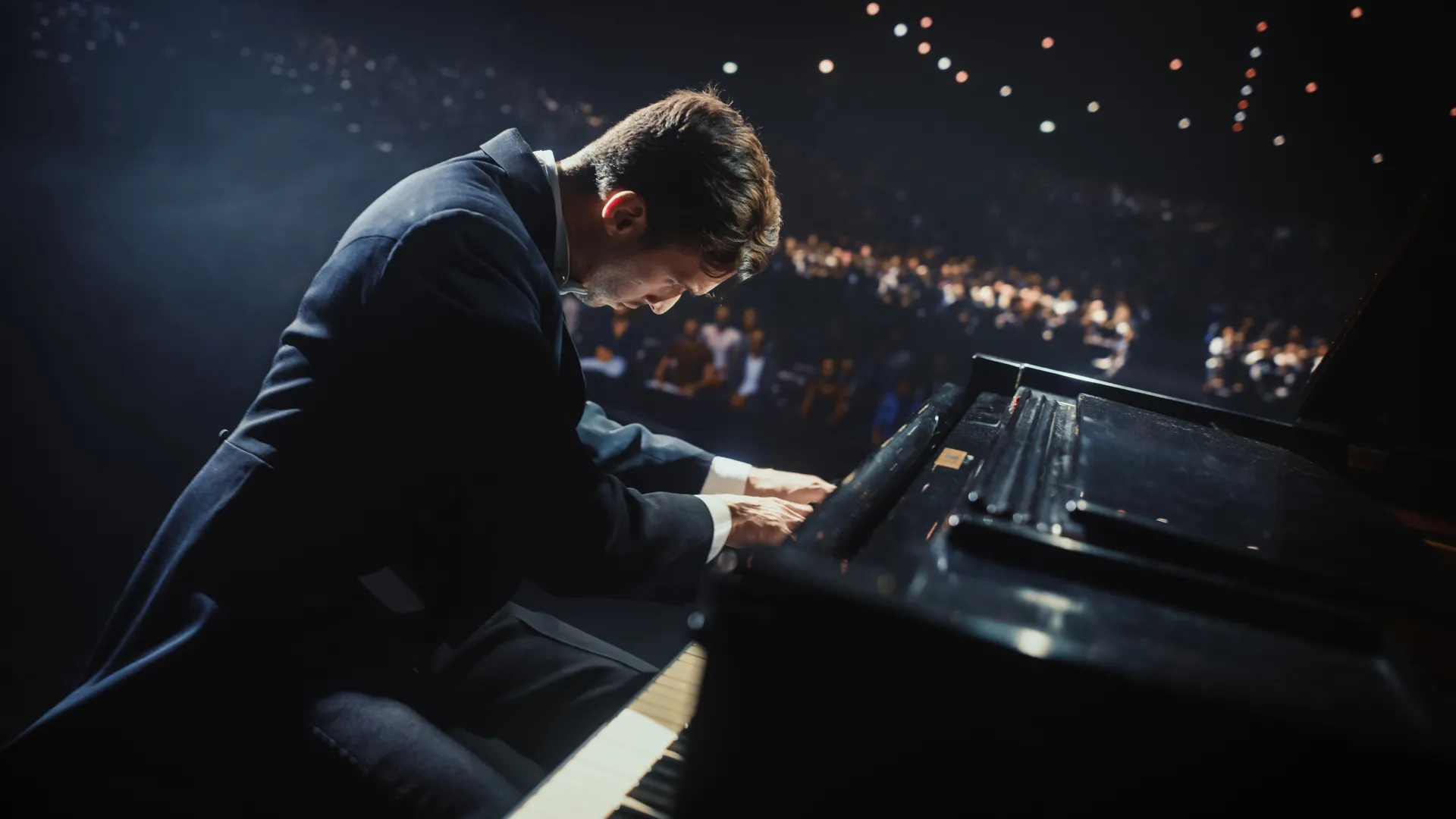
For generations, the debate has echoed through practice rooms and concert halls: can a pianist’s touch truly alter the fundamental character of a piano’s sound, or is the resulting timbre solely a product of the instrument’s mechanics? While musicians have long insisted that subtle variations in finger pressure, speed, and approach imbue a note with qualities like warmth, brightness, or weight, skeptics often attributed these perceived differences to volume, timing, or psychological interpretation. Now, a groundbreaking scientific study, published in the prestigious journal Proceedings of the National Academy of Sciences (PNAS), offers compelling evidence that the pianist’s touch is indeed a potent sculptor of a piano’s timbre, going beyond mere volume or articulation.
Unveiling the Hidden Mechanics of Expressive Playing
Led by Dr. Shinichi Furuya of the NeuroPiano Institute and Sony Computer Science Laboratories, Inc., the research team employed cutting-edge ultra-high-speed sensing technology to meticulously capture the nuanced movements of pianists’ hands and fingers. Their findings reveal that incredibly subtle physical actions, previously undetectable to the naked eye and largely unquantified by science, play a direct and measurable role in how listeners perceive the sonic qualities of a piano note. This sophisticated investigation, which utilized a custom-built noncontact sensing system named HackKey, recorded the motion of all 88 piano keys at an astonishing 1,000 frames per second with microscopic spatial precision.
The study’s core methodology involved twenty internationally acclaimed pianists who were tasked with intentionally producing contrasting tonal qualities. They were instructed to play individual notes and short passages, aiming to evoke distinct timbres such as "bright versus dark" and "light versus heavy." The critical innovation of the HackKey system was its ability to capture not just the strike of the hammer but the intricate, millisecond-by-millisecond choreography of the pianist’s fingers and hands leading up to and immediately following the key press.
A Century-Long Dialogue Between Art and Science
The question of whether a pianist’s touch can genuinely influence timbre has been a persistent point of contention since the early 20th century. For musicians, terms like "warm," "dark," "bright," and "heavy" are fundamental descriptors of musical expression, deeply ingrained in pedagogical approaches and critical reviews. However, for many in the scientific community, these descriptions were often viewed as subjective interpretations or were explained by more readily quantifiable factors such as the dynamic range of the note (loudness) or its precise temporal placement within a musical phrase. The prevailing scientific consensus, until now, leaned towards the idea that once the hammer struck the string, the inherent acoustic properties of the piano—its construction, materials, and tuning—were the dominant determinants of timbre.
This new research directly challenges that long-held assumption. By providing empirical data that links specific physical movements to perceivable timbral changes, Dr. Furuya and his team have effectively bridged the gap between artistic intuition and scientific validation. The results of the listening tests were particularly striking: listeners, including those with no formal musical training, were consistently able to identify the intended timbres produced by the pianists. This suggests that the physical nuances of touch are not merely esoteric qualities understood only by seasoned musicians but are, in fact, perceptible to a broader audience. Professional pianists participating in the listening tests demonstrated an even greater sensitivity to these subtle differences, underscoring their deep-seated understanding of touch-based expressivity.
Decoding the Micro-Movements of Musicality
The scientific breakthrough lies in the identification of a surprisingly small set of highly precise movement features that demonstrated a strong correlation with perceived timbral shifts. These are not broad, obvious gestures but rather minute variations in acceleration, the exact timing of finger movements, and the synchronization between the two hands. The study meticulously detailed how these seemingly insignificant details, invisible to the casual observer, contribute to the richness and variety of piano sound.
One of the most significant discoveries was the ability to reliably alter a listener’s perception of a note’s timbre by manipulating just a single one of these identified movement features. This provides direct, causal evidence that the physical act of touching the keys itself plays a fundamental role in shaping timbre, rather than simply being a concomitant element to other musical effects like loudness or tempo. This distinction is crucial: it moves the discussion from correlation to causation, solidifying the pianist’s touch as an active agent in sonic creation.
The researchers posit that these subtle gestures are not innate but are developed through years of rigorous piano training, representing a highly specialized motor skill. This implies that the artistry associated with piano tone is not merely metaphorical or subjective; it is deeply rooted in measurable, repeatable physical actions. Dr. Furuya elaborated on this, stating that the work aims to translate a long-standing artistic intuition into the language of science. The findings validate the deeply held beliefs of countless pianists and offer a scientifically grounded explanation for how skilled movement can evoke profound emotional and aesthetic experiences in music.
Implications Beyond the Concert Hall: A Multifaceted Impact
The ramifications of this research extend far beyond the realm of classical music performance, promising to reshape disciplines from education to rehabilitation science.
Transforming Music Education
One of the most immediate implications is for music education. The study’s findings could lead to the development of more effective and intuitive methods for teaching expressive piano techniques. Instead of relying on abstract and often ambiguous instructions such as "play warmer" or "use a lighter touch," future pedagogical tools could potentially demonstrate the precise physical movements associated with specific tonal qualities. This could involve visual feedback systems or motion-capture technology that allows students to see and replicate the subtle gestures that produce desired timbres, making the learning process more concrete and accessible.
Advancing Rehabilitation and Neuroscience
The insights into how advanced motor control shapes perception hold significant promise for rehabilitation science and neuroscience. Understanding the intricate interplay between fine motor skills and sensory experience could inform the design of more effective therapeutic interventions for individuals with motor impairments. For instance, the study’s findings might contribute to the development of neurofeedback systems that leverage precise movement patterns to improve motor function and sensory integration.
Furthermore, the research offers valuable clues for understanding how the brain processes complex sensory information and integrates it with motor commands. This could deepen our understanding of motor learning, skill acquisition, and the neural basis of artistic expression.
Revolutionizing Human-Computer Interaction and Robotics
The study’s exploration of nuanced human-machine interaction through precise physical input also has implications for robotics and human-computer interaction (HCI). As artificial intelligence systems become more sophisticated, the ability to understand and replicate subtle human movements is crucial for creating more natural and intuitive interfaces. The research on expressive piano playing could inform the design of robots that can perform delicate tasks or AI systems that can generate more nuanced and emotionally resonant creative outputs.
Inspiring New Technologies in Music and AI
The field of AI and music technology is already actively exploring avenues inspired by expressive musical performance. Recent advancements have focused on modeling timbre, generating realistic piano motion, and developing systems capable of reproducing the subtle expressive nuances found in human performances. This research provides a scientific foundation for these efforts, enabling AI to move beyond simply generating correct notes to creating music that possesses genuine emotional depth and artistic subtlety.
Scientists are envisioning a future where these discoveries lead to the creation of more expressive digital instruments, smarter and more personalized training tools for musicians, and even rehabilitation systems that utilize musical movement to enhance dexterity and coordination.
The Scientific Exploration of Creativity
At a broader level, this research contributes to the burgeoning scientific effort to understand the nature of human creativity itself. For decades, research into musical perception has predominantly focused on measurable acoustic elements like pitch, loudness, and rhythm. Timbre, being a more complex and less easily quantifiable aspect of sound, has historically been more challenging to study scientifically. It involves higher levels of sensory interpretation and often triggers profound emotional responses, making it a frontier in understanding how art affects us.
By successfully identifying specific physical actions that are directly linked to the perception of timbre, the researchers have opened a new avenue for studying how artistic expression emerges from the intricate relationship between the body, the brain, and the auditory experience. This work is part of a wider scientific movement, sometimes referred to as "dynaformics," which aims to scientifically dissect the mechanics and experience of music performance. Proponents of this field believe it could ultimately lead to more efficient musician training, help prevent injuries associated with intense practice, and assist musicians in overcoming physical limitations.
The profound excitement surrounding Dr. Furuya’s findings stems from more than just resolving a long-standing musical conundrum. It suggests that a significant portion of music’s emotional power arises from movements so subtle they are almost imperceptible, yet so precise that human listeners can unequivocally feel the difference. This scientific validation of the pianist’s nuanced touch underscores the profound connection between physical action, sensory perception, and the creation of deeply felt artistic experiences. The study, therefore, not only illuminates the mechanics of piano playing but also deepens our understanding of the very essence of human expression and creativity.
