
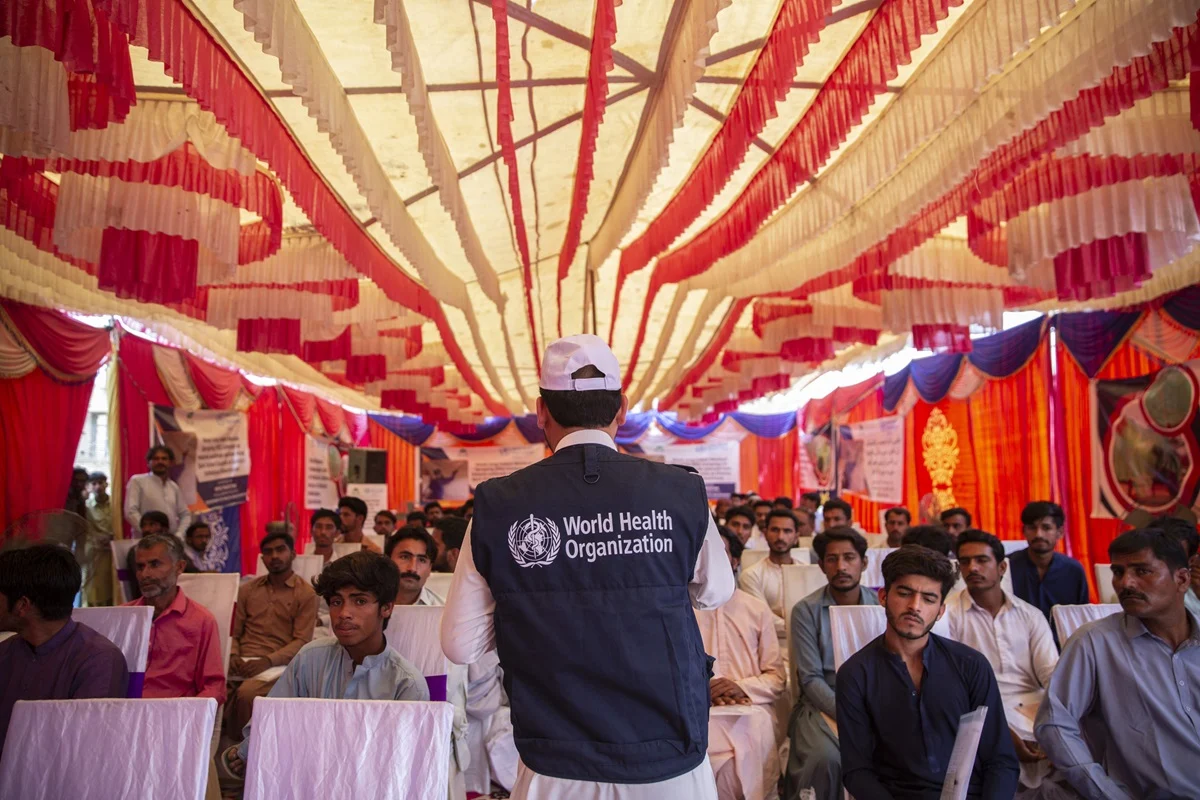
In a significant diplomatic and humanitarian development, the Qatar Fund for Development (QFFD) and the World Health Organization (WHO) have formally signed a Core Contribution Agreement, committing US$ 4 million to support the WHO’s extended Thirteenth General Programme of Work (GPW13). The agreement, finalized just days before the commencement of the Seventy-seventh World Health Assembly (WHA77) in Geneva, marks a pivotal alignment between Qatar’s foreign aid strategy and the multilateral health mandates of the United Nations’ specialized agency. This financial injection is intended to provide the WHO with the fiscal flexibility required to address emerging health crises, strengthen fragile health systems, and advance the global agenda for universal health coverage.
Contextualizing the Thirteenth General Programme of Work
The Thirteenth General Programme of Work, which covers the period from 2019 to 2025, serves as the strategic blueprint for the WHO. It is anchored by the "triple billion" targets: ensuring one billion more people benefit from universal health coverage, one billion more people are better protected from health emergencies, and one billion more people enjoy better health and well-being.
The extension of this programme recognizes the unprecedented disruptions caused by the COVID-19 pandemic, which stalled or reversed progress on several Sustainable Development Goals (SDGs), particularly Goal 3: Good Health and Well-being. By contributing to the core, rather than earmarked, funds of the WHO, QFFD is enabling the organization to allocate resources where they are most critically needed without the bureaucratic constraints often associated with project-specific grants. This level of support is vital for the WHO, which relies heavily on voluntary contributions to fund the majority of its operational budget.
Chronology of Cooperation
The collaboration between Qatar and the WHO is not a singular event but part of a multi-year trajectory of cooperation. Since the inception of the QFFD, the State of Qatar has positioned itself as a major donor in international development, focusing on education, economic empowerment, and health.
- 2019: The launch of the GPW13 coincided with a period of heightened Qatari investment in global multilateral institutions, emphasizing the importance of institutional stability.
- 2020–2022: During the height of the COVID-19 pandemic, Qatar provided extensive medical aid, including personal protective equipment and vaccines, to dozens of countries, often coordinating through the WHO’s logistics hubs.
- 2023: Consultations began regarding the extension of the GPW13, during which the WHO highlighted the urgent need for "flexible funding" to navigate the post-pandemic recovery phase.
- May 2024: The signing of the current US$ 4 million agreement ahead of the Seventy-seventh World Health Assembly serves as a strategic precursor to the high-level policy debates that define the WHA.
The Significance of Flexible Funding in Global Health
To understand the impact of the US$ 4 million contribution, one must analyze the architecture of WHO financing. Historically, the WHO has faced criticism regarding its reliance on "specified voluntary contributions," which are earmarked by donors for specific projects. While this ensures accountability for particular outcomes, it often leaves the organization with a structural deficit in its core, unrestricted budget.
Flexible, or "core," funding allows the WHO to maintain its regional offices, deploy rapid response teams during disease outbreaks, and sustain long-term research programs that might otherwise go unfunded. By providing these resources, QFFD empowers the WHO to act as a buffer against unforeseen global health shocks. In an era of climate-induced health emergencies and the increasing threat of antimicrobial resistance, this liquidity is arguably the most valuable commodity an international health agency can possess.
Official Statements and Strategic Intent
Mr. Sultan Ahmed Al-Aseeri, Acting Director-General of QFFD, framed the contribution as a fundamental component of Qatar’s humanitarian ethos. "Our partnership with WHO is a testament to our dedication to leaving no one behind in the pursuit of health equity worldwide," Al-Aseeri stated during the signing ceremony. He emphasized that the objective is to empower local communities and enhance healthcare access, which he identified as the primary drivers of sustainable development.
WHO Director-General Dr. Tedros Adhanom Ghebreyesus expressed gratitude for the sustained partnership, noting the practical benefits of the funding. "Flexible funds are critical for WHO’s life-saving work," Dr. Tedros remarked. "With thanks to long-standing partners like the Qatar Fund for Development, WHO can use these funds to swiftly respond to global health needs as they arise. I am grateful to the State of Qatar for their support and for allowing us the flexibility we need to carry out our mission and mandate."
Impact on Crisis and Post-Crisis Contexts
A specific focus of the renewed partnership is the provision of support to countries in crisis and post-crisis contexts. This includes regions currently destabilized by armed conflict, displacement, and environmental disasters. According to recent WHO data, nearly 2 billion people currently live in countries where development is hampered by fragility, conflict, and violence.
In these environments, health systems are often the first to collapse. By supporting the WHO’s capacity to operate in these zones, QFFD is effectively underwriting the maintenance of basic health services, including maternal health, vaccination campaigns, and the containment of communicable diseases in refugee camps and war-torn urban centers. This aligns with Qatar’s broader geopolitical goal of being a neutral, reliable broker in international humanitarian aid.
Fact-Based Analysis: The Path to 2025 and Beyond
The infusion of funds comes at a critical juncture. The Seventy-seventh World Health Assembly is set to debate the future of the Pandemic Agreement and amendments to the International Health Regulations (IHR). The participation of high-profile donors like Qatar provides the necessary financial backing to implement the outcomes of these high-level negotiations.
Analysis of the global health landscape suggests that the success of the extended GPW13 will be measured by how effectively the WHO can transition from emergency response to systemic strengthening. The current contribution from QFFD will likely be utilized in three key areas:
- Systemic Strengthening: Training local health workers and building digital infrastructure for disease surveillance.
- Emergency Preparedness: Maintaining pre-positioned supplies and rapid deployment mechanisms that can be activated within 48 hours of an alert.
- Universal Health Coverage (UHC) Advocacy: Supporting national governments in drafting policies that expand access to essential medicines and reduce out-of-pocket health expenditure for their populations.
Implications for International Cooperation
The partnership between the Qatar Fund for Development and the World Health Organization serves as a model for how medium-sized powers can exert significant influence in the multilateral arena. By bypassing the traditional donor-recipient dynamic and moving toward a model of "flexible partnership," Qatar is signaling its intent to remain a permanent fixture in the global health security architecture.
Furthermore, this agreement underscores the necessity of sustained financial commitment. The international community is often prone to "panic and neglect" cycles, where interest in global health spikes during a pandemic and wanes shortly thereafter. By committing to the GPW13 through the end of its 2025 mandate, QFFD is helping to break this cycle, ensuring that the WHO maintains a consistent operational baseline.
As the delegates gather in Geneva for the Seventy-seventh World Health Assembly, the QFFD-WHO agreement stands as a practical example of the collaboration required to tackle the 21st century’s most pressing health challenges. Whether addressing the resurgence of preventable diseases or the impacts of climate change on health, the availability of unrestricted funds will remain the decisive factor in whether the global community meets its health targets or falls further behind.
In conclusion, the US$ 4 million contribution is more than a financial transaction; it is a strategic investment in global stability. As the world navigates a period defined by geopolitical tension and public health uncertainty, the partnership between the Qatar Fund for Development and the World Health Organization represents a pragmatic, evidence-based approach to fostering a more resilient and equitable global health system. The success of this initiative will be monitored closely by international observers as a bellwether for the effectiveness of multi-stakeholder health diplomacy in the coming years.
