

Polycystic ovary syndrome (PCOS) stands as the most prevalent endocrine and metabolic disorder affecting women of reproductive age, yet securing an accurate diagnosis remains an arduous and protracted undertaking. Clinical data indicates that individuals frequently endure a diagnostic odyssey spanning up to two years and requiring consultations with at least three distinct healthcare providers before receiving definitive confirmation. This substantial delay exposes a systemic inefficiency in women’s healthcare, leaving millions to manage debilitating symptoms—ranging from chronic anovulation and hirsutism to metabolic distress—without clinical guidance or targeted intervention.
The Traditional Diagnostic Framework and Its Hurdles
To understand the complexity of identifying PCOS, medical professionals rely heavily on consensus guidelines known as the Rotterdam criteria. Established in 2003, this diagnostic benchmark requires a patient to exhibit at least two out of three primary manifestations: oligo- or anovulation (manifested as irregular menstrual cycles, defined as fewer than eight periods per year or amenorrhea lasting four months or longer), clinical and/or biochemical signs of hyperandrogenism (such as excess facial or body hair, acne, or scalp hair thinning), and the presence of polycystic ovaries on ultrasound examination.

However, arriving at this conclusion is rarely straightforward. Before confirming PCOS, physicians must systematically rule out a myriad of other pathologies that present with overlapping clinical features. These differential diagnoses include Cushing’s syndrome, congenital adrenal hyperplasia, androgen-secreting neoplasms, hypothyroidism, hyperprolactinemia, and drug-induced hirsutism.
The diagnostic workflow typically incorporates two primary modalities: imaging and laboratory evaluation. Transvaginal or pelvic ultrasonography is frequently utilized to visualize ovarian morphology, assessing whether the ovaries are enlarged and exhibit multiple small fluid-filled follicles surrounding the eggs. Concurrently, venous blood draws are deployed to measure various reproductive and metabolic hormones, including luteinizing hormone (LH), follicle-stimulating hormone (FSH), testosterone, and free androgen index. For patients actively attempting to conceive, anti-Müllerian hormone (AMH) levels are also frequently analyzed to evaluate ovarian reserve.
Despite these established protocols, the journey is fraught with bottlenecks. Long wait times for specialist referrals, the subjective nature of symptom reporting, and the necessity of coordinating multiple appointments contribute significantly to the aforementioned two-year diagnostic lag. Furthermore, up to 20% of the healthy female population may exhibit polycystic ovarian morphology on an ultrasound without meeting the full criteria for PCOS, complicating imaging interpretations and necessitating careful biochemical correlation.

The Emergence of Decentralized Diagnostic Options
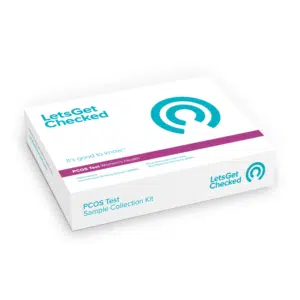
In response to persistent patient dissatisfaction and systemic delays, the healthcare sector has seen an incremental shift toward decentralized diagnostic tools. Among these innovations is the advent of direct-to-consumer home hormone testing kits, designed to streamline the initial phase of inquiry. Platforms such as the Let’s Get Checked PCOS test utilize capillary blood collection—commonly known as a finger-prick sample—allowing individuals to gather biological specimens within their own residences and transmit them via prepaid courier to accredited laboratories.
These at-home panels are engineered to assess key biomarkers associated with hormonal imbalances characteristic of the condition. By decentralizing the initial sample collection phase, such kits aim to bridge the gap between symptom onset and formal clinical evaluation. Patients following these protocols typically collect samples during specific windows of their menstrual cycle—such as days three through five for those with regular periods, or across three consecutive days for those experiencing chronic irregularity—to account for physiological hormonal fluctuations.
Crucially, medical experts emphasize that these direct-to-consumer kits are designed to yield a probable indication rather than a definitive, standalone diagnosis. Clinical oversight remains an integral component; laboratories utilizing these assays are typically subject to rigorous quality control standards equivalent to those used by traditional hospital networks, and abnormal findings generally trigger direct outreach from a clinical nursing team to advise patients on subsequent medical consultations.

Contraindications and Methodological Limitations
While decentralized testing offers unprecedented accessibility, it is bound by specific clinical limitations. Endocrine evaluations rely heavily on baseline physiological states, meaning that exogenous hormone introduction can significantly skew results. Consequently, medical guidelines strongly advise against utilizing home hormone tests while concurrently using hormonal contraceptives, such as oral birth control pills, patches, or hormonal intrauterine devices (IUDs), as these medications artificially suppress or regulate the very biomarkers the test seeks to evaluate.
Additionally, healthcare providers stress that at-home blood panels cannot replace comprehensive physical examinations, pelvic imaging, or the holistic evaluation of a patient’s complete medical history. Instead, public health advocates position these tests as a preliminary screening mechanism—a tool designed to empower patients with concrete biochemical data before they enter a physician’s office, thereby optimizing consultation time and advocating for accelerated specialist referrals, such as appointments with reproductive endocrinologists or gynecologists.
Broader Health Implications and Economic Burden
The necessity for timely and accurate PCOS identification extends far beyond the immediate management of bothersome cosmetic or menstrual symptoms. Chronic hormonal dysregulation carries profound long-term systemic consequences. Epidemiological studies demonstrate that individuals with untreated or unrecognized PCOS face an elevated lifetime risk of developing severe metabolic and cardiovascular comorbidities, including type 2 diabetes mellitus, dyslipidemia, hypertension, and obstructive sleep apnea. Moreover, the hyperandrogenic environment and chronic anovulation significantly increase the incidence of endometrial hyperplasia and carcinoma due to unopposed estrogen stimulation.
The psychological toll is equally significant. Research consistently highlights heightened rates of anxiety, depression, and diminished health-related quality of life among diagnosed populations, exacerbated by years of diagnostic invalidation and misunderstood symptoms. From a macroeconomic perspective, the healthcare utilization costs associated with managing unmanaged PCOS complications—ranging from infertility treatments to long-term management of cardiovascular disease—place a heavy burden on healthcare systems globally.
Industry Evolution and Future Outlook
As the medical community grapples with the realities of delayed diagnoses, the integration of digital health, telemedicine, and at-home diagnostics represents a transformative paradigm in chronic disease management. While traditional brick-and-mortar healthcare institutions remain the gold standard for final clinical determinations, the incorporation of validated patient-initiated testing mechanisms reflects a broader movement toward patient empowerment and decentralized care.
Ultimately, addressing the diagnostic bottleneck requires a multi-pronged approach: enhanced medical education regarding phenotypic variations of the disorder, increased clinical awareness of its systemic comorbidities, and the thoughtful deployment of innovative screening technologies. By compressing the timeline from symptom recognition to clinical intervention, modern diagnostic tools hold the potential to mitigate both the physiological and psychological burdens borne by millions of women worldwide.
