
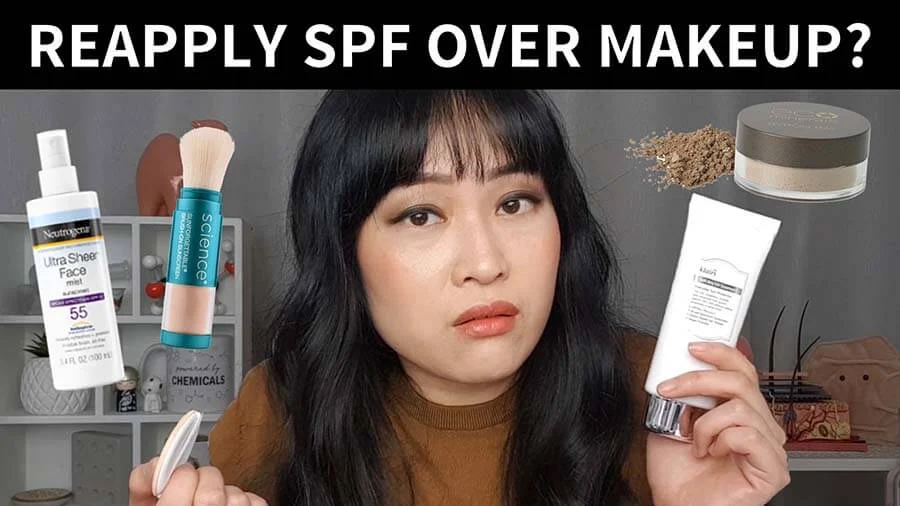
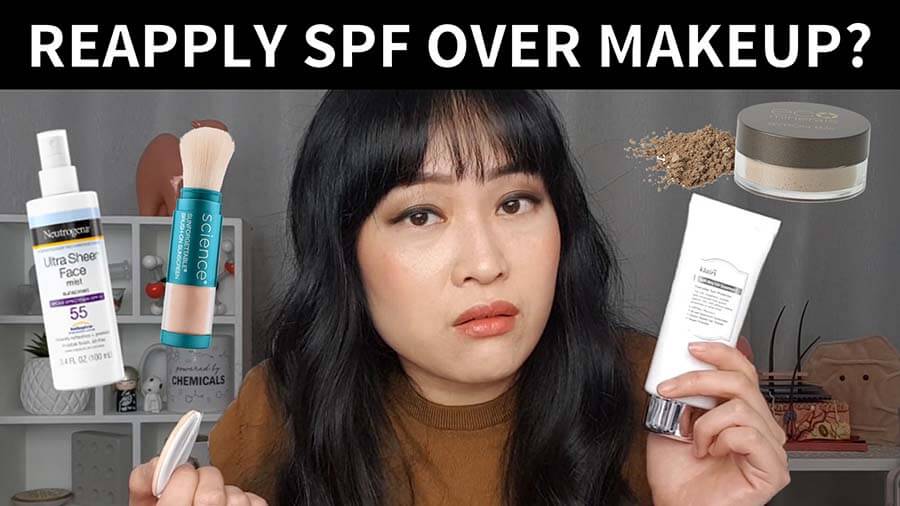
The routine of applying sunscreen in the morning, layering a full face of cosmetics on top, and facing the perennial skincare dilemma of how to reapply UV protection every two hours remains one of the most persistent challenges in modern beauty regimens. Skincare consumers frequently find themselves caught between two undesirable options: sacrificing their carefully applied makeup or entirely forgoing midday sun protection. As dermatological science continues to emphasize the non-negotiable nature of daily photoprotection to prevent skin cancer, premature aging, and hyperpigmentation, beauty scientists are examining the efficacy, mechanics, and practicalities of sun protection touch-ups. To understand how to effectively reapply sunscreen over cosmetics without disrupting aesthetics, researchers must first evaluate why sun protection degrades, how much defense actually remains throughout the day, and which application formats succeed where others fail.
The Science of Degradation: Why Sunscreen Wears Down
To appreciate the necessity of reapplication, one must examine how a sunscreen film behaves on human skin over time. When an individual initially applies an adequate layer of sunscreen—typically standardized in laboratory testing at two milligrams per square centimeter—the product forms a continuous, uniform film across the epidermis. However, this protective barrier is continuously compromised through both mechanical and chemical processes.
The primary factor reducing sunscreen efficacy is physical displacement. Throughout the day, the skin encounters friction from clothing, hair, and casual hand-to-face contact. Each brush against the skin physically removes a fraction of the protective product. Furthermore, the skin constantly secretes sebum and perspiration. As these natural oils and moisture interact with the sunscreen film, the emulsion breaks down. Compounding this issue is facial mobility; regular muscular movements associated with talking, chewing, smiling, and yawning cause the microscopic film to crack, migrate, and pool into pores and fine lines.
Additionally, chemical degradation historically played a larger role when older organic filters were prone to photoinstability upon absorbing ultraviolet radiation. While contemporary formulations predominantly utilize photostable filters or advanced stabilizing technologies, the mechanical breakdown and thinning of the product layer remain inevitable. As the film evaporates, absorbs into the upper stratum corneum, and gets rubbed away, the overall quantity of active UV-blocking agents on the skin diminishes significantly.
Chronological Findings and Empirical Retention Data
Historically, public health guidelines mandated strict two-hour reapplication cycles without accounting for varying lifestyles or environmental exposure. However, recent clinical investigations have sought to quantify precisely how much sunscreen remains on the skin over an extended period under low-activity conditions.
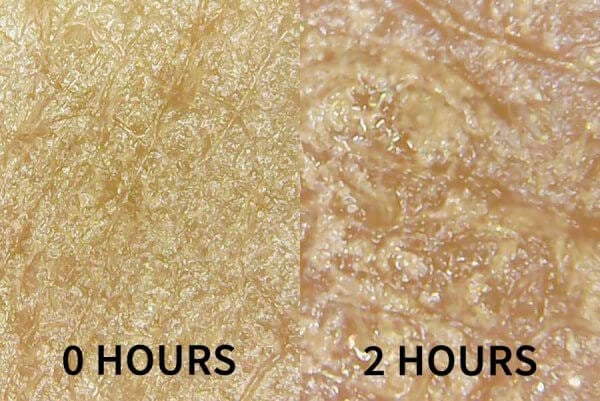
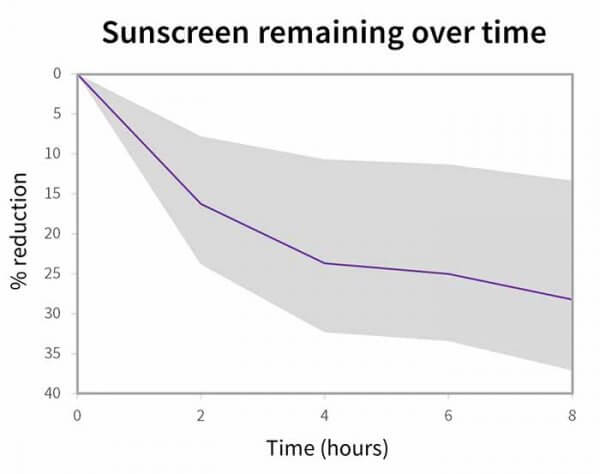
In a landmark open-label trial published in the Journal of Dermatological Treatment, researchers tracked twenty indoor workers who applied a standardized dose of sunscreen infused with a traceable dye. By photographing the subjects every two hours, the study mapped the gradual reduction of the product while participants engaged in normal indoor routines and brief outdoor exposures.
The empirical data revealed that after two hours, subjects retained an average of 84 percent of the initial application, losing roughly 16 percent of the product. By the four-hour mark, an additional 7 percent was lost, and at eight hours, cumulative losses approached 30 percent. While individual retention rates fluctuate based on the specific formulation—with water-resistant and film-forming products demonstrating superior longevity—the findings indicate that a substantial baseline of protection often persists for individuals with minimal physical activity and low sweat levels.
Translating these percentages into practical SPF values illustrates the linear relationship between product quantity and ultraviolet defense. If an individual starts the day with an SPF 50 formulation, a 30 percent reduction leaves an effective protection level roughly equivalent to SPF 35. Similarly, an initial SPF 30 degrades to approximately SPF 21, while an SPF 15 drops to SPF 10. Whether this residual protection proves sufficient depends entirely on environmental exposure levels, personal vulnerability to pigmentation, and individual health priorities concerning skin malignancies.
Strategic Categorization of Sun Exposure Scenarios
Navigating the logistics of reapplication requires assessing daily exposure risks rather than applying a rigid, one-size-fits-all rule. Skincare specialists generally divide daily routines into three distinct operational scenarios:
Minimal Sun Exposure
For office workers or individuals whose daily transit involves indoor commuting with limited direct sunlight during peak UV hours, intensive reapplication may be unnecessary. In these scenarios, relying on residual morning protection coupled with behavioral adjustments—such as sitting away from windows on public transit or walking on shaded pathways—frequently proves adequate. Clinical indicators, such as the rapid fading of post-inflammatory hyperpigmentation or pre-existing freckles, often serve as practical benchmarks confirming that sufficient baseline protection is maintained.
Heavy Sun Exposure
Conversely, high-exposure environments—such as spending hours outdoors near reflective surfaces like water or sand—demand strict adherence to standard reapplication protocols. Under these conditions, physical activity and heavy perspiration render residual protection insufficient, making sunburn a genuine risk. In such scenarios, beauty protocols must prioritize function over aesthetics. Experts recommend utilizing robust, water-resistant sunscreens paired with minimal, low-maintenance base makeup like tinted moisturizers or targeted concealers, allowing for straightforward, direct reapplication over the skin every two hours using a makeup wipe if excess buildup or debris accumulates.
Moderate Sun Exposure
The most common and challenging scenario involves mixed environments, such as working indoors during the morning followed by an outdoor lunch break and a sun-lit afternoon commute. In these instances, consumers desire to maintain their professional aesthetic while bolstering their UV defense. Achieving this balance requires strategic application methods that maximize product transfer while minimizing disruption to existing cosmetics.
Evaluation of Reapplication Vehicles: Lotions, Powders, and Sprays
Selecting the appropriate product format for midday touch-ups dictates whether the reapplication will succeed or fail. Industry analysis of various application vehicles reveals distinct performance metrics:
Liquid Foundations and Powders
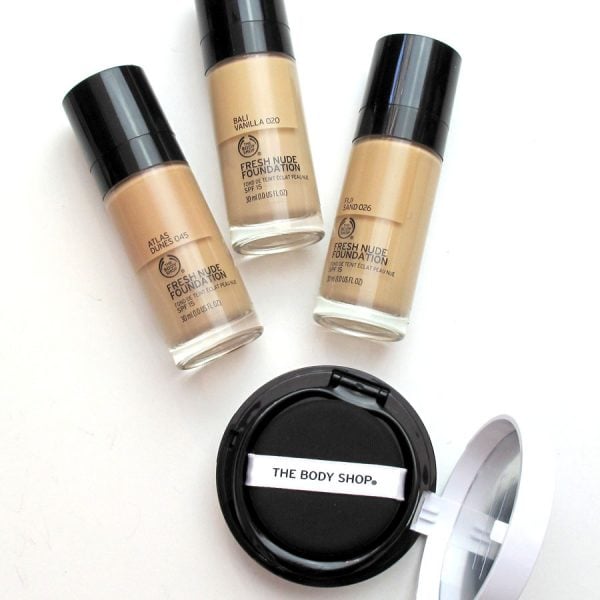
Relying solely on an SPF-rated liquid foundation or powder for reapplication is mathematically and dermatologically impractical. Studies analyzing consumer application habits indicate that the average amount of liquid foundation applied to the face is approximately 0.54 grams, yielding a fraction of the labeled SPF protection. Powders exhibit even lower performance; historic data from environmental protection studies demonstrate that average face powder applications weigh roughly 85 milligrams, providing negligible UV defense. While specialized mineral powders featuring water-resistant coatings—such as those evaluated in FDA submissions by brands like Colorescience—can theoretically deliver adequate protection, achieving this requires rigorous application techniques, including prolonged brush priming and heavy swirling that rarely mirrors real-world usage.
Aerosol and Pump Sprays
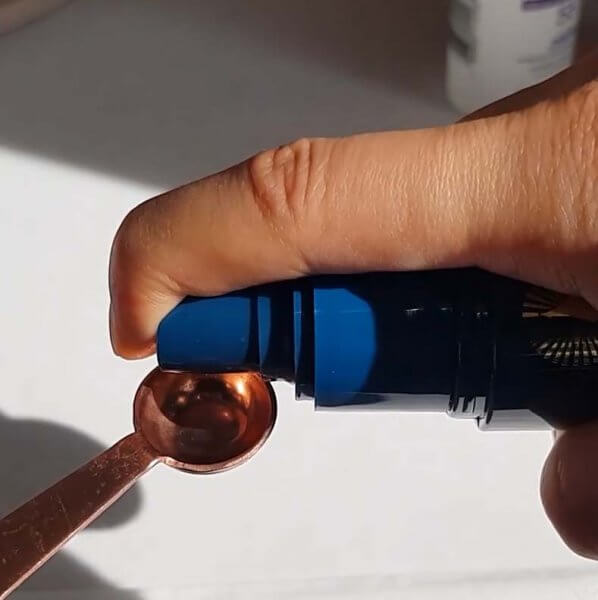
Recent independent laboratory tests and safety reports from regulatory bodies, such as Australia’s ARPANSA, have raised concerns regarding aerosol sunscreen sprays. While previously considered a convenient touch-up method, experimental findings demonstrate that normal spraying techniques result in only a fraction of the product successfully landing on the facial skin, with significant portions lost to ambient air currents or occupied by volatile propellants. Consequently, experts no longer endorse direct facial spraying for reliable reapplication unless the product is sprayed directly into clean hands or a sponge and patted onto the face.
Traditional Lotions and Cushion Puffs
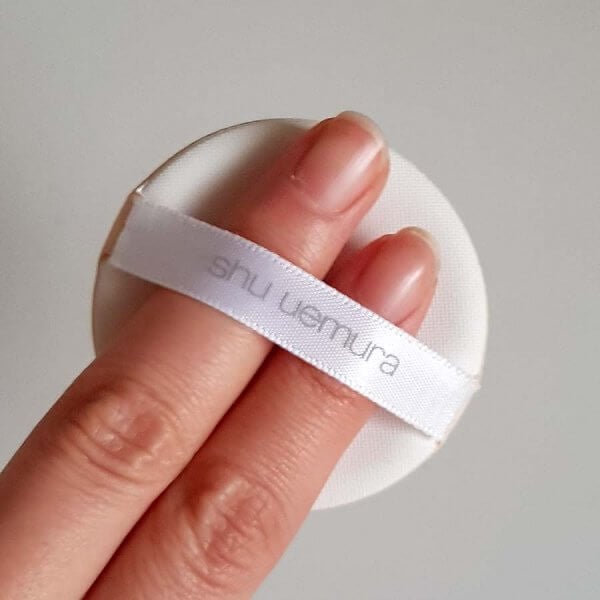
The most reliable and scientifically sound method for reapplying sunscreen over makeup involves utilizing traditional fluid sunscreen lotions applied via a cosmetic cushion puff. Originating within the Asian skincare community and validated by beauty science educators, this technique employs inexpensive, non-absorbent cushion applicators—commonly found in cushion foundation compacts.
Unlike thick makeup sponges that absorb large quantities of valuable product, thin cushion puffs preserve the required volume of sunscreen while facilitating an even, gentle tapping motion. By pressing—rather than wiping—the lotion onto the skin, the user minimizes the displacement of underlying cosmetics. Careful navigation around color cosmetics, such as applying product first to bare areas before lightly pressing over tinted zones, preserves the overall integrity of the makeup look while re-establishing a dense, uniform protective film.
Broader Implications and Industry Consensus
As consumer awareness surrounding photoprotection evolves, the beauty industry faces increasing pressure to innovate user-friendly delivery systems that do not compromise dermatological safety. Regulatory bodies continue to scrutinize marketing claims associated with secondary sun protection products, emphasizing that convenience must not supersede clinical efficacy.
Ultimately, maintaining skin health against ultraviolet radiation requires a pragmatic approach grounded in scientific data. By understanding the mechanical limitations of various application formats and tailoring reapplication strategies to specific environmental exposures, consumers can successfully navigate the intersection of daily cosmetics and optimal skin protection.
