
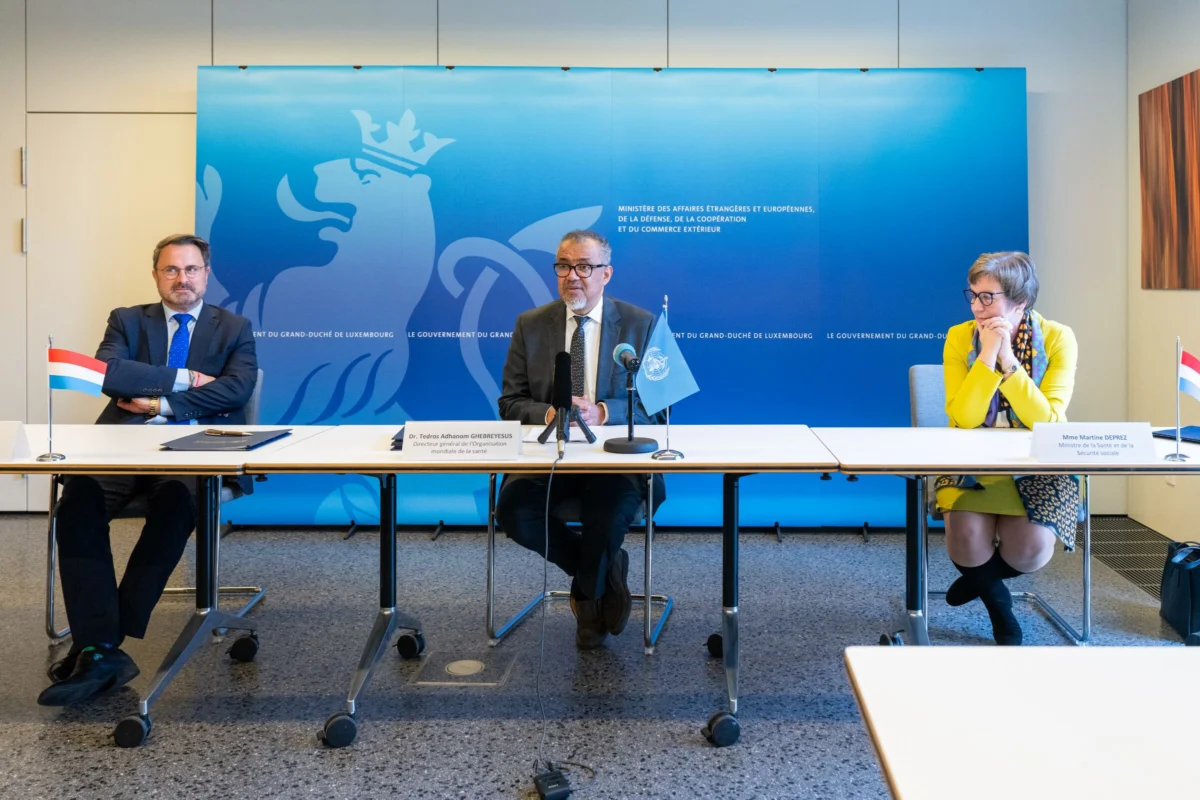
On 20 December 2024, in a move that significantly bolsters the international architecture of public health, the Grand Duchy of Luxembourg formalized a landmark financial commitment to the World Health Organization (WHO). The signing of two distinct, high-impact agreements represents a pivotal juncture in the ongoing effort to achieve the United Nations Sustainable Development Goals (SDGs) as the world transitions into the 2025–2028 planning cycle. By committing a total of €47.5 million, Luxembourg has elevated its status as one of the most reliable and forward-thinking partners in the multilateral health landscape.
The core of this engagement is a Strategic Partnership Framework (SPF) with the Ministry of Development Cooperation and Humanitarian Affairs, valued at €46.5 million. This figure marks the largest single financial agreement ever reached between the WHO and the government of Luxembourg, signaling an intensification of their long-standing bilateral relationship. Complementing this, the Ministry of Health and Social Safety finalized its first-ever multiyear agreement with the organization, a €1 million contribution that serves as a testament to the nation’s domestic commitment to global health security.
A Chronology of Strategic Engagement
The path to this December agreement was paved by years of steady, incremental cooperation. Since the early 2000s, Luxembourg has consistently positioned itself as a "partner of choice" for international organizations, prioritizing flexible funding and long-term sustainability over short-term, project-specific grants.
The 2024 agreements follow a period of heightened scrutiny regarding the resilience of global health systems in the post-pandemic era. Throughout 2023 and 2024, negotiations between Luxembourg’s diplomatic corps and the WHO leadership focused on creating a funding structure that could withstand future shocks. The signing ceremony, held intentionally on the International Day of Solidarity, served as a symbolic bridge between the nation’s humanitarian traditions and its modern diplomatic priorities.
The Architecture of the Funding Agreements
The €46.5 million Strategic Partnership Framework is designed to be highly adaptive, an essential requirement for the WHO to navigate the volatility of global health crises. A significant portion of this funding is "fully flexible," meaning it is not earmarked for specific, rigid projects. This provides the WHO Director-General and the organization’s executive board with the agility to pivot resources toward emerging hotspots or underfunded emergencies without the administrative delays often associated with restricted donor funds.

Furthermore, the funding includes robust allocations for:
- The Universal Health Coverage (UHC) Partnership: A core pillar of the WHO’s mandate, supporting countries in strengthening their primary health care systems to ensure equitable access to essential services.
- Tropical Disease Research: Targeting neglected diseases that continue to disproportionately affect the world’s most vulnerable populations.
- Polio Eradication: A sustained global effort to ensure the permanent cessation of polio transmission, a project that has long been a priority for Luxembourg’s development cooperation programs.
The €1 million contribution from the Ministry of Health and Social Safety, meanwhile, serves as a pioneering voluntary contribution from a domestic health ministry perspective. Minister Martine Deprez noted that this specific tranche will be focused on "sanitary crisis preparedness and response," alongside a concerted effort to dismantle health inequalities, with a dedicated mandate to address gender-based disparities in health outcomes.
Official Perspectives and Diplomatic Resonance
During the bilateral meeting held in conjunction with the signing, Luxembourg’s Deputy Prime Minister and Minister of Foreign and European Affairs, Cooperation and Foreign Trade, Xavier Bettel, underscored the ideological foundation of this investment. "By signing two new partnership agreements, we have reaffirmed Luxembourg’s continued support for the WHO and its mission," Bettel stated. He further emphasized the philosophy of prevention, noting that "we launch these agreements with WHO because we believe the best way to avoid is to prevent."
Dr. Tedros Adhanom Ghebreyesus, the WHO Director-General, acknowledged the depth of the partnership, noting that the timing of the event—occurring on the International Day of Solidarity—was not coincidental. He described the agreements as a "strong statement of solidarity by Luxembourg, not just with WHO, but with the people of the world." The sentiment reflects a broader diplomatic trend in which smaller, highly developed nations exert significant "soft power" by championing multilateralism and global public goods.
Implications for Global Health Governance
The implications of this agreement are far-reaching. By providing flexible, predictable, and multiyear funding, Luxembourg is helping the WHO reduce its dependence on "soft-earmarked" funding, which has historically fragmented the organization’s work.
Strengthening Normative Standards
Beyond direct intervention, the Strategic Partnership Framework provides essential support for the WHO’s core mandate: the development of global norms, standards, and technical guidelines. In an era of increasing misinformation and health-related skepticism, the ability of the WHO to produce high-quality, evidence-based data is vital. Luxembourg’s funding ensures that these guidelines—which form the backbone of national health policies in over 190 countries—remain scientifically rigorous and universally accessible.

Addressing Health Inequalities
The explicit focus on gender within the new funding agreement highlights a growing awareness that health outcomes are fundamentally tied to socio-economic status and gender equity. By integrating gender-sensitive strategies into the broader framework, Luxembourg and the WHO are signaling a shift away from "one-size-fits-all" health interventions, moving toward more nuanced, community-focused solutions.
Statistical Context and Fiscal Impact
To understand the magnitude of this contribution, it is necessary to view it against the backdrop of the WHO’s current financial challenges. In the 2024–2025 biennium, the WHO has faced increased demands for support, ranging from the containment of outbreaks in conflict zones to the systemic strengthening of healthcare infrastructure in the Global South.
Luxembourg’s contribution, while significant in absolute terms, is arguably more important for its quality. Multiyear agreements reduce the "transaction costs" for the WHO, allowing staff to focus on implementation rather than perpetual fundraising. Furthermore, the decision to commit these funds through 2028 provides the WHO with a level of budgetary certainty that is rare in the current geopolitical climate, where donor fatigue is an increasing concern for international agencies.
Future Outlook: Building Toward 2028
As the international community looks toward the 2025–2028 cycle, the partnership between Luxembourg and the WHO serves as a template for other nations. The agreement does not merely provide capital; it builds a bridge between Luxembourg’s domestic health policy—which is characterized by high levels of social protection and technical excellence—and the global necessity for improved health security.
The success of this collaboration will be measured by the organization’s ability to meet the ambitious targets set by the Sustainable Development Goals, particularly Goal 3: ensuring healthy lives and promoting well-being for all at all ages. By focusing on sanitary preparedness, the partnership acts as an insurance policy against the next global health crisis.
In conclusion, the events of 20 December 2024 represent a mature evolution of Luxembourg’s role in global governance. By backing its diplomatic rhetoric with record-breaking financial commitment, the Grand Duchy has reaffirmed that the path to a safer, healthier world is paved through sustained, flexible, and inclusive cooperation. As the world navigates the complexities of the mid-2020s, the partnership between the WHO and Luxembourg stands as a clear, well-funded beacon of international solidarity and evidence-based policy.
