
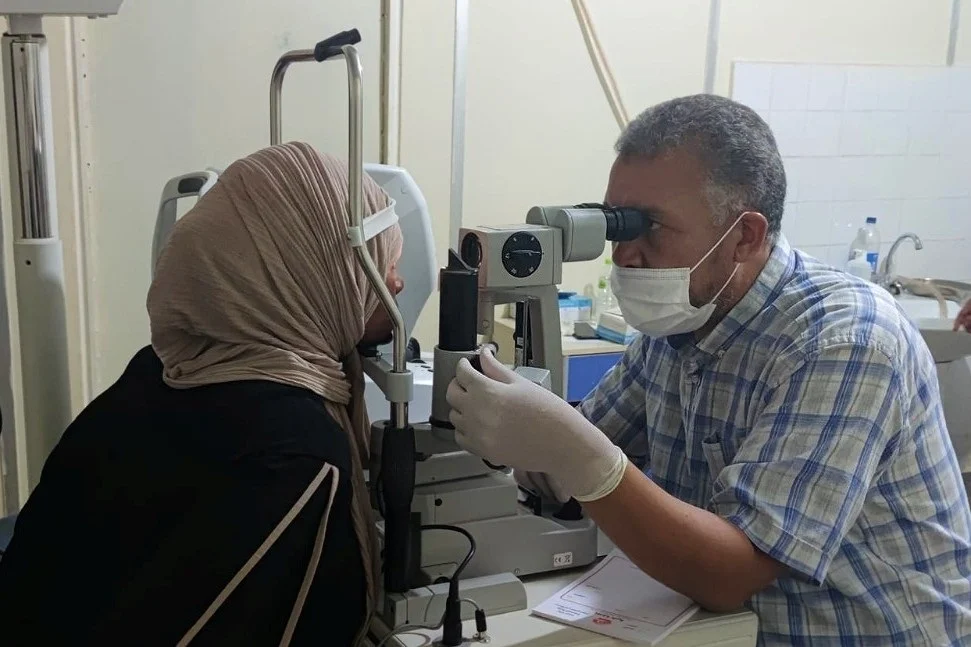
The World Health Organization (WHO) has officially announced that Libya has successfully eliminated trachoma as a public health problem, marking a monumental triumph for the nation’s healthcare system and the broader Eastern Mediterranean Region. This achievement signifies that future generations of Libyans will no longer face the risk of preventable blindness caused by this infectious disease. The validation of Libya’s success serves as a powerful testament to the resilience of national health programs, proving that even in the face of prolonged political instability and humanitarian crises, targeted public health interventions can yield historic results.
Trachoma is a devastating neglected tropical disease (NTD) caused by the bacterium Chlamydia trachomatis. It is primarily transmitted through direct or indirect contact with eye and nose discharges from infected individuals, particularly young children. These discharges can be spread via hands, shared clothing, or eye-seeking flies. If left untreated, repeated infections lead to a condition known as trachomatous trichiasis, where the eyelashes turn inward and scrape the cornea. This process is excruciatingly painful and leads to irreversible corneal scarring and permanent blindness. For decades, trachoma has been a leading infectious cause of blindness globally, disproportionately affecting impoverished communities with limited access to clean water and sanitation.
A Century of Struggle and the Path to Victory
The history of trachoma in Libya spans more than a hundred years. Throughout the 20th century, epidemiological surveys consistently identified high levels of active, inflammatory trachoma across various regions of the country. The burden was particularly heavy in the southern districts, where arid conditions and limited infrastructure exacerbated the spread of the bacterium. Recognizing the severity of the threat, the Libyan Ministry of Health began concerted efforts to control infectious eye diseases as early as the 1970s and 1980s. These early interventions, which included health system strengthening and localized treatment programs, led to a significant decline in transmission rates over several decades.
In 2017, the Ministry of Health intensified its focus, prioritizing the total elimination of trachoma as a core component of the National Prevention of Blindness Programme. This strategic shift was supported by a coalition of international partners, including the WHO, Sightsavers, the International Trachoma Initiative, and Tropical Data. Together, these organizations provided the technical framework and operational support necessary to conduct rigorous, evidence-based assessments in the most at-risk areas.
The final push toward elimination began in earnest in 2022. Comprehensive surveys were launched across six southern districts where the disease was suspected to persist. While most areas showed prevalence rates well below the WHO elimination thresholds, the district of Wadi Al Hayaa/Ghat presented a final challenge, with trichiasis cases still exceeding safe limits. In response, the Libyan health authorities launched an intensive trichiasis surgery campaign to provide life-changing care to those suffering from the advanced stages of the disease. A follow-up survey conducted in 2025 confirmed that the prevalence of both active trachoma and trichiasis had finally fallen below the thresholds required for WHO validation, cementing Libya’s status as a trachoma-free nation.
Strategic Resilience Amidst National Challenges
Libya’s path to elimination was anything but easy. For over a decade, the country has navigated a complex landscape of political fragmentation, civil conflict, and economic volatility. These factors have placed immense strain on the national health infrastructure, leading to the displacement of populations and a surge in demand for basic services like clean water, sanitation, and hygiene (WASH). In many conflict-affected regions, the breakdown of social services often leads to the resurgence of neglected tropical diseases.
However, the Libyan national trachoma elimination programme demonstrated remarkable adaptability. By integrating disease surveillance into existing primary healthcare frameworks and expanding access to surgical care even in remote southern regions, health workers were able to maintain momentum. The program’s success relied heavily on building the capacity of local eye health professionals and fostering deep-rooted partnerships with international stakeholders. This "Integrated NTD" approach allowed Libya to tackle trachoma while simultaneously addressing other public health priorities, ensuring that the most vulnerable populations were not left behind during the country’s most difficult years.
Global and Regional Significance
With this official validation, Libya becomes the 28th country in the world and the 8th in the WHO Eastern Mediterranean Region to eliminate trachoma as a public health problem. This achievement is part of a larger global movement catalyzed by the WHO Alliance for the Global Elimination of Trachoma by 2020 (GET2020), a network established in 1996 to mobilize resources and coordinate elimination efforts. While the 2020 goal was ambitious, the progress made in the subsequent years has been record-breaking.
"This milestone reflects Libya’s determination to safeguard the health of its people and reinforces our conviction that progress against neglected tropical diseases is possible everywhere," said Dr. Tedros Adhanom Ghebreyesus, WHO Director-General. "Eliminating trachoma as a public health problem is an inspiring achievement for the Eastern Mediterranean Region and for communities across Libya."
Dr. Hanan Balkhy, WHO Regional Director for the Eastern Mediterranean, echoed these sentiments, noting that Libya’s success is a beacon of hope for other nations in the region. "Libya joins a growing group of countries from the Eastern Mediterranean Region that have eliminated trachoma. This result reflects strong regional coordination and Libya’s perseverance during periods of great challenge."
Official Responses and the Human Element
The success of the elimination program is being celebrated not just as a policy victory, but as a human one. Behind the statistics are thousands of doctors, nurses, and community health workers who traveled to remote desert outposts to conduct screenings and perform surgeries.
Dr. Mohamed Al-Ghoj, Libya’s Acting Minister of Health, expressed profound pride in the nation’s healthcare workforce. "This validation is a source of pride for Libya and a testament to the commitment of our health workers and communities," he stated. "Even through difficult years, we maintained our focus on improving eye health services and ensuring no one was left behind. This success would not have been possible without the professionalism and dedication of our doctors, nurses, and health workers in the field who reached every district to ensure a future free of preventable blindness."
Dr. Ahmed Zouiten, the WHO Representative in Libya, highlighted the synergy between national and international teams. "Reaching trachoma elimination status in Libya is a testimony of what could be achieved when the Ministry of Health teams and the WHO teams deliver as one. It is a collective public health triumph achieved through science, national mobilization, and international solidarity."
Broader Implications for Neglected Tropical Diseases
Trachoma is just one of 21 conditions classified as neglected tropical diseases. These diseases affect more than one billion people worldwide, predominantly in tropical and subtropical regions where poverty is prevalent. NTDs cause significant disability, stigma, and economic loss, trapping communities in a cycle of poverty.
The WHO’s road map for neglected tropical diseases 2021–2030 sets ambitious targets for the control, elimination, and eradication of these conditions. Libya’s success contributes to a banner year for the global NTD movement; in 2025 alone, nine different countries were validated, verified, or certified by the WHO for achieving elimination targets for various diseases. Libya now stands as the 59th country globally and the 10th in the Eastern Mediterranean Region to have eliminated at least one neglected tropical disease.
The elimination of trachoma in Libya provides a blueprint for other nations facing "complex humanitarian and migration dynamics." It demonstrates that the WHO’s recommended "SAFE" strategy—comprising Surgery for trichiasis, Antibiotics to clear infection, Facial cleanliness, and Environmental improvement—remains highly effective even in unstable environments. By prioritizing the "E" (environmental improvement) and "F" (facial cleanliness) components alongside medical treatment, Libya has addressed the root causes of the disease, ensuring that transmission does not resume.
Looking Toward a Disease-Free Future
While the elimination of trachoma as a public health problem is a permanent milestone, the work of the Ministry of Health and the WHO does not end here. The validation requires the continuation of post-elimination surveillance to monitor for any potential re-emergence of the disease, particularly in border regions where migration flows remain high. Furthermore, the infrastructure built to defeat trachoma will now be repurposed to tackle other NTDs and strengthen the broader Libyan healthcare system.
The victory over trachoma is a reminder that public health is a cornerstone of national stability. By protecting the sight of its citizens, Libya has invested in its future workforce, its education system, and the overall well-being of its society. As the global community looks toward the 2030 goals, Libya’s achievement stands as a definitive example of how scientific rigor, political will, and international cooperation can overcome even the most ancient and persistent of diseases.
