
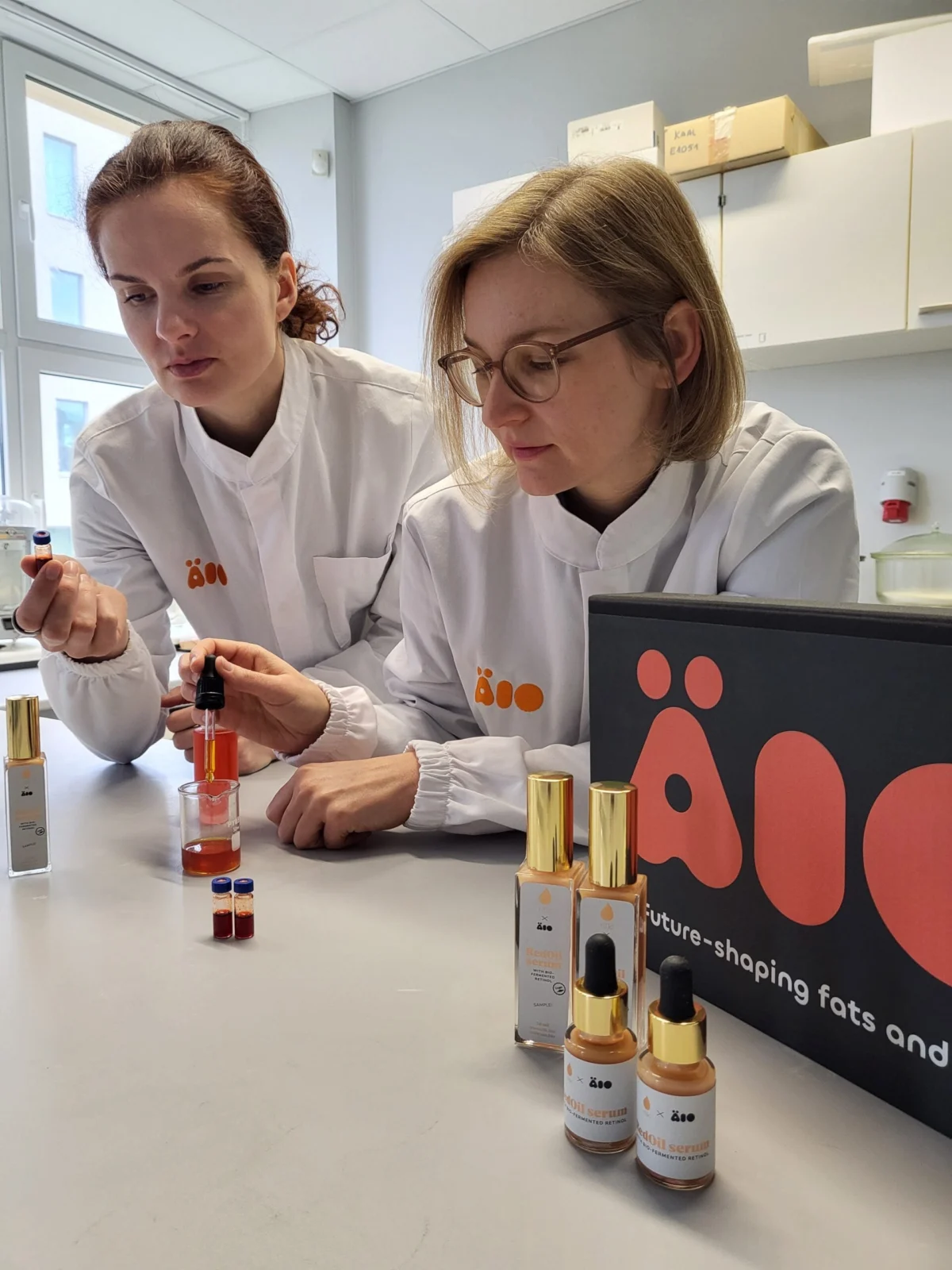
The intersection of biotechnology and consumer goods has reached a new milestone in Northern Europe, where Estonian biotech pioneer Äio and personal care brand Tilk have officially launched their second collaborative product: a skin-boosting face cream formulated with revolutionary fermentation-derived fats. This latest development marks a significant step forward in the commercialization of alternative lipids, transforming industrial waste streams into high-performance active cosmetic ingredients.
The newly unveiled Skin Booster cream harnesses two proprietary, upcycled yeast-based ingredients developed by Äio: Fermira RedOil and ZymaLipid Complex. Building on the momentum of their previous joint venture—a skin-boosting serum launched in April that sold out its entire initial production batch within a single week—this new face cream has already achieved critical early recognition by being shortlisted for the prestigious European Natural Beauty Awards 2026. As regulatory pressures mount globally against environmentally destructive agricultural practices, innovations of this nature offer a glimpse into the future of sustainable consumer products.
The Science of Upcycling: Turning Industrial Side-Streams into Skincare
Äio, which operates as a spin-off from the Tallinn University of Technology (TalTech), was founded on pioneering research conducted by scientists Petri-Jaan Lahtvee and Nemailla Bonturi. The company’s core technology centers around biomass and precision fermentation, a process designed to convert organic side-streams from the wood processing, dairy, and broader food industries into nutrient-dense alternatives to conventional animal- and plant-based fats.
The production mechanism relies on feeding these industrial sidestreams to a proprietary "red yeast" microbe. According to comparative lifecycle metrics released by the company, this precision fermentation process requires up to 97% less land and 90% less water than traditional palm oil production, while operating at a speed ten times faster than conventional oil crop cultivation.
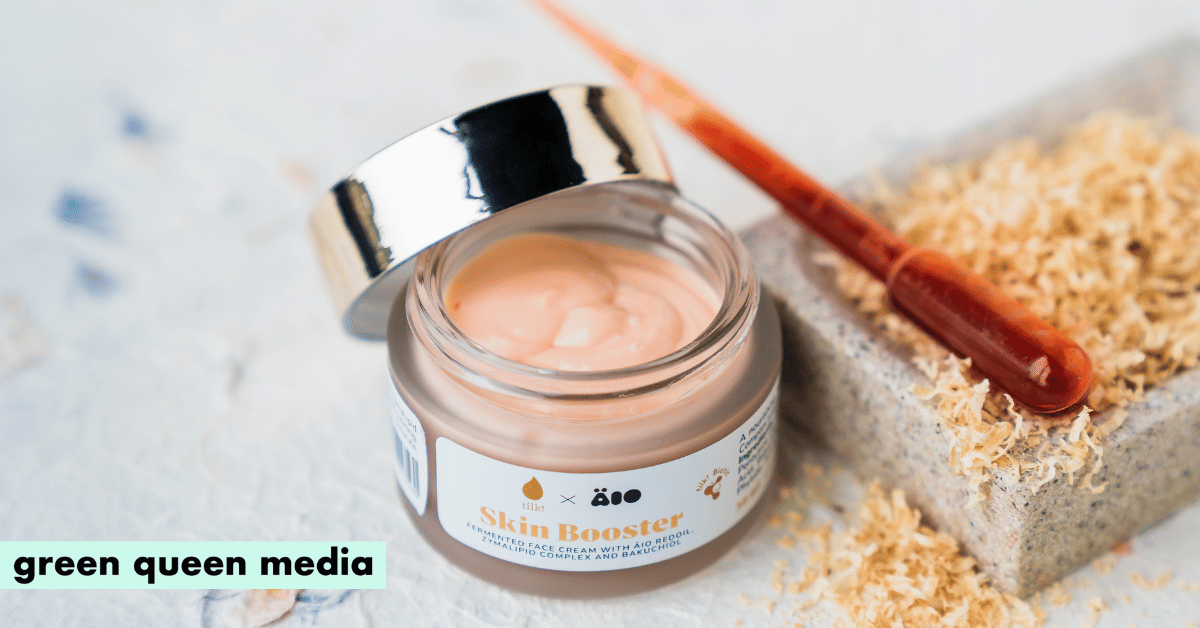
Within the formulation of the new Tilk face cream, Äio’s two primary ingredients serve distinct functional purposes. Fermira RedOil functions as a vibrant red active emollient loaded with naturally occurring carotenoids, bioactives, powerful antioxidants, and essential fatty acids. Designed to serve as a sustainable replacement for fish oils, seed oils, and various vegetable oils, RedOil actively supports skin barrier function, improves hydration, and enhances the skin’s resilience against daily environmental stressors.
Complementing RedOil is the ZymaLipid Complex, a high-purity fatty acid mixture engineered to provide superior emollience, structural integrity, and luxurious sensory properties within cosmetic matrices. Acting as a texture-enhancing substitute for palm, coconut, and soybean oils, the complex ensures that the final product maintains a rich yet fast-absorbing consistency without relying on ecologically taxing tropical crop inputs.
Botanical Synergies and Dermatological Benefits
Beyond its core biotech components, the formulation of the Tilk face cream has been meticulously engineered to cater to sensitive, dry, and environmentally stressed skin types. Industry analysts note that the product functions as a gentle, non-irritating alternative to conventional retinol, accelerating natural skin renewal, improving elasticity, and visibly reducing redness and signs of fatigue.
The inclusion of bakuchiol—a well-known, plant-derived retinol alternative—further amplifies the skin-regenerating effects, promoting a smoother and more even complexion. These active components work in direct synergy with a blend of traditional botanical lipids, including rice bran oil, black seed oil, and wheat germ oil. This triad supplies an extra layer of essential fatty acids and antioxidants, assisting in the restoration of the compromised lipid barrier and preventing transepidermal moisture loss.
To maximize comfort and deep hydration, the formulation also incorporates humectants such as betaine and glycerin, alongside bisabolol, a botanical extract renowned for its anti-inflammatory and soothing properties. The harmonious integration of cutting-edge microbial science with established dermatological ingredients highlights the adaptability of fermentation-derived lipids in sophisticated cosmetic chemistries.

A Chronology of Collaboration and Commercial Scale-Up
The journey toward this commercial milestone spans several years of intensive research, development, and iterative testing. The partnership between Äio and Tilk began during the early developmental phases of RedOil, at a time when sample volumes were severely constrained by laboratory-scale limitations.
Pille Lengi, founder and CEO of Tilk, emphasized the vital relationship between academic research and commercial application during the product launch. Lengi noted that achieving true innovation requires a close, sustained dialogue between commercial formulators and scientific researchers, explaining that the rigorous process demanded years of laboratory testing, safety documentation, and formulation trials before the first consumer product could safely hit the market.
For Äio, the successful rollout serves as definitive proof that precision fermentation ingredients can transition successfully from academic laboratories to mass-market consumer goods. Nemailla Bonturi, co-founder of Äio, underscored this sentiment, stating that a biotechnology company measures its ultimate success by the ability of its partners to manufacture with its ingredients and create products that consumers actively demand. Bonturi pointed out that the inclusion of two distinct Äio ingredients in a single commercial formulation—coupled with its recognition by the European Natural Beauty Awards—validates the years of foundational R&D that preceded the launch.
Industry Landscape and Regulatory Tailwinds
Äio operates within a rapidly expanding global ecosystem of biotech startups dedicated to replacing environmentally harmful lipids. Companies such as Savor, C16 Biosciences, Clean Food Group, Melt&Marble, NoPalm Ingredients, and Terra Oleo are similarly racing to commercialize fermentation-derived fats, butter substitutes, and cocoa alternatives.
This surge in alternative lipid development is heavily influenced by impending global regulatory shifts. Chief among these is the European Union Deforestation Regulation (EUDR), which—following multiple legislative delays—is slated for full implementation. The regulation will strictly prohibit the import of commodities linked to deforestation, including palm oil and its derivatives, with non-compliant enterprises facing financial penalties of up to 4% of their global annual turnover. Current trade data indicates that roughly 34% of global palm oil imports originate from deforested lands, creating an urgent commercial imperative for manufacturers to secure traceable, sustainable lipid supply chains.
Expanding Horizons: Food Systems and Global Distribution
While personal care applications represent an immediate commercial frontier for Äio, the company’s technological platform extends far beyond cosmetics. The startup also manufactures a lipid-rich yeast biomass marketed as "Flavoured Fat" for the food sector, offering an authentic umami flavor profile and functional mouthfeel designed to mimic animal fats in plant-based food products.
To support its expanding product portfolio, Äio has established active commercial dialogues with more than 120 manufacturing partners globally. The company maintains an international distribution network spanning Europe, India, South Korea, Brazil, and the United States, ensuring that industrial clients have seamless access to its proprietary ingredients and dedicated formulation support.
Financially, the startup has been heavily bolstered by strategic public and private backing. Äio has secured multiple government-backed grants to accelerate its research and development initiatives and scale up its biomanufacturing capabilities. Most notably, the company secured a $2.6 million funding tranche designed to facilitate the construction of a state-of-the-art digital biomanufacturing platform.
As Äio continues to align its product development pipelines with strict EU safety standards and complete comprehensive compositional characterizations, the enterprise is preparing to launch a Series A funding round. Company leadership anticipates that this upcoming capital injection will enable the execution of large-scale technology licensing agreements, positioning the Estonian spin-off as a dominant player in the global transition toward sustainable, fermentation-based biomaterials.
