
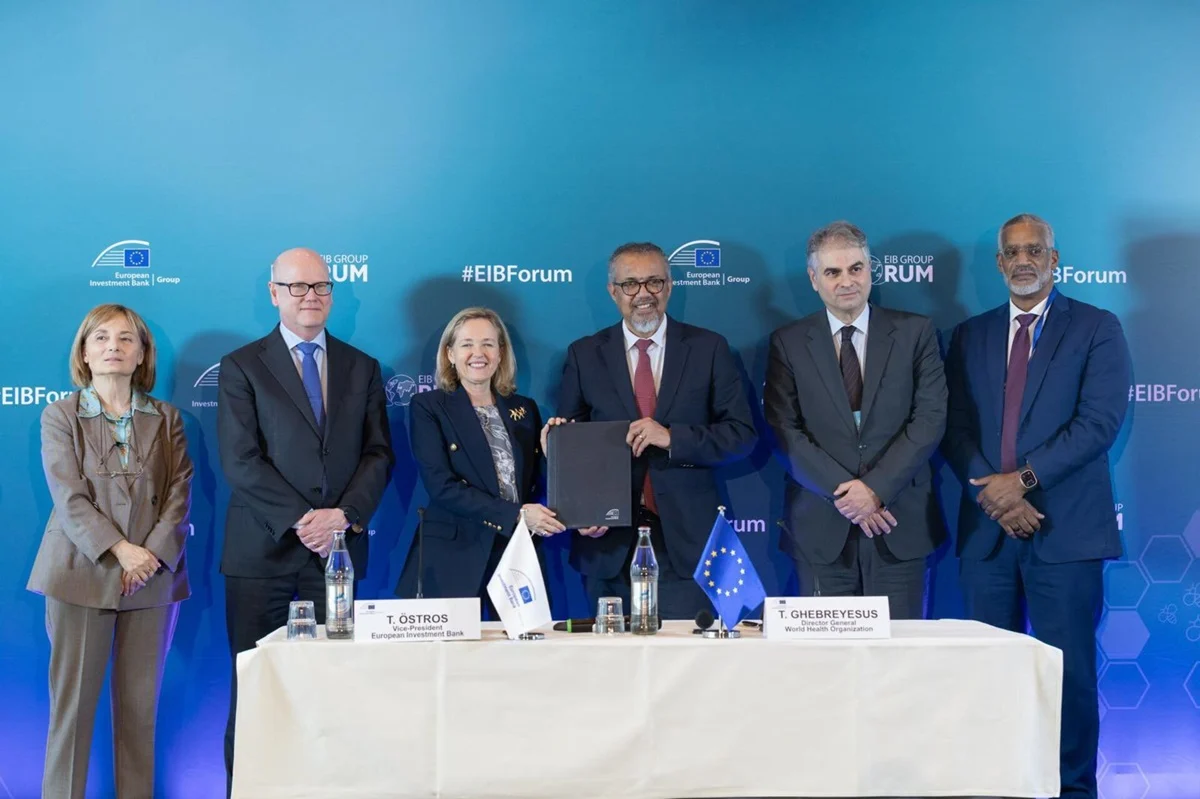
On 6 March 2025, at the EIB Group Forum held in Luxembourg, Dr. Tedros Adhanom Ghebreyesus, Director-General of the World Health Organization (WHO), and Thomas Östros, Vice-President of the European Investment Bank (EIB Global), formalized a landmark partnership aimed at shoring up Lebanon’s precarious healthcare system. The agreement, centered on a 10 million euro grant, represents a strategic intervention designed to restore critical diagnostic capabilities and ensure the continuity of care for thousands of vulnerable individuals suffering from chronic medical conditions.
A Critical Intervention for Lebanon’s Healthcare Landscape
The Lebanese healthcare sector has been under immense strain for several years, grappling with a multifaceted crisis that includes hyperinflation, the depletion of foreign currency reserves, and the degradation of essential public infrastructure. The EIB Global and WHO initiative is specifically engineered to address the systemic collapse of public laboratory services and the scarcity of life-saving medications.
The core of this initiative involves the comprehensive re-establishment of Lebanon’s Central Public Health Laboratory (CPHL). As the primary facility for epidemiological surveillance and diagnostic accuracy, the CPHL’s decline has hampered the nation’s ability to detect and respond to outbreaks effectively. By providing the necessary capital to modernize this facility, the WHO and EIB aim to restore a foundational pillar of national health security. Furthermore, the grant earmarks significant resources for the procurement and distribution of essential medicines. This component is projected to support at least 50,000 people living with chronic diseases, including diabetes, cardiovascular disorders, and various forms of cancer, ensuring that these patients maintain access to treatment despite the ongoing economic volatility in the country.
Chronology of the Crisis and Collaborative Response
The decline of Lebanon’s public health system did not occur in a vacuum. Since late 2019, the country has faced one of the worst economic depressions in modern history. The COVID-19 pandemic further exacerbated these conditions, pushing the already fragile health infrastructure to its breaking point.
- October 2019: The onset of the economic crisis leads to severe currency devaluation, drastically increasing the cost of imported medical supplies.
- August 2020: The Beirut Port explosion causes catastrophic damage to medical facilities and warehouses, destroying significant stocks of vaccines and medicines.
- 2021–2023: A massive brain drain occurs as thousands of doctors and nurses emigrate, leaving hospitals understaffed and public health programs underfunded.
- 2024: Negotiations intensify between international donors and the Lebanese Ministry of Public Health to stabilize the supply chain for essential medicines.
- 6 March 2025: The EIB Global and WHO sign the 10 million euro agreement at the EIB Group Forum, marking a shift from emergency aid toward systemic institutional rebuilding.
Economic and Health Data: The Scale of Need
The necessity for this intervention is underscored by sobering statistics regarding the health status of the Lebanese population. According to reports from the WHO and the Lebanese Ministry of Public Health, chronic diseases are the leading cause of mortality in the country, accounting for nearly 90% of all deaths.
Inflation has rendered standard medications unaffordable for a large segment of the population, with the cost of chronic disease management increasing by over 1,000% in local currency terms since 2019. The supply chain for essential medicines is heavily reliant on imports, and the lack of foreign exchange has frequently led to shortages of insulin, antihypertensives, and oncology treatments. By securing this grant, the WHO aims to bypass private-sector supply disruptions by creating a centralized, sustainable mechanism for the delivery of these medicines through the public health network.
The Central Public Health Laboratory serves as the national reference for microbiology, immunology, and environmental testing. Its restoration is not merely a clinical requirement but a geopolitical necessity, as the laboratory plays a pivotal role in the Global Health Security Agenda. Strengthening this facility allows Lebanon to better participate in regional disease surveillance networks, ensuring that health threats—ranging from infectious diseases to foodborne pathogens—are identified before they reach crisis levels.
Official Perspectives and Strategic Alignment
The partnership between the EIB and the WHO reflects a growing trend in international development, where financial institutions and health organizations leverage their respective strengths to achieve public policy goals.
Dr. Tedros Adhanom Ghebreyesus, in his remarks at the forum, highlighted that the initiative is about more than just funding; it is about building resilience in a region prone to shocks. He emphasized that the sustainability of the Lebanese health system depends on the restoration of domestic institutions that can provide consistent, quality-assured services to the population.
Thomas Östros of the EIB noted that the bank’s investment is part of a broader commitment to supporting human development in the Middle East. By providing technical expertise and financial oversight, the EIB ensures that the grant is utilized with transparency and efficiency, meeting international standards for institutional procurement and project management. The EIB’s involvement also signals to other international donors that the restoration of Lebanon’s public health sector is a viable and prioritized target for development funding.
Broader Implications and Long-Term Impact
The implications of this 10 million euro initiative extend far beyond the immediate provision of medicines. By focusing on the Central Public Health Laboratory, the project addresses the "diagnostic gap" that often complicates public health decision-making in developing nations. A functioning CPHL provides the government with the data-driven insights necessary to allocate limited public funds effectively.
Furthermore, the initiative serves as a model for "health system strengthening" (HSS). Instead of relying on fragmented, NGO-led humanitarian interventions, the EIB and WHO are working through the state’s own apparatus. This is a crucial step in preventing the total privatization of healthcare, which would otherwise leave the most vulnerable citizens—those unable to afford private insurance or out-of-pocket costs—without any safety net.
However, analysts caution that while this grant is a significant step forward, it remains a remedial measure. The long-term health of the Lebanese population will ultimately depend on broader macroeconomic stabilization and the reform of the country’s pharmaceutical procurement laws. The sustainability of the 50,000 patients currently supported by this initiative will require the eventual transition to a domestic financing model, which is currently hindered by the state’s limited fiscal capacity.
Conclusion: A Pathway to Stability
The 6 March 2025 agreement is a testament to the importance of institutional cooperation in the face of national adversity. By linking the EIB’s capital strength with the WHO’s technical mandate, the international community has provided a lifeline to a sector that serves as the bedrock of Lebanese social stability.
As the project unfolds, the success of the CPHL’s restoration and the efficiency of the medication distribution network will be closely watched. If successful, this model of collaboration could serve as a blueprint for other nations experiencing protracted crises. For the people of Lebanon, the initiative offers a tangible glimmer of hope, promising a return to reliable diagnostic services and the consistent availability of essential medicines—the basic components of a functional healthcare system. The commitment made in Luxembourg is not just a financial transaction; it is a vital investment in the stability, security, and human dignity of a nation navigating its most challenging decade.
