
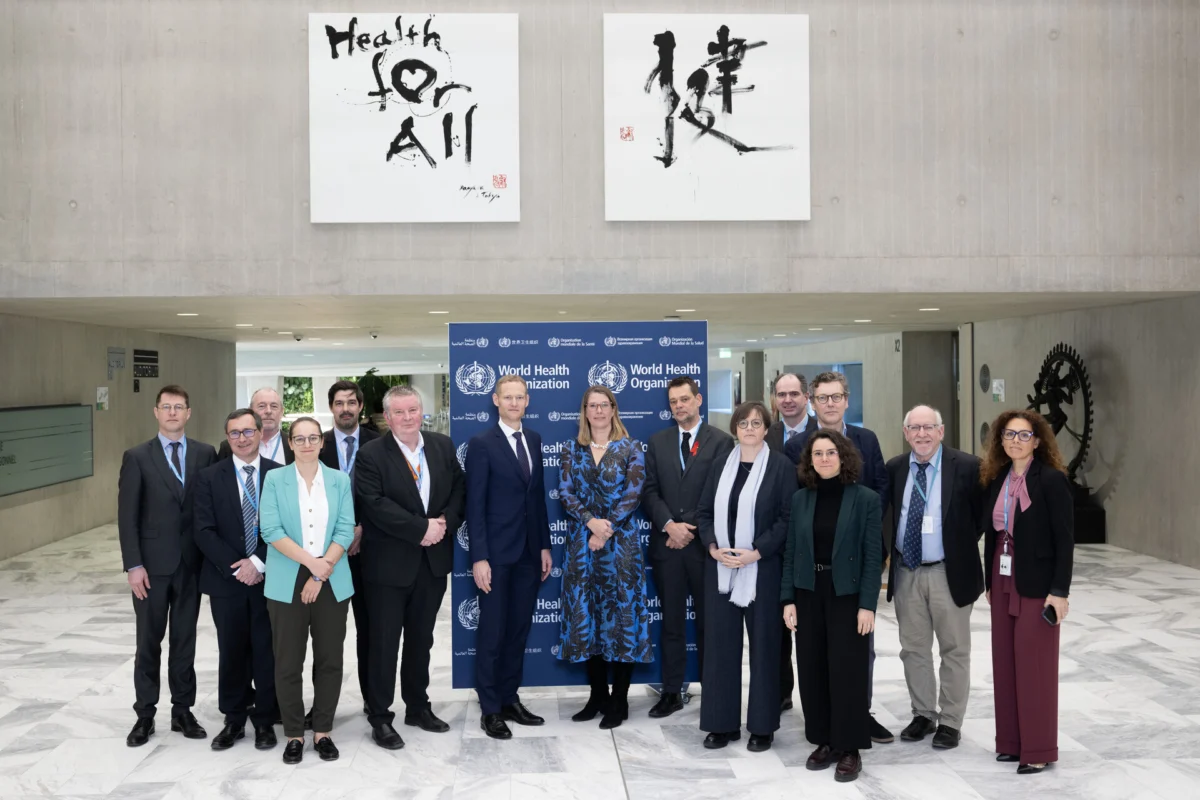
The strategic partnership between the Kingdom of Belgium and the World Health Organization (WHO) has entered a new phase of intensification following a comprehensive three-day dialogue held in Geneva from March 2 to 5, 2025. This high-level engagement brought together representatives from the Belgian federal, Flemish, and Walloon governments to recalibrate their joint efforts in addressing the most pressing challenges in global health. As the global community grapples with the complexities of post-pandemic recovery and emerging biological threats, the alignment between Belgian development cooperation priorities and the WHO’s 14th General Programme of Work (GPW14) has become a focal point of multilateral diplomacy.
The dialogue, led by H.E. Christophe Payot, Ambassador of Belgium to the United Nations and other international organizations in Geneva, served as a platform to evaluate the efficacy of current funding streams and strategic initiatives. This meeting carries particular weight, as it builds upon the momentum generated during Belgium’s presidency of the Council of the European Union in 2024, where global health security was positioned at the forefront of the European political agenda.
A Legacy of Collaboration and Strategic Alignment
Belgium has long been a foundational pillar of the WHO’s financing structure, providing not only flexible core funding but also targeted support for programs that address systemic health inequalities. The recent dialogue focused on ensuring that this financial commitment is channeled with maximum efficiency, particularly in the context of an evolving global health landscape characterized by geopolitical instability, climate-driven health risks, and the persistent challenge of health equity.
The discussions were structured around three core pillars: the expansion of equitable access to medical technologies, the strengthening of the global health emergency architecture, and the acceleration of Universal Health Coverage (UHC). By involving technical experts from WHO’s Regional Offices for Africa and Europe, the dialogue ensured that the policy discussions remained grounded in the realities of country-level implementation.
Accelerating Equitable Access to Medicines and Vaccines
A significant portion of the discourse was dedicated to the Access to Medicines programme, a flagship initiative funded by Belgium. The program addresses the structural barriers that prevent low- and middle-income countries from securing affordable, life-saving treatments.
During the session, the WHO presented a detailed assessment of the programme’s footprint in Senegal. The case study highlighted that the primary challenge is not merely the procurement of pharmaceuticals, but the creation of a sustainable market environment that fosters local production. By shifting focus from short-term aid to long-term market shaping, Belgium and the WHO aim to build self-sustaining health ecosystems. This approach is critical; data suggests that localizing production of essential medicines in Africa could reduce dependency on imports by up to 30% over the next decade, significantly lowering the cost of treatment for chronic and infectious diseases.
Strengthening Global Health Emergency Preparedness
In the wake of the COVID-19 pandemic, the reform of the global health security architecture has become a primary objective for international health agencies. The dialogue explored the progress of the ongoing negotiations regarding the international pandemic agreement—a legally binding instrument designed to govern future pandemic prevention, preparedness, and response.
The participants underscored the necessity of the "One Health" approach, which recognizes the interconnectedness of human, animal, and environmental health. The debate was informed by the stark realities of current crises, with the WHO providing a briefing on the operational complexities of delivering health services in Gaza. This served as a poignant example of the logistical and humanitarian hurdles involved in maintaining health system resilience during active conflict.
Furthermore, the discussion addressed the increasing threat of biological risks and zoonotic diseases. With zoonotic diseases accounting for approximately 60% of all emerging infectious diseases, the collaboration will prioritize risk mitigation strategies and early-warning surveillance systems that can intercept outbreaks before they escalate into global crises.

Advancing Universal Health Coverage (UHC)
Universal Health Coverage remains the cornerstone of the WHO’s development agenda. The UHC-Partnership, which has been supported by Belgium since 2011, has played a pivotal role in assisting countries in developing robust health policies. The review of the 2021–2024 period highlighted significant gains in health system strengthening across Belgium’s partner countries, with the Democratic Republic of Congo serving as a primary case study.
The discussions emphasized the need for a more integrated approach, where WHO country office programs are explicitly aligned with Belgium’s bilateral development cooperation strategies. This convergence aims to eliminate duplication of effort and ensure that domestic health policies are both sustainable and evidence-based.
Mental health, a long-overlooked component of primary healthcare, also received renewed attention. The WHO presented new policies designed to integrate mental health services into existing primary care frameworks, reflecting a growing global consensus that mental health is as essential to human development as physical health.
Official Responses and Diplomatic Sentiment
The atmosphere of the dialogue was characterized by mutual recognition of the trust that has been established over years of cooperation. Dr. Catharina Boehme, Assistant Director-General for External Relations and Governing Bodies at the WHO, expressed deep appreciation for the multi-tiered involvement of the Belgian government. "We thank you for your support, honesty, and strong engagement for global health," Dr. Boehme noted, citing the tangible outcomes of collaborative efforts in Mozambique and Senegal as evidence of the partnership’s impact.
From the Belgian perspective, the sentiment was one of shared responsibility in an increasingly volatile world. "We recognize WHO as a trustworthy partner in global health," stated Mr. Dirk Brems, Director of Thematic and Multilateral Cooperation at the Directorate-General for Development Cooperation and Humanitarian Aid. "It is important we continue these discussions as we tread uncharted territories, and we look forward to working together for strong and sustained multilateralism."
Mr. Koen Van Acoleyen, Minister Counselor at the Permanent Representation of Belgium to the UN, reflected on the importance of the dialogue in navigating current challenges: "After listening to the leaders and experts of WHO, we now better understand how they are navigating these challenging times. We are honoured that we can walk this road together."
Broader Impact and Future Implications
The results of this dialogue are expected to inform the development of a renewed WHO-Belgium Country Cooperation Strategy. By positioning Universal Health Coverage at the heart of the GPW14, the partnership is essentially setting a blueprint for how donor nations can effectively support international health organizations.
The implications for the global health sector are significant. First, the emphasis on localizing production of health technologies represents a strategic shift toward regional autonomy, which is expected to enhance global supply chain resilience. Second, the commitment to aligning bilateral cooperation with WHO-led initiatives minimizes administrative fragmentation, allowing for a more cohesive deployment of resources.
Looking ahead, the focus will remain on evidence-based interventions in neglected tropical diseases and the protection of sexual and reproductive health and rights. These areas, while often overshadowed by high-profile emergencies, are essential for achieving the Sustainable Development Goals (SDGs) by 2030.
As Belgium and the WHO move forward with this multi-year agreement, the partnership serves as a model for how high-income nations can leverage their diplomatic and financial weight to support multilateral institutions. In a climate where multilateralism is often tested by national interests, the sustained commitment between Belgium and the WHO highlights the enduring value of international cooperation in safeguarding global public health. The upcoming months will likely see the formalization of these discussions into actionable country-level roadmaps, ensuring that the strategic vision articulated in Geneva is translated into measurable improvements in health outcomes on the ground.
