
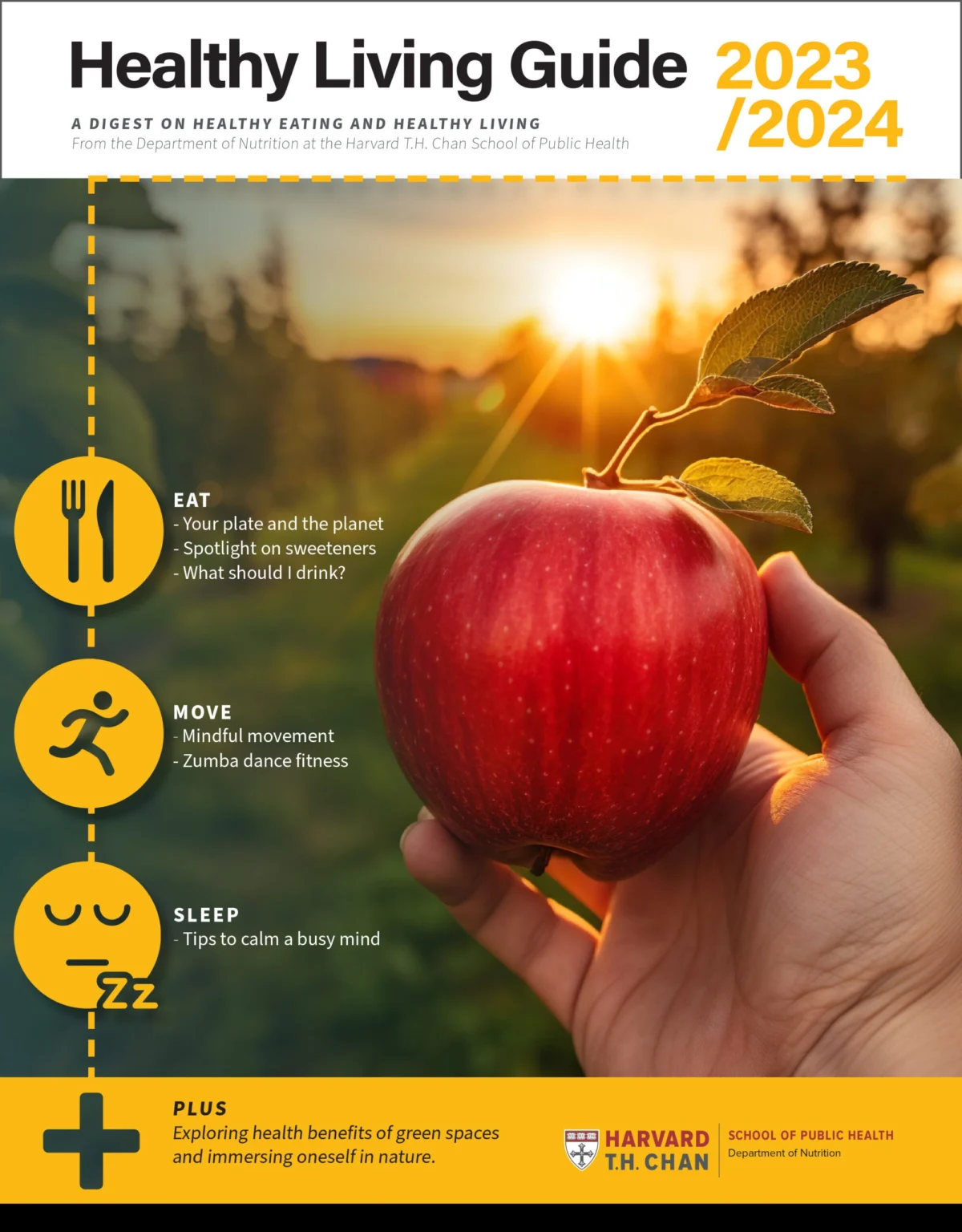
The launch of the fourth annual Healthy Living Guide marks a significant moment for the Department of Nutrition at Harvard T.H. Chan School of Public Health, coinciding with a year of notable advancements, particularly the establishment of the Thich Nhat Hanh Center for Mindfulness in Public Health. This initiative underscores a growing commitment to integrating mindfulness principles into public health strategies, aiming to foster well-being not only at an individual level but across broader populations and on a global scale. The guide, released at the beginning of 2024, reflects this forward-looking approach, with a central theme of mindful eating and its multifaceted impact on both personal health and the health of the planet woven throughout its content.
The release of the Healthy Living Guide is more than just an annual publication; it represents a culmination of research, expert insights, and practical advice from the Department of Nutrition. The 2023-2024 edition specifically highlights key areas of nutrition, physical activity, and sleep, offering readers up-to-date information and actionable strategies. The inclusion of research on ultra-processed foods and their connection to mental health, the energizing benefits of movement like Zumba, and the scientific understanding of sleep chronotypes demonstrates the guide’s comprehensive scope. These topics are not merely academic; they are presented with an emphasis on how they can be practically applied to improve daily life and long-term health outcomes.
The Rise of Mindfulness in Public Health
The establishment of the Thich Nhat Hanh Center for Mindfulness in Public Health in 2023 is a landmark development, signaling a paradigm shift in how well-being is approached within academic and public health spheres. The Center, named in honor of the renowned Zen master, is dedicated to rigorous scientific inquiry into the applications of mindfulness. Its mission extends beyond individual coping mechanisms, focusing on how mindfulness can be scaled to create systemic change and improve health outcomes for entire communities and nations. This philosophical underpinning is directly reflected in the Healthy Living Guide, which emphasizes mindful eating as a practice that can foster a more conscious relationship with food, leading to healthier dietary choices and a reduced environmental footprint.
Mindful eating, a core tenet of the Center’s work, encourages individuals to pay attention to their food experiences without judgment. This involves noticing the taste, texture, smell, and even the emotional and physical sensations associated with eating. Research consistently shows that mindful eating can lead to better digestion, improved satiety, and a reduction in overeating and binge eating. Furthermore, by fostering a deeper appreciation for food, mindful eating can also cultivate a greater awareness of the food system, including its environmental impact, encouraging more sustainable consumption patterns. The Healthy Living Guide serves as a practical conduit for disseminating these principles, offering readers accessible ways to incorporate mindfulness into their daily routines.
Key Research Highlights and Practical Applications
The 2023-2024 edition of the Healthy Living Guide features a diverse array of topics designed to inform and empower readers. Among the notable research highlights are:
-
Ultra-Processed Foods and Mental Health: Emerging research continues to draw a strong correlation between the consumption of ultra-processed foods (UPFs) and negative mental health outcomes, including increased risk of depression and anxiety. UPFs, often characterized by high levels of added sugars, unhealthy fats, and artificial ingredients, are designed for convenience and palatability but can disrupt gut health, promote inflammation, and contribute to nutrient deficiencies. The guide delves into the scientific evidence linking these dietary patterns to neurological and psychological well-being, providing advice on how to identify and reduce UPF intake in favor of whole, minimally processed foods. For instance, studies published in journals like The Lancet Psychiatry have indicated that diets rich in whole foods can significantly improve mood and reduce depressive symptoms, highlighting the tangible impact of dietary choices on mental fortitude.
-
The Power of Movement: Zumba and Beyond: Physical activity remains a cornerstone of healthy living, and this year’s guide explores the benefits of engaging and enjoyable forms of exercise. Zumba, a popular dance fitness program, is highlighted for its ability to boost cardiovascular health, improve coordination, and enhance mood through the release of endorphins. The guide likely includes insights into the physiological and psychological benefits of regular, enjoyable physical activity, emphasizing that consistency and enjoyment are key to long-term adherence. Data from the Centers for Disease Control and Prevention (CDC) consistently shows that adults who meet recommended physical activity guidelines have a lower risk of chronic diseases such as heart disease, type 2 diabetes, and certain cancers. The guide aims to translate these broad recommendations into accessible, engaging activities.
-
Understanding Sleep Chronotypes: The guide also sheds light on the fascinating science of sleep chronotypes, which refers to an individual’s natural inclination to sleep and wake at certain times. Whether one is an "early bird" or a "night owl," understanding one’s chronotype can inform strategies for optimizing sleep quality and quantity. Disruptions to natural sleep-wake cycles, often referred to as circadian rhythm disruption, are linked to a host of health issues, including metabolic disorders, impaired cognitive function, and weakened immune systems. The guide likely presents evidence-based advice on how to align daily routines with one’s chronotype, promoting better sleep hygiene and, consequently, improved overall health. Research in sleep medicine suggests that personalized sleep recommendations based on chronotype can lead to significant improvements in sleep quality and daytime functioning.
A Chronology of Growth and Expansion
The Healthy Living Guide has evolved significantly since its inception. Its journey reflects the ongoing advancements in nutritional science and public health research.
-
2020-2021 Edition: The inaugural guide likely focused on foundational principles of healthy eating and living, establishing core recommendations for balanced diets, regular exercise, and adequate sleep. This period would have been characterized by consolidating existing knowledge and presenting it in an accessible format.
-
2021-2022 Edition: Subsequent editions would have begun to incorporate more nuanced research findings, perhaps delving deeper into specific nutrients, the impact of food environments, or emerging trends in fitness. The focus might have shifted towards addressing common dietary challenges and promoting sustainable lifestyle changes.
-
2022-2023 Edition: This edition likely saw an increased emphasis on the mental health dimensions of nutrition and lifestyle, reflecting a growing body of evidence connecting diet, exercise, and sleep to psychological well-being. It might have also begun to touch upon the environmental impact of food choices.
-
2023-2024 Edition: The current edition marks a significant leap forward with the integration of mindfulness as a central theme, catalyzed by the launch of the Thich Nhat Hanh Center for Mindfulness in Public Health. This edition is characterized by a holistic approach that bridges individual well-being with broader societal and environmental concerns. The inclusion of topics like UPFs and mental health, coupled with the mindful eating focus, signifies a maturation of the guide’s scope and ambition.
Official Statements and Expert Perspectives
While direct quotes from specific individuals are not provided in the original excerpt, the underlying sentiment from the Department of Nutrition is clear: a dedication to translating cutting-edge research into practical, actionable guidance for the public. The launch of the Thich Nhat Hanh Center is a strategic move, signaling an institutional commitment to a more integrated and mindful approach to public health.
"The apple in your hand is the body of the cosmos," a quote attributed to Thich Nhat Hanh, serves as a poignant encapsulation of the Center’s philosophy. It suggests that even the most ordinary aspects of our lives, like eating an apple, are interconnected with the vastness of the universe. This perspective encourages a profound appreciation for our food, its origins, and its impact on ourselves and the environment. It is this kind of mindful awareness that the Center and the Healthy Living Guide aim to cultivate.
Broader Impact and Future Implications
The Healthy Living Guide and the initiatives it represents have far-reaching implications for public health. By making complex scientific information accessible and by promoting practices like mindful eating, the Department of Nutrition is empowering individuals to take greater control of their health. The focus on population-level well-being through the Thich Nhat Hanh Center suggests a long-term vision for public health that is preventative, holistic, and inclusive.
The emphasis on ultra-processed foods, physical activity, and sleep addresses critical public health challenges that contribute to rising rates of chronic diseases. The integration of mindfulness provides a novel and powerful tool for behavior change, addressing not just the "what" of healthy living, but also the "how" and the "why." This approach has the potential to foster more sustainable and equitable health outcomes.
As the public health landscape continues to evolve, the principles championed by the Healthy Living Guide and the Thich Nhat Hanh Center are likely to become even more critical. The interconnectedness of individual health, societal well-being, and planetary health is a defining challenge of the 21st century, and the work being done at Harvard’s Department of Nutrition offers a promising pathway toward a healthier future for all. The guide’s availability in a downloadable PDF format, complete with printable tip sheets, further underscores its commitment to accessibility and practical application for a wide audience.
