
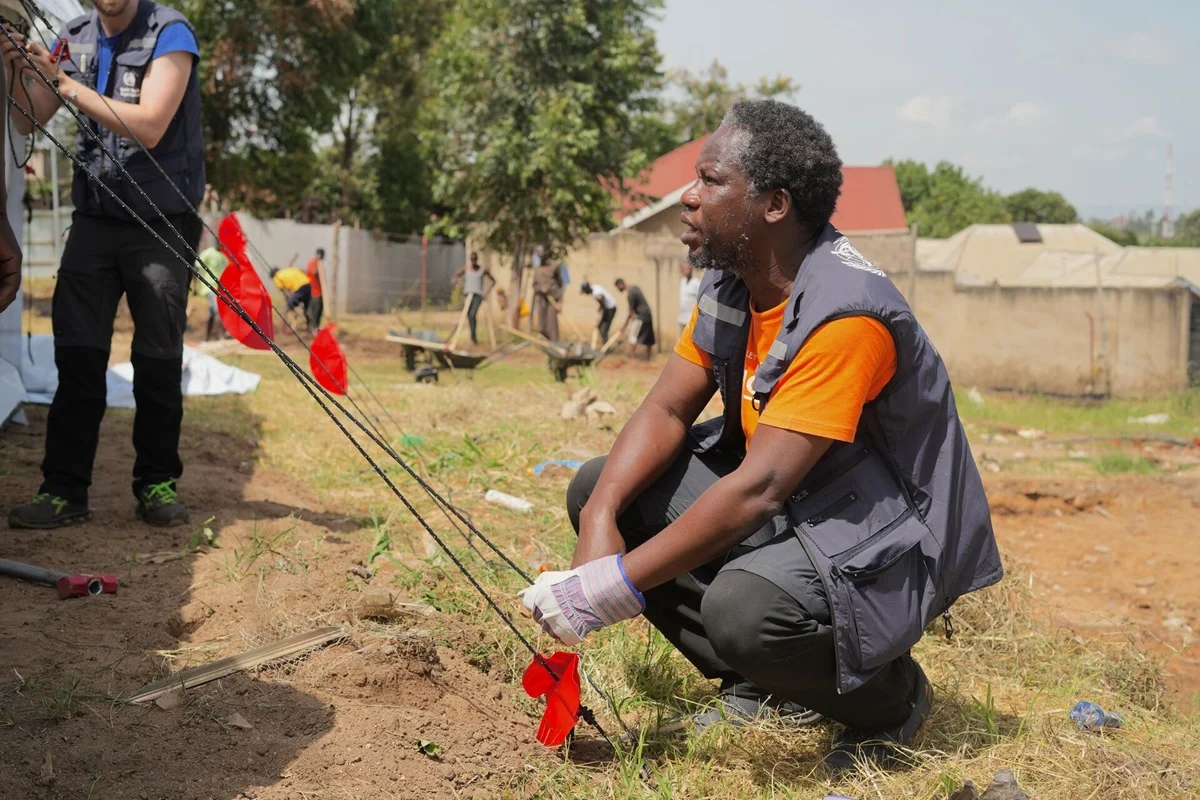
The World Health Organization (WHO) has officially convened its leading technical advisory bodies and research groups to address the escalating threat of Bundibugyo virus disease (BVD) following a surge in cases across the Democratic Republic of the Congo (DRC) and neighboring Uganda. This strategic mobilization aims to bridge a critical gap in the global health security infrastructure, as there are currently no licensed vaccines or therapeutic treatments specifically approved for the Bundibugyo strain of the Ebola virus. In a series of high-level consultations, the WHO R&D Blueprint technical advisory groups, alongside the Strategic Advisory Group of Experts on Immunization (SAGE), have evaluated a portfolio of candidate products. The consensus among these international experts is that while several experimental interventions show significant promise, they must be deployed exclusively within the framework of rigorously designed clinical trials. This approach is intended to ensure that any intervention not only meets the immediate needs of the affected populations but also contributes to the global body of scientific evidence required for future regulatory approval and widespread deployment.
Understanding the Bundibugyo Virus: A Distinct Pathological Challenge
The Bundibugyo virus (BVD) represents one of the six species within the genus Ebolavirus. First identified in 2007 during an outbreak in the Bundibugyo District of western Uganda, the virus is genetically distinct from the more frequently cited Zaire and Sudan ebolaviruses. While the Zaire strain often commands the most international attention due to its high mortality rates—sometimes reaching 90%—the Bundibugyo strain remains a formidable public health threat with case fatality rates historically ranging between 25% and 50%.
The clinical presentation of BVD is characterized by high fever, severe headache, muscle pain, and in advanced stages, internal and external bleeding. The difficulty in managing BVD lies in the lack of "cross-protection" provided by existing medical countermeasures. For instance, the Ervebo vaccine, which was instrumental in curbing the Zaire Ebola outbreaks in West Africa and the eastern DRC, is ineffective against the Bundibugyo species. This biological specificity necessitates the development of a unique suite of vaccines and monoclonal antibody treatments tailored specifically to the molecular structure of the Bundibugyo virus.
The Chronology of Response and Outbreak Context
The current response is situated within a complex history of viral hemorrhagic fever outbreaks in Central Africa. Since its discovery in 2007, BVD has reappeared in sporadic intervals, most notably in the Orientale Province of the DRC in 2012. The current epidemiological situation in the DRC and Uganda has prompted a shift from reactive containment to proactive scientific evaluation.
In late 2022 and early 2023, the region faced a significant outbreak of the Sudan ebolavirus, which further strained local health systems and highlighted the urgent need for a diversified arsenal of vaccines. Recognizing that the Bundibugyo virus could follow a similar trajectory of transmission, the WHO initiated the current round of expert meetings to preempt a larger crisis. The timeline of the WHO’s intervention began with the activation of the R&D Blueprint, followed by the specific convening of SAGE and its Ebola vaccine working group. These groups were tasked with assessing the "readiness levels" of candidate vaccines—some of which are in Phase I or Phase II of development—and determining the feasibility of implementing Phase III ring vaccination trials in active transmission zones.
Strategic Recommendations for Clinical Evaluation
The WHO advisory groups have categorized their recommendations into two primary pillars: therapeutics for the treatment of infected individuals and vaccines for the prevention of new cases. Because no product has yet cleared the high bar of regulatory licensure for BVD, the WHO is working with the governments of the DRC and Uganda to establish the infrastructure for "field trials."
For treatment, the focus remains on identifying monoclonal antibodies or antiviral drugs that can reduce viral load and improve patient survival rates. In previous outbreaks of other Ebola strains, drugs like Ebanga and Inmazeb proved revolutionary; however, their efficacy against BVD must be proven through controlled trials. For prevention, the SAGE experts are looking at viral vector and mRNA vaccine platforms that have shown potential in laboratory settings. The recommendation to use these only in clinical trials is a safeguard against the "compassionate use" trap, which, while well-intentioned, often fails to produce the statistically significant data needed to license a drug for global use. By prioritizing clinical trials, the WHO ensures that every dose administered contributes to a permanent solution for BVD.
Ethical Frameworks and Community Engagement
A central theme of the WHO’s mobilization is the adherence to the highest ethical standards. Conducting research in the midst of a lethal disease outbreak presents profound moral and logistical challenges. The WHO, in partnership with the Africa Centres for Disease Control and Prevention (Africa CDC) and the ANRS Emerging Infectious Diseases (the French National Agency for Research on AIDS and Viral Hepatitis), is developing protocols that prioritize patient safety and informed consent.
Crucially, the WHO has emphasized that research cannot exist in a vacuum. To be successful, clinical trials must be integrated into the broader public health response. This involves "Safe and Dignified Burials" (SDB), which prevent transmission during traditional funeral rites, and intensive community engagement. Past outbreaks have shown that without the trust of the local population, medical teams can face resistance, and contact tracing efforts can collapse. Therefore, the WHO is calling for a "people-centered" approach where affected communities are consulted on the trial designs and are kept informed of the research progress.
The Role of the WHO R&D Blueprint and SAGE
The WHO R&D Blueprint serves as the structural backbone of this response. Launched in the wake of the 2014-2016 West Africa Ebola crisis, the Blueprint is designed to shorten the time between the identification of an outbreak and the deployment of effective countermeasures. It provides a platform for scientists, developers, and regulators to collaborate on "Target Product Profiles" (TPPs), which outline the specific characteristics a vaccine or drug must have to be effective in the field.
Complementing this is SAGE, the principal advisory group to the WHO for vaccines. SAGE’s role is to look beyond the laboratory and consider the logistical realities of immunization. For the BVD response, SAGE is evaluating how a candidate vaccine would be stored (cold-chain requirements), how it would be administered (dosage), and who should be prioritized (frontline health workers versus the general population). The synergy between the R&D Blueprint’s technical focus and SAGE’s policy focus creates a comprehensive pathway from scientific concept to public health reality.
Broader Implications for Global Health Security
The mobilization against BVD is a microcosm of the larger global effort to prepare for "Disease X"—the next unknown pathogen with pandemic potential. By refining the protocols for Bundibugyo, the WHO is strengthening the global response mechanism for all viral hemorrhagic fevers. The implications of this work extend to economic stability; Ebola outbreaks often lead to border closures, the suspension of trade, and the collapse of local markets. Rapidly identifying effective countermeasures can mitigate these secondary impacts, protecting both lives and livelihoods.
Furthermore, the collaboration between the WHO, the Africa CDC, and national governments represents a significant step toward regional health sovereignty. By placing the DRC and Uganda at the leadership of these trials, the international community is moving away from a "top-down" model of global health toward a collaborative partnership where local expertise is central to the scientific process.
Traditional Containment: The Immediate Priority
While the search for vaccines and treatments continues, the WHO remains steadfast in its commitment to the "tried and tested" methods of outbreak control. The organization has reiterated that the primary goal is to stop transmission using the tools available today. These include:
- Disease Surveillance: Identifying new cases as quickly as possible.
- Rapid Testing: Utilizing mobile laboratories to confirm BVD cases in remote areas.
- Contact Tracing: Tracking everyone who has been in contact with an infected person to break the chain of transmission.
- Infection Prevention and Control (IPC): Ensuring that hospitals do not become "amplification points" for the virus.
The WHO’s call for accelerated access to essential supplies—such as personal protective equipment (PPE) and laboratory reagents—is critical to maintaining these frontline defenses. The organization maintains that science and traditional public health must work in tandem; while science looks for the cure of tomorrow, public health manages the crisis of today.
Looking Ahead: World Health Day 2026 and Beyond
The ongoing efforts to combat Bundibugyo virus disease align with the theme of World Health Day 2026: “Together for health. Stand with science.” This year-long campaign highlights the indispensable role of scientific research as the foundation of global well-being. The WHO’s mission—to promote health, keep the world safe, and serve the vulnerable—is exemplified in its response to the BVD outbreak.
As the UN agency for health, the WHO continues to connect nations and partners across more than 150 locations, leading the charge against health emergencies. The current focus on the DRC and Uganda is a testament to the organization’s dedication to ensuring that even the most vulnerable populations have access to the benefits of modern science. Through coordinated investment, ethical research, and unwavering community engagement, the goal of a world safe from the threat of Bundibugyo virus disease moves closer to reality. The lessons learned in the forests of Central Africa today will undoubtedly shape the global response to infectious diseases for decades to come.
