
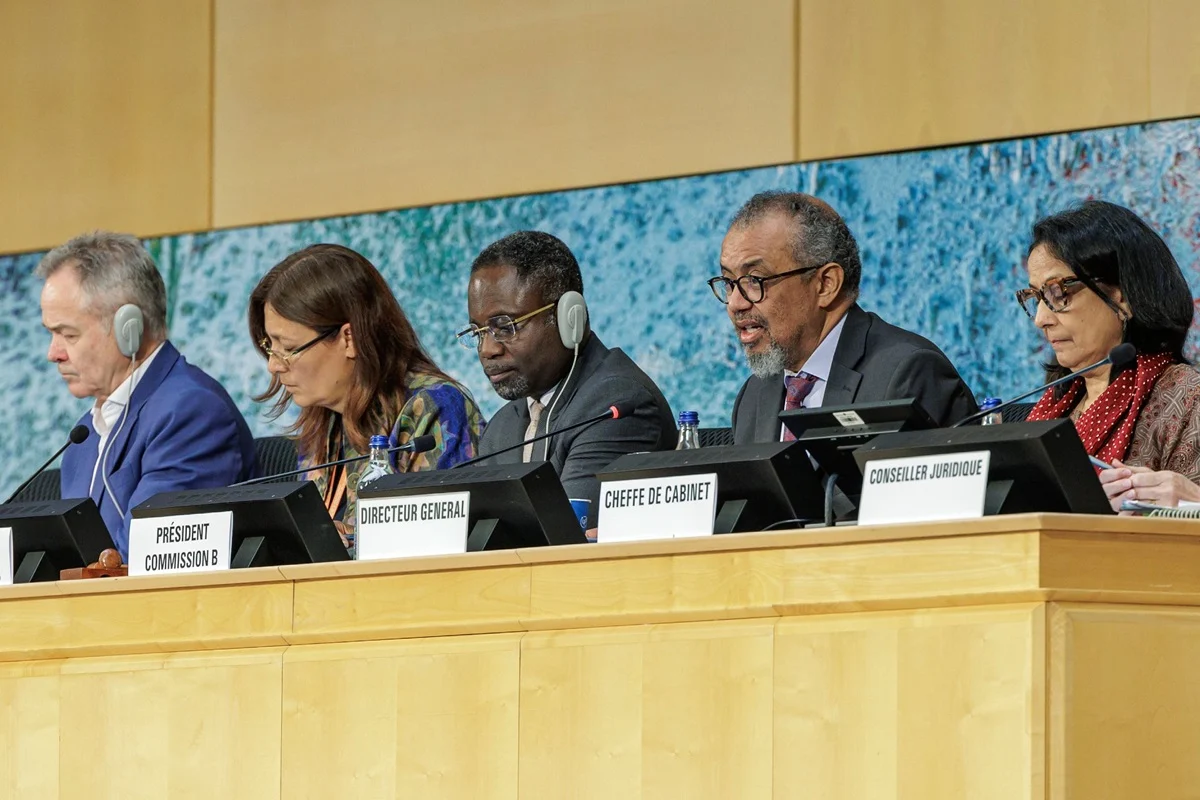
The World Health Assembly (WHA) has reached a series of landmark agreements aimed at modernizing the global health landscape, addressing the rising burden of non-communicable diseases, and integrating cutting-edge technologies into clinical practice. In a move that signals a significant shift in how international health initiatives are managed, Member States decided to establish a joint process, hosted by the World Health Organization (WHO), to support the comprehensive reform of the global health architecture. This process is designed to ensure that the international health system can meet the evolving needs of individual countries and global communities while maximizing equity, access, and collective impact.
Reforming the Global Health Architecture for a New Era
The decision to reform the global health architecture comes at a time when the international community is reflecting on the lessons learned from recent global health emergencies, most notably the COVID-19 pandemic. While the existing architecture has successfully driven improvements in disease control and the establishment of global norms over the past several decades, Member States noted that the current system has not kept pace with a rapidly changing global environment.
The newly established joint process will be led by Member States and involve collaboration with global health partners and United Nations agencies. The initiative will draw on existing reform efforts and align with the relevant elements of the UN80 Initiative. Key drivers for this reform include the expansion of national health sovereignty, the rise of regional health capacities, and the shifting landscape of disease burdens. Furthermore, the rapid evolution of artificial intelligence (AI), science, and digital technologies, coupled with a contraction in traditional health financing, has necessitated a more agile and integrated global framework.
Delegates highlighted that the global health landscape has become increasingly complex, characterized by a proliferation of health actors. This expansion has led to concerns regarding power imbalances, fragmentation of efforts, and the duplication of roles, which often undermine country ownership and leadership. The Assembly has requested the WHO Director-General to submit a final report by next year’s Assembly, outlining specific options and recommendations for a transformed architecture that prioritizes transparency and efficiency.
The First Global Resolution on Stroke Prevention and Care
In a historic move, the World Health Assembly approved the first-ever resolution dedicated specifically to stroke. Titled "Reducing the burden of stroke: strengthening prevention, acute care, rehabilitation and health-system readiness," the resolution was proposed by Egypt and co-sponsored by a diverse group of nations, including Chile, Georgia, Palestine, Paraguay, and Tunisia.
The urgency of this resolution is underscored by alarming epidemiological data. Over the last two decades, the lifetime risk of experiencing a stroke has surged by 50%, with current projections suggesting that one in four adults will suffer a stroke during their lifetime. In 2021 alone, stroke was identified as the third leading cause of death and disability globally, with 93.8 million existing cases and nearly 12 million new cases reported.
The resolution calls for a multi-faceted approach to stroke management, emphasizing the need for robust national prevention programs, improved access to acute care services, and comprehensive rehabilitation. It also links stroke management to the WHO Global NCD Action Plan 2023–2030 and the Intersectoral Global Action Plan on Epilepsy and Other Neurological Disorders, ensuring that stroke remains a central pillar of the global non-communicable disease (NCD) agenda.
Advancing Smart Safety Monitoring for Medicines and Vaccines
The Assembly also took significant steps toward improving the safety of medical products through a new resolution on pharmacovigilance. Recognizing that medicine and vaccine safety monitoring is a critical pillar of patient safety and resilient health systems, the resolution seeks to modernize how adverse effects are detected and managed globally.
The COVID-19 pandemic served as a catalyst for this initiative, demonstrating the necessity of rapid safety signal detection during mass vaccination campaigns. The resolution addresses modern challenges such as fragmented monitoring systems, unequal regulatory capacities across different regions, and the pervasive spread of mis- and disinformation, which can erode public trust in scientific interventions.
Under the new agreement, Member States committed to integrating digital technologies, real-world data, and AI into their national pharmacovigilance systems. This "smart" approach to safety monitoring aims to improve regulatory decision-making while maintaining strict ethical standards and data governance. The WHO has been tasked with developing global guidance and technical tools to support countries in building their workforce capacity and enhancing international information sharing. Progress on these efforts will be monitored and reported to the Assembly through 2032.
A Ten-Year Strategy for Emergency, Critical, and Operative Care
Addressing the high mortality rates associated with acute illness and injury, the Assembly approved the Global Strategy for Integrated Emergency, Critical and Operative (ECO) Care 2026–2035. This strategy provides a ten-year roadmap for countries to strengthen their health systems and ensure that life-saving services are timely, affordable, and of high quality.
Conditions that fall under the ECO umbrella—ranging from traumatic injuries to acute complications of chronic diseases—account for an estimated 38 million deaths and 1.3 billion disability-adjusted life years (DALYs) annually. The strategy emphasizes that integrated ECO services are essential for mitigating the health impacts of outbreaks, conflicts, disasters, and climate-related events.
Despite the clear need, many nations continue to struggle with health worker shortages, limited equipment, and fragmented service delivery. The WHO will provide technical and strategic support to Member States to help bridge these gaps, with a formal action plan containing specific implementation targets expected by the end of 2026.
Scaling Diagnostic Imaging Through Teleradiology
To bridge the gap in diagnostic access, particularly in underserved and remote areas, Member States endorsed a resolution to scale up teleradiology services. Imaging is vital for the detection and management of communicable diseases, trauma, and maternal health conditions, yet many communities lack the trained professionals and infrastructure required for on-site services.
Teleradiology—the remote interpretation of medical images—is recognized as a cost-effective solution to expand access to expert diagnostics. The resolution acknowledges the growing role of AI in radiology while stressing the importance of data protection, patient safety, and clinical oversight. Member States agreed to integrate teleradiology into their national digital health strategies and invest in secure digital infrastructure to support regional and international collaboration.
Precision Medicine: Balancing Innovation with Equity
In a landmark decision, the Assembly approved a resolution on precision medicine, which uses molecular and genomic data to tailor medical treatments to individual patients. While precision medicine has shown remarkable results in improving cancer survival rates and diagnosing rare diseases, there are significant concerns regarding the "genomic divide."
Low- and middle-income countries often face limited laboratory capacity and a lack of representation in global genomic datasets. The resolution requests the WHO to develop a global strategy on precision medicine to ensure that these scientific advancements do not widen existing health inequities. The focus will be on creating a framework for country readiness, ethical data use, and aligning precision medicine with the broader goals of Universal Health Coverage (UHC).
Geopolitical Context and Argentina’s Status
The Assembly also addressed sensitive diplomatic matters, specifically regarding the communication from the United Nations Secretary-General as the depositary of the WHO Constitution. This involved considering Argentina’s notification of withdrawal from the organization. Following deliberations in Committee B, a compromise text was reached by consensus. The Assembly took note of Argentina’s communication but decided that no further action is currently desirable, expressing a continued openness to Argentina’s cooperation within the organization.
Humanitarian Crisis in the Middle East
The proceedings concluded with a focus on the worsening health crisis in the occupied Palestinian territory (oPt), including East Jerusalem. A report from the Director-General detailed the devastating impact of ongoing conflict, noting that health sector losses in Gaza are estimated at $6.78 billion, with $1.39 billion in direct infrastructure damage.
Since October 2023, nearly 2,000 attacks on healthcare facilities have been recorded across the territory. The Assembly agreed to continue reporting on these conditions, emphasizing the severe shortages of medicines, fuel, and supplies. Additionally, delegates approved a resolution addressing the public health impact of regional escalations on Gulf Cooperation Council (GCC) countries and Jordan, highlighting the interconnected nature of health and regional stability.
Through these diverse resolutions, the World Health Assembly has set a comprehensive agenda for the coming decade, prioritizing structural reform, technological integration, and a renewed commitment to health equity in the face of both clinical and geopolitical challenges.
