
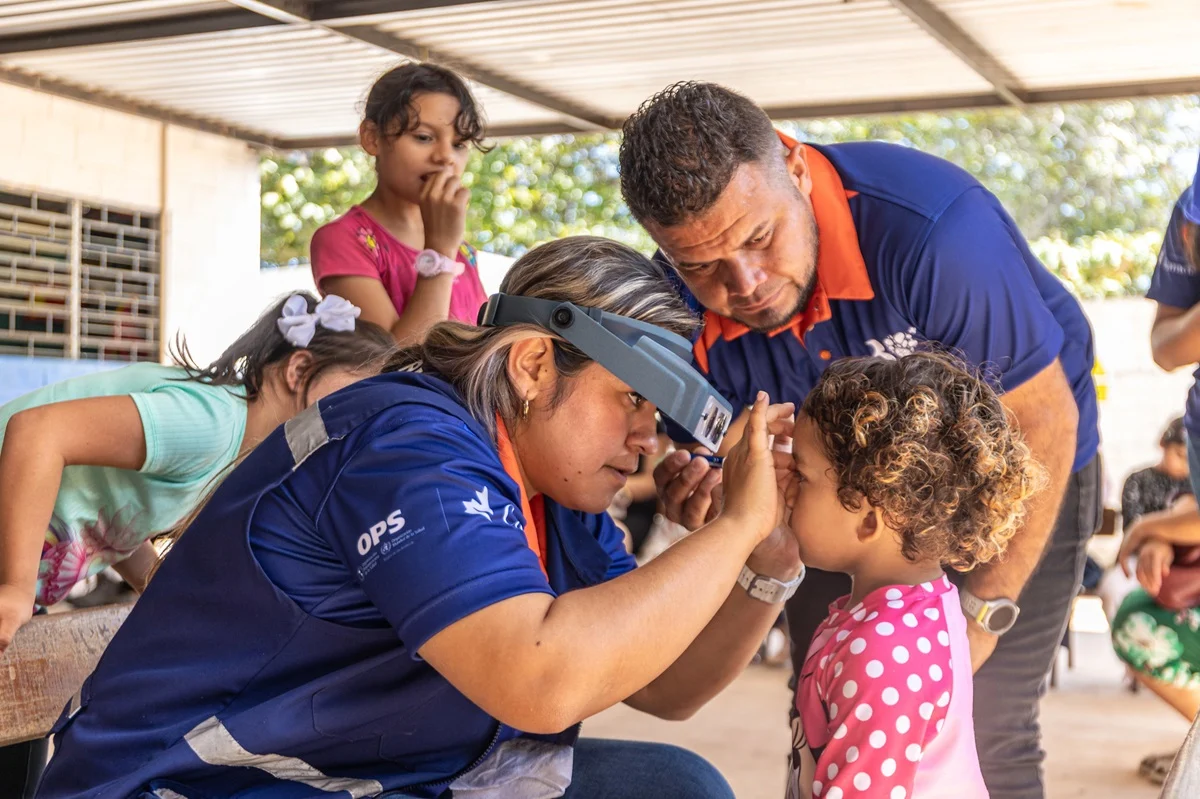
The World Health Organization (WHO) has officially validated El Salvador as having eliminated trachoma as a public health problem, marking a monumental achievement in the nation’s medical history and the broader global fight against neglected tropical diseases (NTDs). Trachoma, an agonizing and preventable bacterial infection, remains the world’s leading infectious cause of blindness. By achieving this status, El Salvador becomes the first country in Central America and only the second in the entire region of the Americas—following Mexico in 2017—to successfully eradicate the disease as a public threat.
This milestone was confirmed after a rigorous, multi-year evaluation process led by the WHO and the Pan American Health Organization (PAHO). The validation underscores El Salvador’s success in implementing a comprehensive public health strategy that combined medical intervention with social and environmental improvements. According to the WHO, the success in El Salvador is a critical step toward the global target of eliminating trachoma in every corner of the world by the year 2030.
Understanding the Burden of Trachoma
Trachoma is caused by the bacterium Chlamydia trachomatis. The infection is transmitted through direct contact with eye or nasal discharge from infected individuals, often via hands, clothing, or eye-seeking flies. While the initial infection is common in children, repeated infections over many years lead to a condition known as trachomatous trichiasis. In this advanced stage, the eyelashes turn inward and scrape against the eyeball, causing intense pain and permanent scarring of the cornea, which eventually leads to irreversible blindness.
The disease is inextricably linked to poverty, overcrowding, and a lack of access to basic services. It thrives in areas with poor sanitation and limited access to clean water, which are essential for maintaining facial hygiene. Because the disease primarily affects the most marginalized and vulnerable populations, its elimination is viewed not only as a medical victory but as a significant step toward social and health equity.
The Chronology of Elimination in El Salvador
The path to validation was defined by an intensive three-year period of assessment and action. Between 2023 and 2026, the Ministry of Health of El Salvador, with technical support from PAHO and financial backing from the Government of Canada, conducted a series of targeted health assessments. These evaluations were strategically focused on communities that were identified as high-risk based on environmental factors, historical data, and social vulnerability.
The results of these assessments were definitive. Health officials found no evidence of active trachoma transmission among children, who are typically the primary reservoir for the infection. Furthermore, no advanced cases of trichiasis capable of causing blindness were detected in the adult population. These findings provided the "solid evidence" required by the WHO to certify that the disease no longer constitutes a public health problem within the nation’s borders.
The success of the program is attributed to a multisectoral approach that went beyond simple clinical treatment. El Salvador’s strategy included:
- Strengthening Primary Care: Integrating eye health into the existing primary health care framework to ensure early detection.
- WASH Initiatives: Extensive improvements in Water, Sanitation, and Hygiene (WASH) infrastructure in rural and impoverished areas to break the cycle of transmission.
- Visual Screening: Implementing large-scale visual acuity screenings for adults to identify and treat historical cases of trichiasis.
- Community Engagement: Mobilizing local communities to participate in hygiene education and health surveys.
Official Reactions and Global Significance
The validation has drawn praise from the highest levels of international health leadership. Dr. Tedros Adhanom Ghebreyesus, WHO Director-General, commended the nation’s resolve. "I congratulate El Salvador on this remarkable achievement. It is a testament to the power of political commitment, strategic investment, and community engagement," Dr. Tedros stated. He emphasized that El Salvador’s success serves as a "clear signal that a healthier, more equitable future is within reach" for other nations still battling the disease.
Dr. Jarbas Barbosa, Director of PAHO, highlighted the equity aspect of the initiative. He noted that the validation reflects a commitment to reaching populations in the most vulnerable conditions and ensuring that "no one was left behind." For PAHO, this achievement is a cornerstone of its broader "Disease Elimination Initiative," which seeks to rid the Americas of more than 30 communicable diseases by 2030.
El Salvador’s Minister of Health, Francisco Alabi, expressed national pride in the speed and efficiency of the campaign. "We are proud to have reached this achievement in just three years, positioning the country in the region and improving the visual health of our population," Alabi said. He credited the collaborative efforts between the national government, PAHO, and the Embassy of Canada for the rapid progress.
The Global and Regional Landscape
While El Salvador celebrates this victory, trachoma remains a persistent threat in several other nations within the Americas. It continues to be a public health problem in rural and remote regions of Brazil, Colombia, Guatemala, and Peru. Furthermore, several other countries are currently under investigation to determine if the disease is endemic within their borders, including Bolivia, Ecuador, Guyana, Panama, Paraguay, and Venezuela.
Globally, El Salvador joins a select group of 64 countries that have been recognized by the WHO for eliminating at least one neglected tropical disease. In the specific context of trachoma, El Salvador is now part of a list of 32 countries validated for its elimination, which includes:
- Africa: Algeria, Benin, Burundi, Egypt, Gambia, Ghana, Malawi, Mali, Mauritania, Morocco, Senegal, Togo, Tunisia.
- Asia & Middle East: Cambodia, China, India, Iraq, Islamic Republic of Iran, Lao People’s Democratic Republic, Myanmar, Nepal, Oman, Pakistan, Saudi Arabia, Viet Nam.
- Oceania: Australia, Fiji, Papua New Guinea, Vanuatu.
- Americas: Mexico, El Salvador.
Technical Criteria for Validation
The WHO maintains strict criteria for certifying the elimination of trachoma. To be validated, a country must demonstrate:
- Low Prevalence of Trichiasis: A prevalence of trachomatous trichiasis (TT) "unknown to the health system" of less than 0.2% in individuals aged 15 years and older.
- Low Prevalence of Active Infection: A prevalence of trachomatous inflammation—follicular (TF) in children aged 1–9 years of less than 5% in every formerly endemic district.
- Sustained Systems: The existence of a robust national system capable of identifying and managing new (incident) cases of trichiasis to prevent the re-emergence of the disease.
El Salvador met and exceeded these benchmarks, proving that its health system has the capacity to detect, investigate, and respond to any potential future cases.
Implications and Future Outlook
The elimination of trachoma in El Salvador is expected to have long-term socioeconomic benefits. Neglected tropical diseases are known to trap communities in a cycle of poverty by preventing children from attending school and adults from working. By safeguarding the vision of its citizens, El Salvador is protecting its human capital and reducing the long-term economic burden on its healthcare system.
Moving forward, the WHO recommends that El Salvador maintain its surveillance mechanisms. The goal is to ensure that even though the disease is no longer a public health "problem," the infrastructure remains in place to treat any sporadic cases that may arise. This involves continued training for health personnel and maintaining the integration of eye care within the national health system.
The success in Central America provides a roadmap for the remaining endemic countries in the region. It proves that with targeted international cooperation—such as the partnership between El Salvador and Canada—and a focus on environmental hygiene, even diseases that have plagued humanity for millennia can be defeated. As the 2030 deadline for the WHO Road Map for Neglected Tropical Diseases approaches, El Salvador’s achievement stands as a beacon of progress for the global health community.
