
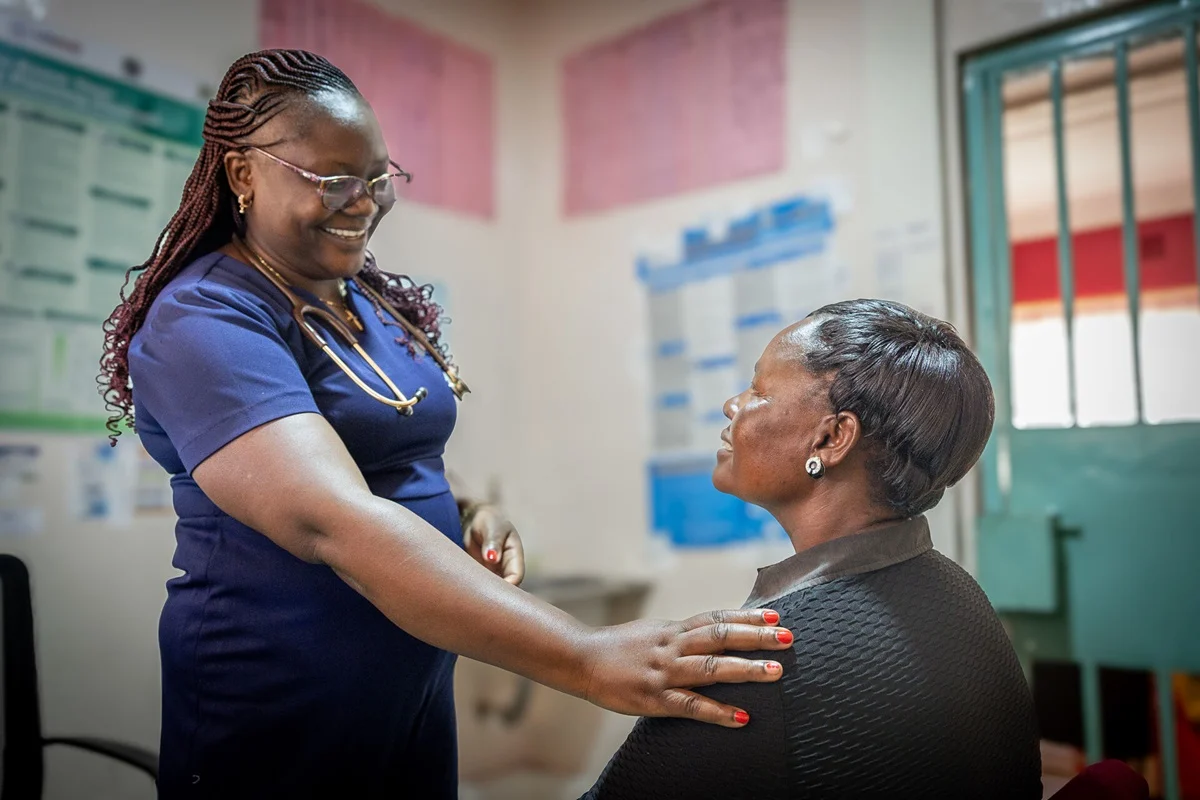
The World Health Organization (WHO) has released its comprehensive Global Status Report on Cancer 2026, delivering a stark warning regarding the physical, emotional, and financial trajectory of a disease that now claims more than 26,000 lives every day. According to the report, which was developed in collaboration with the International Agency for Research on Cancer (IARC), there are currently an estimated 20.6 million new cancer cases and nearly 10 million deaths annually. These figures solidify cancer’s position as the second leading cause of death globally, trailing only cardiovascular disease. Without a fundamental shift in how nations approach oncology—moving toward a model that prioritizes the health needs and lived experiences of patients—the WHO projects that annual cancer cases will surge to nearly 35 million by the year 2050.
The 2026 report serves as a critical barometer for global health, analyzing progress across political commitment, prevention strategies, and treatment investment. While the data shows significant strides in policy development and tobacco control, it also exposes a widening chasm of inequity. Access to prevention, early diagnosis, and supportive care remains a privilege of geography and wealth rather than a universal right. The report emphasizes that reversing the current trend requires more than just clinical innovation; it demands a unified global effort to integrate cancer care into universal health coverage (UHC) frameworks.
A Statistical Overview of the Global Cancer Burden
The sheer scale of the cancer crisis is reflected in the daily mortality rate, which translates to over 1,000 deaths every hour. The WHO’s data highlights that lung cancer continues to be the primary driver of cancer-related mortality on a global scale. Among men, lung, prostate, and colorectal cancers represent the most frequent diagnoses, while breast, lung, and colorectal cancers constitute the majority of the burden for women.
The geographical distribution of these cases reveals a complex landscape of risk and resource allocation. Asia, due in large part to its massive population, accounts for over half of all global cancer cases (50.7%) and an even higher percentage of deaths (56.5%). Europe presents a different challenge; despite representing only 9% of the world’s population, it carries a disproportionately high burden, contributing to 21% of global cases and 20% of deaths. This is often attributed to aging populations and high prevalence of specific risk factors such as alcohol consumption and sedentary lifestyles. Conversely, many regions in Africa and parts of Asia report lower incidence rates but suffer from significantly higher mortality rates, a direct consequence of late-stage diagnosis and a lack of accessible treatment facilities.
The Human and Economic Toll: Beyond the Diagnosis
For the first time, the WHO conducted a dedicated survey of people affected by cancer, including patients and their caregivers, to quantify the socio-economic fallout of the disease. The findings are harrowing: at least 45% of respondents reported experiencing significant financial hardship because of their diagnosis. In many low- and middle-income countries, a single cancer diagnosis can push an entire household into extreme poverty, a phenomenon often referred to as "catastrophic health expenditure."
The emotional and mental health implications are equally severe. More than half of those surveyed reported facing mental health challenges, including depression and anxiety, following their diagnosis. Caregivers, often the unsung backbone of the health system, reported immense strain. Nearly all caregivers surveyed highlighted the burden of providing unpaid services, which frequently leads to social isolation and the abandonment of their own professional or educational pursuits. This data suggests that cancer is not merely a medical crisis but a profound social and economic disruptor that requires holistic support systems beyond the hospital ward.
A Timeline of Progress and Persistent Gaps
The 2026 report provides a historical perspective, tracking the evolution of global cancer control since 2010. Over the past sixteen years, political commitment has seen a measurable uptick. In 2010, only 50% of countries had established national cancer control plans; today, that figure has risen to 82%. Furthermore, scientific innovation is moving at an unprecedented pace, with registered clinical trials for cancer treatments increasing at an annual rate of 7.3% between 2005 and 2021.
Prevention efforts have also yielded tangible results. Global tobacco use has declined by 27% since 2010, thanks to the rigorous implementation of the WHO Framework Convention on Tobacco Control (FCTC). This decline has already begun to manifest as a reduction in lung cancer cases in several high-income regions. Additionally, infection-related cancers—such as those caused by human papillomavirus (HPV) and hepatitis B—are on the decline in areas where vaccination coverage and water, sanitation, and hygiene (WASH) infrastructure have improved.
Despite these gains, the report identifies a "translation gap" where scientific and policy progress fails to reach the patient level in many parts of the world. For instance, while high-income countries have achieved a 74% screening rate for cervical cancer, many low-income nations lack the infrastructure for even basic screening. The availability of essential medicines is perhaps the most glaring indicator of this divide. The availability of the top 20 priority cancer medicines ranges from 68% to 94% in wealthy nations, but plummets to between 9% and 54% in low- and lower-middle-income countries.
Official Responses and the Call for Equity
The findings have prompted strong reactions from global health leaders. WHO Director-General Dr. Tedros Adhanom Ghebreyesus emphasized that the survival of a patient should not be determined by their socioeconomic status or birthplace. "The inequities documented in this report are not inevitable; they are the consequence of choices, and they can be reversed through stronger and unified action," Dr. Tedros stated. He urged world leaders to treat cancer care as a cornerstone of universal health coverage.
Dr. Elisabete Weiderpass, Director of the IARC, pointed out that while traditional risk factors like tobacco are being addressed, new challenges are emerging. "The cancer profile is evolving, increasingly driven by rising rates of obesity, physical inactivity, unhealthy diets, and air pollution," she noted. Dr. Weiderpass called for cancer prevention to remain a top-tier political priority, noting that nearly 40% of all cancer cases are linked to preventable risk factors.
Clarissa Schilstra, a childhood cancer survivor and a lead contributor to the WHO survey, provided a perspective on the "lived experience" of the disease. She argued that policymakers must engage directly with those who have survived the disease to create effective solutions. "Cancer is not just a medical diagnosis—it profoundly, indefinitely affects every aspect of a person’s life," Schilstra said. Her advocacy underscores the report’s shift toward a "people-centred" approach.
Strategic Shifts and Recommendations for 2026 and Beyond
To address the projected rise to 35 million annual cases by 2050, the WHO Global Status Report on Cancer 2026 outlines seven key recommendations and three strategic shifts intended to reshape oncology.
Strategic Shift 1: Integrating Cancer into Universal Health Coverage
Currently, fewer than one in three countries include comprehensive cancer care in their universal health coverage packages. The WHO advocates for a shift where cancer services—from screening to palliative care—are funded through public health systems to prevent financial ruin for families.
Strategic Shift 2: Prioritizing People-Centred Care
This involves moving away from a purely clinical focus toward a model that addresses the psychological, social, and financial needs of patients. This includes providing mental health support and recognizing the economic contribution of caregivers.
Strategic Shift 3: Strengthening Prevention and Environmental Policy
With 40% of cases being preventable, the report calls for stricter regulations on ultra-processed foods, air quality standards, and the continued expansion of HPV and Hepatitis B vaccination programs.
The seven recommendations also include the promotion of "Scientific Diplomacy" to ensure that clinical trial data and new technologies are shared more equitably across borders, and the establishment of "National Cancer Registries" in every country to ensure data-driven policy making.
Analysis of Broader Implications
The implications of the 2026 report are far-reaching. For the global economy, the rising cancer burden represents a significant threat to productivity. The loss of life among the working-age population, combined with the "caregiver tax" where family members leave the workforce to provide support, creates a multi-trillion dollar drain on global GDP.
From a public health perspective, the report signals a transition in the "type" of cancer crisis the world is facing. While infectious diseases and tobacco-related cancers were the primary focus of the early 21st century, the next 25 years will likely be defined by "lifestyle and environmental cancers." This shift requires a rethink of urban planning (to reduce pollution and encourage physical activity) and food systems (to combat obesity).
Ultimately, the WHO Global Status Report on Cancer 2026 serves as both a roadmap and a warning. It suggests that while the world has the scientific tools to manage and even cure many forms of cancer, it currently lacks the political and economic will to distribute those tools fairly. As the theme of World Health Day 2026, "Together for health. Stand with science," suggests, the coming year will be a pivotal moment for nations to decide whether they will allow the cancer gap to widen or if they will commit to a future where health equity is the standard. The choices made by governments today will determine the health and economic stability of the 35 million people projected to face a cancer diagnosis in 2050.
