
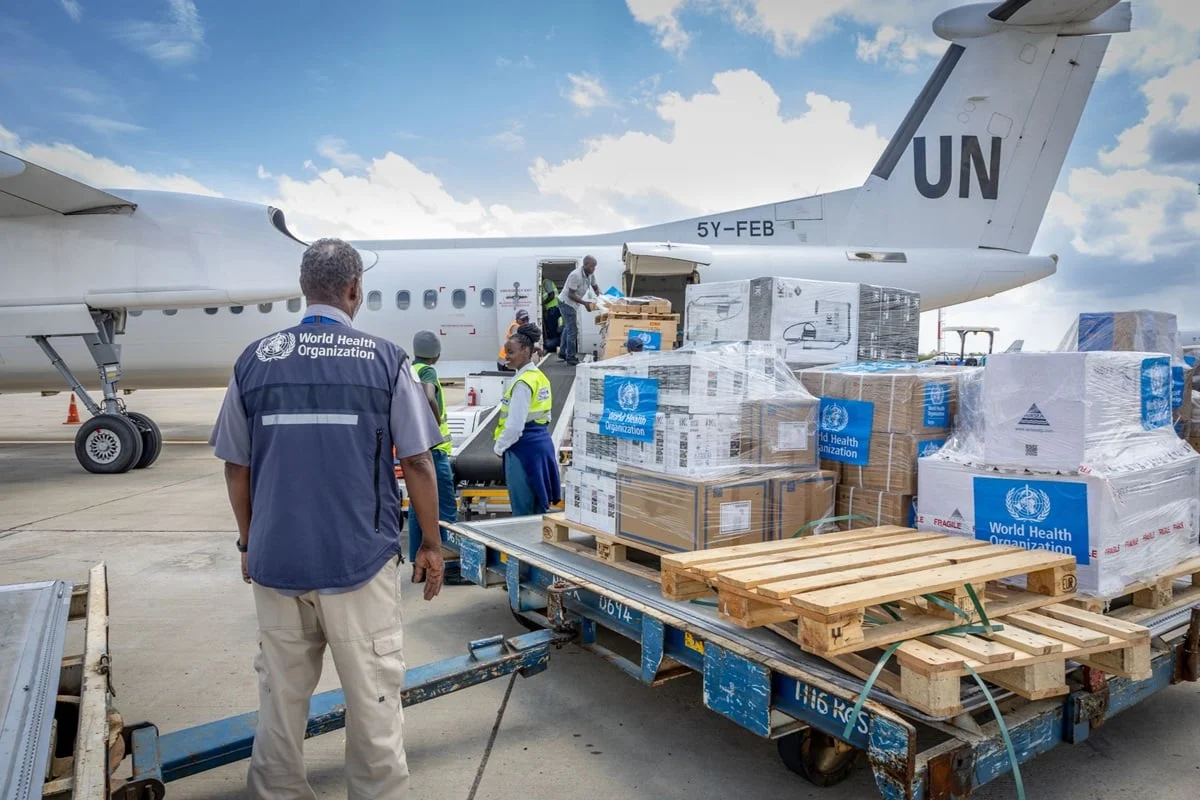
On May 17, 2026, the Director-General of the World Health Organization (WHO) officially designated the ongoing epidemic of Ebola disease caused by the Bundibugyo virus (BDBV) in the Democratic Republic of the Congo (DRC) and Uganda as a Public Health Emergency of International Concern (PHEIC). This determination, made under the authority of the International Health Regulations (2005), follows a surge in cases within the central African region and a high risk of cross-border transmission. While the declaration elevates the global alert status to its highest level, the WHO clarified that the current epidemiological data does not yet meet the specific thresholds for a "pandemic emergency," a distinct classification under the revised IHR framework.
The decision followed an intensive period of consultation with health authorities in the DRC and Uganda, where the virus has established a foothold in both rural and semi-urban settings. Following the Director-General’s initial statement, the IHR Emergency Committee convened on May 19, 2026, to assess the gravity of the situation. The Committee concurred with the Director-General’s assessment, highlighting that the epidemic is unfolding in one of the most complex operational environments in the world—a region characterized by long-standing conflict, displaced populations, and significant logistical hurdles.
The Pathogen: Understanding the Bundibugyo Virus
The current crisis is driven by the Bundibugyo virus (BDBV), one of the six species within the Orthoebolavirus genus. First identified in 2007 during an outbreak in the Bundibugyo District of Western Uganda, the virus is distinct from the more commonly known Zaire ebolavirus, which has been the primary cause of major outbreaks over the last decade.
A critical factor in the WHO’s emergency declaration is the current lack of medical countermeasures specifically licensed for the Bundibugyo strain. While the global health community has successfully deployed the Ervebo vaccine and various monoclonal antibody treatments against the Zaire strain, these interventions do not provide cross-protection against BDBV. As of late May 2026, there are no approved vaccines or therapeutics for Bundibugyo Ebola disease. This scientific gap necessitates a response strategy that relies almost entirely on traditional public health interventions, including rigorous contact tracing, isolation, and community-led infection prevention.
Historically, Bundibugyo outbreaks have shown a case fatality rate (CFR) ranging from 25% to 40%. While this is lower than the 60% to 90% CFR often associated with the Zaire strain, the lack of immediate pharmaceutical tools makes the potential for a sustained regional epidemic significantly more dangerous.
Chronology of the 2026 Outbreak
The 2026 epidemic began with a cluster of unexplained hemorrhagic fever cases in the North Kivu province of the DRC in early April. Initial laboratory results were inconclusive, but genomic sequencing conducted by the Institut National de Recherche Biomédicale (INRB) in Kinshasa confirmed the presence of the Bundibugyo virus by late April.
By early May, the virus had crossed the border into Uganda. On May 22, 2026, the WHO Secretariat confirmed that Uganda had documented two cases of BVD. Both cases were epidemiologically linked to the transmission chains in the DRC, involving individuals who had traveled across the border for trade and family reasons. Fortunately, as of the most recent reporting period, Uganda has not yet documented onwards transmission among the contacts of these two cases, though health officials remain on high alert.
In response to the escalating numbers in the DRC and the confirmed importation into Uganda, the WHO Director-General issued his formal determination on May 17. The subsequent Emergency Committee meeting on May 19 provided the technical foundation for the Temporary Recommendations now being issued to all UN Member States.
Risk Assessment and Regional Impact
The WHO’s risk assessment, updated on May 22, 2026, categorizes the threat level as "Very High" for the Democratic Republic of the Congo and "High" for Uganda. For the surrounding region, the risk is also categorized as "High," given the porous nature of borders and the high volume of trade and migration between the DRC, Uganda, Rwanda, and South Sudan. On a global scale, the risk currently remains "Low," though the WHO warns that international travel could facilitate sporadic cases in distant geographies.
The operational environment in the DRC presents a unique set of challenges. The eastern provinces have been plagued by civil unrest and the presence of various armed groups, which complicates the ability of health workers to reach remote villages. Furthermore, "community fatigue" regarding Ebola interventions—following several outbreaks of the Zaire strain in recent years—has led to instances of resistance against health surveillance teams. The WHO has emphasized that any successful response must be culturally sensitive and deeply integrated with local leadership to overcome these barriers.
Temporary Recommendations for Affected States
For the DRC and Uganda, the WHO has issued a comprehensive suite of temporary recommendations designed to break the chains of transmission. These include:
Coordination and Surveillance
States Parties are urged to activate national emergency management committees to coordinate the multi-sectoral response. This includes the deployment of rapid response teams to suspected "hotspots" and the enhancement of real-time data sharing between provincial and national levels. Surveillance must be intensified at the community level, with a focus on active case finding and the monitoring of all contacts for a full 21-day period.
Laboratory and Diagnostics
The WHO recommends the decentralization of laboratory testing. By establishing mobile lab units closer to the affected areas, health officials can reduce the "turnaround time" for results, ensuring that patients are isolated as quickly as possible. Genomic sequencing is also prioritized to monitor any mutations in the virus that might affect diagnostic accuracy.
Infection Prevention and Control (IPC)
Health facilities in the DRC and Uganda are being directed to implement strict IPC protocols. This includes the provision of personal protective equipment (PPE) for all frontline workers and the establishment of "triage" systems to screen patients for Ebola symptoms before they enter general wards. Given the lack of a vaccine, protecting healthcare workers is a primary concern to prevent the collapse of local health systems.
Clinical Care and Research
While no approved treatments exist, the WHO is facilitating the "fast-tracking" of clinical trials for candidate therapeutics. Patients are currently receiving "optimized supportive care," which includes fluid replacement, electrolyte stabilization, and the treatment of secondary infections, which significantly improves survival rates.
Global Preparedness and Border Health
For States Parties that share land borders with the DRC and Uganda, the WHO has recommended increased vigilance at points of entry. However, the organization explicitly advises against any travel or trade restrictions, noting that such measures are often counterproductive, as they can drive the movement of people to unofficial, unmonitored border crossings.
Instead, bordering nations are encouraged to:
- Implement exit screening at international airports and major land crossings in the affected areas.
- Enhance cross-border collaboration and information sharing.
- Increase public awareness among travelers regarding the symptoms of BVD and the importance of seeking medical care.
For all other States Parties globally, the focus remains on readiness. Countries are advised to review their national contingency plans for viral hemorrhagic fevers and ensure that clinicians are aware of the potential for imported cases. The WHO emphasizes that the dignity, human rights, and fundamental freedoms of all persons must be respected during the implementation of these health measures, in accordance with Article 3 of the IHR.
Implications and Future Outlook
The declaration of a PHEIC for the Bundibugyo virus serves as a "call to action" for the international community to provide the necessary financial and technical resources to the DRC and Uganda. The WHO’s Contingency Fund for Emergencies (CFE) has already released initial funds, but the organization notes that a sustained response will require significantly more investment, particularly in the realm of Research and Development (R&D).
The 2026 outbreak highlights a critical vulnerability in global health security: the "pathogen gap." While the world is better prepared for Zaire ebolavirus than ever before, the emergence of a Bundibugyo-driven crisis reveals that our medical arsenal is still limited. The coming months will be a test of whether the lessons learned from the 2014-2016 West Africa outbreak and the subsequent DRC outbreaks can be applied to a different strain under even more difficult circumstances.
"The situation in the Democratic Republic of the Congo and Uganda is a reminder that the threat of Ebola is ever-evolving," a WHO spokesperson stated during a press briefing in Geneva. "By declaring a PHEIC now, we are not panicking; we are preparing. We are ensuring that the world provides the DRC and Uganda with the tools they need to stop this virus at the source before it becomes a broader regional or global crisis."
As the WHO Secretariat continues to monitor the situation, the Emergency Committee is expected to reconvene within three months to determine if the PHEIC should be extended or if the containment measures have been successful in curbing the spread of the Bundibugyo virus. For now, the focus remains on the ground: tracing every contact, treating every patient, and engaging every community in the fight against one of nature’s most formidable pathogens.
