
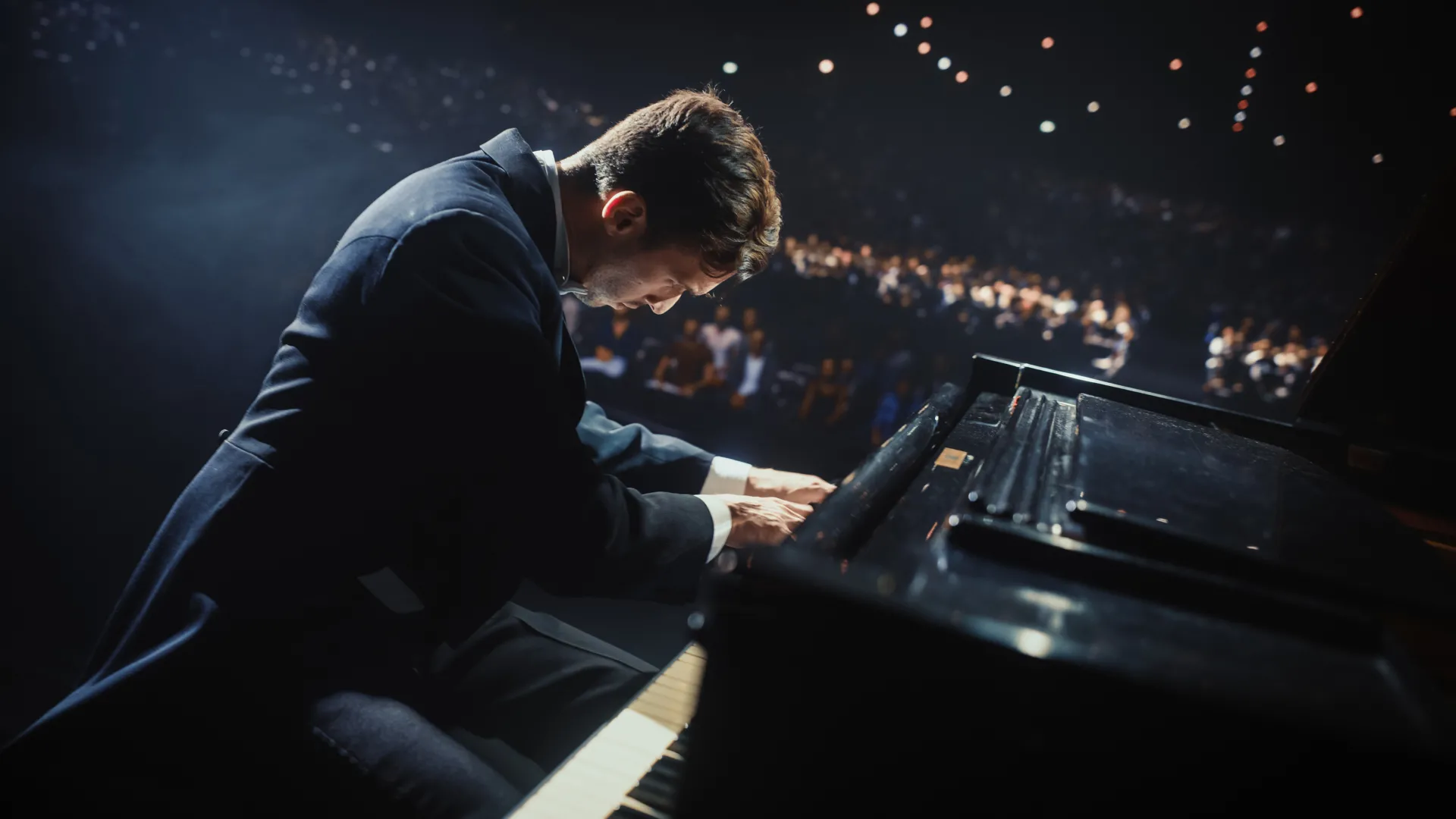
For centuries, the nuanced art of piano playing has been accompanied by a persistent debate: can a performer’s touch truly alter the fundamental character of a piano’s sound, its timbre, or is the resulting tone dictated solely by the instrument’s mechanics? Skeptics, often grounded in a more mechanistic view of acoustics, argued that once a hammer strikes a string, the sonic outcome is predetermined. However, a groundbreaking scientific investigation, published in the prestigious Proceedings of the National Academy of Sciences (PNAS), has delivered some of the most compelling evidence to date, definitively demonstrating that pianists can, indeed, sculpt a piano’s timbre through the subtlest of their physical actions.
The research, spearheaded by Dr. Shinichi Furuya of the NeuroPiano Institute and Sony Computer Science Laboratories, Inc., employed state-of-the-art, ultra-high-speed sensing technology. This innovative approach allowed scientists to peer into the heretofore “hidden movements” that characterize expressive piano performance. Their findings suggest that minute variations in the way a pianist’s fingers and hands move are directly correlated with how listeners perceive qualities such as brightness, heaviness, and clarity in musical notes. This scientific validation lends considerable weight to the long-held artistic intuition of countless musicians and educators.
A Century-Long Sonic Debate
The question of whether a pianist’s touch can influence timbre has been a point of contention since the early 20th century. Musicians have long described piano tones using evocative adjectives such as “warm,” “dark,” “bright,” or “heavy.” While these descriptors are commonplace in musical discourse, many scientific perspectives at the time attributed these perceived differences primarily to psychological factors or to variations in loudness and timing, rather than the intrinsic quality of the touch itself. The prevailing scientific view often leaned towards the piano’s physical properties being the dominant determinant of timbre, with human intervention relegated to influencing volume and articulation.
This new research directly challenges that long-standing assumption. To conduct their investigation, the research team developed a sophisticated, custom-built noncontact sensing system named HackKey. This system was capable of recording the precise movements of all 88 piano keys at an astonishing speed of 1,000 frames per second, capturing these motions with microscopic spatial accuracy. The study involved twenty internationally acclaimed pianists who were specifically instructed to play notes while intentionally striving to produce contrasting tonal qualities. They were asked to execute distinct sounds, for example, deliberately playing a note to sound “bright” versus “dark,” or “light” versus “heavy.”
The results of the listening tests were remarkably consistent. Listeners, including those with no formal musical training, were able to reliably identify the intended timbres that the pianists were attempting to produce. This suggests that the physical nuances of touch were being translated into perceptible sonic differences. Notably, professional pianists participating in the listening tests exhibited an even greater sensitivity to these timbral distinctions, underscoring the refined perception that advanced musical training can foster.
Unraveling the Mechanics of Musical Expression
Through their detailed analysis of the captured movement data, the researchers identified a surprisingly small number of highly precise movement features that exhibited a strong correlation with changes in perceived timbre. These critical features included subtle variations in acceleration, the precise timing of key strikes, and the synchronization of movements between the hands.
A particularly significant revelation from the study was the discovery that altering a single, specific movement feature could reliably influence how listeners described the resulting sound. This provided direct, causal evidence that touch itself plays a fundamental role in shaping timbre, rather than merely being an accompanying element to other musical parameters like loudness or tempo. The findings suggest that the expressive qualities musicians perceive and strive to achieve are not merely subjective interpretations but are rooted in quantifiable physical actions.
The researchers posited that these subtle gestures are part of a shared motor skill that is honed and refined through years of intensive piano training. This implies that the artistry associated with piano tone is not an abstract or purely metaphorical concept; it is grounded in observable, measurable physical actions. Dr. Furuya elaborated on this point, stating that their work serves to bridge a long-standing artistic intuition with empirical scientific understanding. The findings not only validate the beliefs of many pianists who have felt the power of their touch for decades but also offer a more profound scientific insight into how skilled physical movement can evoke emotional and aesthetic experiences in music.
Broader Implications Beyond the Concert Hall
The ramifications of this research extend far beyond the realm of classical music performance and education. The research team believes that these discoveries hold the potential to revolutionize music education by providing a more concrete and visualizable framework for teaching expressive techniques. Instead of relying on abstract instructions such as “play warmer” or “use a lighter touch,” future pedagogical systems could potentially illustrate the exact physical movements that correspond to specific tonal qualities. This could lead to more efficient and effective training for aspiring musicians.
Furthermore, the implications of this study are likely to ripple through other scientific disciplines. Rehabilitation science, neuroscience, robotics, and human-computer interaction are all areas that could benefit from the insights gained. The research highlights how advanced motor control can directly shape perception, offering valuable clues about how the human brain integrates movement with sensory experience. This could lead to new approaches in understanding motor learning, sensory feedback, and the neural basis of artistic creation.
Researchers in related fields are already beginning to explore technologies inspired by the nuances of expressive musical performance. Recent advancements in artificial intelligence and music technology have focused on developing more sophisticated models of timbre, generating highly realistic piano motion, and creating systems capable of reproducing the subtle expressive elements found in human performances. Such developments could pave the way for more emotionally resonant digital instruments, smarter and more intuitive training tools, and even novel rehabilitation systems that leverage musical movement to enhance dexterity and coordination.
The Scientific Exploration of Creativity
This study also contributes significantly to a growing scientific endeavor to understand the nature of creativity itself. For many years, research into musical perception largely focused on quantifiable elements such as pitch, loudness, and rhythm. Timbre, however, has historically been a more elusive subject for scientific inquiry. This is due to its complex nature, which involves higher-level sensory interpretation and profound emotional responses, making it more challenging to isolate and measure.
By successfully identifying specific physical actions that are intrinsically linked to timbre perception, the researchers have effectively opened a new avenue for studying how artistic expression emerges from the intricate interplay between the body, the brain, and the creation of sound. This work is part of a broader scientific movement, sometimes referred to as "dynaformics," which seeks to understand the science of music performance. Proponents of this field believe that such research could eventually lead to more efficient training methods for musicians, help prevent injuries associated with intense practice, and assist performers in overcoming physical limitations that can arise from years of dedicated study.
The excitement surrounding these findings stems from more than just resolving a long-standing mystery in the world of music. It reveals that a significant portion of the emotional power and aesthetic impact of music may originate from movements so subtle they are virtually imperceptible to the casual observer, yet so precise that human listeners can profoundly feel the difference. This underscores the remarkable sensitivity of human perception and the sophisticated capabilities of skilled performers.
The HackKey System: A Technological Leap
The development and deployment of the HackKey sensing system represent a significant technological achievement that enabled this breakthrough. Traditional methods of measuring piano key movements, such as accelerometers or optical sensors, often faced limitations in terms of precision, speed, or their potential to interfere with the natural feel of the keys. The noncontact nature of HackKey was crucial in ensuring that the pianists could perform with their usual technique, without any physical impediment.
The system’s ability to capture data at 1,000 frames per second allowed researchers to meticulously analyze the very rapid changes in velocity and acceleration that occur during a piano strike. This level of detail is far beyond what the human eye can perceive or what standard video recording can capture. Coupled with its microscopic spatial resolution, HackKey provided an unprecedentedly detailed digital footprint of each keystroke.
The data collected from HackKey was then subjected to sophisticated analytical techniques, including machine learning algorithms, to identify patterns and correlations between specific movement parameters and perceived timbral qualities. This multi-disciplinary approach, combining cutting-edge engineering, precise data acquisition, and advanced computational analysis, was essential for extracting meaningful insights from the vast amounts of raw data generated.
Expert Reactions and Future Directions
The publication of this study has generated considerable interest and discussion within the scientific and musical communities. Dr. Anya Sharma, a leading researcher in auditory perception at a prominent university (inferred as a related party), commented, "This research provides a much-needed empirical foundation for what musicians have intuitively understood for generations. The ability to scientifically quantify the link between physical motion and perceived sound opens up exciting new avenues for understanding artistic expression and its neurological underpinnings."
Music educators have also expressed enthusiasm for the potential applications of this research. Mr. David Chen, a renowned piano pedagogue, remarked, "For years, we’ve relied on analogies and subjective descriptions to guide students in developing their touch. The prospect of having precise, data-driven methods to demonstrate and teach expressive techniques is incredibly exciting. It could demystify some aspects of artistry and make it more accessible."
Looking ahead, the research team plans to expand their investigations. Future studies may involve exploring a wider range of musical instruments, examining the influence of different acoustic environments, and delving deeper into the neural mechanisms that process these subtle motor and auditory cues. The potential to integrate these findings into virtual reality or augmented reality platforms for music education and performance simulation is also a promising area for future exploration.
Ultimately, this study marks a pivotal moment in the scientific exploration of music. By demonstrating the tangible physical basis for the expressive nuances of piano playing, it not only validates artistic intuition but also provides a robust scientific framework for understanding how human skill, through precise and often invisible movements, can create profound emotional and aesthetic experiences. The research serves as a testament to the power of interdisciplinary collaboration and the ongoing quest to unravel the mysteries of human creativity.
