
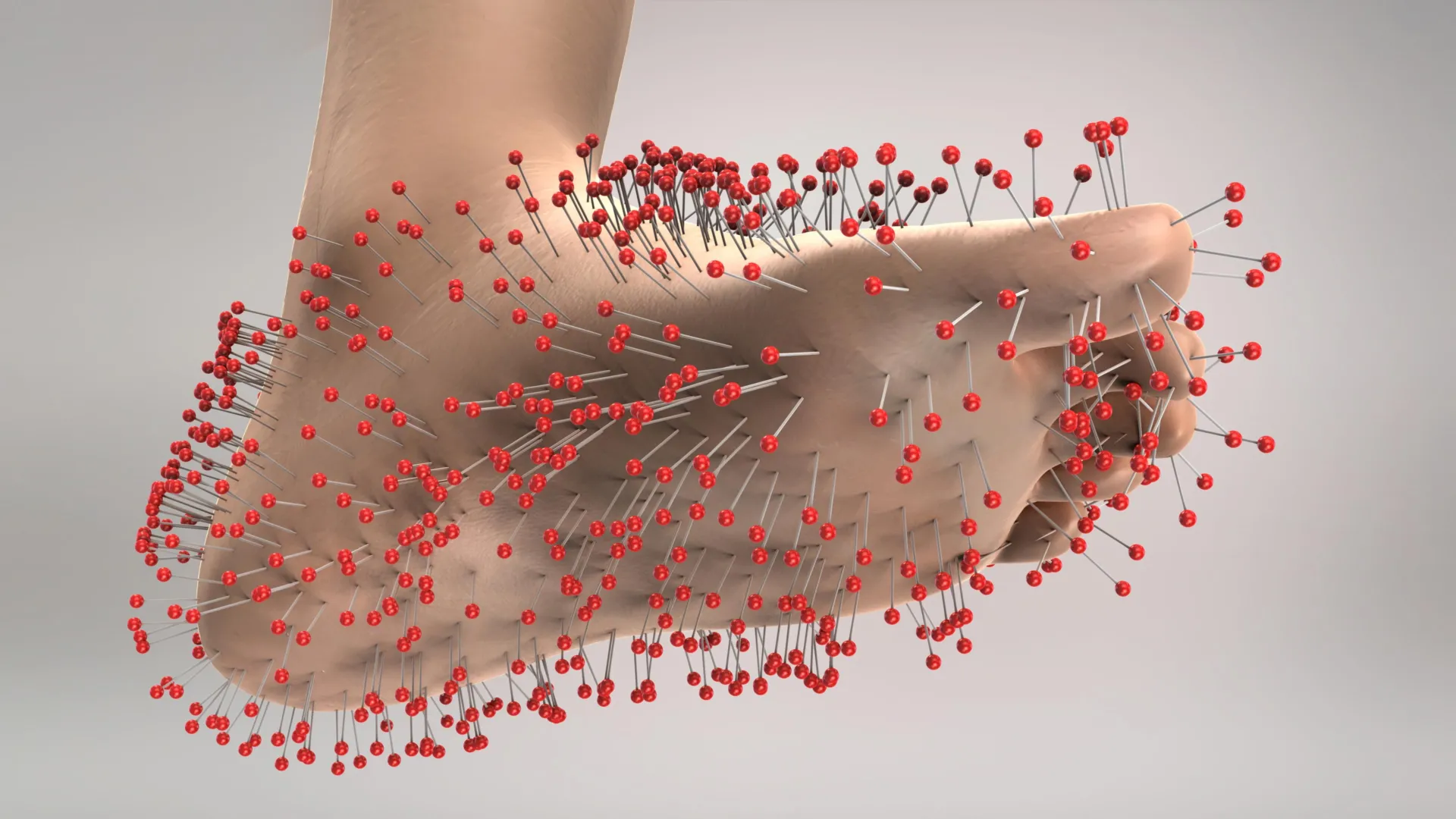
Millions worldwide grapple with the debilitating reality of chronic nerve pain, a condition where even the slightest touch can trigger intense, unbearable sensations. For decades, the scientific community has hypothesized that a breakdown in the function of mitochondria, the powerhouses of our cells, within damaged nerves might be a primary culprit. Now, groundbreaking research from Duke University School of Medicine is illuminating a completely novel therapeutic approach: restoring the health and function of these vital cellular components could offer a paradigm shift in treating this pervasive and often intractable pain.
The findings, published in the esteemed journal Nature, detail a comprehensive study utilizing both human tissue samples and sophisticated mouse models. The research team meticulously investigated whether replenishing or bolstering the supply of healthy mitochondria could facilitate the recovery of damaged nerve cells. Their results were compelling, demonstrating a significant reduction in pain associated with conditions such as diabetic neuropathy and chemotherapy-induced nerve damage. Remarkably, in some instances, the pain relief observed persisted for up to 48 hours, suggesting a sustained therapeutic effect beyond mere symptom suppression.
This innovative strategy diverges from conventional pain management, which often focuses on blocking pain signals. Instead, the Duke researchers propose that their approach addresses one of the fundamental underlying causes of chronic nerve pain by revitalizing the energy supply that nerve cells critically depend upon for proper functioning.
"By providing damaged nerves with fresh mitochondria, or by enabling them to generate more of their own, we can effectively reduce inflammation and promote healing," stated Dr. Ru-Rong Ji, the study’s senior author and director of the Center for Translational Pain Medicine within the Department of Anesthesiology at Duke School of Medicine. "This innovative strategy holds the profound potential to alleviate pain through an entirely new mechanism."
The Crucial Role of Healthy Mitochondria in Nerve Recovery
The Duke study’s findings align with a growing body of scientific evidence suggesting that cells possess the remarkable ability to transfer mitochondria to one another. This intercellular mitochondrial transfer is increasingly being recognized as a crucial natural support system with potential implications for a wide spectrum of health conditions, ranging from metabolic disorders like obesity and cancer to neurological events such as stroke and the chronic pain states that plague so many individuals.
The Duke research team specifically focused their attention on satellite glial cells, a type of glial cell that envelops and provides essential support to sensory neurons. Their investigation uncovered a previously unrecognized function for these cells in the context of nerve health and pain modulation. The study’s revelations indicate that satellite glial cells appear to directly transfer healthy mitochondria into sensory neurons through intricate, microscopic structures known as tunneling nanotubes.
Dr. Ji elaborated on the significance of this process: "When this transfer mechanism falters, nerve fibers begin to deteriorate. This deterioration can then trigger a cascade of symptoms, including persistent pain, tingling sensations, and numbness, particularly in the extremities like the hands and feet, where nerve fibers are most extensive."
"By actively sharing their energy reserves, satellite glial cells may play a pivotal role in safeguarding neurons from pain," Dr. Ji, who also holds professorships in anesthesiology, neurobiology, and cell biology at Duke School of Medicine, emphasized.
Further solidifying their findings, the researchers observed that when they artificially enhanced this mitochondrial transfer process in their mouse models, the mice exhibited a remarkable reduction in pain-related behaviors, with some experiencing as much as a 50% decrease. This quantitative improvement underscores the direct impact of mitochondrial health on pain perception.
Identifying a Key Protein Orchestrating Mitochondrial Transfer
Beyond observing the phenomenon of mitochondrial transfer, the Duke team also explored a more direct therapeutic intervention. They successfully injected isolated mitochondria, sourced from both human donors and mice, directly into the dorsal root ganglia. These ganglia are critical clusters of nerve cells responsible for relaying sensory information, including pain signals, from the body to the brain.
The efficacy of this direct injection approach proved to be highly dependent on the quality of the mitochondria used. Healthy mitochondria, when administered, effectively reduced pain. In stark contrast, mitochondria obtained from individuals diagnosed with diabetes yielded no discernible pain-relieving benefits. This critical distinction highlights the importance of mitochondrial integrity and function for therapeutic success.
In their pursuit of understanding the molecular mechanisms underpinning this cellular communication, the researchers identified a protein named MYO10 as being absolutely essential for the formation of tunneling nanotubes. These nanotubes are the conduits through which mitochondria are transported between cells, making MYO10 a pivotal player in the entire process. The identification of MYO10 provides a potential target for future therapeutic development, offering a means to enhance mitochondrial transfer.
The collaborative effort behind this significant research was led by Dr. Jing Xu, a research scholar in the Department of Anesthesiology at Duke, working closely with Dr. Ji and Dr. Caglu Eroglu, a distinguished Duke professor of cell biology renowned for her extensive work on glial cells.
A Promising New Direction for Chronic Pain Management
While the findings represent a significant leap forward, the researchers are keen to emphasize that further investigation is warranted. Future studies will likely involve high-resolution imaging techniques to gain a more granular understanding of precisely how tunneling nanotubes deliver mitochondria within living nerve tissue. This will be crucial for optimizing therapeutic strategies.
Nevertheless, the implications of this research are profound. The findings point towards a previously underappreciated communication network between nerve cells and glial cells. This network, once fully understood and harnessed, could pave the way for novel treatments that target the root causes of chronic pain, rather than merely masking its distressing symptoms.
The potential impact of this research extends beyond the immediate clinical applications. It opens new avenues for understanding fundamental cellular processes related to energy metabolism, cellular repair, and intercellular communication. This deeper biological insight could have ripple effects across various fields of medicine and biology.
The prevalence of chronic nerve pain is a significant global health challenge. The World Health Organization estimates that approximately 10% of the global population experiences chronic pain, with neuropathic pain conditions being a substantial subset. Conditions like diabetic neuropathy affect an estimated 10-50% of individuals with diabetes, leading to significant morbidity and reduced quality of life. Chemotherapy-induced peripheral neuropathy (CIPN) is another common and distressing side effect of cancer treatment, affecting a substantial proportion of patients undergoing certain chemotherapy regimens, with estimates ranging from 15% to over 60% depending on the specific drugs and treatment protocols used.
The economic burden of chronic pain is also substantial, encompassing direct healthcare costs for diagnosis and treatment, as well as indirect costs related to lost productivity and disability. Therefore, the development of effective, novel treatments for chronic nerve pain holds immense promise not only for improving patient well-being but also for alleviating societal and economic burdens.
The Duke University School of Medicine’s research into mitochondrial health and nerve pain marks a significant moment in the ongoing quest for effective pain management solutions. By shifting the focus from symptom palliation to addressing the fundamental cellular mechanisms of nerve damage and dysfunction, this work offers a beacon of hope for the millions who suffer from the relentless grip of chronic nerve pain. The journey from laboratory discovery to clinical application is often lengthy, but the robust scientific foundation laid by Dr. Ji and his team suggests that a future with more effective and enduring relief from nerve pain is increasingly within reach. The identification of MYO10 as a key protein in this process also opens doors for pharmaceutical development, potentially leading to drugs that can specifically enhance mitochondrial transfer and thereby combat neuropathic pain. The scientific community will undoubtedly be watching closely as this promising line of research unfolds.
