
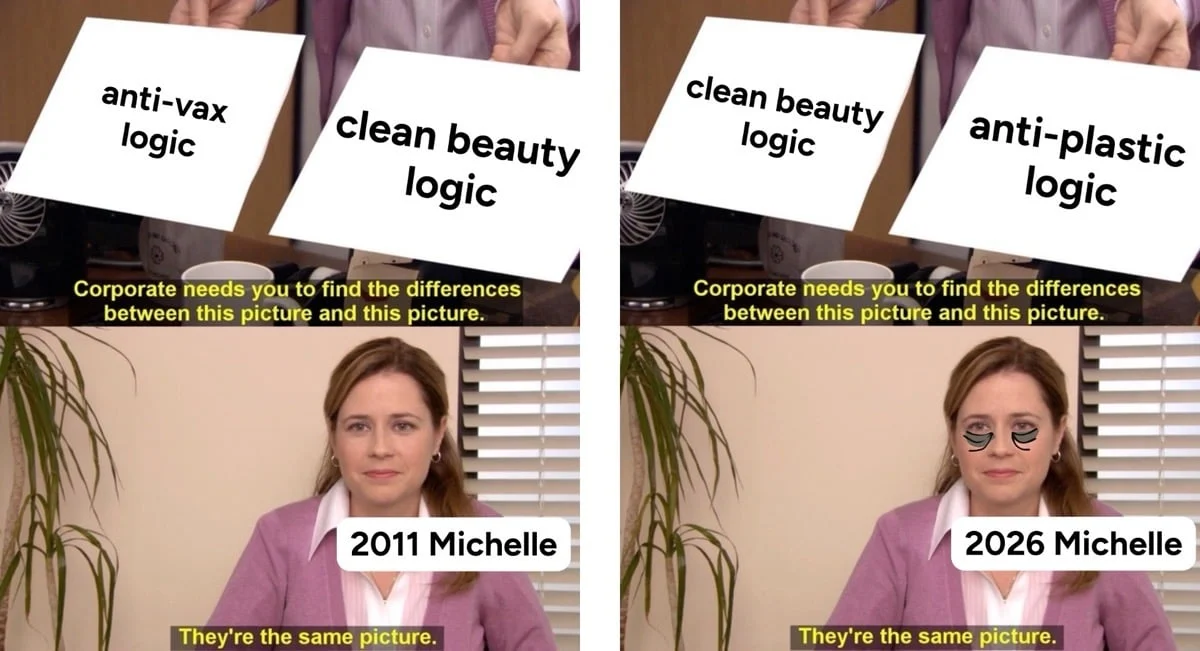
The evolving landscape of consumer environmentalism and product marketing has seen a significant shift, with the "plastic-free" movement emerging as the latest frontier in what many experts are calling a parallel to the "clean beauty" phenomenon. This shift, while ostensibly driven by genuine environmental concerns, exhibits striking similarities in its underlying logic, reliance on pseudoscience, and susceptibility to misinformation, according to analyses from science communicators like Michelle Wong of Lab Muffin Beauty Science. The core argument posits that just as the "non-toxic" clean beauty movement often misrepresents scientific principles, the fervent push for "plastic-free" solutions risks misdirecting efforts and even exacerbating environmental challenges due to an uncritical adoption of simplified narratives.
The observation gained particular traction following a social media post by @idea.soup on Threads, suggesting a potential alignment between anti-polyester sentiment and certain political ideologies, a notion that resonated with Wong’s long-standing concerns. Her journey into science communication began in 2011, motivated by the realization that the clean beauty movement’s "non-toxic" rhetoric could serve as a gateway to anti-vaccination beliefs, sharing identical logical fallacies and demonizing similar substances like aluminum and formaldehyde. Today, the anti-plastic trend, with its sweeping "plastic-free" claims and fearmongering around microplastics, echoes these same patterns, raising alarm bells within the scientific community.
The Genesis of "Clean Beauty" and Its Scientific Shortcomings
To understand the current "plastic-free" discourse, it’s essential to revisit the "clean beauty" movement. Originating in the early 2010s, "clean beauty" gained momentum by promoting products "free from" a growing list of supposedly harmful ingredients, often labeled as "nasties." This movement capitalized on consumer anxieties about chemicals, promising safer, healthier alternatives, typically with a focus on "natural" ingredients. While aiming for transparency and improved product safety, its methodology often deviated from established scientific principles.
Central to clean beauty’s critique is its frequent disregard for toxicology’s fundamental principle: "the dose makes the poison." Ingredients are often demonized based solely on their chemical name or origin, without considering the concentration used in a product or the actual exposure levels. For instance, parabens, widely used as preservatives, became a primary target due despite extensive research confirming their safety at regulated levels. Similarly, aluminum in deodorants or formaldehyde-releasing preservatives were flagged as dangerous, often without robust scientific evidence linking them to adverse health effects at typical exposure. This created a market for "free-from" products that, paradoxically, sometimes used less effective or even more irritating alternatives, leading to compromised product stability or new allergen risks. The movement also often conflated "natural" with "safe," overlooking the fact that many potent toxins occur naturally.
The Emergence of "Plastic-Free" as a New Front
Building on this precedent, the "plastic-free" movement has rapidly ascended, becoming a dominant theme in environmental discourse and consumer product marketing. Fueled by widespread concerns over plastic pollution, particularly visible images of ocean waste and the discovery of microplastics in various environments and organisms, consumers are increasingly seeking alternatives. Beauty brands, in particular, have been quick to adopt "plastic-free" claims, ranging from solid bars to refillable containers and packaging made from alternative materials.
However, the scientific community, particularly those engaged in environmental science communication, has noted a concerning overlap in the rhetorical and logical frameworks employed by both "clean beauty" and "plastic-free" advocates. Many individuals and even scientific outlets that previously debunked clean beauty pseudoscience now appear to uncritically embrace anti-plastic narratives, failing to apply the same rigorous scientific skepticism. This suggests a broader challenge of motivated reasoning, where beliefs aligning with perceived progressive or environmental values are accepted with less scrutiny.
Key Parallels: A Deep Dive into Misinformation
The similarities between the "plastic-free" and "clean beauty" movements are striking and can be categorized into several critical areas of scientific misinterpretation:
1. The Appeal to Nature Fallacy:
This logical fallacy posits that anything "natural" is inherently good or safe, while anything "synthetic" or "man-made" (like plastic) is inherently bad or dangerous. In clean beauty, this manifests as a preference for plant extracts over laboratory-synthesized compounds, even when the latter might be more stable, effective, or less allergenic. For the "plastic-free" movement, it translates into a blanket condemnation of all plastics and an uncritical embrace of "natural" alternatives like bamboo, paper, glass, or bioplastics (derived from natural sources).
The problem, as science consistently demonstrates, is that a material’s origin tells little about its environmental or health impact. Many natural substances are toxic (e.g., arsenic, cyanide), and many synthetic ones are entirely benign. Conversely, "natural" alternatives to plastic often come with their own significant environmental footprints. A paper cup, for instance, typically has a plastic lining, and its production can require more energy and water than a plastic cup, while being less recyclable in practice. This simplistic "plastic = bad, natural = good" dichotomy hinders a nuanced, evidence-based approach to sustainability.
2. Ignoring the Basics of Relevant Science: Life Cycle Assessment (LCA)
Just as clean beauty overlooks toxicology, the "plastic-free" movement often disregards the fundamentals of sustainability science, particularly Life Cycle Assessment (LCA). LCA is the scientific standard for quantitatively measuring a product’s environmental impact across its entire lifespan, from raw material extraction, manufacturing, transportation, consumer use, to its end-of-life disposal or recycling.
Most public discussions around plastic overwhelmingly focus on its end-of-life: microplastics, landfill accumulation, and ocean pollution. While these are critical concerns, they represent only one stage of a product’s life cycle. Crucially, they often overshadow other, sometimes larger, environmental impacts such as climate change, energy consumption, water usage, and land degradation associated with alternative materials.
Research, such as a 2011 Denkstatt report, highlights this imbalance. It found that switching from plastic to glass, paper, or aluminum packaging would, on average, require 3.6 times more material, 2.2 times more energy, and result in 2.7 times more carbon emissions. This is because plastics are incredibly lightweight and durable, leading to lower transport emissions and reduced product spoilage. For instance, plastic packaging for food significantly extends shelf life, thereby reducing food waste, which has a far greater environmental footprint than the packaging itself.
The focus on end-of-life without a holistic LCA perspective often leads to counterproductive choices. Consumers might opt for heavier, more energy-intensive glass or aluminum, believing they are more "eco-friendly," when the overall environmental burden (especially carbon emissions from production and transport) might be higher. This is a critical point often overlooked by beauty brands that promote "plastic-free" options without transparent LCA data, sometimes even promoting new consumption (e.g., limited edition tote bags made of plastic fibers) under the guise of sustainability.
3. Citing Studies with Serious Methodological Issues:
A recurring issue in both movements is the selective citation of studies with significant methodological flaws. In clean beauty, studies on parabens or phthalates often lacked proper controls, relied on in vitro (test tube) data not replicable in vivo (in living organisms), or used doses far exceeding human exposure.
Similarly, many studies on microplastics, while well-intentioned, suffer from fundamental issues that can lead to exaggerated or false positive results. Measuring minute quantities of any substance is challenging, but microplastics present unique difficulties. Common problems include:
- Contamination: Microplastics are ubiquitous in the environment, making it incredibly difficult to conduct studies without contamination from laboratory equipment, clothing, or even air particles. This often leads to researchers counting external microplastics as part of their samples.
- Measurement Errors (e.g., Pyrolysis-GCMS): Techniques like pyrolysis-gas chromatography-mass spectrometry (Py-GCMS), used to identify and quantify microplastics, can misinterpret other substances. For example, fats can appear identical to polyethylene with this method unless rigorous corrections are applied. This specific error was highlighted in a study that sensationally claimed a "spoon’s worth of microplastics" in human brains.
These methodological issues, often esoteric and complex for non-experts to discern, create fertile ground for misinformation. Sensational headlines based on flawed studies can generate public fear and pressure, driving policy and consumer choices away from scientifically sound solutions.
4. Assuming Presence Means Harm (Correlation vs. Causation):
Another common logical leap is the assumption that the mere presence of a substance in a diseased tissue or organism implies it is causing the disease. This conflates correlation with causation. For example, the infamous "parabens in breast tumors" study was widely cited by clean beauty advocates, yet it failed to measure paraben levels in healthy tissue, making it impossible to draw conclusions about causation.
The same fallacy appears in microplastic discourse. Finding microplastics in arterial plaque or the brains of individuals with dementia does not automatically mean microplastics caused these conditions. Alternative explanations include:
- Reverse Causation: The disease itself might make individuals more susceptible to accumulating microplastics.
- Confounding Factors: Lifestyle, diet, or other environmental exposures could be the true causative factors, with microplastic presence being an unrelated correlation.
- Ubiquitous Exposure: Given the widespread presence of microplastics, finding them in various tissues might simply reflect general environmental exposure rather than a direct pathogenic role. Establishing causation requires rigorous epidemiological and experimental studies, not just detection.
5. Ignoring Other Reasons for Material Use:
Both movements often disregard the multifaceted benefits of the materials they demonize. Clean beauty overlooked the critical role of preservatives like parabens in preventing microbial contamination, which can cause severe health issues, including infections and blindness. Parabens are highly effective at low concentrations, often making them safer for sensitive skin than some "natural" alternatives that require higher concentrations or are more allergenic.
Similarly, the anti-plastic narrative frequently ignores the diverse and essential benefits of plastics beyond just environmental impact. These include:
- Hygiene and Safety: Plastics are crucial in medical devices, food packaging (preventing spoilage and contamination), and protective gear.
- Accessibility and Affordability: Plastics are often the most cost-effective material, making essential products more accessible to a broader population.
- Functionality: Plastics offer unique properties like flexibility, durability, and barrier protection that are difficult to replicate with other materials.
- Reduced Product Waste: As mentioned, plastic packaging can significantly extend shelf life, reducing food and product waste.
Demonizing plastic without considering these crucial benefits can lead to the adoption of less effective, more expensive, or even less safe alternatives.
6. Science-Washing and Convenient Experts:
Both clean beauty and anti-plastic movements are rife with "science-washing" – the deceptive use of scientific jargon, cherry-picked data, or credentials to lend credibility to marketing claims that lack genuine scientific backing. Brands and influencers often claim to be "science-backed" while promoting myths. This practice is not unique to beauty; it is prevalent in wellness and fitness industries as well.
Regulatory bodies in major regions, including the US Federal Trade Commission (FTC), the UK Competition and Markets Authority (CMA), and the Australian Competition and Consumer Commission (ACCC), have recognized the misleading nature of unsubstantiated sustainability claims. They issue guidelines emphasizing that brands must have robust, verifiable evidence to support "eco-friendly" or "plastic-free" claims. This implies a need for brands to engage genuine sustainability experts and adhere to their advice, rather than merely using buzzwords for marketing.
A critical aspect of science-washing is the misidentification or misrepresentation of expertise. Brands might consult individuals who are not experts in toxicology or life cycle assessment, or they might promote "experts" whose views align with their marketing agenda, even if those views are outside the scientific consensus. This mirrors clean beauty’s reliance on self-proclaimed "wellness gurus" over board-certified dermatologists or toxicologists.
Motivated Reasoning and Confirmation Bias: A Deeper Challenge
Underlying these specific parallels is the broader psychological phenomenon of motivated reasoning and confirmation bias. People tend to interpret evidence in a way that confirms their existing beliefs or aligns with their identity. This is particularly prevalent in movements linked to perceived moral or political alignments.
A recent example highlights this: when The Guardian, a mainstream media outlet, published an article on January 13, 2026, questioning the methodology of microplastic measurement studies and correcting its own previous reporting on "brain microplastics," it faced backlash. Despite quoting two independent scientists from public institutions and referencing a letter from nine European scientists, the article drew criticism for quoting a former Dow chemist. Accusations of being "bought by Big Plastic" were leveled, demonstrating how perceived affiliations can override the actual scientific arguments presented. As cosmetic scientist Jen Novakovich of The Eco Well rightly states, "Discounting something solely based on funding source or affiliation is actually the opposite of critical thinking." Evaluating the arguments themselves, which The Guardian article made accessible to non-experts, is the true test of critical thought.
Broader Implications and The Way Forward
The conflation of "plastic-free" with "inherently better" poses significant risks. It diverts resources and attention from truly impactful environmental solutions, such as reducing overall consumption, improving recycling infrastructure, investing in renewable energy, and combating climate change – issues that comprehensive LCAs consistently identify as having a greater environmental benefit than simply swapping one material for another. When misinformed environmentalism leads to choices that, in aggregate, increase carbon emissions or resource depletion, it fundamentally undermines the overarching goals of environmental protection and human well-being.
The pervasive influence of misinformation in both the "clean beauty" and "plastic-free" narratives underscores the critical need for enhanced science literacy and critical thinking among consumers, brands, and media outlets. For brands, genuine sustainability requires rigorous scientific assessment, transparency, and a commitment to evidence-based practices, rather than performative "greenwashing." For consumers, cultivating skepticism towards blanket claims, seeking information from diverse and credible scientific sources, and understanding the complexities of environmental impacts are paramount.
Ultimately, the most sustainable choice is almost always to consume less. When consumption is necessary, an evidence-based approach, guided by comprehensive Life Cycle Assessments and sound scientific principles, is crucial to ensure that well-intentioned efforts do not inadvertently lead to worse environmental outcomes. The lessons from the "clean beauty" movement should serve as a cautionary tale for the "plastic-free" era, urging a shift from fear-driven narratives to fact-based solutions for a truly sustainable future.
