
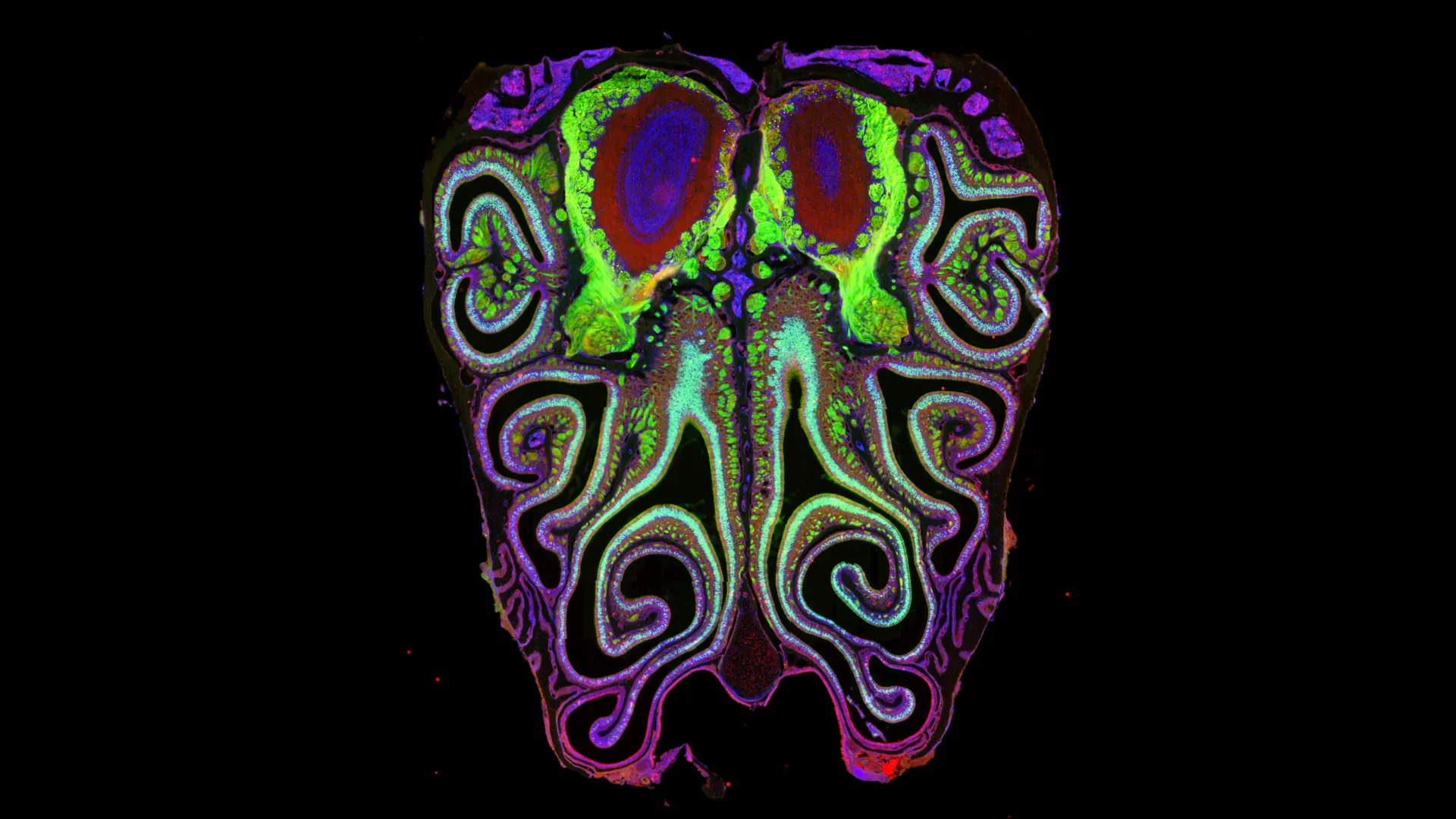
The everyday world, rich with scents that alert us to danger, enhance our culinary experiences, and evoke powerful memories and emotions, has long been a realm of profound mystery for scientists. Despite the undeniable importance of smell, its fundamental biological mechanisms have remained elusive, a stark contrast to our deeper understanding of vision, hearing, and touch. This olfactory enigma has now begun to yield its secrets, as researchers at Harvard Medical School have unveiled the first comprehensive map of smell receptors in the nose, challenging long-held assumptions about the sense of smell and opening new avenues for understanding and potentially treating olfactory disorders.
A Breakthrough in Olfactory Cartography
For decades, the prevailing scientific view posited that the more than a thousand types of olfactory receptors, responsible for detecting a vast spectrum of odors, were distributed somewhat randomly within the nasal cavity. However, a groundbreaking study, published on April 28th in the prestigious journal Cell, has definitively overturned this notion. Led by Sandeep (Robert) Datta, a professor of neurobiology at Harvard Medical School, the research team meticulously mapped the arrangement of these receptors in mice, revealing a surprisingly intricate and organized system.
The findings indicate that olfactory neurons, each expressing a specific type of smell receptor, are not scattered haphazardly but are instead clustered into distinct, horizontal bands or stripes that run vertically from the top to the bottom of the nose. This precise organization, grouped by receptor type, suggests a level of order previously unimagined in the olfactory system. "Our results bring order to a system that was previously thought to lack order, which changes conceptually how we think this works," stated Professor Datta, the senior author of the study. This revelation represents a significant paradigm shift, moving from a perception of chaotic distribution to one of elegant, patterned architecture.
The Long Quest for an Olfactory Map
The quest to map the olfactory system has been a protracted one, marked by significant challenges. While scientists have long understood the topographical organization of receptors in other sensory organs – how patterns of light on the retina translate to neural signals, how sound waves are encoded by the cochlea, or how pressure is detected by the skin – olfaction remained the outlier. "Olfaction has been the one exception; it’s the sense that has been missing a map for the longest time," Professor Datta explained, highlighting the unique difficulties in unraveling this sense.
A primary reason for this historical lag is the sheer complexity of the olfactory system. In mice, for instance, there are an estimated 20 million olfactory neurons, with each neuron specializing in detecting a particular set of odor molecules by expressing one of over a thousand different receptor types. To put this into perspective, human color vision, which allows us to perceive a rich tapestry of colors, relies on just three main types of cone photoreceptors. This vast number of distinct receptor types, each with its own molecular specificity, creates an intricate web of detection that has proven formidable to map.
The journey to identify olfactory receptors began in earnest in 1991. Over the subsequent decades, researchers diligently worked to identify these receptors and search for any discernible patterns in their distribution. Early studies, limited by the available technology, often suggested a more generalized zonal arrangement, leading to the widespread belief that receptor placement was largely a matter of chance. The sophisticated genetic tools and analytical techniques available today, however, have enabled a far more granular and comprehensive investigation.
Unveiling the Pattern: Millions of Neurons Analyzed
Datta’s team harnessed the power of cutting-edge technologies to revisit this fundamental question. Their study involved the analysis of an astounding 5.5 million neurons sampled from over 300 individual mice. This was achieved through a powerful combination of techniques: single-cell sequencing, which precisely identifies the specific receptor type expressed by each individual neuron, and spatial transcriptomics, which determines the exact three-dimensional location of these neurons within the nasal cavity.
"This is now arguably the most sequenced neural tissue ever, but we needed that scale of data in order to understand the system," Professor Datta emphasized, underscoring the necessity of such a massive dataset to discern subtle organizational principles. The results of this extensive analysis were striking. They revealed a consistent and highly organized pattern: neurons expressing the same type of olfactory receptor were found to cluster together, forming dense, overlapping horizontal stripes. This arrangement was remarkably uniform across all the mice studied, suggesting a deeply ingrained developmental blueprint.
Crucially, the researchers discovered that this intricate map within the nose had a direct correlation with the corresponding maps in the olfactory bulb, the primary processing center for smell in the brain. This alignment provides critical insights into how scent information is transmitted from the peripheral sensory organ to the central nervous system, offering a clearer picture of the neural pathways involved in smell perception.
The Developmental Blueprint: How the Map Forms
Beyond identifying the existing map, the Harvard team delved into the developmental processes that give rise to this precise olfactory architecture. Their investigation pinpointed retinoic acid, a molecule known for its role in regulating gene activity and guiding developmental processes, as a key orchestrator of this organization.
The study revealed that a specific gradient of retinoic acid within the developing nose acts as a guide for olfactory neurons. As these neurons migrate and mature, their position within this gradient dictates which olfactory receptor they will express. This mechanism ensures that neurons are correctly positioned to activate the appropriate receptor. To confirm its role, the researchers experimentally altered the levels of retinoic acid. This intervention resulted in a noticeable shift in the entire receptor map, either moving it upward or downward, thereby demonstrating the molecule’s critical influence on spatial organization.
"We show that development can achieve this feat of organizing a thousand different smell receptors into an incredibly precise map that’s consistent across animals," Professor Datta remarked, highlighting the remarkable precision of biological development. This finding not only explains the spatial arrangement of receptors but also underscores the elegance of developmental biology in creating such complex structures. It is noteworthy that a separate study, conducted by the lab of Catherine Dulac at Harvard University and also published in the same issue of Cell, provided corroborating evidence for these findings, reinforcing the significance of this discovery within the scientific community.
Implications for Treating Smell Loss
The implications of this research extend far beyond fundamental scientific understanding, offering a glimmer of hope for individuals suffering from loss of smell, a condition known as anosmia. Currently, effective treatments for anosmia are scarce, despite its significant impact on an individual’s safety (inability to detect gas leaks or spoiled food), nutrition (reduced enjoyment of food leading to poor appetite), and overall mental health and quality of life.
"We cannot fix smell without understanding how it works on a basic level," Professor Datta asserted, emphasizing the crucial link between basic research and clinical application. By elucidating the fundamental organizational principles of the olfactory system, this discovery lays the groundwork for developing targeted and effective therapeutic interventions.
The research team is now focused on several key areas. They aim to understand the precise ordering of these receptor stripes and, critically, to determine whether a similar organizational principle exists in humans. This comparative analysis is vital for translating these findings into human therapies. The knowledge gained could pave the way for innovative treatments, potentially including stem cell therapies designed to regenerate damaged olfactory neurons or advanced brain-computer interfaces that could bypass damaged olfactory pathways to restore the sense of smell.
"Smell has a really profound and pervasive effect on human health, so restoring it is not just for pleasure and safety but also for psychological well-being," Professor Datta stated, underscoring the multifaceted benefits of a functional sense of smell. He concluded with a powerful statement about the necessity of this foundational knowledge: "Without understanding this map, we’re doomed to fail in developing new treatments."
Future Directions and Broader Impact
The mapping of olfactory receptor organization represents a pivotal moment in olfactory neuroscience. It not only resolves a long-standing mystery about the sensory system but also opens up a wealth of new research questions. Understanding the specific function of these organized stripes and how they contribute to the brain’s interpretation of complex odors is a primary next step. Furthermore, investigating how environmental factors or genetic predispositions might disrupt this organization and lead to olfactory disorders will be crucial.
The potential for technological advancements stemming from this research is significant. Imagine diagnostic tools that can precisely identify disruptions in the olfactory map, or therapeutic interventions that can re-establish the correct neural connections. The ability to restore or enhance the sense of smell could profoundly improve the lives of millions, impacting everything from daily safety to social interaction and emotional well-being.
The collaborative spirit evident in this research, with a complementary study from a sister lab at Harvard also contributing to the understanding of olfactory organization, highlights the dynamic nature of scientific progress. As researchers continue to probe the intricate workings of our senses, discoveries like the olfactory map serve as powerful reminders of the remarkable complexity and elegance of the biological world and the enduring potential of scientific inquiry to illuminate its deepest mysteries.
Authorship, Funding, and Disclosures
The comprehensive study involved a large team of researchers, with additional authors including David Brann, Tatsuya Tsukahara, Cyrus Tau, Dennis Kalloor, Rylin Lubash, Lakshanyaa Kannan, Nell Klimpert, Mihaly Kollo, Martin Escamilla-Del-Arenal, Bogdan Bintu, Andreas Schaefer, Alexander Fleischmann, and Thomas Bozza.
The research was generously supported by grants from the National Institutes of Health (NIH) under grant numbers R01DC021669, R01DC021422, R01DC021965, and F31DC019017. Additional funding was provided by the Yang Tan Collective at Harvard and a National Science Foundation Graduate Research Fellowship. The authors have declared no competing interests.
