
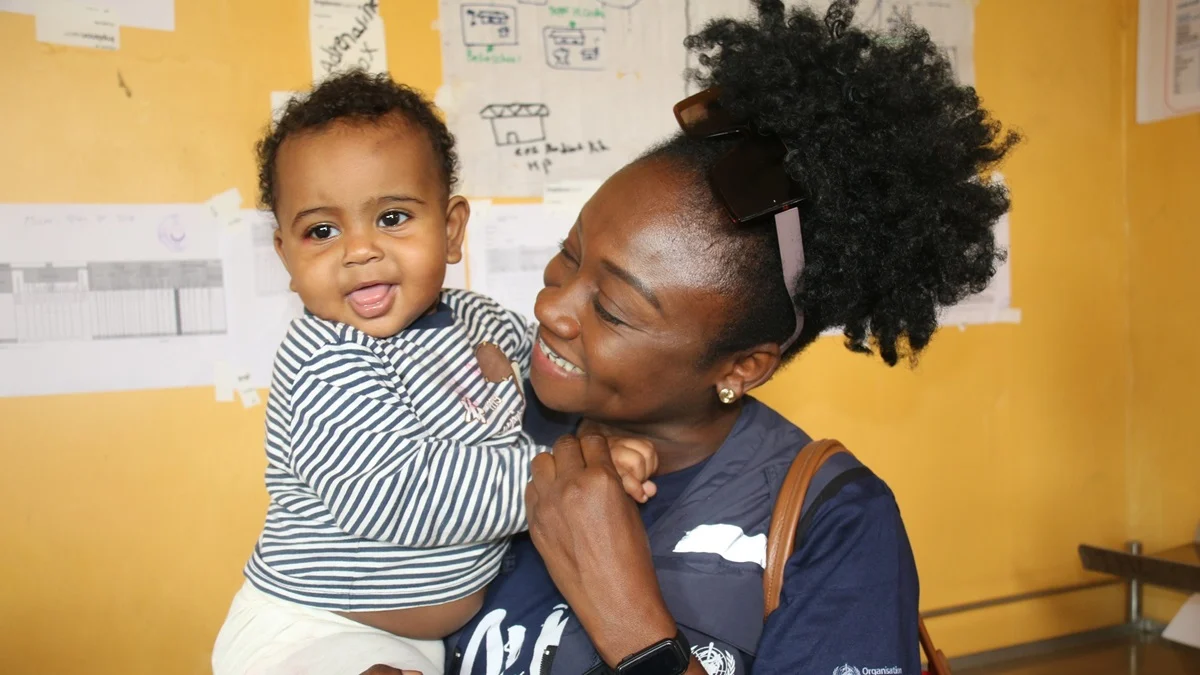
The World Health Organization (WHO) has announced the prequalification of the first antimalarial treatment specifically formulated for newborns and young infants, marking a decisive milestone in the global effort to reduce pediatric mortality. This announcement, made in the lead-up to World Malaria Day on April 25, 2026, introduces a specialized version of artemether-lumefantrine designed for infants weighing between two and five kilograms. Alongside this therapeutic advancement, the WHO has also granted prequalification to three new rapid diagnostic tests (RDTs) capable of detecting malaria strains that have evolved to become "invisible" to conventional testing methods. These twin developments represent a sophisticated technological response to the biological and diagnostic challenges that have recently stalled progress in malaria eradication.
The prequalification of artemether-lumefantrine for the youngest patient demographic addresses a critical gap in the clinical management of neonatal malaria. Historically, healthcare providers in malaria-endemic regions have been forced to adapt adult or older-child formulations for use in infants. This practice often involved crushing tablets and attempting to estimate dosages based on weight, a method fraught with the risk of dosing inaccuracies. Under-dosing can lead to treatment failure and the promotion of drug resistance, while over-dosing poses severe risks of toxicity and adverse side effects in the fragile physiology of a newborn. By providing a quality-assured, weight-appropriate formulation, the WHO aims to standardize care for the estimated 30 million infants born annually in high-burden areas, primarily across sub-Saharan Africa.
Closing the Pediatric Treatment Gap
For decades, the global health community has struggled to provide tailored medical solutions for the most vulnerable malaria patients. Malaria remains one of the leading causes of death among children under five, but the specific needs of newborns—those in the first 28 days of life—and young infants have often been overlooked in drug development cycles. The newly prequalified artemether-lumefantrine formulation is the result of years of collaborative research and development aimed at ensuring that the pharmacokinetics of the drug are optimized for the metabolic rates of very young children.
Dr. Tedros Adhanom Ghebreyesus, WHO Director-General, emphasized the transformative nature of this development. He noted that while malaria has historically devastated families and drained the economic vitality of entire communities, the introduction of medicines adapted for the youngest patients signifies a shift from reactive management to proactive prevention and cure. According to Dr. Tedros, ending malaria is no longer a theoretical aspiration but a logistical and political possibility, provided that international funding remains consistent and political will does not falter.
The significance of WHO prequalification cannot be overstated for public sector procurement. Most malaria-endemic countries rely on international funding bodies, such as The Global Fund to Fight AIDS, Tuberculosis and Malaria and the U.S. President’s Malaria Initiative (PMI), to purchase medications. These organizations generally only procure medicines that have received the WHO prequalification stamp, which serves as a guarantee that the product meets rigorous international standards for safety, efficacy, and manufacturing quality. This designation will effectively open the floodgates for the mass distribution of infant-specific treatments across the African continent and other endemic regions.
Revolutionary Diagnostics for Mutating Parasites
In a parallel advancement, the WHO’s prequalification of three new rapid diagnostic tests on April 14, 2026, addresses a burgeoning biological crisis: the rise of "stealth" malaria. For years, the gold standard for rapid malaria diagnosis has been the HRP2-based RDT, which identifies the Plasmodium falciparum parasite by detecting the Histidine-Rich Protein 2. However, recent surveillance data from 46 countries has confirmed a disturbing trend: certain strains of the parasite have undergone genetic deletions (specifically the pf-hrp2 and pf-hrp3 genes), meaning they no longer produce the protein these tests are designed to find.
In parts of the Horn of Africa, including Ethiopia and Eritrea, reports indicate that up to 80% of malaria cases were being missed by traditional RDTs. These false-negative results are catastrophic, as they lead to patients being sent home without treatment, only for their condition to deteriorate into severe malaria, which is often fatal. The new tests prequalified by the WHO target a different parasite protein, Plasmodium lactate dehydrogenase (pf-LDH). Because this protein is essential to the parasite’s survival and metabolic function, it is much less likely to be "shed" or deleted through mutation.
The WHO now recommends that any country reporting a false-negative rate of more than 5% due to gene deletions should immediately transition to these alternative pf-LDH-based RDTs. This policy shift is intended to safeguard the gains made in malaria control over the last two decades and ensure that diagnostic failure does not become a primary driver of increased mortality.
The Global Malaria Landscape: A Statistical Overview
The urgency of these medical and diagnostic innovations is underscored by the data contained in the World Malaria Report 2025. The report revealed a concerning uptick in global malaria figures, with an estimated 282 million cases and 610,000 deaths recorded in 2024. This represented a notable increase from 2023, suggesting that the global trajectory toward eradication has hit a plateau or, in some regions, begun to reverse.
While the global numbers are sobering, the report also highlighted localized successes. As of 2026, 47 countries have been officially certified as malaria-free by the WHO, and 37 countries reported fewer than 1,000 cases in the previous year. These successes demonstrate that with localized strategies and intensive intervention, the disease can be eliminated. However, the stagnation at the global level is attributed to a "perfect storm" of challenges, including:
- Drug Resistance: The emergence of partial resistance to artemisinin in Africa and Southeast Asia threatens the efficacy of the current primary treatment regimens.
- Insecticide Resistance: Mosquitoes are increasingly evolving resistance to the chemicals used in traditional bed nets and indoor residual spraying.
- Climate Change: Shifting weather patterns and increased flooding have created new breeding grounds for mosquitoes, expanding the geographical range of the disease.
- Funding Shortfalls: A severe reduction in international development assistance has left many national malaria control programs underfunded and unable to maintain high coverage of essential interventions.
Despite these hurdles, the long-term view remains one of significant achievement. Since 2000, coordinated global efforts have prevented an estimated 2.3 billion malaria infections and saved 14 million lives. The rollout of malaria vaccines, such as RTS,S and R21/Matrix-M, has reached 25 countries, providing an additional layer of protection for millions of children. Furthermore, next-generation mosquito nets, treated with dual insecticides to overcome resistance, now account for 84% of all new nets distributed.
World Malaria Day 2026: Driven to End Malaria
The 2026 World Malaria Day campaign, themed "Driven to End Malaria: Now We Can. Now We Must," serves as a rallying cry for the international community. The campaign emphasizes that the tools for eradication—vaccines, specialized treatments for infants, and mutation-proof diagnostics—now exist. The primary obstacle remaining is the mobilization of resources to deploy these tools at scale.
The WHO’s focus for 2026 is on "closing the gap." This involves not only the distribution of medicines and tests but also the strengthening of health systems to ensure that these innovations reach the most remote and underserved communities. The strategy involves a shift toward "sub-national tailoring," where malaria interventions are customized based on local data, rather than applying a one-size-fits-all approach to entire countries.
Analysis of Implications and Future Outlook
The prequalification of infant-specific artemether-lumefantrine is expected to have an immediate impact on neonatal survival rates in high-burden countries like Nigeria, the Democratic Republic of the Congo, and Uganda. By reducing the complexity of dosing, the WHO is empowering community health workers to provide life-saving care without the need for advanced clinical facilities. This "task-shifting" is essential in regions where the ratio of doctors to patients is critically low.
Furthermore, the introduction of LDH-based RDTs will likely lead to a temporary "surge" in reported malaria cases in the Horn of Africa. This will not necessarily indicate an increase in infections, but rather a more accurate capturing of cases that were previously invisible to the health system. This improved data accuracy will allow for better resource allocation and more effective outbreak response.
However, the long-term success of these initiatives depends heavily on the replenishment of the Global Fund and the continued support of bilateral donors. The economic argument for malaria eradication is clear: the disease costs the African continent billions of dollars in lost productivity and healthcare expenses every year. Investing in specialized treatments and advanced diagnostics is not only a moral imperative but a sound economic strategy to foster growth in emerging markets.
As the WHO commemorates World Health Day 2026 under the theme “Together for health. Stand with science,” the focus on malaria serves as a prime example of science in action. By identifying the biological threats of gene deletion and pediatric dosing risks, and subsequently developing technical solutions to meet them, the global health community is demonstrating its resilience. The path to a malaria-free world remains difficult, but the tools unveiled this April provide a renewed sense of momentum in the fight against one of humanity’s oldest and deadliest foes.
