
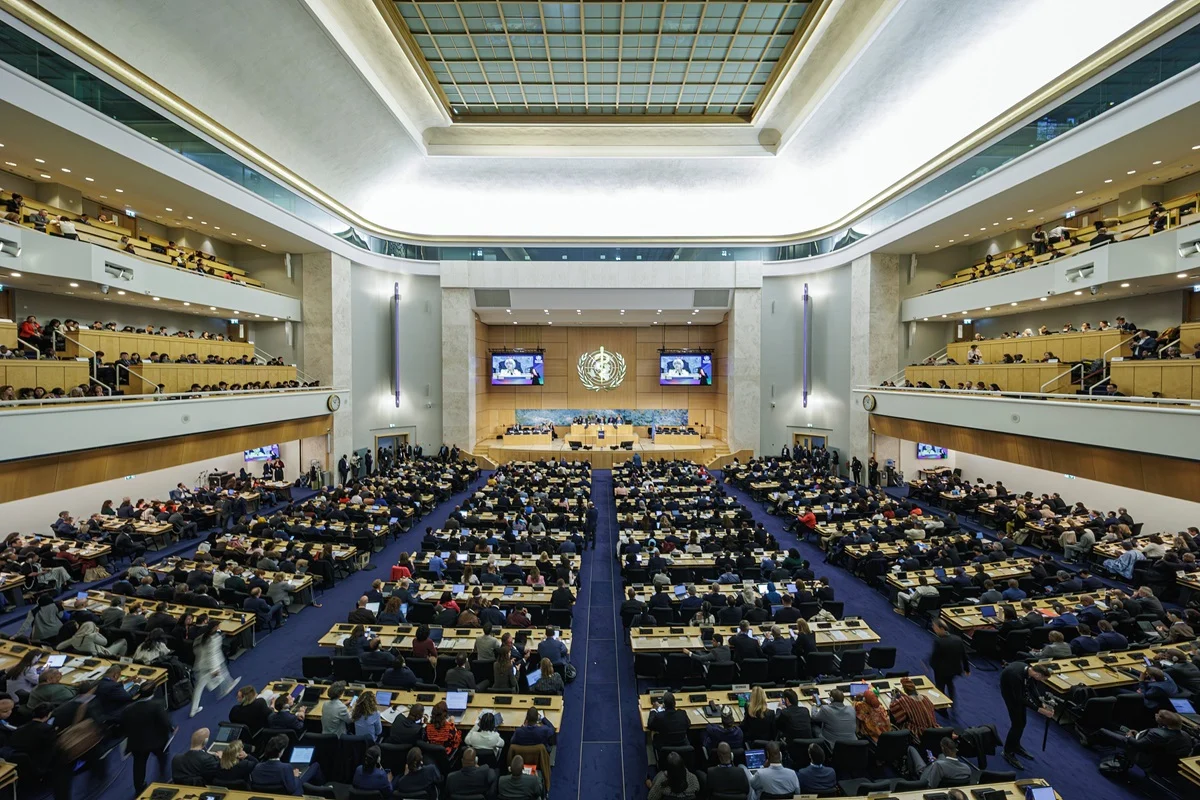
The Seventy-ninth session of the World Health Assembly (WHA79) officially commenced today at the Palais des Nations in Geneva, Switzerland, marking a pivotal moment for international public health policy. As the supreme decision-making body of the World Health Organization (WHO), the Assembly brought together delegates from 194 Member States to deliberate on the most pressing health challenges facing the global community in 2026. The session opened with the formal election of Dr. Víctor Elías Atallah Lajam, representing the Dominican Republic, as the President of the Health Assembly. His appointment signals a significant period of leadership for the Latin American and Caribbean region within the framework of global health governance.
The governance structure for the 79th session was further solidified through the election of five Vice-Presidents, ensuring diverse regional representation in the Assembly’s proceedings. The elected officials include Dr. Mohamed Ali Al-Ghouj of Libya, Dr. Assa Badiallo Touré of Mali, Mrs. Katarzyna Drążek-Laskowska of Poland, Mrs. Neesha Mehta of Nepal, and Mr. Elias Kapavore of Papua New Guinea. Furthermore, the Assembly established its primary working groups, appointing Dr. Timur Sultangaziyev of Kazakhstan as the Chair of Committee A, which focuses on technical and health matters, and Dr. Kwabena Mintah Akandoh of Ghana as the Chair of Committee B, which oversees administrative, financial, and legal affairs.
High-Level Addresses and Diplomatic Engagement
The opening ceremony featured a series of high-level addresses emphasizing the intersection of health, diplomacy, and sustainable development. H.E. Elisabeth Baume-Schneider, Federal Councillor of the Swiss Confederation, welcomed the delegates on behalf of the host nation. In her remarks, she underscored Switzerland’s commitment to multilateralism and the essential role of Geneva as a hub for international health cooperation. She was followed by the Special Guest of Honour, H.E. John Dramani Mahama, President of Ghana, who highlighted the critical need for equitable health systems and the lessons learned from recent global health emergencies. President Mahama’s presence underscored the growing influence of African nations in shaping the global health agenda, particularly regarding local manufacturing of medical countermeasures and pandemic preparedness.
The global nature of the Assembly was further emphasized through video messages from prominent world leaders. United Nations Secretary-General António Guterres provided a somber yet hopeful outlook on the state of global health, urging Member States to bridge the gap in healthcare financing and to treat health as a fundamental human right rather than a privilege. Additional messages were delivered by H.E. Ahmad Al Sharaa, President of the Syrian Arab Republic, and H.E. Mia Mottley, Prime Minister of Barbados. Prime Minister Mottley, a vocal advocate for the "Bridgetown Initiative," specifically addressed the nexus between climate change and health, noting that small island developing states remain on the front lines of health crises driven by environmental degradation.
The Director-General’s Vision and Global Health Awards
Dr. Tedros Adhanom Ghebreyesus, the Director-General of the WHO, delivered a comprehensive opening address that set the tone for the week-long deliberations. Dr. Tedros reflected on the progress made under the WHO’s "Triple Billion" targets—aiming for one billion more people benefiting from universal health coverage, one billion more protected from health emergencies, and one billion more enjoying better health and well-being. However, he cautioned that the path forward remains fraught with challenges, including the rise of antimicrobial resistance (AMR), the lingering effects of the post-pandemic era, and the health impacts of ongoing regional conflicts.
A highlight of the opening session was the presentation of the Awards for Global Health, a ceremony designed to honor individuals who have demonstrated exceptional leadership and lifetime commitment to public health. The 2026 recipients included:
- Dr. Tore Godal: Recognized for his foundational work in global health research and his instrumental role in the creation of Gavi, the Vaccine Alliance. His career has spanned decades of efforts to reduce child mortality through immunization.
- Dr. Merceline Dahl-Regis: Honored for her pioneering leadership in the Americas, where she led the successful effort to eliminate measles, rubella, and congenital rubella syndrome, setting a blueprint for other regions to follow.
- Dr. Mike Ryan: The Executive Director of the WHO Health Emergencies Programme was recognized for his decades of frontline service, from managing Ebola outbreaks to steering the global response to the COVID-19 pandemic.
- Dr. Heba El Sewedy: A prominent philanthropist and founder of the Ahl Masr Foundation, she was celebrated for her work in providing specialized trauma and burn care in Egypt and the broader Middle East, filling a critical gap in emergency medical services.
The afternoon session concluded with a keynote address by H.E. Pedro Sanchez, Prime Minister of Spain. Prime Minister Sanchez emphasized the importance of strengthening the WHO’s mandate and ensuring that the organization is equipped with sustainable and predictable financing to meet future threats.
Strategic Priorities for the 79th World Health Assembly
As the Assembly moves into its working sessions, several key priorities are expected to dominate the agenda. Central to these discussions is the 14th General Programme of Work (GPW14), which outlines the WHO’s strategic direction for the 2025–2028 period. The GPW14 focuses on accelerating progress toward the health-related Sustainable Development Goals (SDGs), with a particular emphasis on primary healthcare as the bedrock of universal health coverage.
A significant portion of the technical deliberations in Committee A will involve the finalization of the "Pandemic Accord," an international treaty designed to strengthen pandemic prevention, preparedness, and response. Following years of negotiations, WHA79 represents a critical juncture for Member States to reach a consensus on issues of equity, pathogen access, and benefit-sharing. Analysts suggest that the outcome of these negotiations will define the landscape of global health security for the next generation.
Additionally, the Assembly will address the escalating threat of antimicrobial resistance (AMR). With 2026 being viewed as a "make or break" year for international action on AMR, delegates are expected to discuss a new global monitoring framework and financial incentives for the development of new antibiotics. Data from the WHO suggests that if left unchecked, AMR could result in 10 million deaths annually by 2050, making it a top-tier priority for the Assembly.
Financial Sustainability and the Investment Round
A recurring theme throughout the opening day was the necessity of financial reform within the WHO. For years, the organization has grappled with a budget heavily reliant on specified voluntary contributions, which limits its flexibility in responding to emerging crises. During WHA79, the Secretariat will provide updates on the inaugural "WHO Investment Round," a new financing model aimed at securing "unearmarked" funds that allow the organization to allocate resources based on technical priority rather than donor preference.
The budget for the 2026–2027 biennium is expected to be a point of contention in Committee B. While there is broad support for increasing "assessed contributions" (membership dues), some Member States remain wary of the economic pressures facing their domestic budgets. The goal of the Investment Round is to bridge this gap, aiming to raise a significant portion of the $7 billion required to implement the GPW14.
The Intersection of Climate and Health
The 79th World Health Assembly also marks a heightened focus on the "One Health" approach, which recognizes the interconnectedness of human, animal, and environmental health. Following the video message from Prime Minister Mia Mottley, a series of technical briefings are scheduled to address the health impacts of extreme heat, air pollution, and the spread of zoonotic diseases.
According to WHO data, nearly 25% of the global burden of disease is linked to environmental factors. In 2026, the Assembly is expected to adopt a new resolution on "Climate Change and Health," which would mandate the WHO to provide greater technical support to nations as they integrate health considerations into their National Adaptation Plans (NAPs) under the Paris Agreement.
Implications for Global Governance
The election of Dr. Víctor Elías Atallah Lajam and the diverse makeup of the Assembly’s leadership reflect a shift toward a more multipolar world. The inclusion of voices from Ghana, Syria, Barbados, and Spain in the opening ceremonies highlights the WHO’s role as a platform for dialogue even amidst geopolitical tensions.
The decisions made during WHA79 will have far-reaching implications. Beyond the technical resolutions, the Assembly serves as a barometer for the world’s commitment to collective security. If the Pandemic Accord is successfully ratified and the Investment Round achieves its targets, 2026 could be remembered as the year global health governance was modernized for the 21st century. Conversely, failure to reach a consensus on equity and funding could leave the world vulnerable to the next inevitable health crisis.
As the delegates prepare for the coming days of intense negotiation, the atmosphere in Geneva is one of cautious optimism. The presence of high-level political leaders suggests that health has finally moved from the periphery of international politics to the very center of the global agenda. The proceedings of the 79th World Health Assembly will continue through the end of the week, with final resolutions expected to be adopted in the closing plenary session.
