
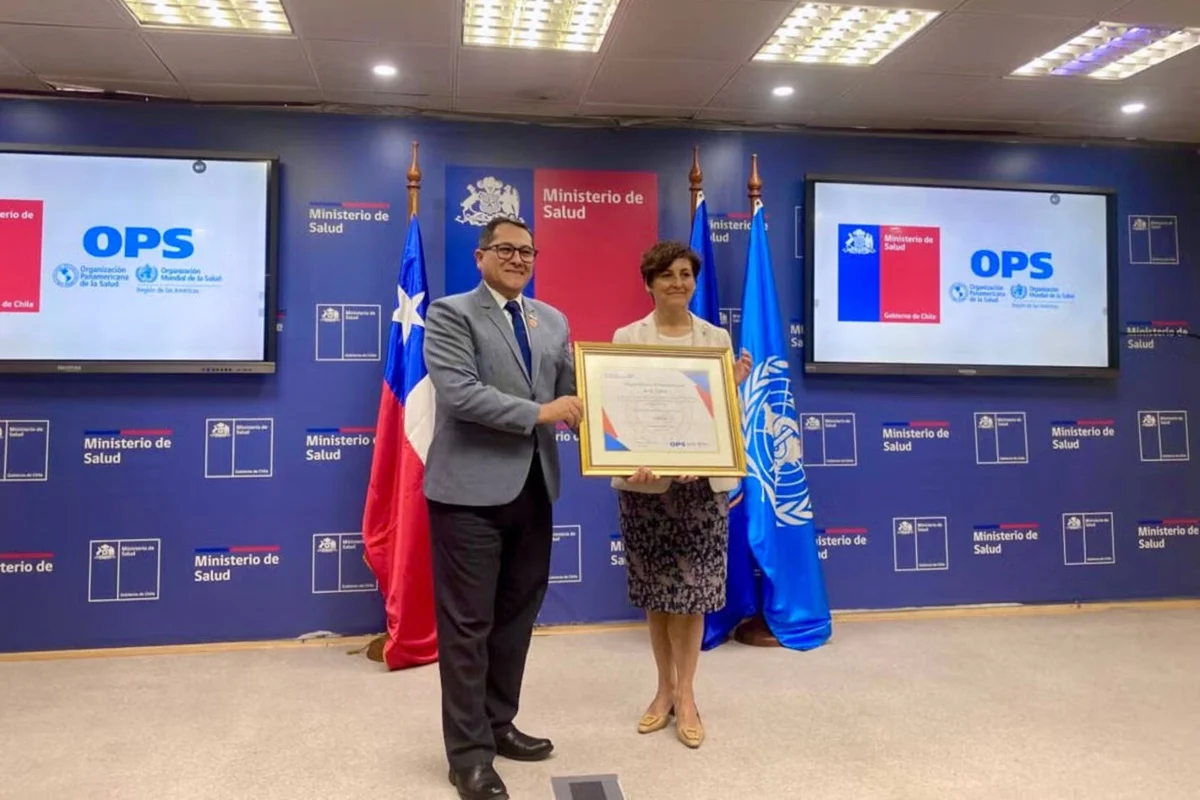
The World Health Organization (WHO) and the Pan American Health Organization (PAHO) have formally announced that Chile has become the first nation in the Region of the Americas and only the second globally to be verified as having eliminated leprosy. This landmark achievement, verified following a rigorous multi-year assessment by international experts, marks the conclusion of a century-long public health battle against a disease that has historically been synonymous with social exclusion and physical suffering. The recognition underscores Chile’s transition from a country managing sporadic outbreaks in isolated territories to a global leader in the surveillance and eradication of neglected tropical diseases (NTDs).
Leprosy, also known as Hansen’s disease, is a chronic infectious condition caused by the bacterium Mycobacterium leprae. While it has been curable for decades, its long incubation period and the social stigma attached to its visible symptoms have historically made it difficult to manage. Chile’s success is particularly notable because it has maintained a status of zero indigenous transmission for over three decades, a feat achieved through a combination of political stability, scientific rigor, and an integrated healthcare model that prioritizes early detection and universal access to treatment.
Historical Context and the Path to Elimination
The history of leprosy in Chile is deeply tied to Rapa Nui (Easter Island), where the disease was first documented in the late 19th century. Due to the island’s geographic isolation, the disease remained largely confined to that specific territory. For much of the 20th century, the Chilean government employed the prevailing medical strategies of the time, which included isolation and specialized treatment centers on the island to prevent the spread to the mainland. These measures, while restrictive by modern standards, succeeded in preventing a widespread epidemic across the South American continent.
By the late 1990s, the last secondary cases on Rapa Nui were successfully managed, and the focus of the Chilean Ministry of Health shifted from containment to total elimination. The last locally acquired case of leprosy in Chile was recorded in 1993. Since then, while the country has seen sporadic cases, every single one has been identified as "imported," meaning the infection was acquired outside of Chilean borders. Between 2012 and 2023, for instance, Chile reported 47 cases nationwide, all of which were linked to international travel or migration from endemic regions.
The official verification process began at the formal request of the Chilean Ministry of Health. In 2025, WHO and PAHO convened an independent panel of international experts to scrutinize Chile’s epidemiological data. The panel reviewed three decades of surveillance records, case management protocols, and the country’s laboratory capacity to ensure that no hidden chains of transmission existed. Their findings confirmed that the indigenous transmission of Mycobacterium leprae had been effectively interrupted, leading to the historic verification.
A Victory for Science and Solidarity
The announcement has drawn praise from the highest levels of global health leadership. Dr. Tedros Adhanom Ghebreyesus, WHO Director-General, characterized the achievement as a "powerful testament to what leadership, science, and solidarity can accomplish." He noted that Chile’s success serves as a blueprint for other nations, proving that even "ancient diseases" can be consigned to history through sustained commitment and inclusive health strategies.
Echoing these sentiments, PAHO Director Dr. Jarbas Barbosa highlighted the socio-economic implications of the milestone. "Chile’s achievement demonstrates that eliminating leprosy is achievable and requires building strong systems that can detect, respond to, and provide comprehensive care," Dr. Barbosa stated. He emphasized that leprosy is frequently linked to populations living in vulnerable conditions, and its elimination helps break the "vicious circle" between disease and poverty.
Chile’s Minister of Health, Ximena Aguilera, expressed national pride in the recognition, attributing the success to the tireless efforts of health teams across the country. She emphasized that while the disease is eliminated, the government’s responsibility does not end. "This milestone reflects decades of sustained public health efforts," Aguilera said. "It also reaffirms our responsibility to maintain active surveillance and ensure respectful, stigma-free care for all."
The Chilean Model: Surveillance and Integrated Care
The cornerstone of Chile’s success is its "Towards Zero Leprosy" strategy, which aligns with WHO’s global targets. Even in the absence of local transmission, Chile never removed leprosy from its public health agenda. It has remained a mandatory notifiable condition, ensuring that every suspected case is immediately reported to central authorities.
The Chilean healthcare system utilizes a mixed public-private model with strong regulatory oversight, ensuring that even the most remote populations have access to diagnostic tools. Primary care centers serve as the first line of defense. When a suspected case is identified—often through skin lesions or loss of sensation—the patient is referred to specialized dermatological services.
Treatment is provided through Multidrug Therapy (MDT), a highly effective combination of antibiotics (rifampicin, dapsone, and clofazimine). Since 1995, PAHO and WHO have ensured that MDT is available free of charge to member states. This supply chain has been supported by philanthropic partnerships, including The Nippon Foundation from 1995 to 2000 and Novartis since 2000. These direct agreements with WHO have been essential in ensuring that cost is never a barrier to a cure.
Beyond pharmaceutical intervention, the Chilean model emphasizes holistic care. This includes:
- Disability Prevention: Early diagnosis to prevent the nerve damage that leads to characteristic deformities.
- Physical Rehabilitation: Access to physiotherapy for those living with chronic disabilities from past infections.
- Psychological Support: Strategies to combat the historical stigma associated with the disease, ensuring social inclusion for survivors.
Broader Impact on the Region of the Americas
Chile’s verification is a significant win for PAHO’s Disease Elimination Initiative, which aims to rid the Americas of more than 30 communicable diseases by 2030. Chile now joins a small group of countries in the region that have successfully eliminated at least one neglected tropical disease (NTD), alongside Brazil, Colombia, Ecuador, Guatemala, and Mexico.
The success in Chile provides a morale boost for other nations in the Americas where leprosy remains endemic. It proves that the tools—early detection, free MDT, and robust surveillance—are sufficient to stop transmission if backed by political will. Globally, Chile is the second country to reach this status, following the Hashemite Kingdom of Jordan, which was verified earlier.
The challenge for the region remains significant. Leprosy persists in over 120 countries, with more than 200,000 new cases reported annually worldwide. By achieving elimination, Chile has demonstrated that "low-incidence" settings require even more vigilance, as medical professionals may go their entire careers without seeing a case, making continuous training and clinical readiness vital.
The Future: Sustaining Elimination in a Mobile World
As Chile enters the "post-elimination" phase, the WHO verification panel has provided specific recommendations to ensure the disease does not return. The primary focus is on maintaining "sensitive surveillance." In an era of high global mobility, the risk of imported cases remains. Chile must continue to train its health workers to recognize the symptoms of leprosy, leveraging digital tools like the WHO Academy’s online training modules.
Furthermore, the panel recommended the formal designation of a national referral center to consolidate expertise. This center would act as a hub for complex case management and laboratory confirmation, ensuring that if a case enters the country, it is neutralized before secondary transmission can occur.
The legal framework in Chile also plays a crucial role in sustaining this status. National legislation guarantees equal access to healthcare for migrants and vulnerable populations, who are often at higher risk for NTDs. By removing barriers to care, Chile ensures that no case goes undetected in the shadows of society.
Conclusion
The elimination of leprosy in Chile is more than a medical victory; it is a validation of a public health philosophy that refuses to leave any population behind. From the isolated shores of Rapa Nui to the bustling urban centers of Santiago, the country has proven that meticulous surveillance and a commitment to human rights can overcome even the most persistent pathogens.
As the global community looks toward the 2030 goals for neglected tropical diseases, Chile stands as a beacon of possibility. The message from the WHO and PAHO is clear: with the right combination of science, international cooperation, and local dedication, the world can finally close the chapter on leprosy and other diseases of poverty. Chile’s journey from the 19th-century outbreaks to 21st-century verification serves as a definitive guide for the global health community in the pursuit of a disease-free future.
