
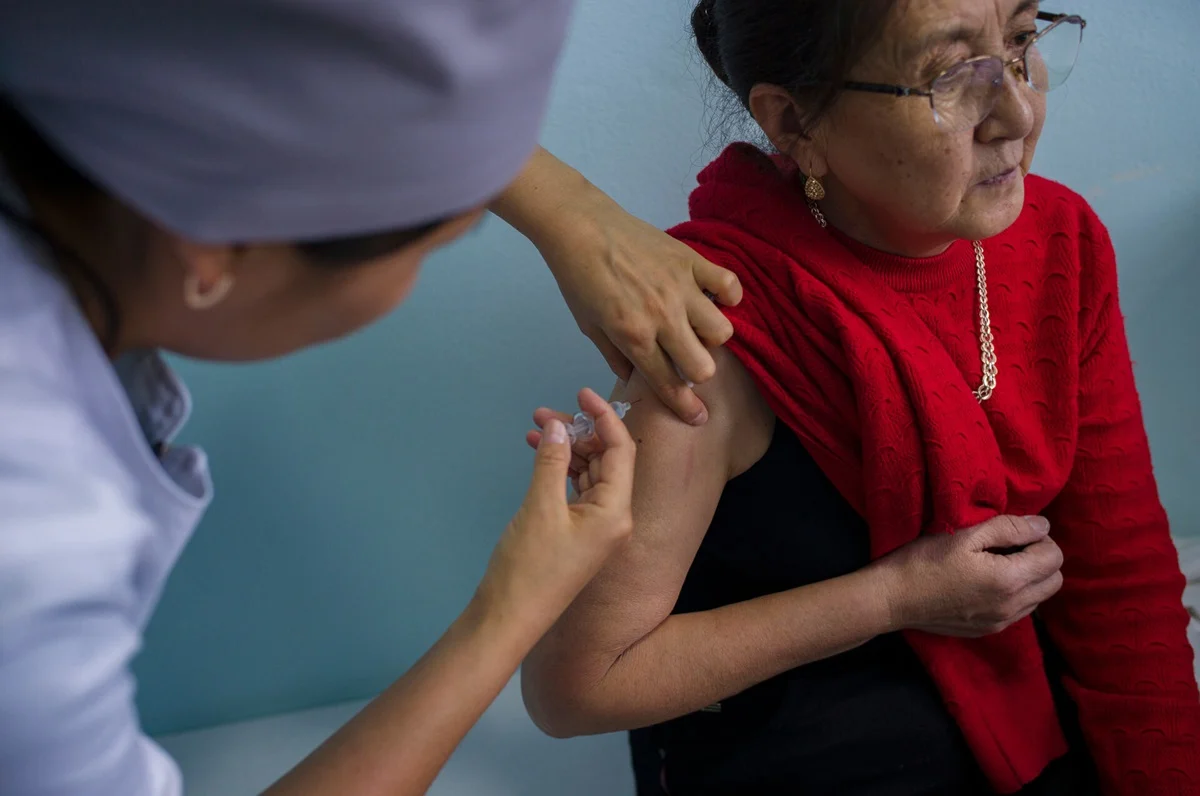
The World Health Organization (WHO) has officially released its recommendations for the viral composition of influenza vaccines for the 2026-2027 Northern Hemisphere season, marking a critical milestone in the global effort to mitigate the impact of seasonal respiratory pathogens. The announcement followed a rigorous four-day consultation involving an international panel of experts who meticulously reviewed global influenza surveillance data. These recommendations serve as the definitive blueprint for national vaccine regulatory agencies and pharmaceutical manufacturers worldwide, ensuring that the next generation of vaccines is precisely calibrated to target the most prevalent and dangerous strains of the virus.
Influenza remains one of the world’s most persistent public health challenges, characterized by its ability to undergo constant genetic mutation—a process known as antigenic drift. Because the virus evolves so rapidly, the antibodies generated by previous infections or past vaccinations may no longer recognize the updated versions of the virus. Consequently, vaccine composition must be re-evaluated and updated twice a year—once for the Northern Hemisphere and once for the Southern Hemisphere—to maintain high levels of efficacy. The goal of this biannual process is to achieve the closest possible match between the vaccine and the viruses predicted to circulate during the upcoming peak season, thereby providing the best possible defense against severe illness, hospitalization, and mortality.
The 2025-2026 Context: The Rapid Rise of Subclade K
A primary driver behind the 2026-2027 recommendations was the emergence and subsequent global dominance of a specific variant of the influenza A(H3N2) virus. In August 2025, surveillance systems identified a notably different variant classified as J.2.4.1, commonly referred to in epidemiological circles as "subclade K." This variant demonstrated an extraordinary capacity for transmission, spreading rapidly across international borders within a matter of months.
The proliferation of subclade K had a tangible impact on global health patterns. Many countries reported an uncharacteristically early start to their influenza seasons, with healthcare systems facing higher-than-usual levels of activity during the autumn months. Analysis conducted by the WHO Global Influenza Surveillance and Response System (GISRS) confirmed that subclade K accounted for the vast majority of influenza viruses reported across multiple regions. The rapid displacement of older H3N2 strains by subclade K necessitated a significant update to the vaccine components to ensure that the 2026-2027 formulations remain effective against this dominant lineage.
While A(H3N2) was the predominant threat, other variants continued to circulate. Surveillance data indicated the continued presence of influenza A(H1N1)pdm09 viruses, which have been a seasonal staple since the 2009 pandemic. Meanwhile, influenza B viruses, specifically those of the B/Victoria lineage, were detected at relatively low levels. Notably, the B/Yamagata lineage continues to be absent from global reports; no confirmed cases of B/Yamagata have been recorded since March 2020. This ongoing absence has led to continued discussions among scientists regarding the eventual transition from quadrivalent vaccines (which cover four strains) back to trivalent vaccines (covering three), as the Yamagata component may no longer be necessary.
The Global Influenza Surveillance and Response System (GISRS)
The recommendations issued by the WHO are the culmination of a massive, year-round scientific undertaking. Since its inception in 1952, the Global Influenza Surveillance and Response System (GISRS) has functioned as the backbone of international respiratory virus monitoring. It is the longest-standing global platform for systematic disease surveillance, currently comprising a network of over 150 National Influenza Centres in more than 120 countries.
During the four-day consultation, experts from WHO Collaborating Centres and Essential Regulatory Laboratories analyzed thousands of virus samples. These laboratories perform genetic sequencing and antigenic characterization to determine how well current vaccines might perform against emerging strains. This collaborative framework allows for "shared action" in the face of "shared risks," a sentiment echoed by WHO Director-General Dr. Tedros Adhanom Ghebreyesus.
"Season after season, constantly evolving influenza viruses circulate globally, showing us how connected our world is," stated Dr. Tedros. "WHO’s recommendations for influenza vaccine composition rest on the diligent, year-round work of the GISRS and partners. Thanks to this system, next season’s vaccines have been updated to counter the latest strains of influenza viruses, in turn better protecting communities."
Zoonotic Influenza and the Specter of Pandemic Threats
Beyond seasonal flu, the WHO consultation dedicated significant resources to the assessment of zoonotic influenza—viruses that circulate in animals but have the potential to infect humans. These viruses, often referred to as "bird flu" or "swine flu," are monitored with extreme vigilance because they represent a primary source of pandemic risk. Should a zoonotic virus gain the ability to spread efficiently between humans, the global population would have little to no pre-existing immunity.
Since September 23, 2025, WHO has received reports of 25 human infections with zoonotic influenza across six different countries. The majority of these cases were linked to direct exposure to infected poultry or contaminated environments. While no evidence of sustained human-to-human transmission was found in these instances, the high mortality rate often associated with zoonotic strains like H5N1 and H7N9 keeps the international community on high alert.
To prepare for such contingencies, the WHO experts select and develop Candidate Vaccine Viruses (CVVs). These are "seed" viruses that can be provided to manufacturers to jumpstart the production of vaccines in the event of a pandemic. During the most recent meeting, the panel recommended the development of a new CVV for the A(H9N2) virus, a strain that has shown persistent activity in animal populations and sporadic spillover into humans. By maintaining a library of CVVs, the WHO ensures that the world is not starting from scratch if a novel influenza virus begins to spread globally.
Official Vaccine Composition Recommendations for 2026-2027
For the 2026-2027 Northern Hemisphere influenza season, the WHO has provided specific instructions for both egg-based and cell-culture-based manufacturing platforms. These technical specifications are vital for pharmaceutical companies as they begin the months-long process of "growing" the virus strains needed for vaccine production.
Egg-Based Vaccines
For use in the production of egg-based vaccines, the WHO recommends that trivalent vaccines contain the following:
- An A/Victoria/4897/2022 (H1N1)pdm09-like virus;
- An A/Scotland/412/2025 (H3N2)-like virus (updated to address subclade K);
- A B/Austria/1359417/2021 (B/Victoria lineage)-like virus.
Cell Culture- or Recombinant-Based Vaccines
For vaccines produced using cell culture, recombinant protein, or nucleic acid (mRNA) technologies, the recommendations include:
- An A/Wisconsin/67/2022 (H1N1)pdm09-like virus;
- An A/Slovenia/3412/2025 (H3N2)-like virus (updated to address subclade K);
- A B/Austria/1359417/2021 (B/Victoria lineage)-like virus.
For quadrivalent vaccines (which include a second B-strain component), the WHO recommends the inclusion of a B/Phuket/3073/2013 (B/Yamagata lineage)-like virus, though many health authorities are moving toward the removal of this component in line with the virus’s apparent extinction in the wild.
Broader Public Health and Economic Implications
The annual flu cycle is more than a medical inconvenience; it is a significant economic and social burden. Globally, seasonal influenza is responsible for approximately one billion cases of illness every year. Of these, between 3 and 5 million cases result in severe disease, requiring hospitalization and intensive care. The mortality toll is equally staggering, with an estimated 290,000 to 650,000 respiratory-related deaths occurring annually.
The economic impact is measured in billions of dollars due to lost productivity, absenteeism in the workforce, and the strain on public healthcare budgets. In many developing nations, the cost of treating severe influenza can push families into poverty, while in developed nations, a "bad flu year" can lead to the cancellation of elective surgeries and the overcrowding of emergency departments.
By issuing these recommendations early, the WHO provides the lead time necessary for a complex global supply chain to function. Once the strains are selected, manufacturers must optimize the growth of the virus, conduct safety testing, package the doses, and distribute them to clinics worldwide. Any delay in this timeline can result in vaccine shortages during the peak of the winter season.
Furthermore, the focus on new technologies—such as mRNA and recombinant protein vaccines—offers hope for more agile responses in the future. Unlike traditional egg-based manufacturing, which can take six months or longer, these newer platforms have the potential to produce vaccines more quickly, allowing for "just-in-time" updates if a new variant emerges mid-season.
Conclusion: A Proactive Stance on Global Health
The WHO’s recommendations for the 2026-2027 Northern Hemisphere influenza season reflect a sophisticated marriage of traditional surveillance and cutting-edge genomic science. By identifying the threat of "subclade K" and addressing the lingering risks of zoonotic spillover, the global health community is taking a proactive stance against a virus that refuses to remain stationary.
While the vaccine is the most effective tool available for preventing influenza, health officials continue to emphasize a multi-layered approach to protection. This includes maintaining respiratory hygiene, ensuring adequate ventilation in public spaces, and fostering global equity in vaccine distribution. As the world moves toward the 2026-2027 season, the diligent work of the GISRS ensures that despite the virus’s constant evolution, the international community remains one step ahead.
