
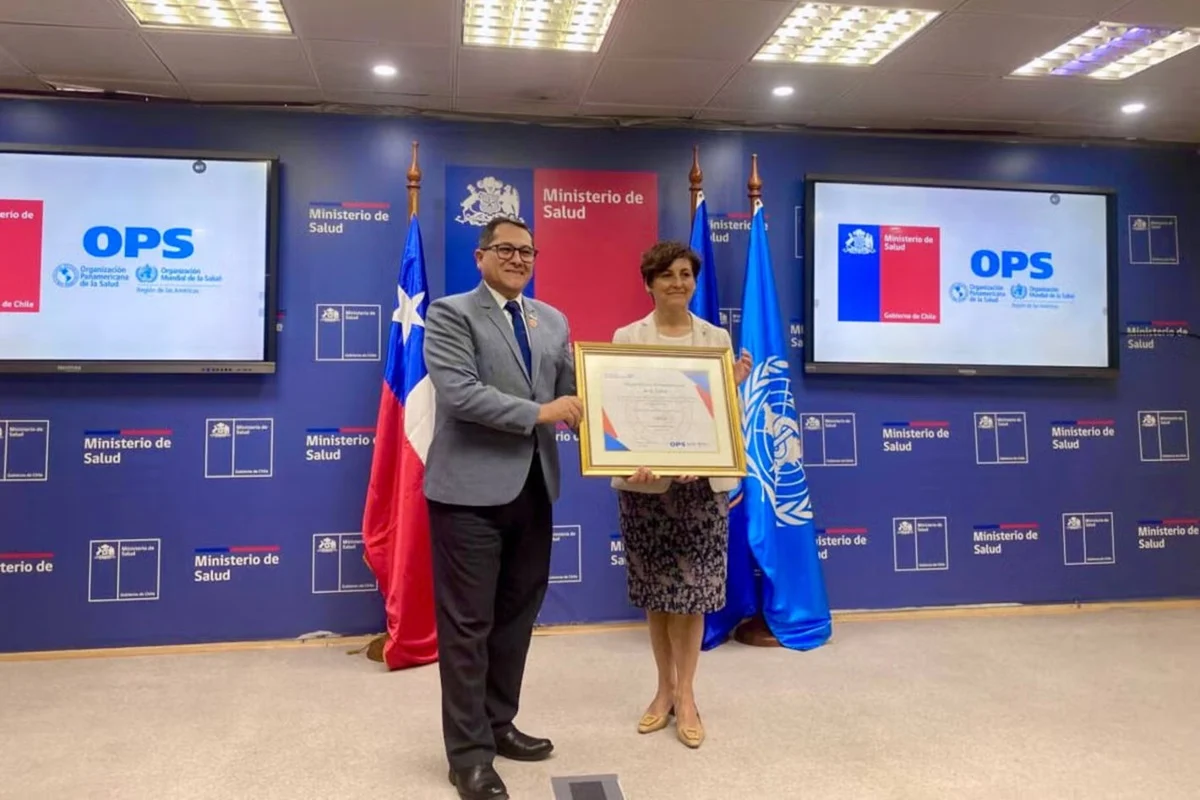
The World Health Organization (WHO) and the Pan American Health Organization (PAHO) have formally announced that Chile is the first nation in the Americas to be verified as having eliminated leprosy. This historic achievement makes Chile only the second country in the world to receive such a distinction, following the Hashemite Kingdom of Jordan. The verification serves as a global benchmark for public health, marking the culmination of more than three decades of rigorous surveillance, clinical discipline, and political commitment to eradicating a disease that has plagued humanity for millennia.
Leprosy, also known as Hansen’s disease, is a chronic infectious condition caused by the bacterium Mycobacterium leprae. While it was historically associated with severe social stigma and permanent physical disability, the Chilean experience demonstrates that modern public health strategies, when consistently applied, can consign such "ancient" diseases to the annals of history. The official verification was granted following an exhaustive assessment by an independent expert panel, which confirmed that Chile has maintained zero cases of local transmission for over thirty years.
Historical Context: From Rapa Nui to National Elimination
The history of leprosy in Chile is inextricably linked to Rapa Nui, also known as Easter Island. The disease was first documented on the island in the late 19th century. Due to the island’s geographic isolation, the disease remained largely confined there, with only sporadic introductions reported in mainland Chile. For much of the 20th century, the Chilean government managed the disease through a combination of isolation measures and evolving medical treatments.
By the late 1990s, the last secondary cases on Rapa Nui had been successfully managed. However, the most significant milestone in the country’s journey occurred in 1993, which remains the year of the last locally acquired case of leprosy detected on Chilean soil. Despite the absence of indigenous transmission, the Chilean Ministry of Health (MINSAL) made the strategic decision to keep leprosy on the national public health agenda. It remained a mandatory notifiable condition, ensuring that the health system stayed prepared to identify and treat any imported cases resulting from global travel or migration.
The Verification Process and Epidemiological Rigor
The path to official WHO verification is a multi-year process involving stringent criteria. At the request of the Chilean Ministry of Health, PAHO and WHO convened an independent panel of experts in 2025. This group was tasked with determining whether the interruption of transmission was not only achieved but also sustainable.
The panel’s methodology was comprehensive, involving a deep dive into decades of epidemiological data. They scrutinized the country’s integrated surveillance mechanisms, case management protocols, and long-term sustainability plans. A critical component of the verification was validating Chile’s capacity to detect and respond to "non-autochthonous" cases—those acquired outside the country. Between 2012 and 2023, Chile reported 47 cases of leprosy, but the panel confirmed that every single one was imported, with no evidence of secondary transmission within the country.
Dr. Tedros Adhanom Ghebreyesus, WHO Director-General, characterized the achievement as a "powerful testament to what leadership, science, and solidarity can accomplish." He noted that Chile’s success sends a clear message that with inclusive health services and early detection, even the most persistent neglected tropical diseases (NTDs) can be defeated.
The Chilean Model: Integrated Care and Clinical Readiness
Chile’s success is attributed to a robust, integrated health model that prioritizes early intervention and holistic care. Even in a low-incidence setting where many medical professionals may go their entire careers without seeing a case of leprosy, the country maintained a high state of clinical readiness.
Under the Chilean model, primary care centers serve as the frontline for detection. Any suspected case is immediately referred to specialized dermatology services for definitive diagnosis and treatment. This system is aligned with the WHO’s "Towards Zero Leprosy" strategy, which emphasizes not just the cure of the infection, but the prevention of disability and the promotion of social inclusion.
The care provided is multidisciplinary. Because Mycobacterium leprae primarily affects the skin and peripheral nerves, untreated cases can lead to permanent nerve damage and physical impairment. Chile’s health system addresses this through integrated physiotherapy and rehabilitation services, ensuring that patients receive long-term support for both acute medical needs and chronic disabilities. This comprehensive approach ensures that the "vicious circle" between disease, disability, and poverty is broken.
International Cooperation and the Role of Multidrug Therapy
A cornerstone of the global fight against leprosy has been the availability of multidrug therapy (MDT). Since 1995, PAHO and WHO have ensured that countries in the Americas have uninterrupted access to this life-saving treatment. The MDT regimen, which consists of a combination of antibiotics, is highly effective at killing the bacteria and rendering the patient non-infectious within days of starting treatment.
This global supply chain has been maintained through unique public-private partnerships. The Nippon Foundation provided MDT free of charge from 1995 to 2000, and since 2000, the pharmaceutical company Novartis has continued this commitment through direct agreements with the WHO. In Chile, this reliable international supply, coupled with a strong national distribution system, ensured that even imported cases were treated promptly, preventing any possibility of local transmission.
PAHO Director Dr. Jarbas Barbosa emphasized that Chile’s achievement is a milestone for the entire Region of the Americas. He noted that the elimination of a disease so strongly linked to vulnerable populations proves that equitable health systems can overcome the social determinants of health that allow NTDs to persist.
Legal Frameworks and the Fight Against Stigma
One of the most significant barriers to eliminating leprosy globally is the social stigma associated with the disease. Historically, leprosy patients were often ostracized, leading to delayed diagnosis and increased transmission. Chile addressed this challenge by embedding leprosy care within a broader legal and social framework that protects human rights and promotes inclusion.
National legislation in Chile guarantees equal access to healthcare and social protection for all, including migrants and other vulnerable groups. By providing care within a mixed public-private health system with strong regulatory oversight, Chile has ensured that leprosy treatment is provided without discrimination. This "stigma-free" environment encourages individuals with suspicious symptoms to seek medical attention early, which is vital for maintaining an elimination status.
Broader Impact on Neglected Tropical Diseases (NTDs)
Chile’s verification as having eliminated leprosy contributes to the broader goals of the WHO’s 2021–2030 roadmap for neglected tropical diseases. NTDs are a group of 21 conditions—including rabies, trachoma, and lymphatic filariasis—that affect more than one billion people worldwide, primarily in impoverished tropical and subtropical regions.
With this verification, Chile becomes the 61st country globally and the sixth in the Americas to have eliminated at least one NTD. It joins Brazil, Colombia, Ecuador, Guatemala, and Mexico in this elite group. The success in Chile provides a blueprint for other nations in the region, particularly those in "low-incidence" settings that must maintain vigilance and clinical expertise even when the disease is no longer a primary public health threat.
Sustaining Elimination in the Post-Verification Era
The WHO and PAHO have stressed that verification is not the end of the journey. Moving into the "post-elimination" phase, Chile must remain vigilant. The verification panel recommended that the country continue its mandatory reporting to the WHO and formally designate a national referral center to consolidate clinical expertise.
As global migration increases, the risk of imported cases remains. Therefore, the Chilean health system is encouraged to leverage modern training tools, such as the WHO Academy’s online platforms, to ensure that new generations of health workers are capable of recognizing the symptoms of leprosy.
Ximena Aguilera, Chile’s Minister of Health, expressed immense pride in the achievement, noting that it reflects decades of sustained effort. "This milestone reaffirms our responsibility to maintain active surveillance and ensure respectful, stigma-free care for all," she stated.
The elimination of leprosy in Chile serves as a beacon of hope for the global health community. It demonstrates that with a combination of political will, international cooperation, and a high-functioning, equitable health system, it is possible to eradicate diseases that have burdened humanity for thousands of years. As the world looks toward the 2030 targets for neglected tropical diseases, Chile’s success provides both the evidence and the inspiration needed to continue the fight toward a world free of leprosy.
