
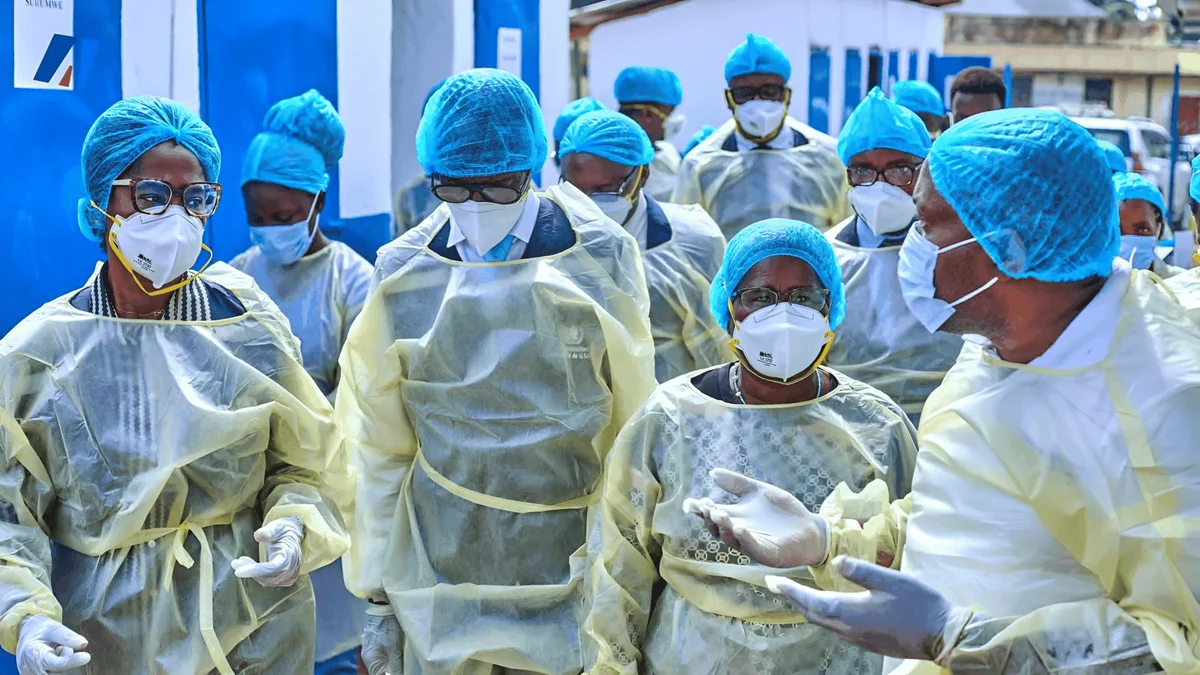
The World Health Organization (WHO) has successfully concluded Exercise Polaris II, a comprehensive two-day high-level simulation designed to pressure-test the world’s collective ability to respond to a fast-moving, fictional bacterial pathogen. Held on April 22 and 23, 2026, the exercise marked a significant milestone in global health security, bringing together a diverse coalition of 26 countries and territories, 600 health emergency experts, and more than 25 international partners. The simulation was conducted under the auspices of HorizonX, the WHO’s multi-year strategic program dedicated to operationalizing emergency frameworks through rigorous, real-world scenario testing.
Exercise Polaris II centered on the rapid global spread of a fictional new bacterium, a scenario specifically chosen to challenge the nuances of international health regulations, diagnostic capabilities, and the deployment of medical countermeasures. Unlike the viral scenario featured in the previous year’s exercise, a bacterial outbreak introduces unique complexities, including considerations for antimicrobial resistance, different transmission vectors, and specific laboratory requirements. By simulating these conditions, the WHO aimed to ensure that the global health workforce is not only prepared for the "next flu" but for a diverse range of biological threats that could destabilize international security.
A New Paradigm in Global Health Coordination
The core objective of Exercise Polaris II was to move beyond theoretical planning and into the practical application of two recently established global frameworks: the Global Health Emergency Corps (GHEC) framework and the National health emergency alert and response framework. These pillars represent the WHO’s post-pandemic strategy to shift from a reactive stance to a proactive, coordinated, and standardized global response system.
The GHEC framework, which was officially published in June 2025, serves as the operational backbone for international health workforce mobilization. It is built upon three foundational principles: sovereignty, equity, and solidarity. During the exercise, participating nations practiced the "surge" of their workforce, simulating the deployment of regional and global personnel to hotspots while maintaining national autonomy. This mechanism is designed to bridge the gap between resource-rich and resource-limited settings, ensuring that expertise is distributed based on need rather than geopolitical influence.
Complementing this, the National health emergency alert and response framework, published in October 2025, provided the tactical roadmap for the exercise. This framework outlines the specific functions and coordination systems required at the local, sub-national, and national levels. By testing these protocols in a synchronized manner, countries were able to identify bottlenecks in information flow and synchronize their policy decisions with both the WHO and neighboring territories.
Chronology of Global Preparedness: From Polaris I to Polaris II
The path to Exercise Polaris II began in the wake of the COVID-19 pandemic, which exposed critical fractures in global health infrastructure. The WHO recognized that "plans on paper" were insufficient to handle the speed of modern contagion.
- April 2025: The WHO launched Exercise Polaris I. This initial simulation focused on a fictional respiratory virus. It served as a proof-of-concept for the GHEC, bringing countries together to test basic information-sharing protocols and initial workforce coordination.
- June 2025: Following the lessons learned from Polaris I, the WHO formally published the Global Health Emergency Corps (GHEC) framework, establishing the legal and operational guidelines for cross-border health worker deployment.
- October 2025: The National health emergency alert and response framework was released, providing a standardized "playbook" for domestic health agencies to interact with international bodies.
- Early 2026: The launch of the Health Emergency Leaders Network for Africa and the Eastern Mediterranean further decentralized leadership, creating regional hubs of expertise.
- April 22-23, 2026: Exercise Polaris II was conducted, involving a broader range of participants and introducing advanced technological tools, including AI-enabled planning software.
Technological Integration and the Role of Artificial Intelligence
A standout feature of Exercise Polaris II was the integration of AI-enabled tools to support workforce organization and resource planning. In a real-world pandemic, the sheer volume of data—ranging from infection rates to the availability of intensive care beds and the location of specialized personnel—can overwhelm traditional management systems.
During the simulation, AI tools were used to model the most efficient deployment of the 600 participating experts. These tools analyzed real-time data inputs to suggest where "surge" support was most urgently needed and how to optimize the logistics of medical supply chains. This technological layer allowed participants to explore "what-if" scenarios, such as the sudden closure of borders or the failure of a major regional laboratory hub, providing a data-driven foundation for high-level decision-making.
The use of AI also facilitated improved information flow between the 26 participating countries. By standardizing the way data was reported and analyzed, the simulation reduced the "noise" often associated with emergency communications, allowing health ministers and technical leads to focus on strategic alignment and policy synchronization.
Global Participation and Regional Leadership
The exercise saw participation from a geographically and economically diverse group of nations, reflecting the universal nature of health threats. Participating countries included Bangladesh, Brazil, Brunei, Colombia, Egypt, El Salvador, France, Georgia, Ghana, India, Indonesia, Jordan, Kenya, Kosovo (under UN Security Council resolution 1244), Libya, Malaysia, Nepal, Oman, Paraguay, Philippines, Qatar, Republic of Congo, Rwanda, Suriname, Thailand, and Yemen.
This broad participation was bolstered by the involvement of over 25 national, regional, and global health agencies. These partners provided the technical expertise and operational "heft" required to simulate a truly global response. Key organizations included:
- Africa Centres for Disease Control and Prevention (Africa CDC): Playing a pivotal role in regional coordination.
- The International Federation of Red Cross and Red Crescent Societies (IFRC): Focusing on community-level response and humanitarian aid.
- UNICEF: Ensuring that the needs of children and vulnerable populations were integrated into the emergency response.
- Emergency Networks: The Global Outbreak Alert and Response Network (GOARN), the Emergency Medical Teams (EMT) initiative, and the Standby Partners.
- Technical Institutes: The Robert Koch Institute (Germany), UK-Med, and the International Association of National Public Health Institutes.
The involvement of the recently launched Health Emergency Leaders Network for Africa and the Eastern Mediterranean was particularly significant. This network allowed for a more localized approach to leadership, ensuring that the response was not just top-down from Geneva, but driven by leaders who understand the specific cultural and logistical contexts of their regions.
Leadership Perspectives on Collective Action
The conclusion of the exercise was met with a sense of urgency and cautious optimism from global health leaders. Dr. Tedros Adhanom Ghebreyesus, WHO Director-General, emphasized that the simulation proved the necessity of the GHEC’s mission. "Exercise Polaris II showed what is possible when we act together. It demonstrated that global cooperation is not optional—it is essential," Dr. Tedros stated. He further noted that the purpose of the GHEC is to build the trust and connections required to work as a single, unified entity across borders.
Echoing this sentiment, Dr. Chikwe Ihekweazu, Executive Director of the WHO’s Health Emergencies Programme, highlighted the importance of a "ready-to-act" workforce. "This reflects the spirit of the Global Health Emergency Corps: a well-organized, trained, coordinated and connected emergency workforce ready to respond wherever and whenever it is needed," he said.
From a national perspective, Edenilo Baltazar Barreira Filho, Director of the Public Health Emergencies Department at the Ministry of Health in Brazil, underscored the practical value of the exercise. He remarked that having plans on paper is a necessary first step, but the true test is how those plans perform under the pressure of a real-life simulation. For Brazil and other participating nations, Polaris II served as a "stress test" that revealed both strengths to be leveraged and gaps to be filled before the next actual crisis occurs.
Implications for Global Health Security
The success of Exercise Polaris II suggests a significant shift in how the international community approaches pandemic preparedness. By moving away from siloed national responses and toward a modular, interconnected system (as embodied by the GHEC), the WHO is attempting to create a "firewall" against future pathogens.
Analysis of the exercise suggests several key implications for the future:
- Standardization is Key: The ability of 26 different countries to work under the same framework indicates that standardized protocols can significantly reduce the chaos of the early days of an outbreak.
- Equity as a Strategy: The emphasis on the GHEC framework shows that the WHO views equity not just as a moral imperative, but as a strategic necessity. A pathogen left unchecked in one region due to a lack of resources remains a threat to all regions.
- The Rise of Regional Hubs: The success of the Health Emergency Leaders Network suggests that the future of global health security may lie in "distributed leadership," where regional organizations like the Africa CDC take a more prominent role in managing local outbreaks before they become global pandemics.
- Continuous Investment: As part of the HorizonX program, Polaris II reinforces the idea that preparedness is not a one-time event. It requires continuous investment in training, technology, and relationship-building.
As the world looks toward World Health Day 2026, themed "Together for health. Stand with science," the results of Exercise Polaris II provide a tangible example of science-based collaboration in action. The WHO’s mission to promote health, keep the world safe, and serve the vulnerable is increasingly dependent on these high-stakes simulations, which turn the abstract concepts of global solidarity into the concrete reality of a coordinated, lifesaving response.
The lessons learned over these two days in April will now be analyzed and integrated into the next phase of the HorizonX program. For the 600 experts who participated, the exercise was more than just a drill; it was a vital rehearsal for a performance the world hopes it will never have to give, but must be ready for nonetheless. Through the Global Health Emergency Corps and continued international cooperation, the goal remains clear: to ensure that when the next "Pathogen X" arrives, the world is not caught off guard, but stands ready, connected, and prepared to act as one.
