
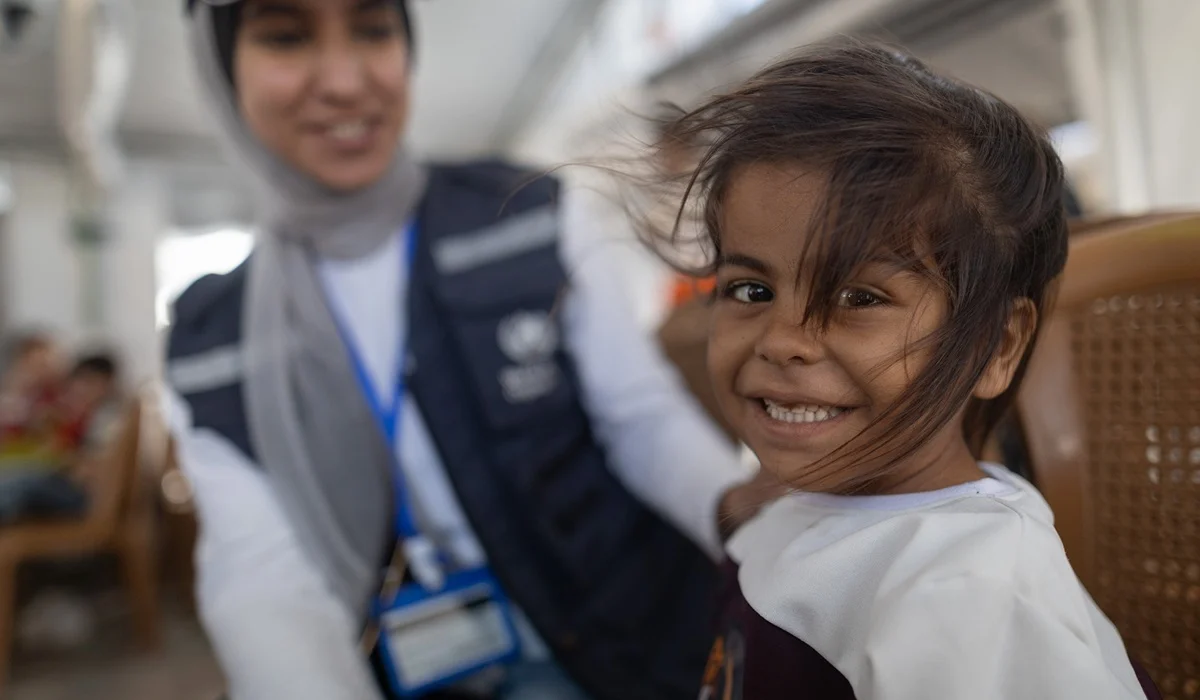
The World Health Organization (WHO) has officially inaugurated its 2026 Global Appeal, a comprehensive strategic funding request aimed at raising nearly US$ 1 billion to provide essential health services to millions of individuals trapped in the crosshairs of humanitarian catastrophes, armed conflicts, and environmental disasters. The appeal, launched in Geneva, underscores a critical juncture for international humanitarian efforts as the organization grapples with an unprecedented widening gap between the escalating demand for emergency health interventions and a steady contraction in global donor contributions. By seeking approximately $1 billion, the WHO intends to address 36 distinct emergencies across the globe, including 14 "Grade 3" emergencies—the highest level of internal classification, requiring a full-scale, multi-level organizational response.
The 2026 appeal is not merely a request for financial assistance but a strategic roadmap designed to stabilize fragile health systems and prevent the collapse of essential services in regions where the social fabric has been torn apart. According to the WHO, these funds are vital for sustaining life-saving operations in territories where healthcare is often the only remaining line of defense against total societal breakdown. The initiative comes on the heels of a challenging 2025, where despite significant operational successes, the organization was forced to navigate a severe funding shortfall that limited its reach to only a fraction of those in desperate need.
Retrospective Analysis: The Impact and Limitations of the 2025 Response
To understand the necessity of the 2026 request, it is essential to examine the scale of the WHO’s operations over the preceding year. In 2025, the WHO and its network of international and local partners successfully provided health support to approximately 30 million people. This massive logistical undertaking was made possible through the resources mobilized by the annual emergency appeal. The tangible outcomes of these efforts were significant: life-saving vaccinations were administered to 5.3 million children in high-risk zones, and more than 53 million health consultations were facilitated.
Furthermore, the WHO’s 2025 operations supported over 8,000 health facilities and saw the deployment of 1,370 mobile clinics. These mobile units proved indispensable in reaching internally displaced persons (IDPs) and refugees in remote or conflict-heavy areas where permanent infrastructure had been destroyed. However, the success of these operations was tempered by a sobering reality: the global humanitarian funding environment has deteriorated. In 2025, total humanitarian financing plummeted to levels below those seen in 2016. This financial regression meant that the WHO could only provide assistance to one-third of the 81 million people it had originally identified as requiring urgent humanitarian health support. The 2026 appeal seeks to reverse this trend by securing more predictable and flexible funding streams.
The Convergence of Global Pressures: A Growing Demand for Aid
The 2026 appeal arrives during a period defined by what experts describe as "converging global pressures." The demand for health emergency support is being driven by a perfect storm of protracted military conflicts, the intensifying physical impacts of climate change, and the persistent threat of recurrent infectious disease outbreaks. Unlike previous decades, where emergencies were often localized and temporary, modern crises are increasingly interconnected and long-lasting.
Climate change, in particular, has emerged as a primary driver of health insecurity. Extreme weather events, such as the catastrophic flooding seen in East Africa and the prolonged droughts in the Sahel, have decimated local food systems and contaminated water supplies, leading to surges in waterborne diseases. Simultaneously, conflict remains the dominant cause of health system collapse. In regions like Sudan and Ukraine, the deliberate targeting of healthcare infrastructure and the displacement of medical personnel have left millions without access to basic surgical care, maternal health services, or chronic disease management.
The WHO’s 2026 strategy specifically highlights the need to combat infectious diseases that thrive in these unstable environments. Ongoing outbreaks of cholera, fueled by poor sanitation in displacement camps, and the spread of mpox (formerly monkeypox) across borders, represent significant threats to global health security. The appeal emphasizes that failing to contain these outbreaks at their source significantly increases the risk of international transmission, potentially leading to far more costly global health crises.
Priority Geographic Regions and Targeted Interventions
The WHO has identified a specific list of priority areas where the 2026 funds will be most heavily concentrated. These regions represent the most complex humanitarian landscapes in the world today. The list includes Afghanistan, the Democratic Republic of the Congo (DRC), Haiti, Myanmar, the occupied Palestinian territory, Somalia, South Sudan, Sudan, the Syrian Republic, Ukraine, and Yemen. Each of these locations faces a unique set of challenges that require tailored health responses.
In Sudan and the occupied Palestinian territory, the focus remains on trauma care and the restoration of basic primary health services amidst active hostilities. In Afghanistan and Yemen, the WHO is prioritizing the fight against malnutrition and the provision of essential medicines for a population whose economy has largely collapsed. Meanwhile, in the DRC, the response is heavily geared toward containing the mpox outbreak and managing the health needs of millions of displaced persons fleeing violence in the eastern provinces.
As the lead agency for the Global Health Cluster, the WHO coordinates more than 1,500 partners across 24 crisis settings. This coordination ensures that international aid does not bypass local systems but rather strengthens them. By keeping national authorities and local community partners at the center of the response, the WHO aims to build resilience that outlasts the immediate humanitarian intervention.
Leadership Perspectives: Health as a Strategic Investment
During the launch event in Geneva, Dr. Tedros Adhanom Ghebreyesus, the WHO Director-General, framed the appeal as more than a humanitarian gesture. He argued that investing in the WHO’s emergency response is a fundamental component of global security. "This appeal is a call to stand with people living through conflict, displacement, and disaster—to give them not just services, but the confidence that the world has not turned its back on them," Dr. Tedros stated. He further emphasized that the funding should be viewed as a "strategic investment in health and security," noting that access to healthcare is a primary driver of community stabilization and recovery.
The sentiment was echoed by international partners who co-chaired the event. Ambassador Noel White, the Permanent Representative of Ireland to the United Nations in Geneva, highlighted the intrinsic link between humanitarian crises and health. Ireland has been a vocal proponent of "unearmarked" funding—money that is not tied to a specific project but can be used flexibly where the need is greatest. This type of funding is primarily channeled through the Contingency Fund for Emergencies (CFE), which allows the WHO to deploy resources within 24 to 48 hours of a crisis breaking.
Ms. Marita Sørheim-Rensvik, Deputy Permanent Representative of Norway, also addressed the assembly, emphasizing the WHO’s unique role in upholding international humanitarian law. She pointed out that the WHO often operates in regions where few other organizations can maintain a presence, ensuring that vulnerable populations—particularly women requiring reproductive health services—are not abandoned. Norway’s call for increased support reflects a broader concern among some Member States that the erosion of humanitarian funding will lead to a "lost generation" in conflict-affected zones.
Chronology of the Appeal and Future Implications
The 2026 appeal follows a rigorous cycle of assessment and planning. Throughout the latter half of 2025, WHO regional offices and country teams conducted detailed needs assessments, consulting with local health ministries and non-governmental organizations (NGOs) to determine the exact requirements for the coming year. This data-driven approach is intended to ensure that every dollar requested is tied to a specific, high-impact intervention.
Looking ahead, the success of the 2026 appeal will likely determine the trajectory of global health stability for the remainder of the decade. If the funding gap continues to widen, the WHO warns of a "vicious cycle" where untreated health issues lead to further social instability, which in turn creates more displacement and higher costs for future humanitarian responses. Conversely, early and predictable investment allows for the containment of outbreaks before they become pandemics and the stabilization of health systems before they completely fail.
The WHO’s shift in language—from "aid" to "investment"—reflects a growing realization that health is the bedrock of economic and political stability. By providing nearly $1 billion in resources, the international community has the opportunity to prevent health risks from escalating into wider humanitarian and health security crises that carry far greater human and financial costs. The 2026 Global Appeal stands as a litmus test for international solidarity in an era of increasing isolationism and fiscal tightening. As the WHO and its partners prepare for the challenges of the coming year, the message remains clear: the cost of inaction is a price the global community cannot afford to pay.
