
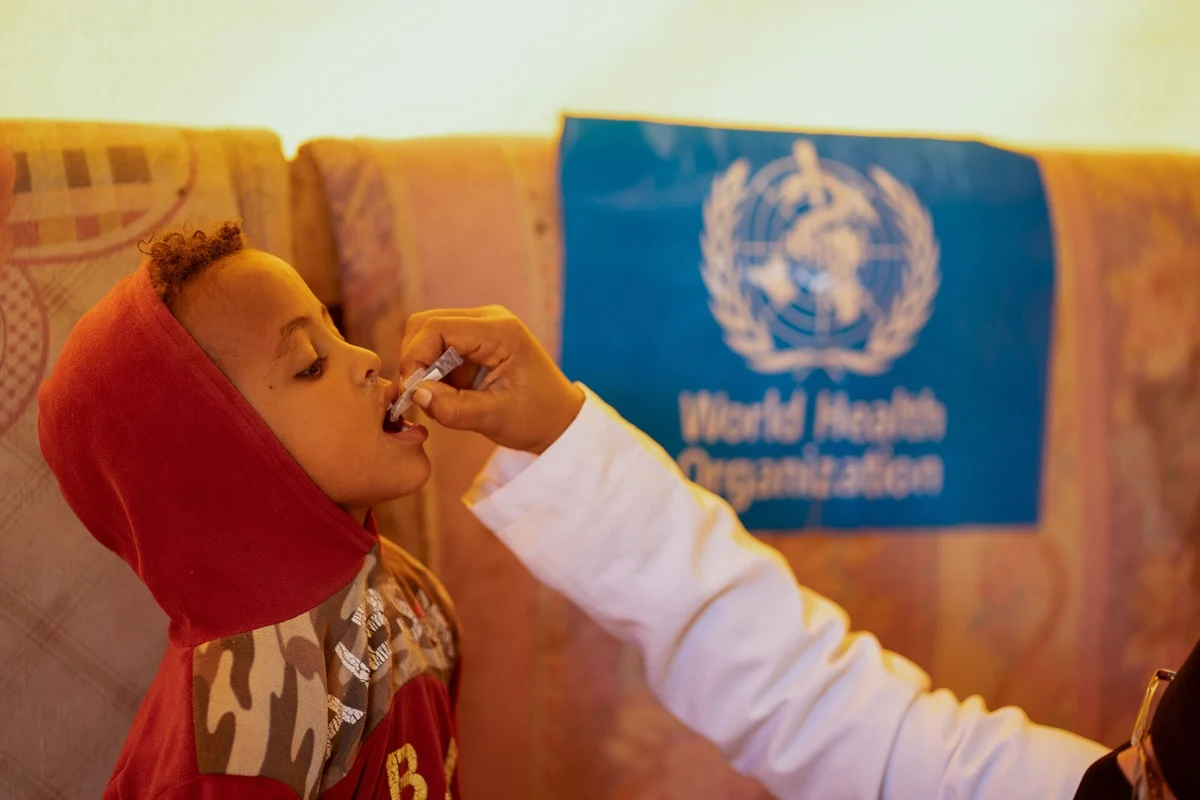
The global health community reached a pivotal turning point in the fight against one of the world’s oldest and most persistent pathogens as Gavi, the Vaccine Alliance, UNICEF, and the World Health Organization (WHO) jointly announced that the supply of oral cholera vaccines (OCV) has finally stabilized. This recovery in manufacturing and procurement capacity allows for the resumption of large-scale preventive vaccination campaigns, which had been suspended since 2022 due to an unprecedented global shortage. The restart of these life-saving initiatives marks a shift from a purely reactive "firefighting" approach to a proactive strategy aimed at shielding vulnerable populations before outbreaks can take hold.
Mozambique has been designated as the first country to restart these preventive efforts, a decision driven by the country’s precarious public health situation following devastating climate events. The suspension of preventive campaigns over the last three years was a direct consequence of a global surge in cholera cases that overwhelmed existing stockpiles, forcing international health agencies to prioritize outbreak response over long-term prevention. With the annual global supply of OCV projected to double from 35 million doses in 2022 to nearly 70 million doses by 2025, health officials believe the world is now in a significantly stronger position to break the cycle of infection.
The Situation in Mozambique: A Frontline Defense
The resumption of vaccination in Mozambique comes at a critical juncture. The nation is currently grappling with the aftermath of severe flooding that has impacted more than 700,000 people and caused widespread displacement. Such environmental catastrophes are notorious catalysts for cholera, as they destroy fragile water and sanitation infrastructure, forcing communities to rely on contaminated water sources.
The preventive campaign in Mozambique is not merely a medical intervention but a race against time to prevent a localized outbreak from spiraling into a national emergency. Of the initial 20 million doses allocated for this global restart, 3.6 million doses have been delivered to Mozambique. These doses are intended to create a "wall of immunity" in high-risk districts where the combination of flood damage and high population density creates a perfect storm for the Vibrio cholerae bacterium.
Health workers on the ground report that the floods have disrupted basic healthcare delivery, making the delivery of the oral vaccine—which is administered easily without the need for needles—an essential tool in the current humanitarian response. By targeting these areas preventively, the WHO and its partners hope to reduce the strain on Mozambique’s already overstretched clinical facilities.
The Global Supply Chain Breakthrough
The shortage that paralyzed preventive efforts for three years was the result of a "perfect storm" in global health: a sudden spike in demand across multiple continents occurring simultaneously with limited manufacturing capacity. For much of this period, the world relied on a single primary manufacturer, EUBiologics, to produce vaccines at the scale required for mass campaigns.
Dr. Tedros Adhanom Ghebreyesus, WHO Director-General, highlighted the vulnerability of this reliance while praising the efforts to expand production. The doubling of the vaccine supply to 70 million doses by 2025 is the result of years of behind-the-scenes negotiations, financing via Gavi, and technical assistance to streamline manufacturing processes. Gavi’s role in financing the global OCV stockpile has been instrumental in providing the market certainty needed for manufacturers to invest in increased production lines.
However, health leaders warn that while EUBiologics has performed a vital service, the global supply remains fragile. There is a standing call for other pharmaceutical entities to enter the market to ensure a diversified and resilient supply chain that can withstand future surges in demand or localized manufacturing disruptions.
Chronology of a Crisis: 2021 to 2025
The path to the current milestone has been marked by difficult decisions and tactical retreats. In 2021, a global resurgence of cholera began, fueled by climate change, conflict, and the economic fallout of the COVID-19 pandemic. By October 2022, the International Coordinating Group (ICG) on Vaccine Provision—the body that manages the global emergency stockpile—was forced to make the unprecedented recommendation to move from a two-dose to a one-dose vaccination strategy for outbreak response. This was a "stop-gap" measure intended to stretch limited supplies to cover more people, even though the protection offered by a single dose is shorter in duration.
Throughout 2023, the situation remained dire. Over 600,000 cases were reported globally, a figure widely considered an underestimate due to the lack of robust surveillance in conflict zones and impoverished rural areas. Deaths reached nearly 7,600, showing a disturbing trend: while the total number of cases showed a slight decline by early 2025, the lethality of the outbreaks appeared to be increasing, likely due to weakened health systems and the presence of more virulent strains.
The restoration of the preventive strategy in late 2024 and early 2025 signifies that the global stockpile has finally recovered enough volume to move beyond emergency rationing. The 20 million doses currently being deployed represent the first wave of this new, more stable era of cholera management.
Strategic Allocation: DRC and Bangladesh
Beyond Mozambique, two other nations have been prioritized for the initial rollout of preventive doses based on criteria established by the Global Task Force for Cholera Control (GTFCC). The Democratic Republic of the Congo (DRC), which continues to face significant outbreaks exacerbated by internal conflict and displacement, has been allocated 6.1 million doses.
Bangladesh, a country with a long history of endemic cholera and high population density, is slated to receive the largest share of this initial allocation: 10.3 million doses. In Bangladesh, the focus is on "hotspot" mapping—identifying urban slums and coastal areas where the disease consistently resurfaces. By applying a large-scale preventive campaign in these zones, health officials aim to significantly lower the national burden of the disease and prevent seasonal spikes that often follow the monsoon rains.
The GTFCC’s allocation framework is designed to ensure that these precious resources are distributed equitably and transparently. The framework accounts for disease burden, the risk of spread, and the country’s logistical readiness to execute a mass campaign.
Scientific Context: The Efficacy of OCV
The Oral Cholera Vaccine is a critical tool because of its safety profile and ease of administration. Recommended for everyone over the age of one, the vaccine provides a two-tiered level of protection. A single dose provides a rapid immune response that lasts for at least six months, making it ideal for controlling an active outbreak. However, the "gold standard" for prevention is the two-dose regimen, which provides robust protection for up to three years.
With the supply now improving, health agencies are beginning to evaluate when and where to return to the two-dose strategy. For now, the one-dose strategy remains the standard for emergency outbreak response to maximize coverage, but the preventive campaigns being launched in Mozambique, DRC, and Bangladesh are designed to build more durable, multi-year immunity within communities.
Broader Impact and the Necessity of Infrastructure
While the increase in vaccine supply is a triumph of international cooperation, officials from UNICEF and the WHO are quick to point out that vaccines are not a "silver bullet." Catherine Russell, UNICEF Executive Director, emphasized that vaccination must be paired with long-term investments in safe water, sanitation, and hygiene (WASH) infrastructure.
Cholera is fundamentally a disease of inequity. It thrives where clean water is absent and where human waste is not safely managed. In the long term, the goal of the GTFCC’s "Ending Cholera: A Global Roadmap to 2030" is to reduce cholera deaths by 90%. Achieving this will require more than just an increase in vaccine doses; it will require political commitment from national governments to invest in the pipes, pumps, and treatment plants that prevent the contamination of water sources in the first place.
Dr. Sania Nishtar, CEO of Gavi, noted that the multi-year surge in cases serves as a "stark reminder" that a sustainable vaccine supply is a global public good. The current success in doubling production is a testament to what can be achieved through public-private partnerships, but it also highlights the dangers of complacency. As climate change continues to increase the frequency of extreme weather events like the floods in Mozambique, the demand for OCV is likely to remain high for the foreseeable future.
Conclusion and Future Outlook
The resumption of preventive cholera vaccination represents a significant victory for global health security. It signals that the international community has successfully navigated a period of extreme scarcity and is now moving toward a more sustainable model of disease control. The efforts of Gavi, UNICEF, the WHO, and manufacturers like EUBiologics have effectively "bought time" for the world’s most vulnerable populations.
However, the road ahead remains challenging. The continued rise in cholera deaths, despite the stabilization of case numbers in some regions, suggests that the disease is becoming harder to treat in settings where healthcare systems have collapsed. As the 20 million doses reach the arms of people in Mozambique, the DRC, and Bangladesh, the focus will remain on monitoring the effectiveness of these campaigns and ensuring that the global manufacturing base continues to expand.
The milestone reached today is a call to action for continued investment—not just in the vials of vaccine, but in the fundamental human right to clean water and the health infrastructure necessary to ensure that no child dies from a preventable, waterborne disease. The cycle of reacting to outbreaks may finally be breaking, but the work of total eradication is only just beginning.
