
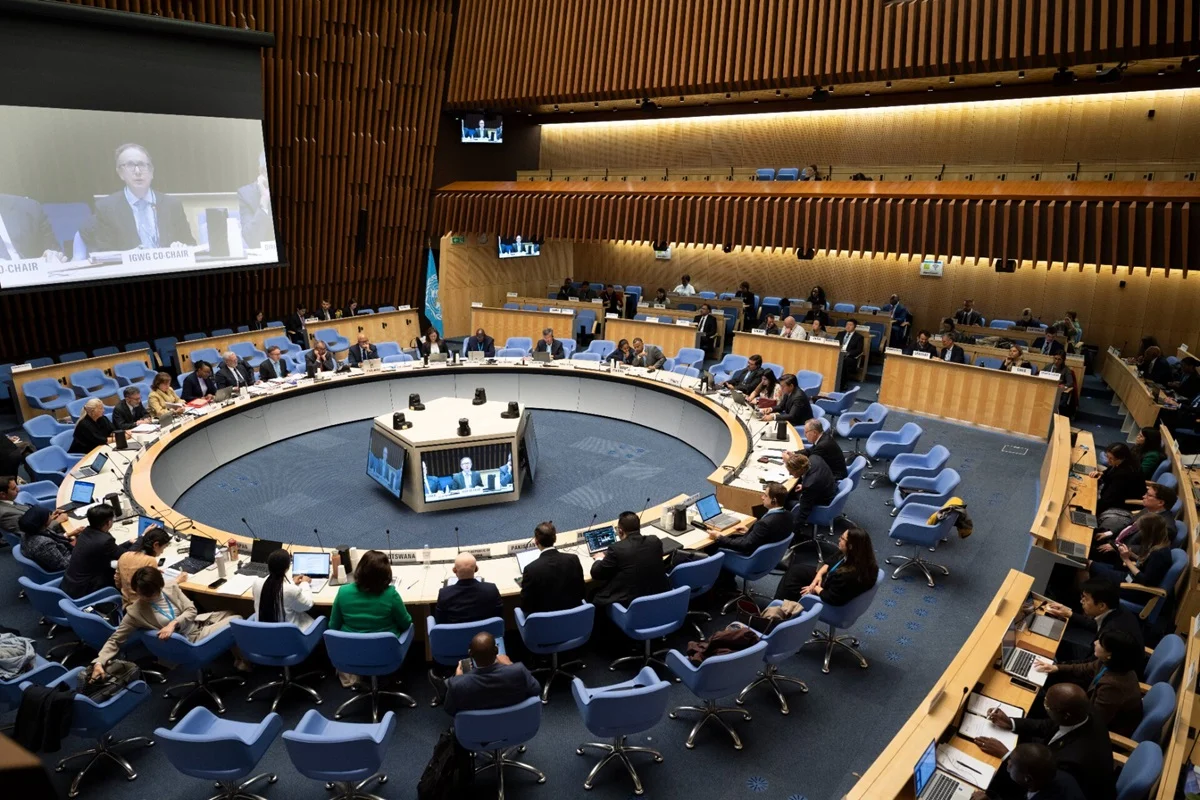
GENEVA — Member States of the World Health Organization (WHO) have concluded a pivotal weeklong session of negotiations regarding the draft annex for Pathogen Access and Benefit Sharing (PABS), a cornerstone of the broader WHO Pandemic Agreement. This fifth meeting of the Intergovernmental Working Group (IGWG) on the WHO Pandemic Agreement took place from February 9 to 14, 2026, marking a significant milestone in the international community’s effort to codify a legally binding framework for global health security.
The PABS system represents one of the most complex and vital components of the international response to future biological threats. It seeks to resolve a long-standing tension in global health: the need for rapid, unfettered access to pathogen samples and genetic data to develop medical countermeasures, balanced against the ethical and economic necessity of ensuring that the resulting benefits—such as vaccines, diagnostics, and therapeutics—are shared equitably with the nations that provided the initial data.
The Mandate and Progress of the Fifth IGWG Meeting
The IGWG was established by the World Health Assembly (WHA) following the formal adoption of the overarching Pandemic Agreement in 2025. The group’s specific mandate is to finalize the PABS annex, a document that will detail the operational mechanics of how viruses, bacteria, and their genetic sequences are shared globally.
During the February 2026 session, negotiators focused on streamlining the draft text, which had previously been burdened by bracketed language indicating areas of disagreement. Ambassador Tovar da Silva Nunes of Brazil, serving as the IGWG Bureau co-chair, noted that the week’s discussions were characterized by a "steadfast commitment" from member states. According to Ambassador Nunes, the group now possesses a "clear vision" for the document’s structure, though he acknowledged that several "contentious elements" still require targeted consultation before the final deadline.
The "contentious elements" typically refer to the specific percentages of vaccine production that pharmaceutical companies would be required to reserve for the WHO, as well as the legal mechanisms governing the use of Digital Sequence Information (DSI). While the meeting successfully moved toward a more cohesive draft, the final language on these points remains a work in progress.
A Chronology of Global Health Reform
The path to the PABS negotiations began in the wake of the COVID-19 pandemic, which exposed systemic vulnerabilities in the International Health Regulations (IHR 2005).
- December 2021: A Special Session of the World Health Assembly established an Intergovernmental Negotiating Body (INB) to draft and negotiate a WHO convention, agreement, or other international instrument on pandemic prevention, preparedness, and response.
- 2022–2024: Multiple rounds of negotiations occurred, focusing on the "equity" gap that saw low-income countries waiting months for vaccines while high-income countries administered boosters.
- May 2025: The World Health Assembly formally adopted the WHO Pandemic Agreement, a landmark legally binding treaty. However, the specific details of the Pathogen Access and Benefit Sharing system were deferred to a specialized annex to allow for more technical and political deliberation.
- February 2026: The fifth meeting of the IGWG concludes, setting the stage for a final push toward the May 2026 World Health Assembly.
This timeline reflects the transition from emergency response to a permanent, institutionalized framework intended to prevent the "vaccine apartheid" observed during the 2020–2022 period.
The Mechanics of Pathogen Access and Benefit Sharing (PABS)
At its core, the PABS system is built on two pillars: rapid access and equitable sharing.
The Access Pillar
To respond to an emerging threat, scientists require immediate access to physical samples of a pathogen and its genetic sequence data (GSD). During the COVID-19 pandemic, the rapid sharing of the SARS-CoV-2 genome allowed for the development of the first diagnostic tests within days and the first vaccine candidates within weeks. The PABS annex aims to standardize this process, ensuring that labs across the world can share data through a recognized WHO-coordinated system without the delays of bilateral negotiations.
The Benefit-Sharing Pillar
Historically, developing nations have expressed concern that they share pathogen samples only to find themselves unable to afford the vaccines developed from those samples. The PABS system proposes a "quid pro quo" model. In exchange for providing access to pathogens, member states (and the global community) would receive guaranteed benefits.
Current proposals under discussion include:
- Real-time contributions: A requirement for manufacturers of pandemic-related products to provide a percentage (often debated between 10% and 20%) of their production to the WHO—half as a donation and half at affordable, non-profit prices.
- Monetary contributions: Annual fees or payments from entities that utilize the PABS system to fund pandemic preparedness in developing regions.
- Technology transfer: Provisions to encourage or mandate the sharing of manufacturing "know-how" to diversify global production capacity.
Supporting Data: The Cost of Inequity
The urgency of the PABS negotiations is underscored by the data emerging from the COVID-19 era. According to the WHO, while more than 13 billion vaccine doses were administered globally by late 2023, only about 25% of the population in low-income countries had received at least one dose, compared to over 72% in high-income countries.
Furthermore, the economic impact of pandemic-related disruptions is estimated to have cost the global economy over $12.5 trillion between 2020 and 2024. Health economists argue that a functional PABS system, by accelerating the response and ensuring global coverage, could save the global economy billions in future outbreaks. The "100 Days Mission," an initiative supported by the G7 and G20, aims to have vaccines ready for any new pathogen within 100 days; experts suggest this goal is only achievable if the PABS legal framework is robust and universally accepted.
Stakeholder Perspectives and Industry Reaction
The February 2026 negotiations were not limited to government officials. The IGWG engaged with "relevant stakeholders," including representatives from the pharmaceutical industry, academic researchers, and managers of sequence information databases like GISAID.
The private sector’s reaction has been a mix of cautious support and logistical concern. Pharmaceutical trade groups have argued that mandatory benefit-sharing requirements could disincentivize innovation or slow down research during an emergency. They emphasize the need for a system that respects intellectual property (IP) rights while facilitating cooperation.
Conversely, civil society organizations and representatives from the Global South argue that voluntary measures failed during COVID-19 and that legally binding obligations are the only way to ensure fairness. The involvement of academic laboratories is also crucial, as these institutions are often the first to sequence new pathogens and require a system that does not bury their research in excessive bureaucracy.
Official Responses from the Negotiating Bureau
The conclusion of the fifth meeting brought a sense of cautious optimism from the leadership. Mr. Matthew Harpur of the United Kingdom, co-chair of the IGWG Bureau, emphasized the gravity of the remaining tasks.
"As we conclude the fifth meeting… I want to thank delegations for their serious and constructive engagement," Harpur stated. "It is clear that important differences remain, but there is a shared recognition of what is at stake. With time running short, the coming weeks will be critical in bridging the remaining gaps and delivering a Pathogen Access and Benefit Sharing annex that is fair, effective, and fit for purpose."
WHO Director-General Dr. Tedros Adhanom Ghebreyesus echoed these sentiments, highlighting the importance of multilateralism. He pointed out that the adoption of the main Pandemic Agreement last year was a "huge testament to global cooperation" and that the PABS annex is the final piece of the puzzle. Dr. Tedros expressed confidence that the May deadline is achievable, provided countries maintain their current momentum.
Analysis of Implications and the Path to May
The success or failure of the PABS negotiations will likely define the effectiveness of the entire WHO Pandemic Agreement. Without a functional PABS system, the agreement remains a high-level statement of intent without the operational "teeth" needed to manage a biological crisis.
Geopolitical Considerations
The negotiations are occurring against a backdrop of complex geopolitics. Middle-income countries with large manufacturing bases, such as India, South Africa, and Brazil, are pushing for stronger technology transfer language. Meanwhile, the United States, the European Union, and Japan are focused on ensuring that the system does not compromise the speed of private-sector research.
The Role of Digital Sequence Information (DSI)
One of the most technical hurdles remains the treatment of DSI. In the modern era, physical samples are often less important than the digital code of a virus’s genome. If the PABS annex does not effectively cover DSI, it risks becoming obsolete as technology shifts toward synthetic biology and localized mRNA printing based on digital blueprints.
The May Deadline
Member States are scheduled to resume negotiations next month. This upcoming session will be the final opportunity to resolve the most difficult political questions before the draft is presented to the 79th World Health Assembly in May 2026. If an agreement is reached, it will mark the first time in history that the world has a pre-negotiated, legally binding "contract" for how to share the burden and the bounty of pandemic science.
As the international community moves toward this deadline, the focus remains on creating a system that is "fit for purpose." The objective is a framework that reacts at the speed of a virus while maintaining the moral imperative of equity—a dual challenge that has eluded global health governance for decades. The progress made in Geneva this February suggests that while the path is difficult, the collective will to avoid the mistakes of the past remains strong.
