
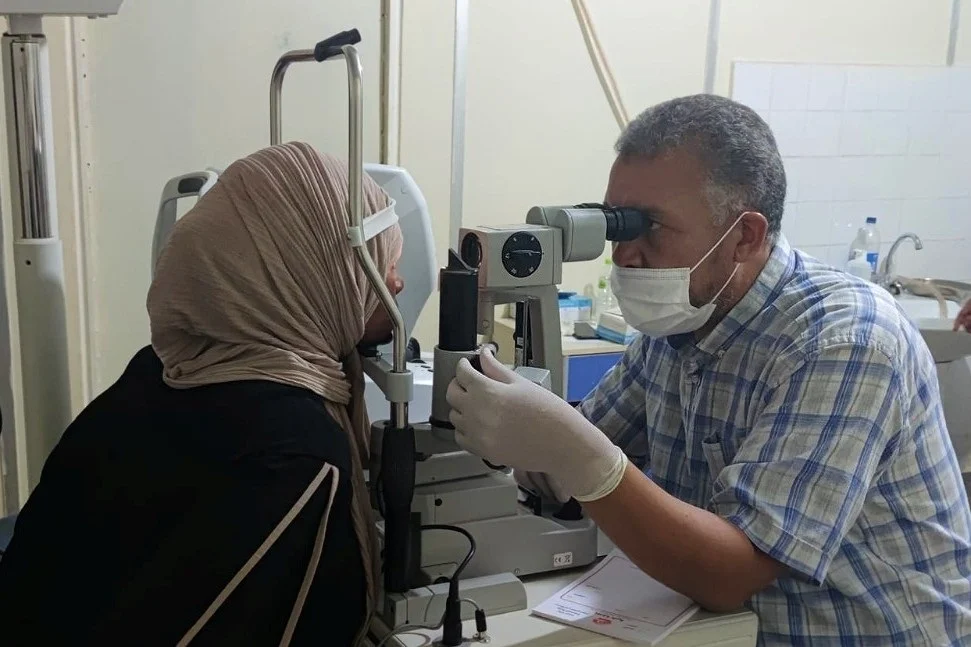
The World Health Organization (WHO) officially announced today that Libya has successfully eliminated trachoma as a public health problem, marking a monumental victory for the nation’s healthcare system and the broader Eastern Mediterranean Region. This achievement represents the culmination of decades of dedicated surveillance, clinical intervention, and international cooperation, effectively protecting future generations of Libyans from a preventable cause of permanent blindness. Libya now joins an elite group of nations that have proven that neglected tropical diseases (NTDs) can be defeated even in the face of significant socio-political and humanitarian challenges.
With this formal validation, Libya becomes the 28th country globally to eliminate trachoma and the 8th within the WHO Eastern Mediterranean Region to reach this status. The milestone is particularly significant given the country’s recent history of internal conflict and the resulting strain on its national infrastructure. It serves as a testament to the resilience of Libya’s health workers and the effectiveness of evidence-based public health strategies when paired with persistent political will.
The Nature of the Challenge: Understanding Trachoma
Trachoma is a devastating infectious eye disease caused by the bacterium Chlamydia trachomatis. It is primarily transmitted through direct contact with eye and nose discharge from infected individuals, often spread via contaminated hands, clothing, or through eye-seeking flies (Musca sorbens). The disease is most prevalent in areas with limited access to clean water and basic sanitation services, making it a hallmark of poverty and neglected infrastructure.
The progression of the disease is particularly cruel. Initial infections, often occurring in childhood, cause inflammatory "active" trachoma. While these individual episodes may resolve, repeated reinfection over years leads to severe scarring of the inner eyelid. This scarring eventually causes the eyelid to turn inward, a condition known as trichiasis. In this state, the eyelashes constantly rub against the cornea, leading to intense pain, corneal opacification, and ultimately, irreversible blindness. Globally, trachoma remains one of the leading causes of infectious blindness, though it is entirely preventable through coordinated public health interventions.
A Century of Struggle: The Chronology of Elimination in Libya
The history of trachoma in Libya spans over a hundred years. Throughout the early and mid-20th century, epidemiological surveys documented high levels of active trachoma across various communities, with the highest prevalence concentrated in the arid southern regions of the country. These areas, characterized by remote settlements and limited infrastructure, faced the brunt of the disease’s impact for generations.
In the 1970s and 1980s, the Libyan Ministry of Health launched its first concerted efforts to control infectious eye diseases. These early programs focused on mass antibiotic distribution and improving basic eye care services. As the national health system strengthened through the 1990s, subsequent surveys began to show a dramatic decline in transmission. However, the complete elimination of the disease remained elusive as pockets of infection persisted in hard-to-reach southern districts.
The final push toward elimination began in 2017 when the Ministry of Health prioritized trachoma elimination as a cornerstone of the National Prevention of Blindness Programme. This strategic shift involved a multi-faceted approach:
- 2017–2021: Integration of trachoma surveillance into the broader national health framework, despite the challenges posed by political instability.
- 2022: A comprehensive series of surveys was conducted in six southern districts—Wadi Al Hayaa, Ghat, Murzuq, Sebha, Ubari, and Traghan—where the disease was suspected to be endemic. These surveys were supported by an international coalition including WHO, Sightsavers, the International Trachoma Initiative, and Tropical Data.
- 2023–2024: Following the 2022 surveys, it was discovered that while most areas met elimination thresholds, the district of Wadi Al Hayaa/Ghat still required intervention for trichiasis. A targeted surgical campaign was launched to treat affected individuals and clear the backlog of cases.
- 2025: A follow-up survey confirmed that the prevalence of trichiasis had fallen below the WHO-mandated elimination threshold of less than 0.2% in adults aged 15 and older, clearing the way for official validation.
Scientific Validation and the SAFE Strategy
To achieve validation of elimination as a public health problem, a country must meet specific criteria established by the WHO. These include a prevalence of active trachoma (trachomatous inflammation—follicular) of less than 5% in children aged 1–9 years, and a prevalence of trachomatous trichiasis (TT) unknown to the health system of less than 0.2% in adults aged 15 years and older.
Libya’s success is rooted in the implementation of the WHO-recommended SAFE strategy:
- Surgery to treat the blinding stage (trichiasis).
- Antibiotics to clear infection (specifically using azithromycin).
- Facial cleanliness to reduce transmission.
- Environmental improvement, particularly increasing access to water and sanitation.
By integrating these four pillars into their national health services, Libyan authorities were able to break the cycle of reinfection and provide life-changing surgery to those at immediate risk of losing their sight.
Overcoming Adversity: Public Health Amidst Conflict
What makes Libya’s achievement particularly remarkable is the context in which it was realized. Over the last decade, the country has navigated intense political volatility, civil unrest, and humanitarian crises. These factors often lead to the collapse of disease surveillance and the interruption of treatment programs. Furthermore, Libya is a major transit point for migration, creating complex population dynamics that can facilitate the spread of infectious diseases.
Despite these pressures, the national trachoma elimination program remained operational. Health workers often traveled to remote and insecure areas to conduct surveys and provide treatment. This perseverance ensured that even the most vulnerable populations, including displaced persons and those in marginalized southern regions, were not left behind.
"This validation is a source of pride for Libya and a testament to the commitment of our health workers and communities," stated Dr. Mohamed Al-Ghoj, Libya’s Acting Minister of Health. "Even through difficult years, we maintained our focus on improving eye health services. This success would not have been possible without the professionalism and dedication of our doctors, nurses, and health workers in the field who reached every district to ensure a future free of preventable blindness."
Global and Regional Significance
The elimination of trachoma in Libya is a significant contribution to the WHO’s Eastern Mediterranean Region (EMR), a territory that has faced numerous public health hurdles due to conflict and climate change. Libya joins Morocco, Oman, Saudi Arabia, the Islamic Republic of Iran, Iraq, Jordan, and Pakistan as the 8th country in the region to eliminate the disease.
Dr. Hanan Balkhy, WHO Regional Director for the Eastern Mediterranean, praised the achievement, noting, "Libya joins a growing group of countries from the Eastern Mediterranean Region that have eliminated trachoma. This result reflects strong regional coordination and Libya’s perseverance during periods of great challenge."
On a global scale, the announcement provides momentum for the WHO Alliance for the Global Elimination of Trachoma by 2020 (GET2020), which, while having passed its namesake year, continues to drive progress toward a trachoma-free world. Libya’s success serves as a blueprint for other nations currently categorized as "endemic," demonstrating that even under the most strenuous conditions, public health goals are attainable through science and solidarity.
The Broader Impact on Neglected Tropical Diseases (NTDs)
Trachoma is one of 21 neglected tropical diseases—a group of conditions that affect more than one billion people worldwide, primarily in impoverished and tropical settings. These diseases cause immense suffering, disability, and economic loss, yet they often receive less attention and funding than high-profile illnesses like HIV/AIDS or malaria.
The WHO’s road map for neglected tropical diseases 2021–2030 sets ambitious targets for the control, elimination, and eradication of these conditions. Libya’s success makes it the 59th country globally to eliminate at least one NTD. This milestone reinforces the conviction that the goals set for 2030 are within reach.
Dr. Tedros Adhanom Ghebreyesus, WHO Director-General, emphasized the inspirational nature of this victory: "This milestone reflects Libya’s determination to safeguard the health of its people and reinforces our conviction that progress against neglected tropical diseases is possible everywhere. Eliminating trachoma as a public health problem is an inspiring achievement for the Eastern Mediterranean Region and for communities across Libya."
Future Outlook: Sustainability and Surveillance
While the validation of elimination is a cause for celebration, the work does not end here. The WHO and the Libyan Ministry of Health have emphasized the need for "post-validation surveillance." This involves maintaining high standards of eye care and monitoring for any potential resurgence of the disease.
The infrastructure built to fight trachoma—including trained ophthalmic nurses, improved data collection systems, and community health networks—will now be repurposed to tackle other public health threats. In Libya, this includes addressing other NTDs such as cutaneous leishmaniasis and leprosy, as well as strengthening the general primary healthcare system.
Dr. Ahmed Zouiten, WHO Representative in Libya, highlighted the collaborative effort required for such a triumph: "Reaching trachoma elimination status in Libya is a testimony of what could be achieved when the Ministry of Health teams and the WHO teams deliver as one. It is a collective public health triumph achieved through science, national mobilization, and international solidarity."
As Libya moves forward, the elimination of trachoma stands as a beacon of hope. It proves that even in a landscape marked by fragmentation and hardship, the focused application of medical science and humanitarian dedication can eradicate ancient scourges, ensuring that the "silent thief of sight" no longer threatens the people of Libya.
