
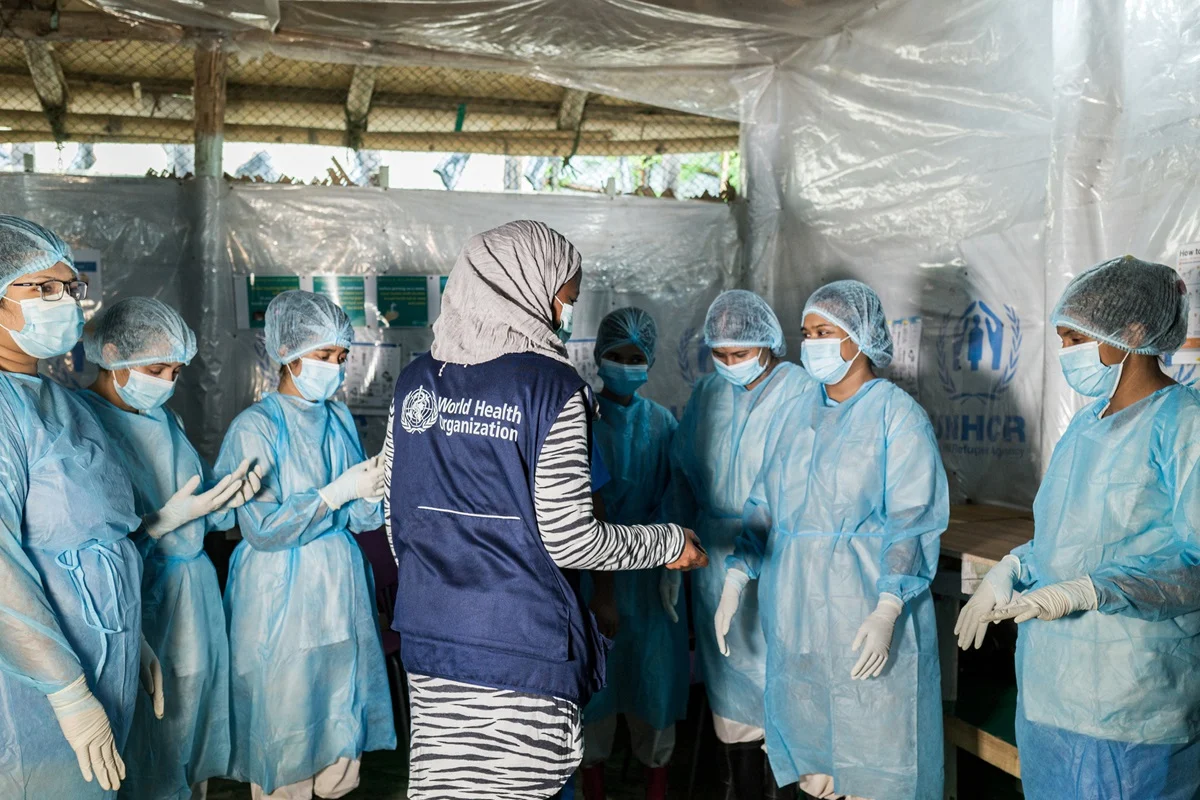
Six years ago, the Director-General of the World Health Organization (WHO) invoked the most stringent instrument of international law available to the global health community, declaring the outbreak of a novel coronavirus a Public Health Emergency of International Concern (PHEIC). On that day in late January 2020, the world stood at the precipice of a crisis that would eventually claim millions of lives, destabilize the global economy, and fundamentally alter the landscape of public health. While the official emergency status was rescinded in May 2023, the scars of the pandemic remain a defining element of contemporary history. As the international community crosses this six-year milestone, the WHO has issued a sobering assessment of the world’s current state of readiness for the inevitable "Disease X" or the next influenza pandemic. The consensus among global health leaders is a paradoxical "yes and no"—a reflection of significant technological and structural advancements tempered by shifting political will and economic instability.
A Chronology of Crisis and Evolution: 2020–2024
The trajectory of the global response since 2020 provides a roadmap of how the world has evolved in the face of biological threats. When the PHEIC was first declared, the international community was largely reliant on reactive measures. Testing capacity was localized, vaccine technology was in its infancy for coronaviruses, and global supply chains for personal protective equipment (PPE) collapsed almost immediately under the weight of nationalistic hoarding and manufacturing bottlenecks.
By 2021, the world witnessed the fastest vaccine development in human history, yet this achievement was marred by "vaccine apartheid," where high-income nations secured the lion’s share of doses while the Global South remained vulnerable. This inequity spurred the creation of the COVAX facility and the subsequent establishment of the WHO mRNA Technology Transfer Hub in South Africa, intended to decentralize pharmaceutical production.
In 2022 and 2023, the focus shifted from acute response to structural reform. The World Bank, in collaboration with the WHO, launched "The Pandemic Fund," a financial intermediary fund designed to provide a steady stream of capital for prevention and preparedness in low- and middle-income countries. By the time the PHEIC was declared over in May 2023, the global health architecture had been bolstered by new surveillance networks and a commitment to negotiate a legally binding Pandemic Accord. Today, as the 158th session of the WHO Executive Board convenes, the dialogue has moved toward finalizing these historic agreements amidst a world increasingly distracted by geopolitical conflict and economic retrenchment.
Quantitative Progress: Data-Driven Successes in Preparedness
The "yes" in the WHO’s assessment is backed by substantial data and the scaling of technical capabilities. Since 2020, the global capacity for genomic sequencing—the ability to "read" the genetic code of a virus to track mutations—has expanded by over 60% globally. In early 2020, fewer than 50 countries had the capacity to sequence SARS-CoV-2; today, that number exceeds 150, allowing for real-time monitoring of pathogens like H5N1 avian flu and new cholera strains.
Furthermore, the WHO’s International Pathogen Surveillance Network (IPSN) now links laboratories across every continent, facilitating the rapid sharing of data that was once siloed within national borders. The establishment of the WHO Hub for Pandemic and Epidemic Intelligence in Berlin has further integrated data science into public health, using artificial intelligence and big data to predict outbreaks before they escalate.
In terms of financial mobilization, The Pandemic Fund has already allocated hundreds of millions of dollars to dozens of countries. These funds are being used to train community health workers, upgrade laboratory equipment, and strengthen "One Health" initiatives that monitor the spillover of diseases from animals to humans—a critical front, given that 75% of emerging infectious diseases are zoonotic in origin.
Comparative Success: Lessons from Ebola and Marburg
The efficacy of these new systems is best illustrated by recent responses to viral hemorrhagic fevers. A decade ago, the West African Ebola outbreak (2014–2016) resulted in more than 11,000 deaths, largely due to a slow international response and a lack of localized diagnostic tools. In contrast, recent outbreaks of Ebola in the Democratic Republic of the Congo (DRC) and Marburg virus in Rwanda and Tanzania have been managed with unprecedented speed.
In the 2024 response to Marburg in Rwanda, national health authorities, supported by the WHO, implemented rapid contact tracing and utilized experimental therapeutics within days of the first confirmed case. The fatality rates in these recent incidents have been significantly lower than historical averages. This shift is attributed to the "localization" of health security—where national institutions, rather than international NGOs, lead the charge. The development of rapid diagnostic tests and the stockpiling of vaccines for Ebola have transformed a once-certain death sentence into a manageable clinical challenge.
The Fragility of Gains: Funding Shifts and National Security
Despite these technical triumphs, the WHO warns that the progress is "fragile and uneven." The primary threat to global health security is no longer just the biology of the virus, but the volatility of human politics. As the memory of the COVID-19 lockdowns fades, global funding is increasingly being diverted from health budgets to defense and national security.
The WHO Director-General, Dr. Tedros Adhanom Ghebreyesus, has pointed out that this shift is fundamentally shortsighted. "Pandemics are national security threats," he noted during the Executive Board session. A single pathogen can cause more economic damage and loss of life than many conventional conflicts. The International Monetary Fund (IMF) estimated that the COVID-19 pandemic cost the global economy nearly $13.8 trillion through 2024. By comparison, the investment required to prevent such a catastrophe is a fraction of that cost.
The current "fatigue" in pandemic preparedness has led to a stagnation in the negotiations for the Pandemic Accord. Disagreements persist between the Global North and Global South regarding "Pathogen Access and Benefit-Sharing" (PABS). Developing nations argue that if they share the genetic data of local pathogens with the world, they should be guaranteed equitable access to the vaccines and treatments derived from that data. High-income nations, protective of intellectual property rights and pharmaceutical profits, remain hesitant to codify such guarantees.
Analysis of Implications: The Cost of Inaction
The implications of "dropping the ball" on preparedness are profound. If the global community fails to finalize the Pandemic Accord and maintain funding for surveillance, the world risks returning to the "cycle of panic and neglect." In this cycle, massive resources are deployed during a crisis, only to be withdrawn once the immediate threat subsides, leaving the world vulnerable to the next mutation.
Moreover, the rise of misinformation remains a critical barrier. The pandemic highlighted a "dual outbreak"—the virus itself and an "infodemic" of false information that eroded public trust in vaccines and government mandates. Without a coordinated global effort to rebuild trust in science and public health institutions, future containment efforts may be undermined by civil non-compliance and social unrest.
The WHO’s call to action emphasizes that health security is not a luxury for wealthy nations but a fundamental requirement for global stability. The interconnectedness of modern travel and trade means that an outbreak in a remote village can reach a major financial capital in less than 36 hours. Solidarity, as Dr. Tedros stated, is not merely a moral imperative but "the best immunity."
A Pivotal Moment for Global Governance
The 158th session of the WHO Executive Board represents a crossroads for international diplomacy. Governments are currently tasked with designing a future framework that emphasizes accountability and efficiency. This includes the "Universal Health and Preparedness Review" (UHPR), a mechanism similar to human rights reviews, where countries voluntarily undergo peer review of their health security capacities.
To ensure long-term resilience, the WHO urges stakeholders to focus on three pillars:
- Sustainable Financing: Moving away from ad-hoc emergency funding toward predictable, multi-year investments in health infrastructure.
- Equitable Access: Ensuring that the tools to fight pandemics—diagnostics, therapeutics, and vaccines—are treated as global public goods rather than commodities.
- Cross-Sectoral Collaboration: Integrating health security with climate action and animal welfare to address the root causes of zoonotic spillover.
As the world reflects on the six years since COVID-19 changed the course of history, the message from the World Health Organization is clear: the window of opportunity to prepare for the next threat is closing. The technical blueprints for a safer world exist, and the lessons have been painfully learned. What remains to be seen is whether the political will of Member States can match the biological urgency of the pathogens that do not respect borders, ideologies, or economic status. The time to invest in the "national security" of global health is now, before the next alarm sounds.
