
The Director-General of the World Health Organization (WHO), Dr Tedros Adhanom Ghebreyesus, has concluded the first day of a pivotal two-day State visit to the Hashemite Kingdom of Jordan, a mission designed to reinforce the deep-seated partnership between the global health body and one of the Middle East’s most critical humanitarian hubs. The visit, characterized by high-level diplomatic meetings and field inspections of medical facilities, underscored a shared commitment to three core pillars: the achievement of universal health coverage (UHC), the integration of comprehensive mental health services into primary care, and the continuation of robust humanitarian health actions amidst escalating regional crises.
Central to the first day’s agenda was a formal meeting between Dr Tedros and His Majesty King Abdullah II. This engagement served as a platform to recognize Jordan’s proactive leadership in elevating health as a matter of national security and global priority. The discussions between the Director-General and the King focused on the systemic fortification of health infrastructures, the expansion of equitable access to medical services, and the urgent need for sustained international backing for emergency responses. Particular emphasis was placed on the plight of the Palestinian people and the logistical challenges involved in the medical evacuation of patients from the Gaza Strip to Jordanian facilities for specialized treatment.
Diplomatic Recognition and the Humanitarian Mandate
During his meeting at the Royal Palace, Dr Tedros expressed profound gratitude for King Abdullah II’s personal commitment to advancing the UHC agenda. Universal Health Coverage remains a cornerstone of the WHO’s global strategy, aiming to ensure that all individuals receive the health services they need without suffering financial hardship. Jordan has emerged as a regional leader in this regard, despite the immense pressure placed on its public infrastructure by successive waves of regional displacement.
"I wish to express my appreciation to His Majesty King Abdullah II for his commitment to advancing universal health coverage," Dr Tedros stated. "I also extend my thanks to His Majesty and the people of Jordan for their solidarity and generosity in providing health services to more than three million refugees, primarily from Gaza and Syria, who are living in the country."
This figure—three million refugees—represents a staggering proportion of Jordan’s population, making it one of the largest refugee-hosting nations per capita in the world. The Director-General’s remarks highlighted that Jordan’s healthcare system does not merely serve its citizens but acts as a safety net for the broader region. Dr Tedros specifically lauded the "Medical Corridor" initiative, a humanitarian lifeline established under the King’s direction to facilitate the transfer and treatment of ill and injured children from Gaza, where the healthcare system has faced near-total collapse.
Field Visits: Witnessing the Impact of Specialized Care
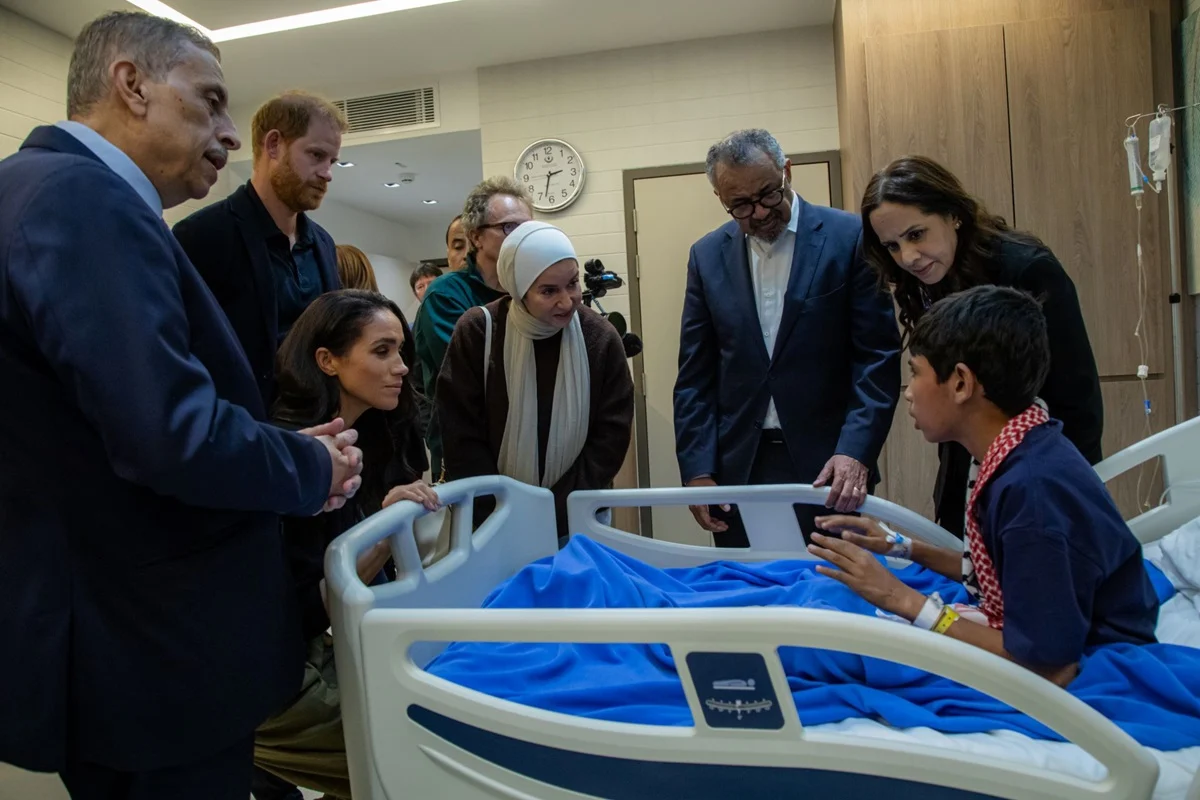
To gain a first-hand perspective on the operational realities of Jordan’s humanitarian efforts, Dr Tedros visited a WHO-supported hospital currently providing specialized care to pediatric patients evacuated from Gaza. The visit was a somber reminder of the human cost of conflict. The Director-General met with young patients undergoing treatment for complex trauma injuries, cancer, and other life-threatening conditions that cannot currently be managed within the occupied territories.
The medical evacuation corridor through Jordan has become a vital artery for survival. Health officials noted during the visit that without this organized pathway, hundreds of children would face certain death or permanent disability due to the lack of specialized equipment and medication in conflict zones. Dr Tedros emphasized that the corridor’s success is contingent upon sustained international funding and logistical support, calling on the global community to ensure that these life-saving transfers are not interrupted.
The hospital visit also provided an opportunity for the Director-General to engage with frontline health workers. These professionals—many of whom are working under extreme pressure—were commended for their dedication to delivering high-quality care to vulnerable populations. The integration of these patients into the Jordanian health system is seen by the WHO as a model for "humanity first" healthcare, where medical need supersedes nationality or legal status.
Mental Health: A New Frontier in Crisis Response
A significant portion of the State visit was dedicated to the "WHO Director-General’s Special Initiative for Mental Health." Jordan was one of the early adopters of this initiative, recognizing that the psychological scars of war and displacement are often as debilitating as physical wounds. The Jordanian Ministry of Health has made significant strides in integrating mental health services into routine primary healthcare, moving away from an asylum-based model toward community-oriented care.
In several of these engagements, Dr Tedros was joined by the Duke and Duchess of Sussex, Prince Harry and Meghan. Participating in their capacity as founders of Archewell Philanthropies, the couple has been long-standing supporters of the WHO’s mission. Their presence underscored the intersection of philanthropy, mental health advocacy, and international diplomacy. Archewell Philanthropies has previously collaborated with the WHO on initiatives ranging from COVID-19 vaccine equity to the support of medical evacuations.
Prince Harry, speaking as an ally of the WHO’s mental health work, emphasized the necessity of de-stigmatizing psychological support, particularly for men, young people, and children in emergency settings. "Mental health is fundamental to recovery, dignity and long-term peace," Prince Harry remarked. "Through our work with Archewell Philanthropies, my wife and I have seen first-hand the impact of WHO’s efforts to support mental health and deliver life-saving care in emergencies."
The Duchess of Sussex also highlighted the importance of compassionate innovation, noting that Jordan’s approach to treating the "whole person"—including their mental well-being—is a benchmark for other nations hosting large refugee populations.
Financing and Sustainability: The High-Level Meeting
Beyond the field visits, the Director-General convened a high-level strategic meeting involving health partners, donor countries, United Nations agencies, and various philanthropic organizations. The primary objective of this session was to address the "financing gap" that threatens the sustainability of Jordan’s health system.
As Jordan continues to provide services to millions of non-citizens, the strain on its domestic budget is considerable. Dr Tedros advocated for a shift from "emergency-only" funding to long-term "health system strengthening" investments. This includes scaling up mental health services and ensuring that the King Hussein Cancer Center and other specialized institutions have the resources to continue their regional role.
The meeting focused on:
- Sustainable Financing: Developing multi-year funding cycles rather than relying on unpredictable emergency appeals.
- Health System Resilience: Investing in the training of healthcare workers and the modernization of medical technology to handle future health security threats.
- Refugee Integration: Ensuring that international aid directly supports the national systems that refugees utilize, rather than creating parallel, unsustainable structures.
Chronology and Future Engagements
The first day of the visit set a rigorous pace for the remainder of the mission. The schedule for the second day is expected to delve deeper into the technical aspects of rehabilitation and specialized medicine.
- Morning of Day 2: Dr Tedros is scheduled to visit the National Center for Rehabilitation of Addicts. This facility, supported by the WHO, represents a critical component of Jordan’s mental health strategy, providing integrated medical, psychological, and social services for substance use disorders—a growing concern in many post-conflict and high-stress environments.
- Mid-Day: The Director-General will meet with community leaders and women’s groups, including representatives from the Jordanian Hashemite Fund for Human Development (JOHUD). These meetings aim to discuss the role of community-led health initiatives and the empowerment of women in the healthcare workforce.
- Afternoon: A visit to the King Hussein Cancer Center (KHCC) is planned. The KHCC is a premier institution in the Middle East, and the discussions will focus on regional collaboration in oncology and how Jordan can continue to serve as a center of excellence for cancer patients across the Arab world.
Analysis of Implications: Jordan as a Regional Health Hub
The State visit by Dr Tedros serves as a powerful validation of Jordan’s role as a "stabilizer" in the Middle East. By maintaining a high-functioning healthcare system that remains open to those fleeing conflict, Jordan prevents the total collapse of health security in the region.
However, the WHO’s presence also signals a warning to the international community: the "Jordanian model" is under immense pressure. The economic burden of hosting millions of refugees, combined with the logistical demands of the Gaza medical corridor, requires a more equitable distribution of global responsibility. The enrichment of the partnership between the WHO and Jordan is not just a diplomatic gesture; it is a strategic necessity to prevent a wider humanitarian catastrophe.
The integration of mental health, as championed by the Director-General and the Duke and Duchess of Sussex, represents a modern evolution in humanitarian aid. It acknowledges that "health" is not merely the absence of disease but a state of complete physical, mental, and social well-being. By focusing on this, the WHO and Jordan are laying the groundwork for the long-term recovery of populations affected by decades of instability.
As the visit concludes, the reinforced collaboration is expected to yield new frameworks for medical evacuations and more robust funding commitments from the donor community. The Director-General’s visit has successfully refocused global attention on Jordan, not just as a country in a volatile region, but as a global leader in the pursuit of health and humanity.
