
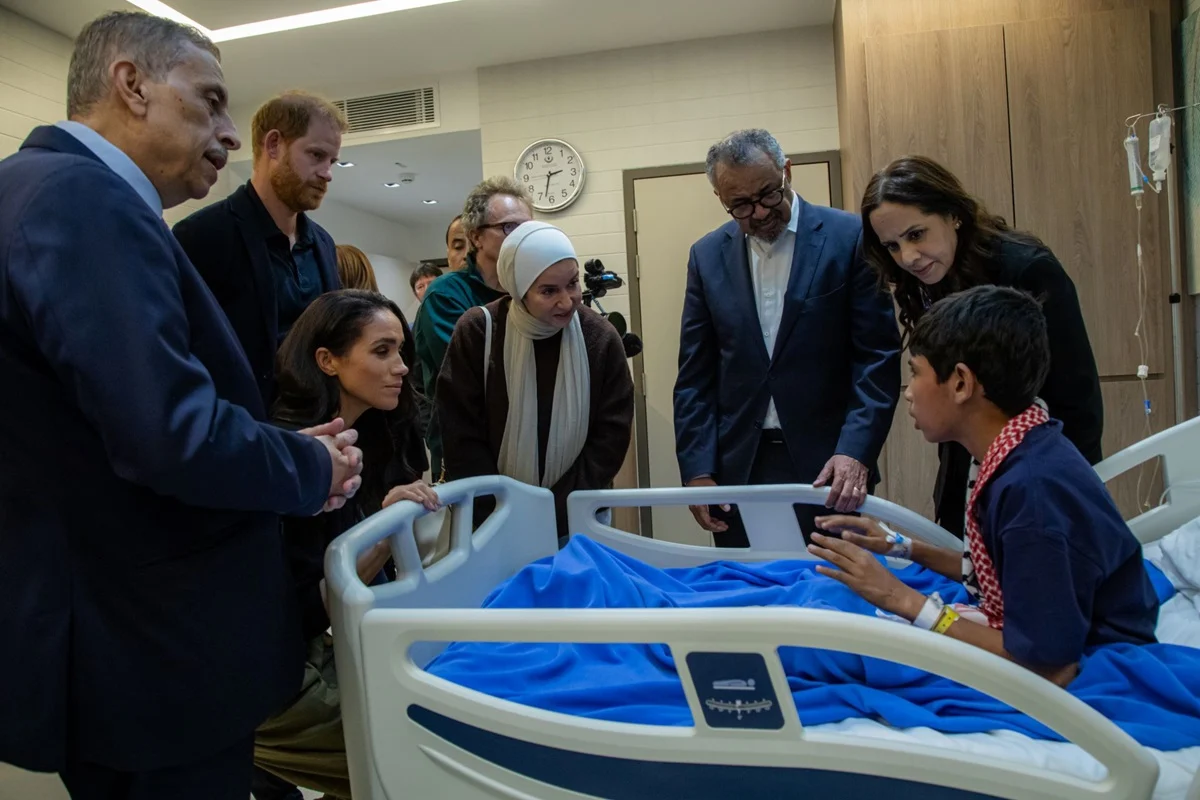
The Director-General of the World Health Organization (WHO), Dr. Tedros Adhanom Ghebreyesus, has completed the initial phase of a high-profile two-day State visit to the Hashemite Kingdom of Jordan, a mission aimed at reinforcing the robust strategic alliance between the global health body and one of the Middle East’s most critical humanitarian hubs. The visit, which commenced with high-level diplomatic engagements and field inspections, serves as a testament to Jordan’s pivotal role in managing regional health crises, particularly in the context of the ongoing humanitarian catastrophe in the Gaza Strip and the long-term challenges of hosting one of the world’s largest refugee populations per capita. Throughout the first day, Dr. Tedros emphasized three core pillars of cooperation: the advancement of Universal Health Coverage (UHC), the integration of mental health into primary care, and the urgent scaling of humanitarian health actions to mitigate the suffering of those displaced by regional conflict.
High-Level Diplomacy and the Vision for Regional Health Security
A defining moment of the first day was the formal audience with His Majesty King Abdullah II. This meeting underscored the elevation of health as a matter of national security and regional stability for the Jordanian state. During the discussions, Dr. Tedros and King Abdullah II explored the intricacies of strengthening health systems that have been under immense pressure due to successive waves of regional instability. The dialogue focused heavily on Jordan’s leadership in the "Medical Corridor" initiative, a life-saving logistical framework designed to evacuate critically ill and injured patients from Gaza for specialized treatment in Jordanian facilities.
Dr. Tedros expressed profound gratitude to the King for his unwavering commitment to Universal Health Coverage, noting that Jordan’s inclusive approach—extending health services to over three million refugees—serves as a global benchmark for solidarity. The Director-General highlighted that despite the economic burdens associated with such a large-scale humanitarian response, Jordan has maintained a principled stance, ensuring that refugees, primarily from Syria and Palestine, are not left behind in the national health agenda. This commitment is particularly vital as the global community faces "donor fatigue," making Jordan’s continued hospitality a rare example of humanitarian persistence.
The Gaza Medical Corridor: A Lifeline in Times of Crisis
Following the royal audience, Dr. Tedros conducted a field visit to a WHO-supported hospital in Amman that has become a sanctuary for children evacuated from the Gaza Strip. The visit provided a somber look at the human cost of the conflict, as the Director-General met with young patients suffering from complex trauma, blast injuries, and advanced stages of cancer—conditions that can no longer be treated within Gaza’s decimated healthcare infrastructure.
The medical evacuation corridor through Jordan has emerged as a critical necessity. According to WHO data, the healthcare system in Gaza has faced unprecedented degradation, with a significant majority of hospitals rendered non-functional or only partially operational. The "Medical Corridor" initiative, championed by King Abdullah II, allows for the systematic transfer of the most vulnerable cases. Dr. Tedros’s visit to the wards served to highlight the technical and financial requirements needed to sustain these evacuations. He called upon the international community to provide consistent support, noting that the survival of these children depends entirely on the stability of this corridor and the continued generosity of the Jordanian medical workforce.
Strategic Financing and Multi-Sectoral Partnerships
Recognizing that humanitarian intent must be matched by fiscal sustainability, Dr. Tedros convened a high-level assembly of health partners, donor nations, United Nations agencies, and philanthropic organizations. The primary objective of this meeting was to address the financing gap for health system strengthening in Jordan. As the country navigates the dual challenge of modernizing its own domestic health infrastructure while simultaneously acting as a regional emergency ward, the need for diversified and predictable funding has never been more acute.
The discussions touched upon the "Special Initiative for Mental Health," a WHO flagship program that Jordan has pioneered in the region. By integrating mental health services into routine primary healthcare, Jordan is addressing a "silent epidemic" often exacerbated by displacement and war. The meeting also focused on scaling up services for countries hosting large refugee populations, ensuring that the burden of global crises is shared more equitably among international stakeholders rather than resting solely on host nations like Jordan.
The Role of Archewell Philanthropies and Global Advocacy
In a notable addition to the delegation, the Director-General was accompanied by the Duke and Duchess of Sussex, Prince Harry and Meghan. Their presence underscored the intersection of high-level health policy and global advocacy. Through their organization, Archewell Philanthropies, the Duke and Duchess have been long-standing supporters of the WHO, contributing to initiatives ranging from COVID-19 vaccine equity to the current focus on mental health in conflict zones.
Prince Harry, participating as a vocal ally of the WHO’s mental health agenda, spoke on the necessity of de-stigmatizing psychological support, particularly for men, youth, and children who have witnessed the horrors of war. His participation emphasized that recovery from conflict is not merely physical but deeply psychological. Dr. Tedros praised the Sussexes for using their global platform to bring visibility and resources to vulnerable communities, noting that their involvement helps bridge the gap between policy-making and public awareness.
Prince Harry’s remarks reflected a deep appreciation for Jordan’s "compassion and innovation," stating that mental health is a fundamental prerequisite for long-term peace and dignity. This partnership between the WHO and Archewell Philanthropies illustrates a modern approach to health diplomacy, where traditional institutional power is augmented by the influence of global philanthropic figures to drive social change.
Jordan’s Leadership in Universal Health Coverage and Primary Care
A bilateral meeting with Jordan’s Minister of Health further detailed the technical progress the country has made toward achieving UHC. Jordan has been recognized for its "Primary Health Care" approach, which prioritizes accessible, community-based services as the first line of defense against disease. The integration of mental health into this framework is a key component of the WHO Director-General’s Special Initiative for Mental Health.
The WHO’s support in Jordan has been instrumental in training healthcare providers to identify and treat mental health conditions at the community level, reducing the need for specialized institutionalization and making care more dignified. Analysis of Jordan’s health strategy suggests that by focusing on primary care, the government is not only improving health outcomes but also creating a more resilient system capable of absorbing the shocks of sudden refugee influxes.
Analysis of Implications: Jordan as a Regional Health Hub
The State visit by Dr. Tedros is more than a diplomatic formality; it is a strategic recognition of Jordan’s role as a stabilizer in the Middle East. By positioning itself as a hub for medical evacuations and a leader in refugee health, Jordan provides a public good that benefits the entire region. However, this role comes with significant risks. The strain on Jordan’s water, energy, and health resources is immense. The implications of Dr. Tedros’s visit suggest that the WHO is advocating for a shift in how the world views "host countries"—not just as recipients of aid, but as essential partners in global health security who require long-term investment rather than short-term emergency grants.
Furthermore, the emphasis on the "Medical Corridor" sets a precedent for how the international community might handle future conflicts. By formalizing these pathways through Jordan, the WHO is creating a blueprint for humanitarian access that could be replicated in other volatile regions.
Looking Ahead: The Agenda for Day Two
The second day of the State visit is set to focus on specialized care and community resilience. Dr. Tedros is scheduled to visit the National Center for Rehabilitation of Addicts, an institution supported by the WHO that provides a holistic mix of medical, psychological, and social services. This visit will highlight the broader spectrum of health challenges Jordan is tackling, including the often-overlooked issue of substance abuse in stressed populations.
Additionally, the Director-General will engage with the Jordanian Hashemite Fund for Human Development and visit the King Hussein Cancer Center (KHCC). The KHCC is widely regarded as one of the premier cancer treatment facilities in the Middle East and has been instrumental in treating both Jordanians and regional patients, including those from Gaza. These engagements will reinforce the message that Jordan’s health system is a sophisticated, multi-layered apparatus capable of providing world-class care under the most demanding circumstances.
The conclusion of this State visit is expected to result in renewed funding commitments and a strengthened roadmap for WHO-Jordan cooperation. As the world watches the unfolding events in the Middle East, the partnership between Dr. Tedros and the Hashemite Kingdom stands as a critical pillar of hope, demonstrating that even in the face of overwhelming crisis, a commitment to "health for all" remains a viable and necessary path forward.
