
The global haircare industry has long relied on the foundational concept of "hair porosity"—a term describing how well hair can absorb and retain moisture—to guide consumer purchasing decisions, shape salon treatments, and dictate cosmetic formulations. For decades, beauty enthusiasts and professionals alike have divided hair types into low, medium, and high porosity categories, prescribing specific regimens ranging from heavy butters to lightweight humectants based on these classifications. However, recent scientific investigations spearheaded by cosmetic chemists and trichology educators reveal that popular diagnostic methods used to determine hair porosity, such as the ubiquitous "float test" and "drop test," are fundamentally flawed. Far from measuring internal moisture absorption or structural gaps within the hair shaft, these DIY diagnostic tools merely measure surface tension and external cuticle integrity, upending conventional wisdom in the cosmetic science community.
Background Context and the Rise of Porosity Culture
The concept of hair porosity gained mainstream traction alongside the rise of the natural hair movement and online beauty blogging platforms in the late 2000s and 2010s. Consumers sought scientific-sounding explanations for why certain products performed well on their hair while leaving others dry, limp, or brittle. In response, digital influencers and beauty brands popularized simple at-home diagnostic procedures.
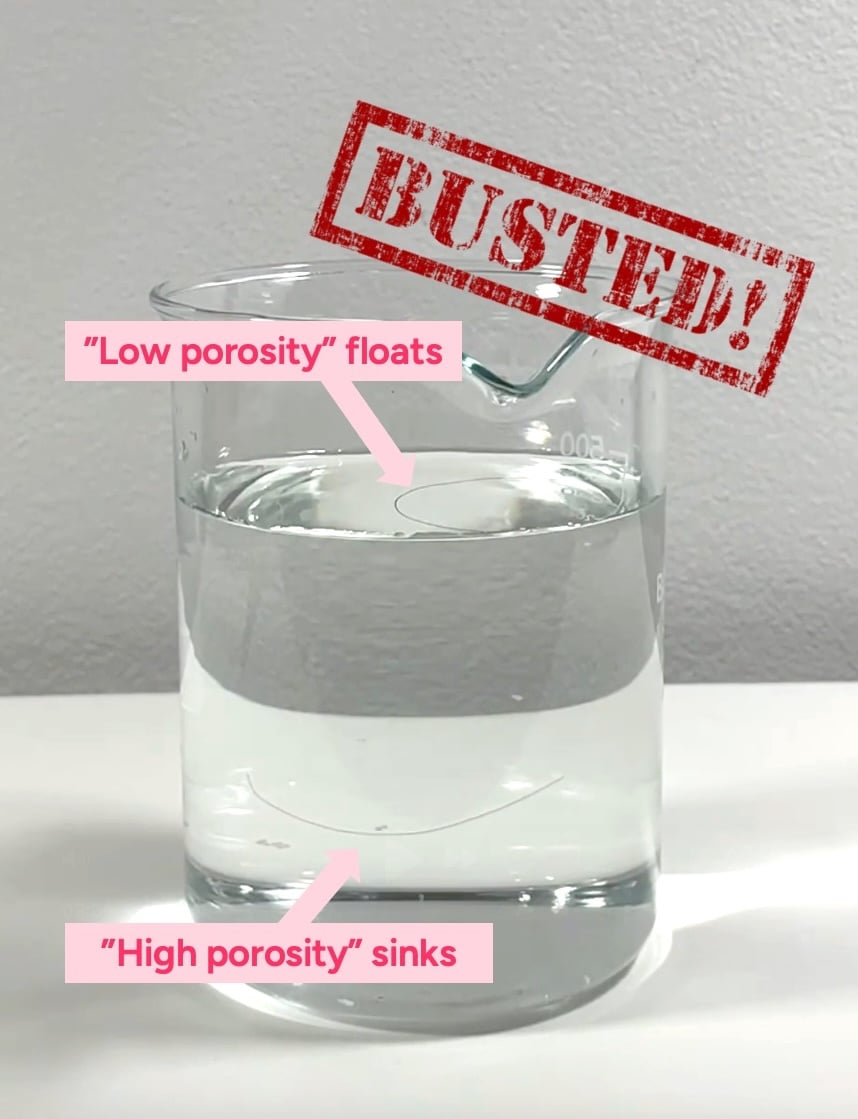
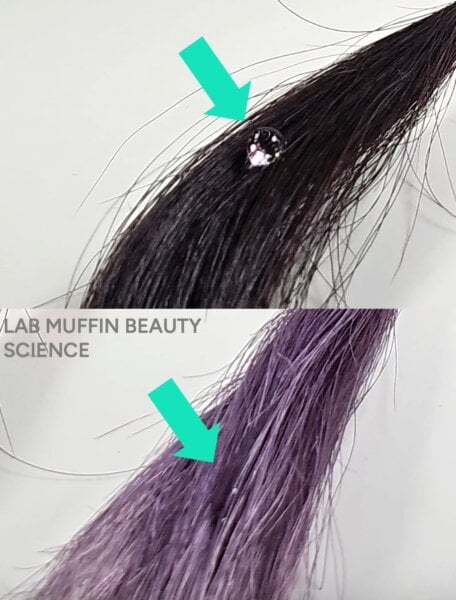
Chief among these is the "float test," which instructs individuals to pluck a clean strand of hair and drop it into a glass of room-temperature water. According to popular lore, hair that floats indefinitely is categorized as low porosity, meaning its cuticles are tightly sealed, preventing moisture from entering. Hair that slowly sinks to the middle is deemed normal porosity, while hair that quickly plummets to the bottom is diagnosed as high porosity, supposedly riddled with holes and gaps that allow water to rush in and weigh the strand down. Another variation, the "drop test," involves placing a single drop of water onto a lock of hair to observe whether it beads up (indicating low porosity) or flattens and absorbs rapidly (indicating high porosity).
Despite the widespread adoption of these tests, cosmetic scientists emphasize that the underlying physics and chemistry driving these observations have been systematically misinterpreted. The rituals do not measure porosity; instead, they visualize surface chemistry.
Unpacking the Myth: How Hair Interacts with Water
To understand why traditional porosity tests fail, one must examine the physical and chemical behavior of human hair when exposed to moisture. A persistent misconception in haircare circles is that healthy, undamaged hair is naturally waterproof, and that conditioners function by mimicking a sealed, impermeable barrier over the cuticle.
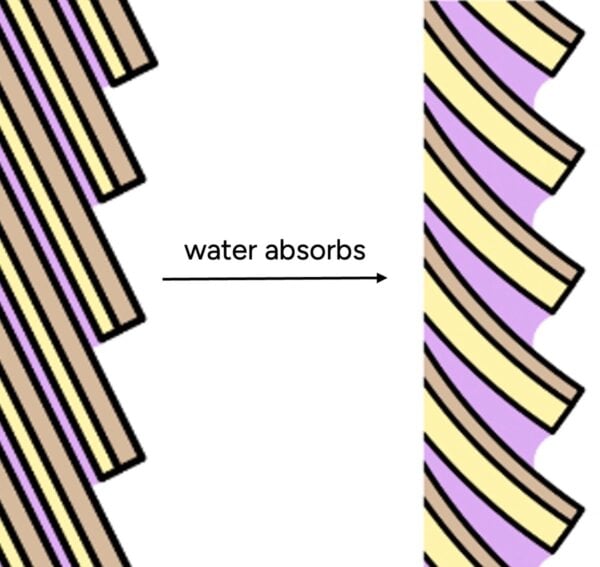
Scientific literature demonstrates that this is entirely false. Undamaged human hair is naturally hygroscopic, meaning it readily absorbs moisture from its surrounding environment. In fact, under normal conditions, undamaged human hair can absorb nearly one-third (approximately 30 percent) of its own dry weight in water within minutes. This dynamic absorption rate fluctuates rapidly in response to changes in ambient relative humidity.
According to established data compiled in scientific texts such as Professor Clarence R. Robbins’ Chemical and Physical Behavior of Human Hair, water absorption scales predictably with atmospheric humidity:
- At 0% relative humidity, hair absorbs 0% additional water weight.
- At 8% relative humidity, water absorption registers at 3.9%.
- At 40% relative humidity, water absorption rises to 10.2%.
- At 63% relative humidity, water absorption reaches 14.8%.
- At 86% relative humidity, hair absorbs 22.6% of its weight in water.
- At 100% relative humidity, moisture absorption peaks at 31.2%.
This high capacity for absorption occurs because human hair is structurally similar to a pinecone. The natural protective lipid layer—known as the F-layer—resides strictly on the exterior surface of individual cuticle scales, leaving microscopic gaps and pathways through which moisture readily penetrates.
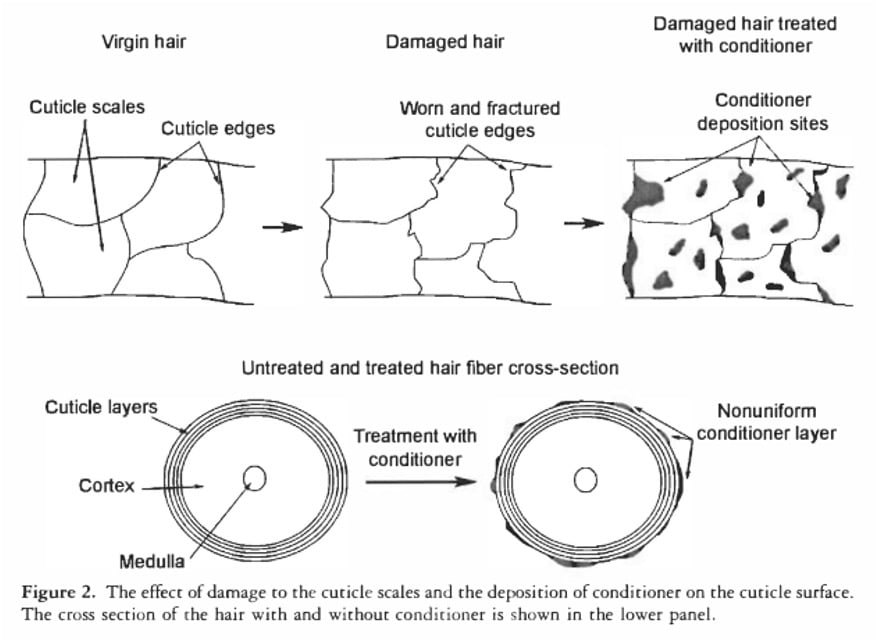
Furthermore, standard hair conditioners do not form a continuous, waterproof film. Atomic force microscopy studies, such as those conducted by researchers La Torre and Bhushan published in the Journal of Cosmetic Science, reveal that conditioning agents deposit onto the hair shaft in discrete microscopic blobs rather than a uniform sheet. While these microscopic deposits successfully smooth the cuticle edges to provide a soft tactile feel, individual water molecules are orders of magnitude smaller than these conditioner droplets, rendering them entirely ineffective at blocking moisture infiltration.
The Physics of Surface Tension
If undamaged hair is not waterproof and readily absorbs ambient moisture, the physical mechanics behind the float and drop tests demand scientific re-evaluation. The observable outcomes of these tests are governed entirely by surface tension rather than internal structural porosity.
Liquid water molecules cohere strongly to one another via an extensive network of hydrogen bonds. Molecules located at the liquid’s surface lack adjacent neighbors above them, resulting in intensified intermolecular attractive forces that create a resilient, skin-like barrier across the surface of the water. This phenomenon of surface tension is powerful enough to support dense objects—such as steel paperclips, which are roughly eight times denser than water—allowing them to float despite their physical weight. Introducing a surfactant, such as a drop of dish detergent, immediately disrupts these hydrogen bonds, causing the paperclip to sink instantly, despite the steel remaining entirely solid and incapable of absorbing water.
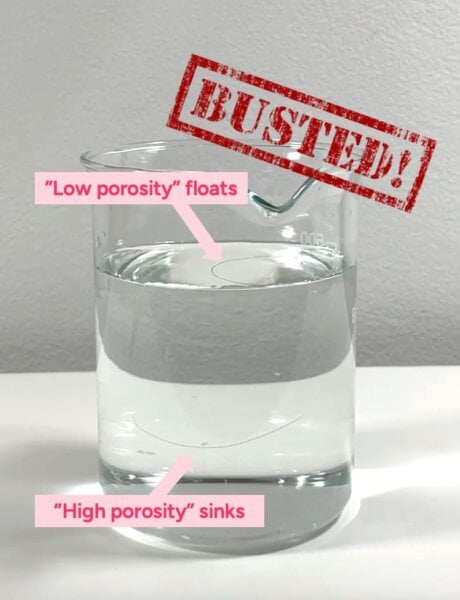
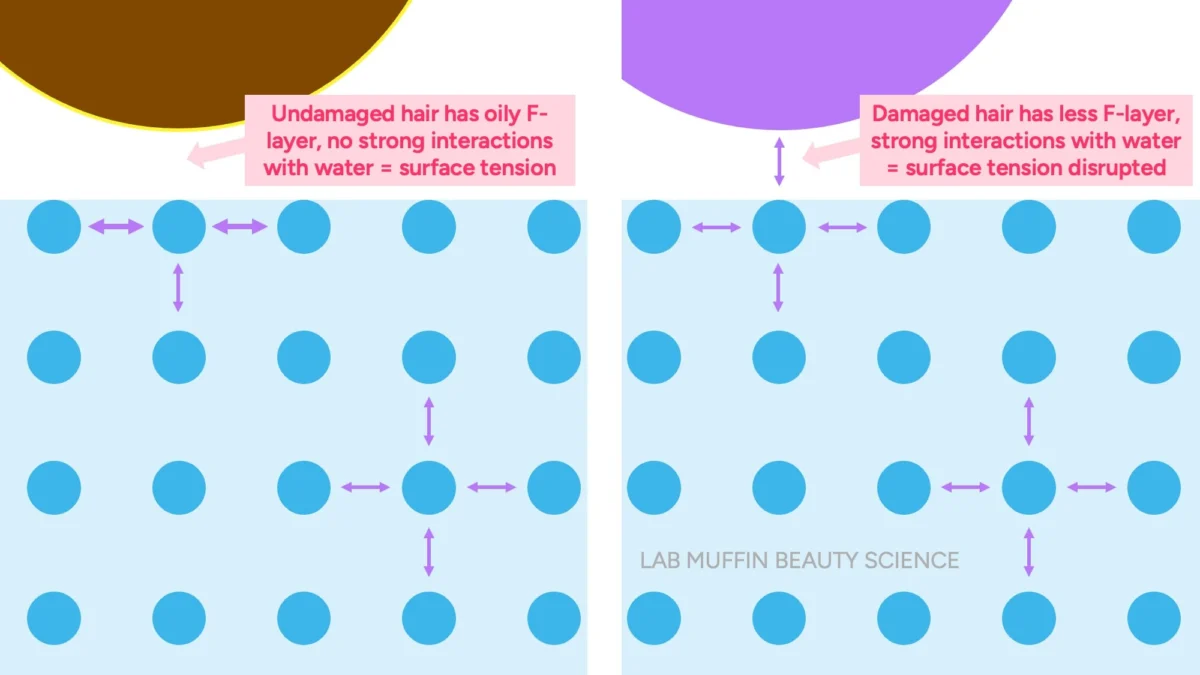
Applying this principle to the float test clarifies the diagnostic illusion. Undamaged hair is naturally coated with a hydrophobic (water-repelling) lipid F-layer. When a clean, undamaged strand is placed on water, this oily surface repels interaction, allowing the water’s surface tension to support the hair.
Conversely, when hair suffers from severe surface damage—whether from chemical processing, excessive heat styling, or mechanical friction—this protective lipid layer is stripped away, exposing a hydrophilic (water-loving) protein cortex beneath. When this damaged, hydrophilic surface encounters water, it forms hydrogen bonds with the surface water molecules. This molecular interaction disrupts the local surface tension "skin," neutralizing the upward buoyant force and causing the hair strand to sink. The hair sinks not because it has suddenly filled with water like a sponge, but because its damaged surface has dismantled the surface tension supporting it.
Similarly, the drop test evaluates surface wettability rather than porosity. Comparative studies show that damaged hair absorbs only marginally more water—roughly 45 percent of its dry weight—compared to the 30 percent absorbed by undamaged hair. The rapid flattening of a water droplet on damaged hair is driven by surface spreading across a hydrophilic landscape rather than rapid internal saturation. The 30 percent moisture intake observed in healthy hair occurs primarily via the absorption of water vapor in the gas phase, where individual gas molecules are small enough to bypass surface tension barriers and slip between cuticle scales effortlessly.
Industry Implications and Expert Consensus
The revelation that porosity tests are fundamentally misnamed has significant implications for both consumers and professional salon workers. While the terminology of "porosity" is scientifically inaccurate, the practical advice derived from these tests has largely endured because it correctly identifies the presence of surface damage. Diagnostic results categorizing hair as "high porosity" accurately signal high surface damage, while "low porosity" results indicate minimal surface wear. Adjusting product routines based on surface damage levels remains a sound cosmetic practice.
However, relying on these flawed tests for advanced professional applications can lead to counterproductive results. Trichologists and cosmetic chemists caution salon professionals against utilizing float or drop tests to determine processing times for chemical services such as permanent waving, relaxing, or coloring. Chemical penetration rates do not reliably correlate with the surface tension phenomena observed in glass-of-water diagnostics. Instead, industry experts recommend direct strand testing—applying the formulation to a discreet subsection of hair—to accurately gauge chemical reactivity.
As the beauty industry continues to embrace evidence-based science, the dismantling of the hair porosity myth marks a crucial step toward consumer literacy. Moving away from oversimplified kitchen-chemistry diagnostics allows individuals to make informed haircare choices grounded in polymer science, dermatology, and actual chemical behavior rather than persistent marketplace folklore.
