
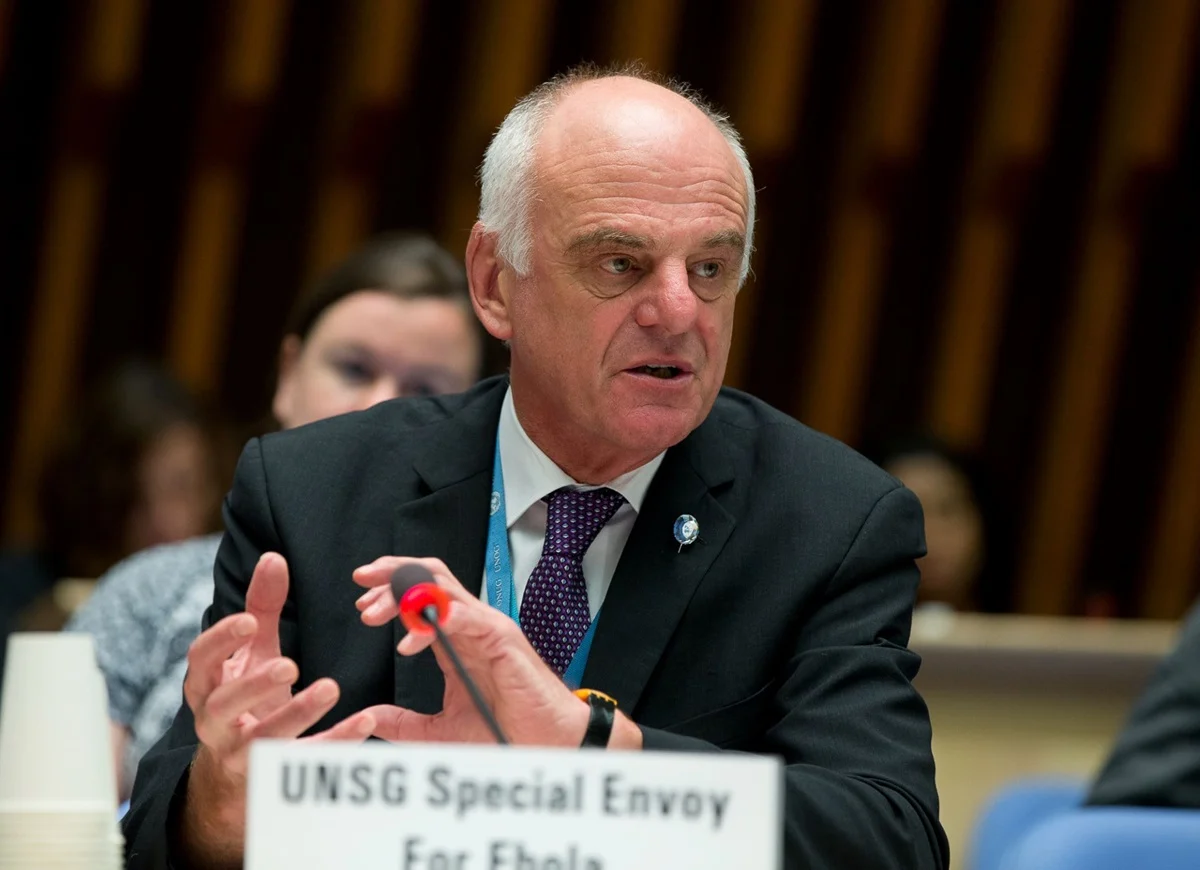
The international public health community is in mourning following the announcement that Sir David Nabarro, a physician, diplomat, and tireless champion for global equity, passed away at his home on Friday, July 25, 2025. At the age of 75, Sir David leaves behind a legacy defined by his ability to bridge the gap between high-level policy and the practical realities of crisis management. His career, which spanned decades of service within the World Health Organization (WHO), the United Nations, and academia, was marked by a profound commitment to the world’s most vulnerable populations.
Dr. Tedros Adhanom Ghebreyesus, the Director-General of the World Health Organization, led the tributes to a man he described as both a colleague and a mentor. "David was a great champion of global health and health equity, and a wise, generous mentor to countless individuals," Dr. Tedros stated. "His work touched and impacted so many lives across the world. We will dearly miss his expertise, wisdom, and kindness."
A Career Defined by Crisis Response and Systemic Change
Sir David Nabarro’s professional trajectory was characterized by his willingness to step into the most challenging global hotspots. His expertise was not confined to a single discipline; he was a polymath of humanitarian intervention, moving fluidly between infectious disease control, food security, climate change, and sustainable development.
His early leadership at the WHO, between 1999 and 2005, saw him tackling the systemic hurdles of the Roll Back Malaria Project, where he helped shape the strategy for international resource mobilization. Following this, he transitioned to the United Nations, where he held a series of high-stakes roles. From 2005 to 2014, he served as the UN System Senior Coordinator for Avian and Pandemic Influenza, a role that required him to navigate the delicate intersection of international security and public health preparedness.
During his tenure as the UN Secretary-General’s Special Envoy for the West Africa Ebola Outbreak Response (2014–2015), Sir David was instrumental in coordinating the global effort to contain a virus that threatened to destabilize an entire region. His ability to synchronize the efforts of various international actors, NGOs, and local governments was widely credited with helping to turn the tide of the epidemic.
The Architect of Global Health Diplomacy
Perhaps Sir David’s most enduring contribution to the structure of international aid was his focus on "systemic transformation." Rather than focusing solely on symptom management, he pushed for the creation of sustainable systems that could withstand shocks—whether they were climate-related, economic, or epidemiological.
In 2018, he co-founded the 4SD Foundation (Skills Systems and Synergies for Sustainable Development) with Florence Lasbennes. The foundation was designed as a training hub for the next generation of leaders in sustainable development. Through 4SD, he championed the "Food Systems Dialogues," an initiative that fundamentally shifted how the international community perceives the link between food production, climate health, and human nutrition. This work provided the intellectual and organizational framework for the 2021 UN Food Systems Summit, an event that remains a benchmark for multilateral policy on nutrition.
His impact was recognized globally in 2018 when he received the prestigious World Food Prize. In 2023, King Charles III honored Sir David with a knighthood, a testament to his decades of service to global health and his contributions to the United Kingdom’s influence in humanitarian diplomacy.
Navigating the COVID-19 Pandemic
When the COVID-19 pandemic paralyzed the world in early 2020, Sir David was once again called upon by the WHO to serve as a Special Envoy to the Director-General. His role involved providing strategic guidance on the global response, navigating the complex political landscape of vaccine distribution, and advising on the implementation of public health measures that balanced economic survival with contagion control.
His perspective was unique because he viewed the pandemic not merely as a medical emergency, but as a "syndemic"—a situation where biological factors interact with social, political, and economic conditions to worsen the health outcomes of the poor. He consistently advocated for a "people-centered" approach, warning that ignoring the socio-economic impacts of lockdowns would be as damaging as the virus itself.
The Broader Impact and Implications for Global Health
The loss of Sir David Nabarro comes at a precarious time for global governance. As the world grapples with the lingering effects of the pandemic, the ongoing climate crisis, and food instability, the loss of a figure who possessed such institutional memory and diplomatic skill is significant.
Analysts suggest that Sir David’s death creates a vacuum in the leadership of international food system reform. By integrating the workstreams of the UN Secretary-General’s Food, Energy and Finance crisis response group—particularly during the disruptions caused by the war in Ukraine—he proved that health security is inextricable from food security. His passing forces a re-evaluation of how international organizations fill leadership roles that require both scientific rigor and high-level political navigation.
Furthermore, Sir David’s mentorship legacy ensures that his influence will persist through the cohorts of leaders trained at the 4SD Foundation. His methodology—focusing on "systems change from within"—has been adopted by dozens of national governments, creating a network of convenors who continue to work on transforming local food systems.
A Legacy of Compassion and Personal Dedication
Despite his high-profile roles, those who worked closely with Sir David often cited his humility and his dedication to those in the "trenches" of aid work. His commitment to equity was not just a professional directive but a personal philosophy. He was known for his patience, often spending hours mentoring junior staff and ensuring that local perspectives were included in global-level decision-making.
The statement issued by the 4SD Foundation regarding his death highlighted his unwavering commitment to improving the lives of others, a sentiment echoed by his family. Sir David is survived by his wife, Flo, and his six children—Tom, Ollie, Polly, Josie, and Lucas—along with seven grandchildren.
"We are deeply grateful for the outpouring of tributes to David, and for the kindness to all who mourn his passing," his family stated in a message released on July 30. "Across the fields of international development, especially public health, food systems transformation, nutrition and crisis response, we are proud to see how his legacy will continue through so many compassionate leaders working to shift systems from within."
Looking Ahead: Memorials and Continuity
A private funeral is scheduled for Monday, August 4, for close family. However, given his global reach, the WHO and the 4SD Foundation are expected to coordinate several memorial services in the coming weeks to allow colleagues, diplomats, and international partners to honor his life.
The 4SD Foundation has established an online memorial page for those wishing to share memories, tributes, and mementos. For the global health community, the challenge now lies in maintaining the momentum of the initiatives Sir David championed. Whether it is the ongoing work of the National Convenors of Food Systems transformation or the continued efforts to reform WHO’s outbreak response protocols, the structures he helped build serve as a testament to his vision of a more equitable, resilient, and prepared world.
As international organizations reflect on his passing, the focus will likely shift to how his specific blend of diplomacy and technical expertise can be replicated in future crises. Sir David Nabarro’s career remains a blueprint for how a single individual, through persistent advocacy and intellectual rigor, can fundamentally improve the architecture of human welfare. His life was a testament to the idea that health is a human right, and that the protection of that right requires constant, coordinated, and compassionate action.
