
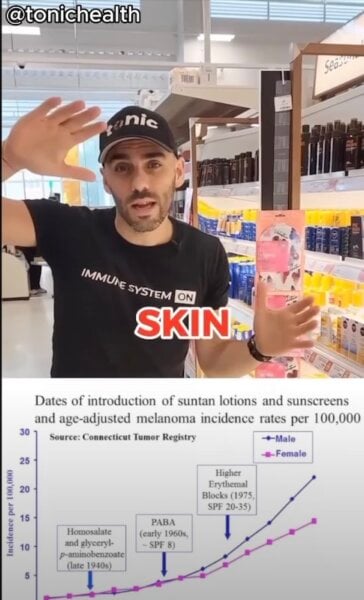
In recent years, viral social media posts have popularized a counterintuitive claim: that rising rates of skin cancer alongside increased global sunscreen sales prove that sunscreens are ineffective or potentially harmful. Videos across platforms like TikTok frequently feature historical charts showing climbing melanoma rates since the mid-20th century, prompting influencers to question public health advisories. However, dermatologists, oncologists, and public health researchers emphasize that this argument misinterprets epidemiological data, conflates correlation with causation, and ignores a complex array of socioeconomic, demographic, and behavioral shifts over the past century.
The assertion that sunscreens fail to prevent skin cancer—or worse, cause it—relies heavily on oversimplified trend analysis. A closer examination of dermatological science, rigorous clinical trials, and global health data reveals a vastly different reality. While aggregate skin cancer rates have indeed risen globally over the decades, controlled scientific investigations consistently demonstrate that daily sunscreen use significantly reduces the incidence of skin cancers and decelerates visible skin aging. To understand why cancer rates continue to climb despite widespread adoption of photoprotection, experts point to a convergence of human longevity, evolving travel habits, shifting tanning cultures, and vastly improved medical screening technologies.
Dissecting the Statistical Fallacy: Correlation Versus Causation
The foundational premise of the anti-sunscreen narrative rests on a logical fallacy: assuming that because two trends are moving upward simultaneously, one must be driving the other. Trend lines tracking melanoma incidence in Western nations typically begin rising in the early-to-mid 19th and 20th centuries. While sunscreen formulation and commercial availability expanded during this period—originating in the 1940s and surging in popularity during the 1970s—myriad other lifestyle and environmental factors underwent parallel transformations.
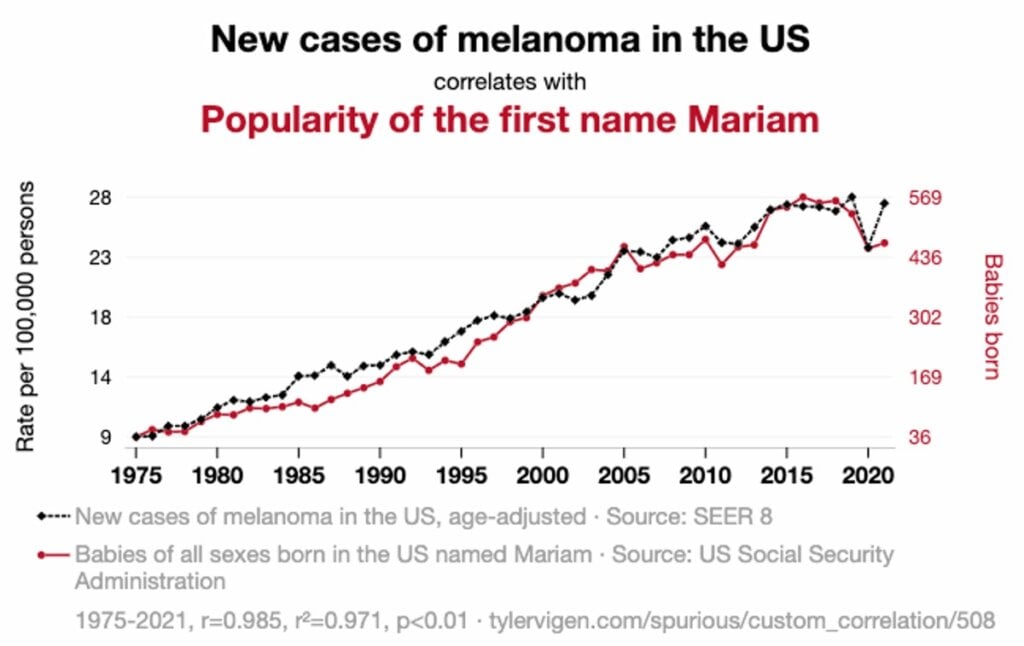
Using the same flawed statistical reasoning, historical increases in melanoma incidence correlate strongly with countless unrelated phenomena, from the widespread adoption of commercial air travel to the fluctuating popularity of specific baby names, such as "Mariam." Statisticians frequently use public tools like Spurious Correlations to highlight how easily random datasets can be paired to create an illusion of causality.

Furthermore, historical tracking data for skin cancer suffer from severe confounding variables. Real-world observational trends cannot adequately control for individual behavior, changes in sun exposure duration, clothing styles, or regional environmental variations. To isolate the genuine efficacy of a protective agent like sunscreen, researchers must move beyond population-level trend graphs and rely on gold-standard experimental designs.
The Definitive Evidence: Randomized Controlled Trials
To establish whether sunscreen genuinely protects against skin malignancies, scientists look to Randomized Controlled Trials (RCTs). RCTs eliminate external noise by dividing comparable cohorts into distinct groups—such as one utilizing daily sunscreen and another relying on discretionary, intermittent application—and tracking health outcomes over extended periods.
The largest and most definitive investigation into this matter remains the landmark Nambour Trial, conducted in Australia. Researchers monitored participants of similar ages and skin types over a 4.5-year intervention phase, followed by a subsequent 10-year observational follow-up. The findings provided undeniable proof of sunscreen’s protective capacity. Individuals who applied sunscreen on a daily basis demonstrated significantly lower rates of both squamous cell carcinomas and melanomas compared to the discretionary-use group.
Complementary studies reinforce these biological mechanisms. In controlled laboratory settings, researchers have applied varying quantities of high-SPF sunscreen to human skin samples before exposing them to controlled ultraviolet (UV) lamps that mimic solar radiation. Analysis of the epidermal tissue consistently reveals that higher levels of sunscreen application drastically reduce the formation of pyrimidine dimers—DNA mutations induced by UV radiation that serve as the primary biochemical precursors to skin cancer. Additionally, follow-up evaluations from the Nambour Trial established that daily sunscreen users exhibited 24 percent fewer clinical signs of skin aging, confirming its dual protective utility.
Why Are Aggregate Skin Cancer Rates Still Climbing?
If randomized trials confirm that sunscreens prevent cellular damage and reduce cancer risks, public health officials face a persistent question: why do global cancer registries continue to report climbing numbers of skin cancer diagnoses? Dermatologists attribute this upward trajectory to several distinct socioeconomic and demographic drivers that easily overwhelm the protective benefits of modern sunscreens.
First and foremost is human longevity. Skin cancer, particularly melanoma, is heavily age-correlated, with the average diagnosis occurring around age 65. Because modern medicine, sanitation, and nutrition have dramatically extended global life expectancies, a much larger proportion of the population now survives into the advanced age brackets where skin cancers have sufficient time to manifest. Decades ago, many elderly individuals succumbed to other causes before cumulative cellular mutations could develop into detectable malignancies.
Second, human behavior regarding sun exposure has shifted radically. The advent of commercial aviation and affordable global tourism has transformed vacation habits. Millions of individuals now regularly travel to tropical destinations, exposing their skin to intense equatorial UV radiation. Concurrently, many indoor-dwelling desk workers subject their unconditioned skin to concentrated, high-intensity sun exposure for brief, intermittent periods during vacations—a pattern heavily associated with an elevated risk of melanoma.
Cultural perceptions of beauty have also played a detrimental role. The societal desire for a tanned complexion gained massive momentum around the same historical window that modern sunscreens and indoor tanning salons entered the mainstream market. Chronic, intentional UV tanning—whether via natural sunlight or artificial tanning beds—remains a powerful independent risk factor for skin malignancies.
Finally, the role of modern medicine must not be overlooked. Improvements in dermatological screening, public health awareness campaigns, and diagnostic precision (such as the widespread adoption of the ABCDE criteria for suspicious moles) mean that doctors and patients are catching early-stage skin cancers at unprecedented rates. Many lesions that would have gone unnoticed or unrecorded decades ago are now promptly diagnosed and treated, artificially inflating incidence statistics.
Regional Success Stories: The Counter-Trend in Australia
While overall skin cancer rates continue to rise in many parts of the industrialized world, notable exceptions prove that coordinated public health intervention can reverse the trend. Australia, historically burdened with some of the highest skin cancer rates globally due to its geographic proximity to the equator and a predominantly fair-skinned population, has achieved remarkable success among its younger demographics.
Recent epidemiological data published in the Medical Journal of Australia highlights that melanoma rates in Australians under the age of 40 have steadily decreased. Among adolescents and young adults aged 15 to 24, melanoma incidence has been roughly halved since the 1980s. Public health experts attribute this divergence to a combination of shifting population demographics and decades of aggressive, culturally embedded public health campaigns.
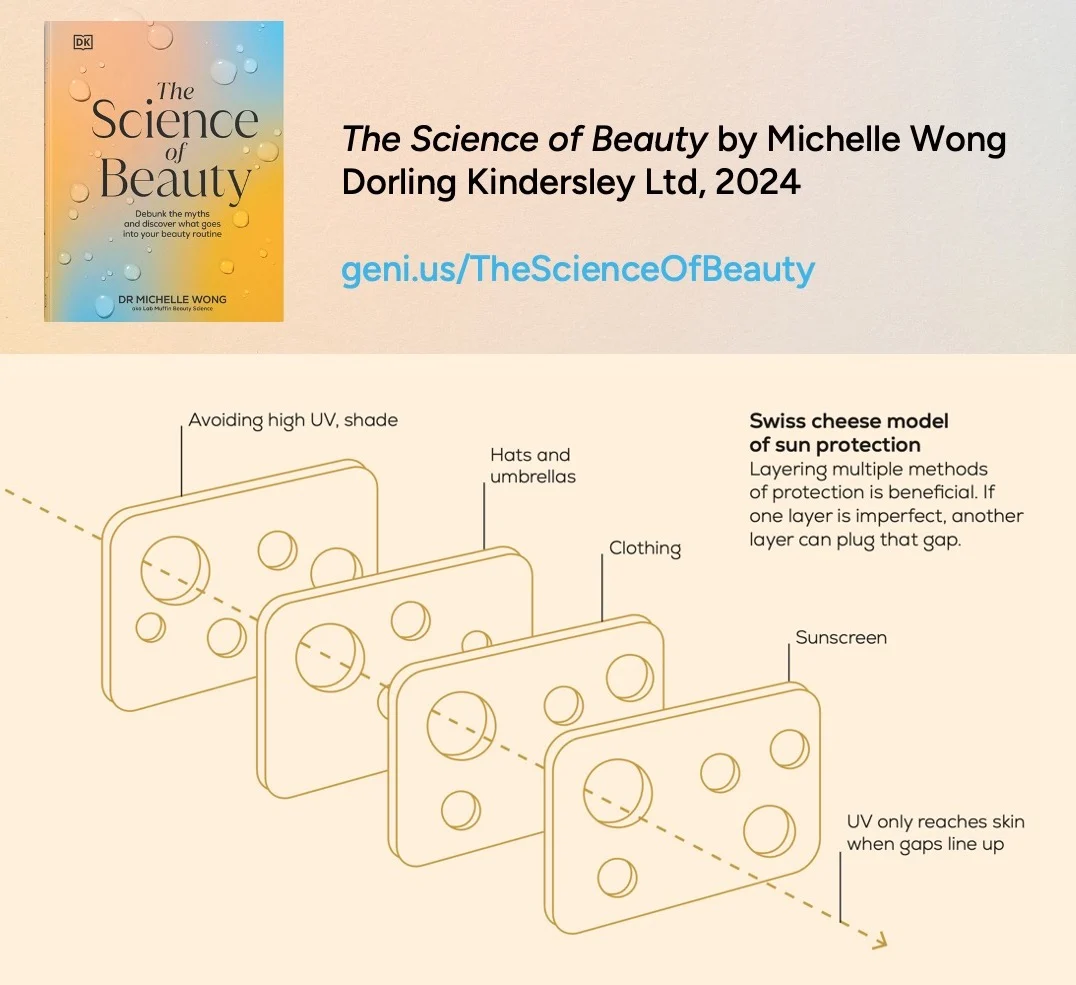
Australia’s success stems from moving beyond simple product marketing to enact a comprehensive public health framework. Initiatives like the legendary "Slip, Slop, Slap, Seek, Slide" campaign—which encourages individuals to slip on a shirt, slop on sunscreen, slap on a hat, seek shade, and slide on sunglasses—promote a multi-layered approach to sun safety. Public health authorities frequently utilize the "Swiss cheese model" of protection, emphasizing that no single defense mechanism is infallible, and true safety requires combining sunscreen with physical barriers.
Furthermore, institutional policies have fundamentally altered societal habits from childhood. Educational institutions across Australia widely adopted strict "no hat, no play" policies, normalizing sun-protective behavior during formative years. By embedding protection into daily routine, fashion, and school culture rather than relying solely on individual consumer choice, Australia demonstrated that skin cancer trends can indeed be turned downward.
Implications for Future Public Health Policy
The persistence of misinformation surrounding sunscreen on digital media platforms underscores a broader challenge for modern science communication: the ease with which complex epidemiological data can be weaponized for sensationalism. When viral content misconstrues population-level cancer registries to cast doubt on preventive medicine, public health infrastructure faces tangible threats.
Medical professionals and regulatory bodies maintain that regular, correct application of broad-spectrum sunscreen remains a cornerstone of dermatological health. However, experts stress that public education must evolve alongside digital media landscapes. Clear communication must emphasize that sunscreen is not a license to prolong sun exposure indefinitely, but rather one critical component of a holistic photoprotection strategy. As global temperatures shift and international travel remains accessible, sustained emphasis on multi-layered sun safety—supported by robust clinical science rather than misleading social media trends—remains essential for reducing the global burden of skin cancer.
