
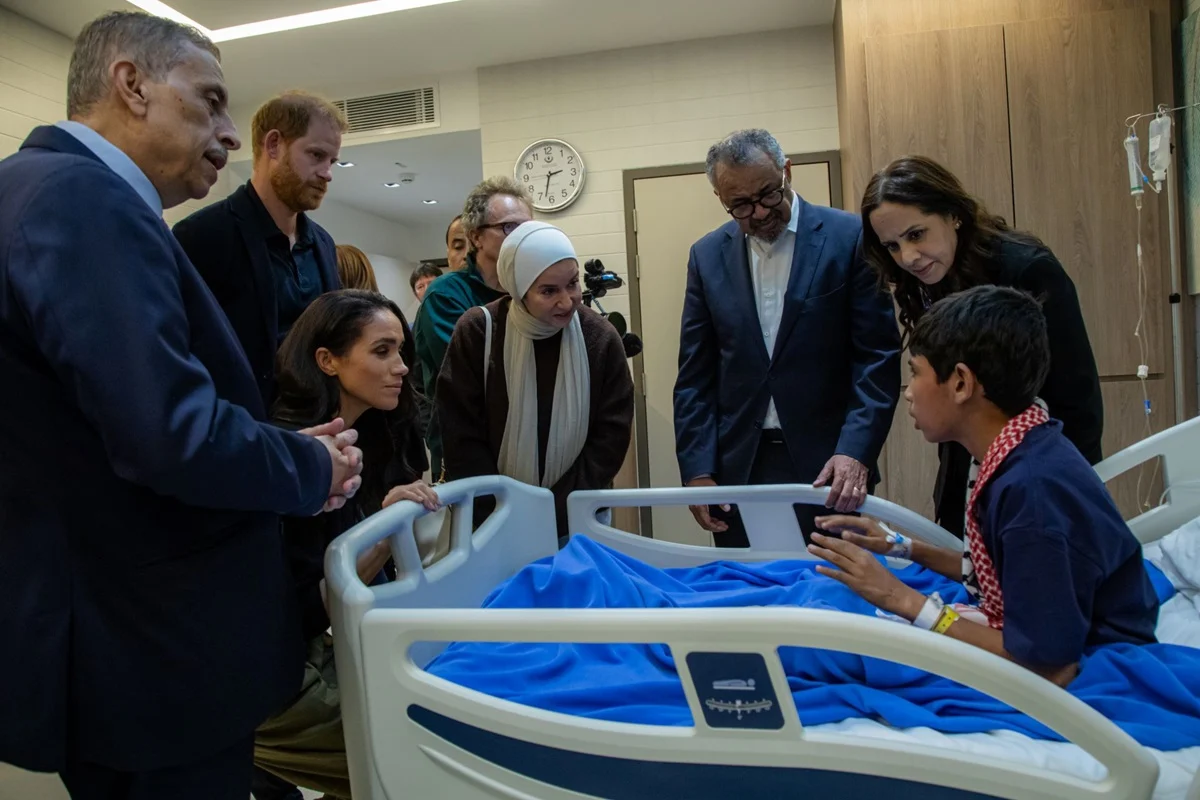
The World Health Organization (WHO) Director-General, Dr. Tedros Adhanom Ghebreyesus, has concluded a pivotal two-day State visit to the Hashemite Kingdom of Jordan, a diplomatic mission that underscored the Kingdom’s role as a regional lynchpin for humanitarian relief and public health reform. The visit served as a critical platform for high-level discussions regarding the expansion of Universal Health Coverage (UHC), the integration of mental health services into national policy, and the sustained management of health crises stemming from regional geopolitical instability.
The visit was marked by a formal audience with His Majesty King Abdullah II, where the discourse centered on the existential necessity of maintaining medical corridors for conflict-affected populations. Jordan, which currently hosts over three million refugees—a demographic composition largely comprised of individuals displaced by the protracted conflicts in Syria and the ongoing humanitarian emergency in Gaza—stands as a rare example of a nation that has integrated displaced populations into its domestic healthcare infrastructure.
A Chronology of Strategic Engagements
The first day of the visit commenced with a high-level briefing with Jordanian health authorities, followed by an emotionally charged site visit to a WHO-supported hospital facility. This facility serves as a primary hub for pediatric patients evacuated from Gaza, many of whom are receiving life-saving treatment for trauma, chronic illness, and cancer. Dr. Tedros observed firsthand the logistical complexities involved in the "Medical Corridor" initiative—a project spearheaded by King Abdullah II that facilitates the transfer of critically ill Gazan children to Jordanian centers of excellence, such as the King Hussein Cancer Center.
Following the hospital visit, the Director-General chaired a plenary session involving United Nations agencies, international donor governments, and representatives from global philanthropic organizations. The agenda focused on the "financing gap" in humanitarian health. With the global aid landscape increasingly strained by competing crises, the session aimed to secure long-term financial commitments to support Jordan’s primary health care approach, which has become a blueprint for the Middle East and North Africa (MENA) region.
The second day of the visit shifted focus to specialized social and medical services. Dr. Tedros toured the National Center for Rehabilitation of Addicts, an institution that underscores Jordan’s commitment to comprehensive care by merging medical, psychological, and social rehabilitation services. The visit concluded with sessions involving community leaders and women’s organizations, specifically those supported by the Jordanian Hashemite Fund for Human Development (JOHUD), emphasizing the role of grassroots civil society in maintaining population health resilience.
Humanitarian Context and Supporting Data
The significance of Jordan’s healthcare contribution cannot be overstated. According to recent WHO data, Jordan’s health system has demonstrated remarkable resilience despite a population increase that has put significant pressure on public infrastructure. The Kingdom has successfully integrated refugees into its primary health care (PHC) system, a move that the WHO has cited as a gold standard for sustainable development.
Data from the Jordanian Ministry of Health indicates that since the escalation of the conflict in Gaza in October 2023, the Kingdom has processed thousands of medical evacuations. These operations require seamless coordination between the Jordanian Royal Medical Services, the WHO, and regional logistics hubs. The cost of providing these services is significant, and the Director-General’s visit was intended to galvanize the international donor community to replenish the funds required to keep these corridors open.
Furthermore, the integration of mental health into primary care remains a centerpiece of the WHO’s current strategic initiative. Jordan’s progress in this area is notable; by decentralizing mental health services, the Kingdom has reduced the stigma associated with psychiatric care and improved access for both its citizens and refugee populations.
Collaborative Philanthropy: The Archewell Engagement
Adding a distinct dimension to the diplomatic mission, the Duke and Duchess of Sussex, Prince Harry and Meghan, joined Dr. Tedros for several segments of the visit. Representing Archewell Philanthropies, the pair highlighted the intersection of mental health and emergency relief. Prince Harry’s participation focused on the psychological toll of prolonged conflict, particularly on men, young people, and children in displaced settings.
The inclusion of the Sussexes reflects a broader WHO strategy to utilize high-profile advocacy to secure funding and public awareness for mental health, which is frequently the most underfunded component of humanitarian response. In his remarks, Prince Harry emphasized that mental health is not merely a clinical issue but a fundamental pillar of "recovery, dignity, and long-term peace." This sentiment was echoed by Dr. Tedros, who noted that the visibility provided by the Archewell foundation has been instrumental in bringing resources to the world’s most vulnerable, often forgotten, populations.
Implications for Regional Health Policy
The implications of this visit extend beyond the immediate medical relief provided to Gazan patients. By reinforcing the relationship between the WHO and the Jordanian government, the visit serves to solidify a regional hub for health security. Jordan’s geography and its stable, structured approach to health administration make it the ideal candidate for the "WHO Hub" model, where expertise, supplies, and best practices are centralized before being distributed across the region.
However, the analysis of the current situation suggests that Jordan’s health system is approaching a critical juncture. The sustainability of the "Medical Corridor" and the ongoing integration of refugees are dependent on international financial support that has historically been volatile. The high-level meeting convened by Dr. Tedros was a proactive attempt to shift the narrative from "emergency response" to "systemic investment."
By investing in Jordan’s health system, international partners are not only assisting a host nation but are effectively fortifying a regional firewall against the collapse of health services in conflict zones. The emphasis on "Primary Health Care" as the bedrock of Universal Health Coverage is the core of the WHO’s post-pandemic strategy, and Jordan’s implementation of this model—despite the immense demographic burden it carries—is being studied by the WHO as a case study for other nations in similar geopolitical contexts.
Official Statements and Future Outlook
In his closing address, Dr. Tedros lauded the "solidarity and generosity" of the Jordanian people. He emphasized that the country’s commitment to providing health services to over three million refugees is an act of humanitarian leadership that deserves more robust international recognition and material support. "Jordan continues to show the world what it truly means to put health and humanity first," the Director-General stated.
For the Hashemite Kingdom, the visit was a validation of its long-term health policy. Minister of Health discussions focused on the digitalization of health records and the expansion of the national insurance scheme—two pillars that are expected to further improve the quality of care in the coming decade.
As Dr. Tedros departed, the consensus among observers was that the visit successfully elevated the profile of Jordan’s humanitarian efforts while setting a clear path for future WHO collaboration. The success of these initiatives will now depend on whether the international partners present at the high-level meeting translate their verbal commitments into the necessary financial and logistical support. The WHO remains committed to providing technical expertise to ensure that Jordan’s health systems remain robust, scalable, and inclusive, proving that even in times of extreme regional volatility, health can act as a bridge toward stability and human dignity.
